
Highlights of the Private 14-Day Bhutan Tour
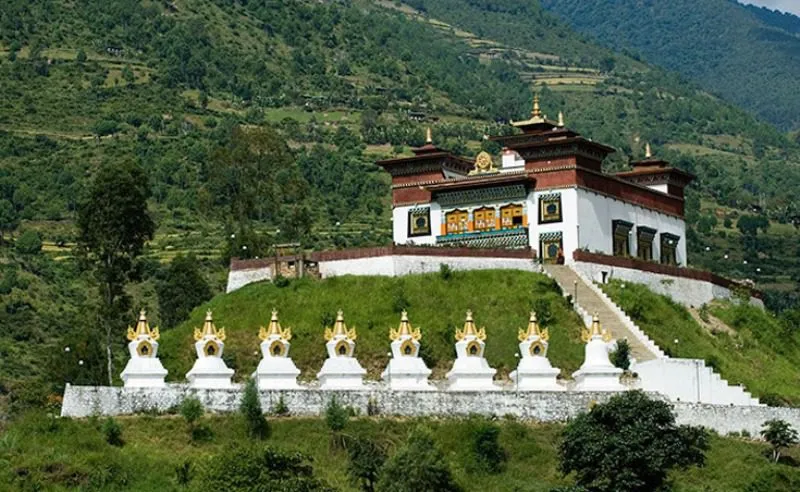
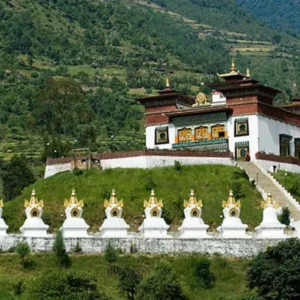
- Punakha Dzong, the most breathtaking fortress-monastery in the Himalayas, rising from the confluence of two sacred rivers at 1,310 m, where the Je Khenpo winters and royal marriages have been consecrated
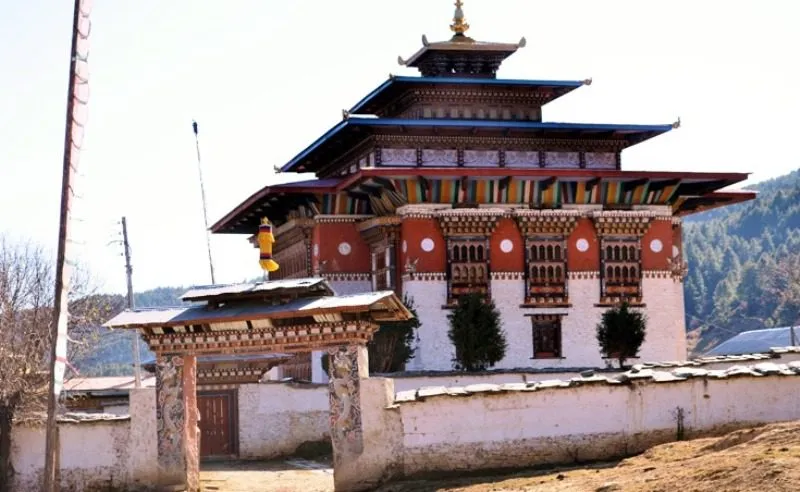
- Phobjikha Valley & Gangtey Monastery: a glacial bowl of extraordinary silence, winter home to hundreds of endangered black-necked cranes, and one of the last great Nyingma monastery complexes in Bhutan
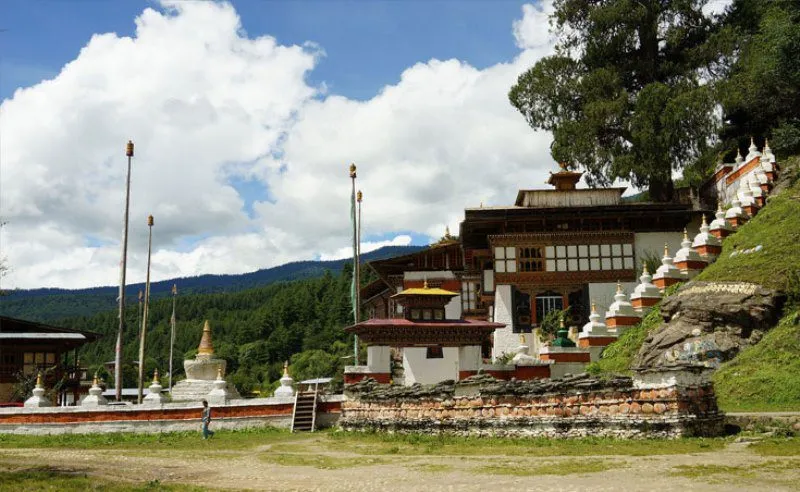
- Bumthang's Sacred Circuit: Kurjey Lhakhang, Jambay Lhakhang, and Mebar Tsho (the Burning Lake), three sites where Buddhism arrived, took root, and became inseparable from the landscape
- Ura Valley is one of Bhutan's highest and most self-contained farming communities, where kushuthara silk is still woven on backstrap looms and the village lanes are too narrow for the modern world to enter
- Eastern Bhutan: Mongar & Trashigang, the Bhutan that tourism has not yet reshaped; frontier towns with genuine markets, instinctive hospitality, and a landscape that rewards the long drive with compound interest
- Thrumshing La (3,750 m), Bhutan's highest motorable pass on the east-west highway, crossing into subtropical gorge terrain that most visitors to the kingdom never witness
- Tiger's Nest Monastery (Taktsang): four sacred cave temples at 3,120 m, clinging to a sheer cliff above Paro Valley, reached by a two-hour forest ascent that earns every step
- Fully private, fully guided: your own TCB-certified guide and vehicle for all 14 days, moving at your pace through a country that rewards those who slow down
Overview
Most people who visit Bhutan leave having seen the same country. The same teahouse ledge provided the same dzongs, the same valley views, and the same Tiger's Nest photograph.
That version of Bhutan is real and worth seeing. But it is also the version that ends at the western edge of a much larger kingdom, and our 14-Day Bhutan Private Tour Package is built for travelers who want to understand what lies beyond it.
Bhutan is one of the few places left on earth where the way a country governs itself, worships, builds, farms, and trades has remained coherent across centuries. That coherence is not a museum piece.
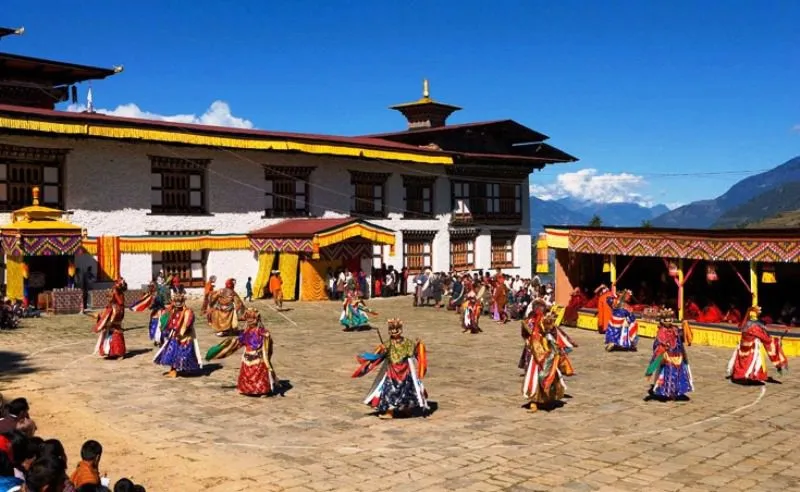
It is alive in the courtyards of Tashichho Dzong, where monks in crimson robes share administrative space with civil servants in traditional gho; the dual governance system, known as the chhoe-sid-nyi, operates today exactly as it was designed centuries ago under the Royal Government of Bhutan.
The narrow lanes of Ura remain unchanged, with women weaving kushuthara silk on backstrap looms in open doorways as visitors watch.
What we offer in this journey is access to that coherence, not as a series of scheduled viewings but as a sustained encounter with a country that rewards the traveler who moves slowly and stays longer.
We connect the western highlights that most Bhutan tours cover with the eastern districts of Mongar and Trashigang, which almost none of them reach.
The east is not a bonus extension. It is where Bhutan's character becomes fully legible, where the roads narrow above gorges, where the towns exist for the people who live in them rather than the people passing through, and where the hospitality is genuine because foreign visitors remain uncommon enough to be genuinely captivating.
The cultural weight of this journey accumulates as it moves. Punakha holds the most architecturally remarkable fortress-monastery in the Himalayas, built in 1637 at the confluence of two rivers, still serving as the winter seat of Bhutan's religious authority.
Gangtey Monastery sits above the Phobjikha glacial bowl, a rare Nyingma institution above wetlands that go silent with a completeness that city people experience as unsettling at first and do not want to leave afterward.
Bumthang carries thirteen centuries of uninterrupted sacred use in a landscape of stone-walled fields, apple orchards, and river valleys where the air is noticeably cleaner and the sense of antiquity is immediate.
Trongsa Dzong, perched above the Mangde Chhu gorge, controlled the only road through Bhutan for centuries and produced the dynasty that unified the kingdom. These are not background details. They are the substance that makes up this journey.
We design every departure as a fully private experience: your guide, licensed and certified by the Department of Tourism, Bhutan; your vehicle; and your own schedule.
There are no shared groups, no compromise on pace, and no fixed departure windows that force you to move before a place has given what it has to give.
Our guides are selected specifically for their knowledge of the eastern circuit, which requires a depth of regional familiarity that western-only guiding simply does not build.
Many of them have been leading the Mongar and Trashigang route for over a decade and carry personal relationships with the communities along the way that quietly but meaningfully shape what you experience in those towns.
East of Bumthang, the journey crosses Thrumshing La at 3,750m, the highest motorable pass on Bhutan's east-west highway, and descends into a landscape that most visitors to this country never see.
Mongar, a ridge town with a frontier quality, has genuine markets, a compact dzong, and a welcome that has not been smoothed by repetition.
Trashigang, the commercial and administrative capital of the east, sits above a river confluence with the energy of a place that has been trading for centuries.
The driving days here are long, and the roads are dramatic, and our team considers them part of the experience rather than a cost of it. Travelers who make this journey east with us almost universally say it was the part that reframed everything else.
This journey is ideal for travelers who have a genuine curiosity about how Bhutan's governance, religious life, and the relationship between tradition and daily practice actually function.
It suits repeat visitors who completed the western circuit and sensed there was more. It suits couples, solo travelers, and small private groups who are comfortable with long mountain drives and understand that the road itself, in a country this dramatic, is part of what they came for. The difficulty is moderate throughout.
The Tiger's Nest hike is the single most physically demanding day, lasting five to six hours, with 900 meters of elevation gain, but every other day is well within reach for anyone in reasonable general health.
This journey does not suit travelers looking for a highlights reel on a tight schedule. For that, we have shorter options. This one is for the traveler who wants the whole picture.


