
Highlights 6-Day Bhutan Tour Package
- Explore Bhutan's three most iconic valleys: Paro, Thimphu, and Punakha
- Hike to the legendary Tiger's Nest Monastery, perched 900m above Paro Valley
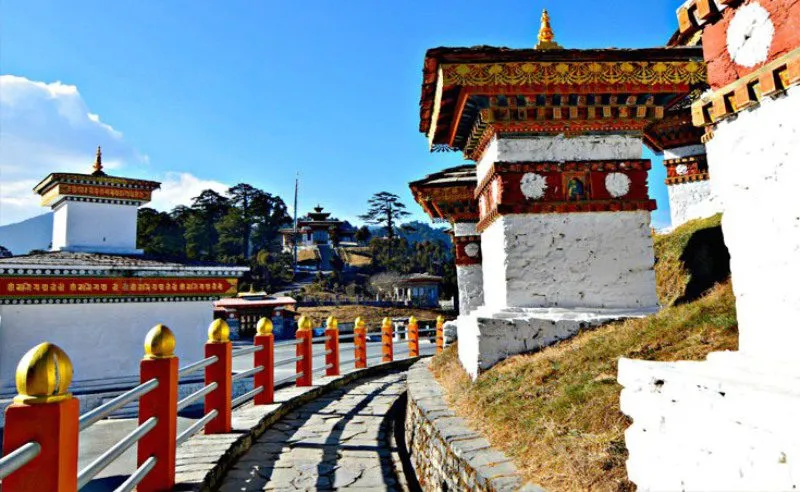
- Cross Dochula Pass (3,100m) with sweeping views of the eastern Himalayan range
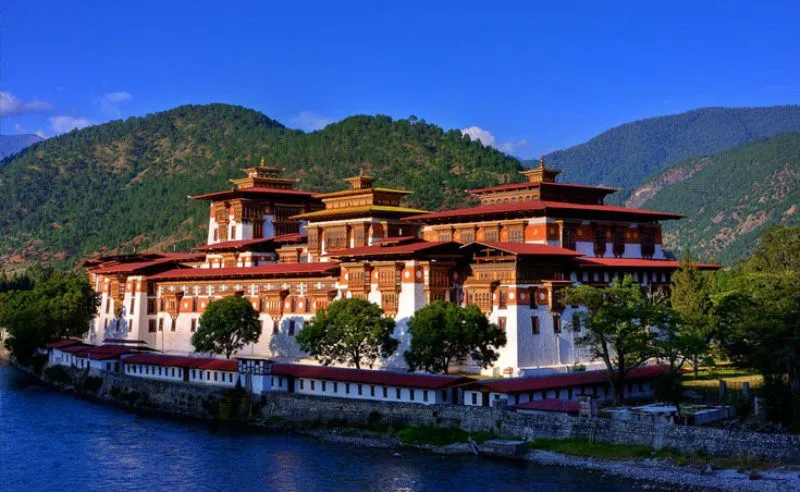
- Visit Punakha Dzong, built at the confluence of two rivers and once the nation's capital
- Explore Bhutan's living Buddhist culture through monasteries, chortens, and local markets
- Walk through traditional villages and farmland in the warm, fertile Punakha Valley
- Experience authentic Bhutanese hospitality and the country's rare, unhurried way of life
Overview of the Bhutan 6-day itinerary
Six days in Bhutan's western valleys covers more genuine ground than most travelers expect. Paro, Thimphu, and Punakha hold the densest concentration of Bhutan's history, living culture, and protected landscape in the country.
Bhutan is one of the few countries in the world that measures national progress by Gross National Happiness rather than GDP alone.
Coined by His Majesty the Fourth King of Bhutan, Jigme Singye Wangchuck, in 1972, GNH is built on four core pillars: sustainable and equitable socio-economic development, environmental conservation, preservation and promotion of culture, and good governance.
What makes this framework distinctive is how it functions in practice. Since 2008, every policy and development project in Bhutan must pass through a GNH Policy Screening Tool administered by the Centre for Bhutan and GNH Studies before it can be adopted.
The tool assesses potential effects across nine domains of well-being, and its use is mandatory for all cabinet-level policy submissions.
Every road built, every tourism regulation set, and every land use decision made in Bhutan has been measured against these values before implementation. The most recent GNH Survey, published in 2023, reported that Bhutan's GNH Index value rose from 0.743 in 2010 to 0.781 in 2022, measurable evidence that the framework holds. Further details are published by the Centre for Bhutan and GNH Studies at www.bhutanstudies.org.bt
This principle is written into the constitution and enforced through land policy, environmental law, and a tourism model the government has maintained deliberately for decades. The country keeps 60 percent of its land under forest cover by constitutional mandate, has achieved carbon-negative status, and limits international arrivals through a Sustainable Development Fee. Every visitor contributes directly to the system that keeps Bhutan functioning the way it does. Full details on entry policy and the SDF are at the official Tourism Council of Bhutan website: bhutan.travel
Paro introduces Bhutan at its most immediate level. The airport approach, a tight spiral descent between Himalayan ridgelines at 2,250 meters, is one of the most technically demanding commercial landings on earth. Whitewashed farmhouses, terraced fields, and forested ridgelines strung with prayer flags line the valley floor.
Rinpung Dzong has stood at the center of this valley since 1646. Above it, Taktsang Palphug Monastery sits on a cliff face 900 meters above the valley floor, built in 1692 at the site where Guru Rinpoche meditated in the eighth century. Our guides walk this trail with every group personally, with full knowledge of every cave, courtyard, and the history behind both.
Thimphu functions unlike any other capital in the region. There is not a single traffic light in the city. The dual administrative system called "chhoe-sid-nyi," in which religious and civil governance share authority, was established in the seventeenth century and remains intact today.
Tashichho Dzong, the seat of the Royal Government and summer residence of the Je Khenpo, is a working fortress where monks and government officials share the same courtyards. The National Institute for Zorig Chusum reflects the same deliberate approach to cultural preservation that runs through every layer of how this country operates, training students in Bhutan's 13 traditional arts through multi-year apprenticeships.
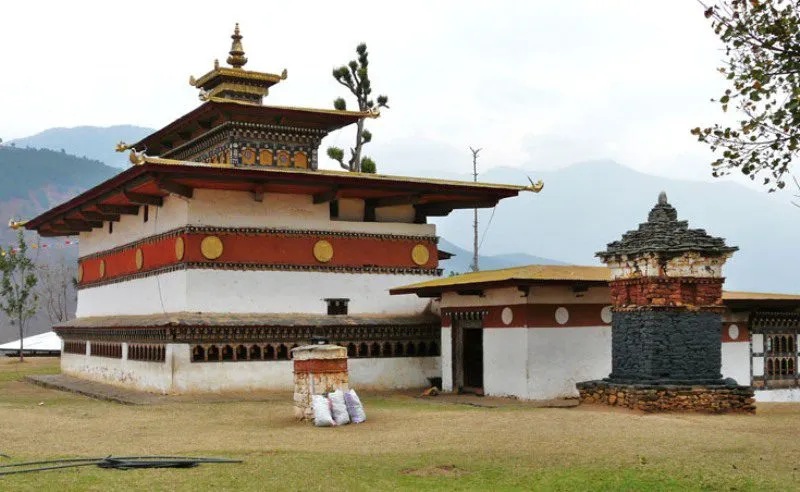
Punakha sits 800 meters lower than Thimphu, subtropical and warm, with a pace and landscape that bear no resemblance to the capital. Punakha Dzong, constructed in 1637 at the confluence of the Pho Chhu and Mo Chhu rivers, served as Bhutan's royal capital for centuries and remains the winter residence of the Je Khenpo. The walk to Chimi Lhakhang passes through a working village: prayer wheels, kitchen gardens, and children in traditional dress heading to school. Nothing here is arranged for visitors. This is simply how the valley lives.
Bhutan's Gross National Happiness framework, its constitutional forest mandate, and its High Value Low Volume tourism policy exist together by design. As a TCB-licensed Bhutanese operator, we assign every guide who is certified, locally trained, and chosen for knowledge over routine. Traveling with us means enjoying a private experience, at your own pace, alongside people who know this country from the inside.
For current SDF rates, visa requirements, and licensed operator verification, visit the Tourism Council of Bhutan at bhutan.travel and the Department of Immigration at www.doi.gov.bt
Planning starts with one conversation. Contact us to build your Bhutan journey from the ground up, with no obligation and no group tours, just your trip.
Highlights
-
Majestic views of the world’s highest peaks onboard flight to/from Paro and excitement level builds up as the plane cuts through different hills towards the deep valley of Paro
-
Guided city tour of the tiny capital Thimphu.
-
Rafting at the Po-chu River in Punakha
-
Exhilarting cycling from Thimphu to Punakha
-
Explore Paro exploding with colors and tradition
-
Visit the Bhutan’s old capital city – Punakha
-
Hike up to Taktsang Monastery – the Tiger’s Nest
-
Punakha Dzong – the most beautiful monastery in Bhutan
