12-Day Bhutan Cultural Tour & Trek

12 Days 11 Nights

This 12-Day Bhutan Cultural Tour & Trek is the most immersive way to experience the Kingdom of the Thunder Dragon, weaving together Paro's sacred valleys, Thimphu's royal heritage, Punakha's subtropical warmth, and the timeless highlands of Bumthang. The package balances deep cultural encounters with rewarding hikes like the iconic Tiger's Nest Monastery trail.

  • 3,120m/10,240 ft
  • March to May and September to November
  • Full board (breakfast, lunch and dinner)
  • Government approved 3 stars and Above
  • Private car, van or bus (Depends on group size)
  • Private Tour

Overview

Highlights of the Bhutan cultural trekking tour

  • The Tiger's Nest Monastery Hike, Taktsang Palphug, Bhutan's most sacred site, rises 3,120m above the Paro Valley.

  • Punakha Dzong, the most beautiful fortress-monastery in Bhutan, sits where two rivers meet.

  • Dochula Pass & Himalayan Views: 108 memorial chortens offer sweeping views of the Himalayan range on clear days.

  • Bumthang Valley Exploration: Bhutan's spiritual heartland, ancient temples, apple orchards, and yak pastures.

  • Masked Tsechu Festival (Seasonal): Witness sacred Cham dances if traveling during spring or autumn festival windows.

  • Traditional Arts & Crafts: Visit Thimphu's national artisan school for thangka painting, weaving, and wood carving.

  • Authentic Bhutanese cuisine includes Ema Datshi, red rice, momos, and butter tea, all served in traditional farmhouse settings.

  • Carbon-Negative Kingdom: Travel with purpose; Bhutan absorbs three times more CO₂ than it produces. 

Overview of Bhutan Cultural Tour & Trek

Bhutan is not a destination you visit; it is a destination that visits you back. Our 12-day Bhutan cultural tour with Trek is architected around a fundamental question: what does it feel like to travel through a country that measures success in happiness rather than GDP? Every element of this journey answers that question through lived experience rather than observation. 

You will arrive in Paro, one of the world's most dramatic airport approaches, with the aircraft threading through Himalayan ridgelines before touching down in the valley.

From there, a thoughtfully paced progression carries you through Bhutan's most culturally dense regions: Thimphu for royal governance and monastic life, Punakha for history and subtropical river valleys, Wangdue Phodrang for traditional Bhutanese village encounters, and Bumthang, the ancient spiritual core of the kingdom, where temples predate Buddhism's formal arrival in Bhutan.

This tour is designed for travelers who seek cultural depth without academic dryness, specifically for those who are genuinely curious about how a medieval Buddhist kingdom functions in the twenty-first century.

You will sit with monks, walk through rice terraces at dawn, shop at weekend markets without a guide rushing you, and share meals with local families. 

The trekking component adds physical reward without requiring mountaineering fitness: the Tiger's Nest trail is challenging but achievable for anyone in reasonable health, while optional walks in Bumthang are gentle ridge strolls through pine forests.

Culturally, Bhutan operates on terms entirely its own. The Sustainable Development Fee, which funds free healthcare and education for all citizens, is built into your tour price, meaning your visit directly funds the country's extraordinary social model. Television only arrived in 1999. Plastic bags are banned.

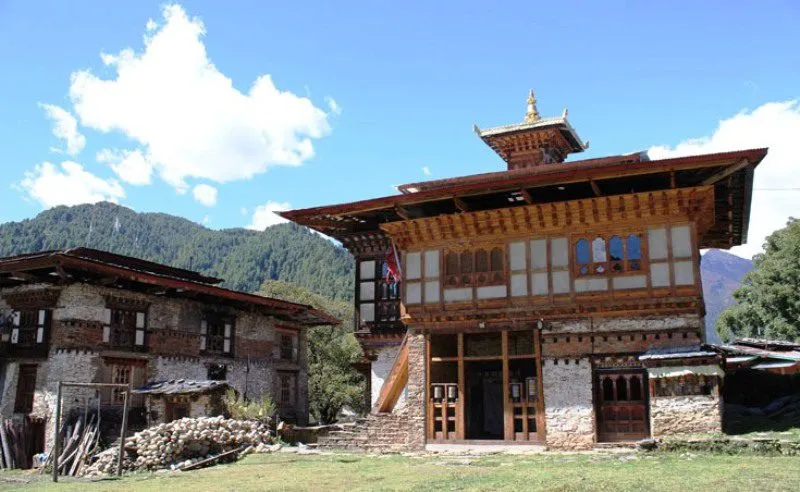
Every building, from petrol stations to banks, must be built in the traditional Bhutanese architectural style. These are not curiosities; they are the texture of daily life here, and this tour gives you time to absorb them rather than photograph them through a bus window.

The ideal traveler for this itinerary is intellectually curious, values quality of experience over quantity of sights, and is comfortable with some physical activity at altitude.

Couples, solo travelers over 30, and small groups of friends consistently find this format the most rewarding way to first encounter Bhutan. Repeat visitors use it to reach Bumthang, which many shorter tours skip entirely.

12-Day Bhutan Cultural Tour & Trek Itinerary

  • Day
    01

    Arrival in Paro & Transfer to Thimphu

    Our Bhutan cultural hike tour begins with one of the world's most exhilarating landings. Paro Airport sits in a tight valley, and only a handful of certified pilots worldwide can land here.

    As you clear immigration and collect your Bhutan visa (arranged in advance by us), your licensed TCB guide will greet you with a traditional white khata scarf.

    The drive to Thimphu follows the Paro Chu river through terraced fields and chorten-dotted hillsides, offering your first taste of an architectural law that makes Bhutan look unlike anywhere on earth.

    The afternoon is yours; use it to acclimatize, walk Thimphu's clock tower square, and observe the only capital city in the world with no traffic lights. Dinner at your hotel introduces you to Bhutanese hospitality.

  • Day
    02

    Thimphu Royal Capital & Monastic Life

    Thimphu rewards slow exploration. Morning begins at Tashichho Dzong, the seat of the Royal Government and the summer residence of the Je Khenpo (Chief Abbot).

    The fortress is a living administrative center; monks in crimson robes navigate its courtyards between prayer sessions and government offices.

    Our guide explains the dual governance system (civil and monastic) that has defined Bhutanese political life for centuries. After lunch, visit the National Institute for Zorig Chusum (the 13 traditional arts), where young students learn thangka painting, wood carving, weaving, and lacquerwork.

    The 169-foot Buddha Dordenma statue above the valley offers sweeping city views and houses thousands of smaller Buddha statues within. End the day at the weekend market (Saturdays and Sundays) or the folk heritage museum for a deeper domestic Bhutan story.

  • Day
    03

    Dochula Pass to Punakha Valley

    The Dochula Pass, at 3,100m, is one of Bhutan's most photographed locations. On clear mornings, especially from November through February, the view extends across the entire eastern Himalayan range, including Gangkhar Puensum, Masagang, Tsendagang, and other peaks over 7,000 m, arranged in a jagged white wall above the rhododendron forests.

    The 108 Druk Wangyal chortens were built in memory of soldiers lost in a 2003 operation against Indian separatists who had entered Bhutanese territory.

    Descending into Punakha feels like entering a different country; subtropical warmth, banana groves, and rice paddies replace the pine forests of Thimphu.

    Punakha served as Bhutan's capital until 1955 and retains a historical weight that feels different from the busy modernity of Thimphu. Afternoon at leisure along the Mo Chu River.

  • Day
    04

    Punakha Dzong & Chimi Lhakhang

    Punakha Dzong (Pungthang Dechen Phodrang, Palace of Great Happiness) is widely considered the most beautiful building in Bhutan.

    Built in 1637 at the confluence of the Pho Chu (Father River) and Mo Chu (Mother River), its whitewashed walls and golden rooftops reflect in the turquoise water below.

    It serves as the winter residence of the Je Khenpo and hosts the spectacular Punakha Drubchen and Tsechu festivals each February.

    The dzong's interior courtyard contains a tree that Zhabdrung Ngawang Namgyal, the unifier of Bhutan, is said to have planted.

    Afternoon walk through rice paddies to Chimi Lhakhang, the Temple of the Divine Madman (Drukpa Kunley), Bhutan's most irreverent and beloved saint.

    Couples seeking fertility and families wishing for children make pilgrimages here, expecting colorful wooden phalluses painted on farmhouse walls, a uniquely Bhutanese form of spiritual protection and luck.

  • Day
    05

    Wangdue to Phobjikha & Rinchengang, village walk, black-necked crane habitat  

    Day 5 brings the Rinchengang village walk, a 90-minute path through one of Bhutan's oldest continuous settlements, where the stone architecture predates modern Bhutan.

    Local families still weave traditional kiras (women's dresses) on hand looms in open courtyards.

    The black-necked crane reserve at Phobjikha Valley can be visited en route in season (October–March), where several hundred of these endangered birds winter in the glacial bowl below Gangte Monastery.

  • Day
    06

    Wangdue to Trongsa, Trongsa Dzong & watchtower museum

    The drive from Wangdue to Trongsa crosses the Pelé La pass at 3,300m, a high-altitude corridor draped in prayer flags and rhododendron forest.

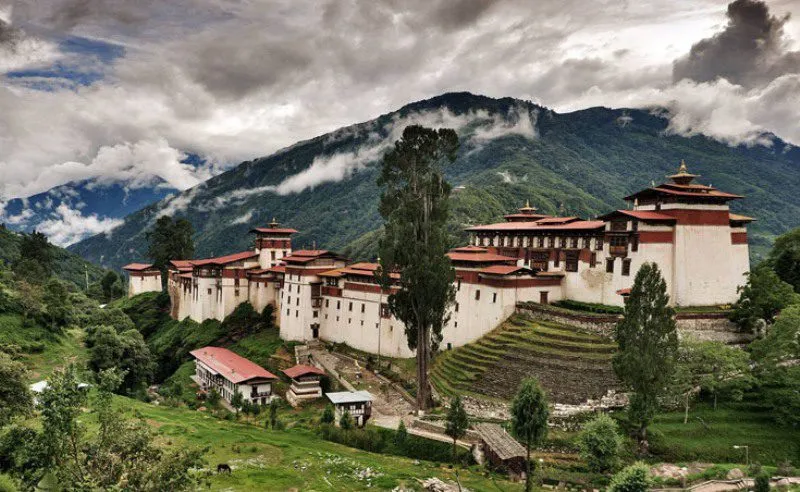
    Trongsa is the ancestral seat of Bhutan's royal family, and Trongsa Dzong, perched on a spur above the deep Mangde Chhu gorge, controls the only east-west road through the kingdom.

    Whoever held this fortress once held Bhutan. The adjacent Ta Dzong watchtower museum houses royal regalia, armor, and dynastic artifacts that trace the full arc of Wangchuck rule, making it the most historically rich museum stop on the entire route.

  • Day
    07

    Trongsa to Bumthang, Jakar Dzong & Jambay Lhakhang

    The road east from Trongsa climbs into Bhutan's high interior, arriving in the Bumthang Valley, Bhutan's cultural and spiritual heartland.

    Jakar Dzong, the White Bird Castle, crowns a ridge above the valley floor and serves as both a functioning monastery and administrative center.

    Below it, Jambay Lhakhang is one of the 108 temples built simultaneously across the Himalayas in the seventh century by the Tibetan king Songtsen Gampo to pin down a demoness, a creation myth that still shapes how Bhutanese understand their landscape and sacred geography.

  • Day
    08

    Bumthang Valley exploration, Kurjey Lhakhang & Mebar Tsho

    A full day devoted to Bumthang's two most sacred sites. Kurjey Lhakhang, named after the body imprint Guru Rinpoche left pressed into the rock of its cave, is a living pilgrimage destination where monks complete long retreat cycles in the surrounding hermitages.

    Across the valley, Mebar Tsho (Burning Lake) is not a lake but a narrow river gorge where the treasure-revealer Pema Lingpa reportedly faltered in carrying a burning butter lamp and emerged with ancient sacred texts, the flame miraculously still alight, one of Bhutan's most resonant and retold spiritual stories.

  • Day
    09

    Bumthang highland hike, Ngang Lhakhang to Tharpaling Monastery

    The tour's finest hike begins at Ngang Lhakhang, the Swan Temple, set in a quiet side valley of Bumthang.

    The trail climbs through dense old-growth forest before emerging at Tharpaling Monastery at 3,800m, where the entire breadth of the Choekhor Valley opens below.

    Yaks graze the upper meadows; hermit monks occupy cliff-face retreats carved into the ridgelines above.

    The altitude, the silence, and the sheer scale of the landscape make the trek the single most meditative walking experience on the itinerary: unhurried, demanding, and deeply worth the effort.

  • Day
    10

    Bumthang to Paro, scenic flight or road via Trongsa

    The return to Paro is made by scenic mountain flight from Bathpalathang Airport to Paro International Airport when weather permits — approximately 40 minutes over an unbroken panorama of Himalayan ridges and river valleys that few travelers ever see at this altitude and angle.

    When conditions prevent flying, the overland route retraces the road via Trongsa and Punakha with new stops added, turning the journey itself into a final act of discovery.

    Either way, Paro's evening rewards a slow walk through the old town bazaar, where traditional shopfronts stay open late under warm light.

  • Day
    11

    Paro, Tiger's Nest full-day hike at 3,120m

    Taktsang Palphug Monastery clings to a sheer 900-meter cliff above Paro Valley, with four sacred cave temples built in 1692 around the site where Guru Rinpoche arrived on a tigress and meditated for three months.

    The hike ascends steadily through pine and oak forest for two hours to a viewpoint teahouse at 3,120m, then drops steeply into a gorge before climbing to the monastery entrance.

    Inside, butter lamps illuminate ancient murals in rooms barely larger than a wardrobe.

    The descent takes 1.5 hours. Physically demanding, visually staggering, and spiritually resonant, the journey's defining day.

  • Day
    12

    Departure, Paro International Airport, farewell Bhutan

    After breakfast, depending on your flight time, you can take a final browse through Paro's handicraft market, which offers hand-woven textiles, wooden bowls, incense, thangka prints, and locally produced natural remedies, providing unhurried souvenirs of a country that discourages rush.

    Our guide accompanies you to Paro International Airport for the last time. As the aircraft climbs out of the valley and the Himalayas fill the windows once more, most travelers find that Bhutan has already begun quietly, insistently, planning its way back into their lives.

The Cost Includes

  • Airport pick-up and drop-off by private vehicle
  • 3-star accommodation (4 & 5-star options available at additional cost)
  • Bhutan visa fee, including all necessary processing
  • Route permit for all destinations
  • Three meals per day during your stay in Bhutan
  • A licensed Bhutanese tour guide for the entire journey
  • All land transportation by private vehicle
  • Sightseeing as per itinerary
  • All internal taxes and charges
  • Monument entrance fees, where applicable
  • Sustainable Development Fee of $100 per person per night (funds free education, healthcare, poverty alleviation, and infrastructure)

The Cost Excludes

  • International airfare and travel insurance
  • Expenses of a personal nature, tips to guides and drivers
  • Expenses arising from unforeseen events such as flight delays, road conditions, or weather

Frequently Asked Questions

1. Do I need to be fit to do this tour?

Moderate fitness is recommended. The Tiger's Nest hike (5–6 hours, 900m elevation gain) is the most demanding day. You do not need trekking experience, but regular walking, 10,000+ steps daily, in the months before departure will make the trip significantly more comfortable. A pony is available for the first section of the Tiger's Nest trail if needed.

2. Is the Sustainable Development Fee (SDF) really included?

The USD 100 per person per night SDF is fully included in your tour price and is fixed at this rate until August 2027. It is mandatory for all visitors and non-negotiable, but knowing it funds free healthcare and education for all Bhutanese citizens makes paying it feel quite different from a typical tourism tax.

3. Can the itinerary be customized?

Absolutely. This 12-day format is our most popular structure, but we tailor every tour we operate to the group. We can add the Haa Valley (one of Bhutan's least-visited regions), extend to 15 days for the Snowman Trek approach, or shorten to 8 days focusing on Paro, Thimphu, and Punakha only. Contact us and we will design your specific journey.

4. How do I get to Paro from Kathmandu / Delhi / Bangkok?

Druk Air (Bhutan's national carrier) and Bhutan Airlines are the only airlines authorized to land at Paro. Flights operate from Delhi, Kolkata, Mumbai, Kathmandu, Bangkok, Singapore, and Dhaka. We can assist with flight booking as an add-on service. Kathmandu to Paro is approximately 1.5 hours with spectacular Himalayan views on clear days.

5. What is the group size, and will I be with strangers?

We cap all tours at a maximum of 8 guests. Departures run as private groups (couples, families, or friends booking together) or join-in trips where you may travel alongside other independent travelers. If you prefer a completely private experience, we operate private tours with no minimum group size; pricing is adjusted accordingly.

6. What happens if Tiger's Nest is closed due to weather?

Weather closures at Tiger's Nest are very rare; the monastery closes only for specific religious ceremonies (publicly announced). Our guides monitor conditions daily and will restructure the Day 11 program if needed, substituting Paro Valley's other sacred sites (Kyichu Lhakhang and Dungtse Lhakhang) and a longer evening in Paro town. In 12 years of operation, we have completed the Tiger's Nest hike on over 97% of scheduled days. 

Additional Travel Info

How Much Does a 12-Day Bhutan Cultural Tour & Trek Cost?

Planning a trip to Bhutan is a unique experience. The cost of the Bhutan Cultural Tour & Trek depends on how keen you are to explore this beautiful Himalayan kingdom. Unlike standard holiday packages with fixed prices, every Bhutan journey is customized according to your travel preferences, interests, and budget, unlike standard holiday packages with fixed prices. The total cost of our Bhutan trip may vary based on several factors, including:

  • Number of travelers: Private tours, family holidays, and group trips have different pricing structures.
  • Accommodation choice: Select from comfortable 3-star hotels, premium 4-star stays, luxury 5-star properties, or exclusive luxury accommodations.
  • Travel season and dates: Bhutan tour costs can change depending on peak seasons, festivals, and travel availability.
  • Trip duration: The number of days you spend exploring Bhutan’s cultural landmarks, monasteries, valleys, and natural landscapes affects the overall cost.
  • Customized experiences: Special activities, private guides, unique cultural experiences, trekking options, and personal requests can influence your final package price.

    Since every traveller has different expectations, we do not offer fixed prices for our Bhutan tour packages. Instead, our Bhutan travel experts create a personalized itinerary and detailed quotation based on your requirements, ensuring you receive the best value for your journey.

    Just share your preferred travel dates, group size, accommodation preferences, and travel interests with us. We will design a customized itinerary with a transparent cost breakdown and no obligation to book.

    Request Your Personalized Bhutan Quote Today

    📧 Email: info@tourinbhutan.com
    💬 WhatsApp: +1 401 328 1478
    📞 Phone: +1 401 328 1478

Best Time for this Bhutan Tour

Bhutan's seasons are dramatically different in character, not just in weather but also in culture, festivals, and landscape.

  • Spring (Mar–May): Rhododendrons, clear skies, and Paro & Thimphu Tsechu festivals. Best overall conditions.
  • Autumn (Sep–Nov): Crystal visibility, Himalayan panoramas, Thimphu Tshechu, post-monsoon clarity.
  • Winter (Dec–Feb): Cold nights (-5°C in Bumthang), fewer crowds, Punakha Drubchen. Ideal for lower valleys.
  • Monsoon (Jun–Aug): Heavy rainfall, landslides on mountain roads. Limited trekking. 

Mid-October to mid-November offers the most consistent combination of clear skies, excellent trail conditions, and a festive atmosphere for this specific itinerary, which includes the Bumthang highland hike and Tiger's Nest.

Spring (late March to May) is equally spectacular for wildflower blooms along the Dochula and Pele La passes.

Gear & Equipment

Bhutan's altitude range (1,200m–3,800m on this tour) and changeable mountain weather require thoughtful packing.

Clothing

  • Moisture-wicking base layers (3–4 sets)
  • Mid-layer fleece or down jacket
  • Waterproof outer shell (essential)
  • Lightweight trekking trousers
  • Modest clothing for temple visits (knees & shoulders covered)
  • Warm hat, gloves, buff/neck gaiter
  • Quick-dry underwear and socks

Footwear

  • Waterproof trekking boots (broken in before trip)
  • Lightweight camp/lodge sandals
  • Gaiters (optional, useful post-rain)
  • Wool or synthetic trekking socks (5–6 pairs)

Health & Safety

  • Personal first aid kit
  • Altitude sickness medication (consult doctor)
  • Water purification tablets or filter
  • Sunscreen SPF 50+ and UV sunglasses
  • Blister prevention (moleskin, tape)
  • Personal prescription medications

Tech & Power

  • Universal power adapter (Bhutan uses Type D/F)
  • Portable power bank (10,000+ mAh)
  • Camera with extra memory cards
  • Headtorch/headlamp with spare batteries
  • Offline maps downloaded (no reliable data in hills)

Bags

  • Daypack 20–25L for hikes
  • Main luggage max 20kg (vehicle storage)
  • Dry bags or waterproof stuff sacks
  • Reusable water bottle (1L minimum)

Essential Extras

  • Biodegradable soap and toiletries
  • Cash (Bhutanese Ngultrum, Indian Rupees, USD)
  • Printed visa and booking documents
  • Snacks for long mountain drives
  • Lightweight binoculars (birdwatching)

Accommodation 

All accommodation is handpicked for location, cleanliness, and authentic character. Bhutanese architecture standards ensure that even standard hotels look beautiful.

  • Standard (Included): 3-star category. The hotel offers en-suite rooms, hot water, Wi-Fi in the lobby, and traditional décor. Reliable comfort across all destinations.
  • Deluxe Upgrade: 4-star boutique properties. Valley-view rooms, spa access, curated local menus, and premium linens. +USD 60–90/night.
  • Luxury (Aman/Uma): Amankora or Uma by COMO, Bhutan's finest. Private valley villas, farm-to-table dining, and a dedicated butler. +USD 400+/night.
  • Premium Upgrade: In Bumthang, we partner with a family-run farmhouse guesthouse for one night, a genuine home-stay experience that no luxury hotel can replicate. Sleeping under yak-wool blankets while the farmhouse fire burns is one of the most mentioned highlights by returning guests.

Essential Travel Tips

  • Visa & Entry: All nationalities except those from India, Bangladesh, and the Maldives require a Bhutan visa. We handle the full process; submit your passport copy 4 weeks before departure. The visa is granted digitally; you collect the physical stamp at Paro Airport.
  • Currency & Money: The Bhutanese Ngultrum (BTN) is pegged 1:1 to the Indian Rupee. ATMs exist in Thimphu and Paro but are unreliable in rural areas. Carry USD 200–300 cash equivalent for tips, souvenirs, and personal expenses. Credit cards accepted at major hotels only.
  • Altitude Awareness: Paro sits at 2,334 m; Bumthang at 2,600–2,800 m; the Day 9 hike reaches 3,800 m. Acclimatize gradually, drink 3L of water daily, avoid alcohol for the first two days, and consult your doctor about Diamox (acetazolamide) if altitude-sensitive.
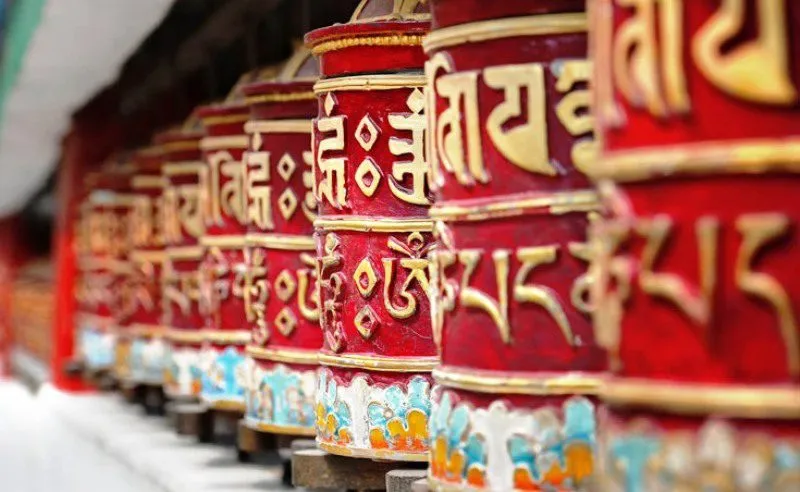
  • Temple Etiquette: Remove shoes before entering temples and dzongs. Walk clockwise around chortens and prayer wheels. Do not photograph monks, altars, or sacred objects without permission. Modest dress (covered knees and shoulders) is mandatory at all religious sites.
  • Internet & Connectivity: TashiCell and B-Mobile SIM cards are available at Paro Airport (~USD 3 for 30-day data). Coverage is good in towns but absent on mountain roads and in Bumthang's outer valleys. Download offline maps and WhatsApp messages before remote days.
  • Dress Code: Bhutanese people dress conservatively and take pride in traditional dress. Visitors are expected to dress modestly in public. For Dzong visits, avoid shorts and sleeveless tops. Locals will appreciate any attempt to wear a kira (women) or gho (men); rentals are available.
  • Sustainability: Bhutan is plastic-bag-free. Bring reusable bags and a water bottle. Do not remove any natural or cultural objects from sites. The SDF you pay directly funds Bhutan's free healthcare, free education, and environmental conservation programs.
  • Health & Safety: No specific vaccinations are required for Bhutan, but update routine jabs (hepatitis A, typhoid). Bhutan has high-quality hospitals in Thimphu and Paro. Emergency evacuation insurance for helicopter transport is strongly recommended for the highland hiking days.
  • Time Zone & Climate: Bhutan Standard Time is UTC+6 (same as Bangladesh, 30 min ahead of India). Pack for a 15°C temperature range; mornings are cold, afternoons are warm, and evenings are cool even in summer. Layering is essential across all seasons.

Notes

On the day of departure, the ‘local agents’ host obligation shall be limited to providing breakfast only, and any extra requirements shall be payable on a usage basis.

Bumthang/Paro flights (with a day’s gap) are available to avoid the return overland journey from Bumthang to Paro. Our entire Bhutan tour is a private journey with tailor-made programs suited for any independent travelers according to their chosen travel dates.

Should you wish, the tour can be easily customized according to your interests and the activities you wish to get involved in or spend more time in at your places of interest. Contact us to customize this tour as per your requirements. This tour can be undertaken throughout the year.

Normally, during the monsoon season (June, July, Jul & Aug), the road condition between Thimphu and Bumthang will be muddy and bumpy. Other than land cruisers, the journey is not easy, but even with them, it will still be a bumpy ride.

Another option will be flying into Bumthang and driving back or vice versa. But in other seasons, such is not the case.

Plan Your Bhutan Cultural and Trekking Journey

Every Bhutan journey we create is custom-built around your travel style, travel dates, and the experiences that matter most to you. Let's start with a conversation.

Trip Reviews

[trustindex no-registration=google]
TripAdvisor
Rated Excellent by our travellers
★★★★★
"Best Bhutan Tour Operator"
"Aura Trails made our Bhutan trip absolutely unforgettable. Every detail was perfectly planned."
Sarah M.
Australia · Cultural Tour
TripAdvisor
★★★★★
"Exceeded All Expectations"
"From landing in Paro to our last day in Thimphu, everything was seamless. Highly recommend!"
James K.
USA · Trekking Tour
TripAdvisor
★★★★★
"A Dream Come True"
"The festival tour was magical. Our guide Karma was exceptional — so much local knowledge and warmth."
Emma L.
UK · Festival Tour
TripAdvisor
Read All Reviews on TripAdvisor →