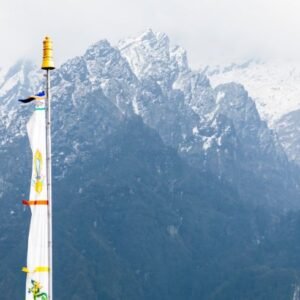
Laya Gasa Trek—20 Days

20 Days 19 Nights

The 20-day Laya Gasa Trek in Bhutan is a challenging, high-altitude trek in northern Bhutan. It is combined with cultural sightseeing. Laya Gasa is one of Bhutan’s premier treks. It offers remote wilderness, nomadic culture, dramatic peaks, and a rewarding finish at hot springs.

  • 4,440m/14,567ft
  • March to May and September to November
  • Full board (breakfast, lunch and dinner)
  • Government approved 3 stars and Above
  • Private car, van or bus (Depends on group size)
  • Private Tour

Overview

Highlights of Laya Gasa Trek

  • Panorama views of Mount Jomolhari (7,326 m), Jichu Drake (6,662 m), Tserim Kang (6,532 m), and Gangchhenta (6,678 m) from open alpine campsites
  • Rest and cultural immersion in Laya village (3,840 m), Bhutan’s highest permanent settlement, home to the indigenous Layap community, whose semi-nomadic lifestyle has remained largely unchanged for centuries
  • Two full acclimatization days at Jangothang Base Camp (4,090 m) and Laya, reducing altitude risk and enabling optional exploratory day hikes
  • Trekking through Jigme Dorji National Park, a UNESCO-recognized biodiversity hotspot supporting snow leopards, Takins, Himalayan blue sheep, and over 300 bird species
  • Crossing high-altitude passes, including the approach to Nyele La (4,870 m) with 360-degree Himalayan panoramas
  • Relaxation at Gasa Tsachu (Gasa Hot Springs, 2,200 m): natural mineral-rich thermal pools used for centuries by highland Bhutanese for healing and recovery
  • Guided sightseeing at Punakha Dzong, Thimphu cultural monuments, and a sunrise hike to Taktsang Monastery (Tiger’s Nest, 3,120 m) above the Paro Valley
  • Complete permit and logistics management by a TCB-licensed Bhutanese operator, including SDF, restricted area permits, and government-approved trekking crew

Quick Facts

  • Duration: 20 days (14 active trekking days, 2 acclimatisation rest days, 4 cultural sightseeing days)
  • Total trekking distance: approximately 166 km
  • Maximum campsite altitude: 4,220 m (Shomuthang); highest trail point: Nyele La approach, 4,870 m
  • Difficulty: Strenuous / Difficult
  • Best seasons: Spring (mid-March to May) and Autumn (September to November)
  • Group size: Minimum 2 persons; private departures available
  • Accommodation: 3-star or equivalent hotels in Paro, Punakha, and Thimphu; fully equipped tented camps on trek
  • Meals: All meals included throughout (breakfast, packed lunch, dinner on trek; hotel breakfast included at city stays)
  • Transportation: Airport transfers by private vehicle; return drive Tashithang to Punakha
  • Starting point: Paro International Airport
  • Ending point: Paro International Airport
  • Permits required: Bhutan Tourist Visa, Trekking Permit, Jigme Dorji National Park Entry Permit, Restricted Area Permit (for Laya)
  • SDF: USD 100 per person per night (current rate, fixed until August 2027)
  • Operator: Aura Trails (Tour in Bhutan) – TCB-licensed

Overview of 20-Day Laya Gasa Trek

The 20-day Laya Gasa Trek offers culture and stunning mountain views in the northwestern part of Bhutan. The trek offers a diverse range of Bhutanese landscapes, culture, and hiking in one of the most beautiful and unspoiled areas. The trek departs from Paro and reaches its northern limit in the Laya valley at 3,840 meters before descending south to the thermal pools of Gasa Tsachu.

The full arc traverses the Jigme Dorji National Park, Bhutan's largest protected wilderness at 4,349 square kilometers, following ancient trade corridors that once connected highland Bhutan with Tibet. No road cuts across this interior. The only way through is on foot.

This trek is physically demanding and should not be underestimated. Daily stages range from 10 km to 22 km, crossing multiple passes above 4,000 meters.

The approach to Nyele La Pass reaches 4,870 meters, the highest point of the route, and the elevated campsite at Shomuthang sits at 4,220 meters.

The 20-day schedule includes two structured acclimatization days at Jangothang beneath Mount Jomolhari (7,326 m) and at Laya village, which help the body adjust and significantly lower the risk of acute mountain sickness.

Those who have no technical climbing experience also can do this trek, but a minimum of three months of focused cardiovascular training before departure is strongly recommended. What happens between the passes sets this route apart from every other high-altitude trek in the region.

At Laya, trekkers encounter the Layap people, a semi-nomadic indigenous community that has inhabited this highland since the 15th century, speaking their language (Layakha), wearing a distinct conical bamboo hat found nowhere else in Bhutan, and sustaining a yak-herding economy with minimal connection to the lowland world. This is not a reconstructed cultural experience. It is a functioning society, and the encounter is among the most authentic available to any traveler in the Himalayas today.

The biodiversity encountered along the route is equally rare. The trail passes through the habitat range of the takin, Bhutan's national animal; blue sheep (bharal) move across the rocky high ridges; and above 3,500 meters, trekkers have a genuine chance of finding the Himalayan blue poppy, Bhutan's national flower, in the alpine meadows.

The trek concludes at Gasa Tsachu, mineral-rich hot springs below Gasa Dzong at 2,200 meters, where highland Bhutanese have soaked for centuries, a fitting, restorative close to a physically demanding journey.

Cultural sightseeing anchors both ends of the itinerary. Pre-trek days include a guided ascent to Paro Taktsang Monastery (Tiger's Nest, 3,120 m), Bhutan's most sacred site, and a visit to Punakha Dzong, the most architecturally significant fortress-monastery in the kingdom. Few trekking routes anywhere in the Himalayas ask as much of a traveler or give back as generously.

It is a crossing through one of the last genuinely unaltered highland cultures on earth, conducted inside a kingdom that has, by deliberate national policy, refused to trade its identity for tourist volume.

Laya Gasa Trek—20 Days

  • Day
    01

    Arrival in Paro (2,250 m)

    Arrive at Paro International Airport, the gateway to the Kingdom of Bhutan and one of the most technically demanding commercial landings in the world, with approach views of 5,000–6,000 m peaks.

    Our representative meets you at the airport and transfers you to your hotel.

    The afternoon is free for initial acclimatization, an introductory orientation with your lead guide, and a visit to Rinpung Dzong and the National Museum of Bhutan. Overnight at a 3-star hotel in Paro.

  • Day
    02

    Paro to Sharna (2,870 m) Drive and Trek | 40 km drive + 8 km trek | 3–4 hours

    After breakfast, drive along the Paro Chhu valley to Drukgyel Dzong, the 17th-century ruin that once guarded the trade route to Tibet.

    The short drive ends at the trailhead, and the trek to the Sharna campsite follows the river valley through blue-pine forest and past scattered farming villages.

    This is an easy opening day by design, allowing gear adjustment and the first engagement with trail conditions. Accommodation: tented camp at Sharna (2,870 m).

  • Day
    03

    Trek to Thangthangka (3,630m)

    The longest day of the opening section climbs steadily through rhododendron and conifer forest with increasing alpine character.

    The trail crosses several streams and affords the first clear views toward the high peaks of the Jomolhari group. Thangthangka is a wide meadow campsite used by yak herders in summer, with excellent water and open sightlines.

    On this day, trekkers begin to feel the altitude more significantly above 3,400 m. Accommodation: tented camp at Thangthangka (3,630 m).

  • Day
    04

    Thangthangka to Jangothang (4,090 m)

    The trail enters the glacial moraine zone below Jomolhari, crossing from forest to open tundra and rocky terrain typical of high Himalayan environments.

    Mount Jomolhari (7,326 m) and its companion Jichu Drake (6,662 m) become fully visible on the final approach to Jangothang.

    The base camp at Jangothang sits in a wide, flat valley at 4,090 m; the ruins of an old fortress (Jangothang means 'land of ruins') stand nearby.

    This site is one of the most iconic campsites in Bhutan. Accommodation: tented camp at Jangothang (4,090 m).

  • Day
    05

    Rest / Acclimatisation Day at Jangothang (4,090 m)

    A full rest day at Jangothang is mandatory for safe progression toward higher altitudes.

    Optional day hikes include a 3-hour climb to the Jichu Drake glacier viewpoint, which has unobstructed views of the north face of Jomolhari, or, for stronger trekkers.

    This is an optional 4-hour ascent to 5,200 m between Jomolhari and Jichu Drake. This activity is not required in the itinerary and should only be attempted by those with no AMS symptoms and guide approval.

    Most trekkers also explore the ruins, photograph yak herds, and observe the abundant birdlife in the valley. Guides assess the group’s acclimatization status today. Accommodation: tented camp at Jangothang (4,090 m).

  • Day
    06

    Jangothang to Lingshi (4,010 m)

    The most demanding day of the opening section crosses the high plateau toward Lingshi via the Nyele La ridge, the highest point of the entire itinerary at 4,870 m.

    The pass delivers 360-degree views of the Himalayan peaks that have accompanied the trek since Jangothang.

    Descent to Lingshi village and its 17th-century dzong is gradual and rewards trekkers with their first glimpse of true high-Himalayan settlement life. Accommodation: tented camp at Lingshi (4,010 m).

  • Day
    07

    Lingshi to Chebisa (3,880 m)

    A relatively moderate day by distance, the trail from Lingshi to Chebisa is memorable for its passage through the habitat of Bhutan’s national animal.

    The Takin, a large bovid endemic to the Eastern Himalayas and one of Bhutan’s most protected species.

    Chebisa is a small village settlement with traditional Bhutanese homes; a small waterfall above the village is a particularly rewarding afternoon exploration point. Accommodation: tented camp at Chebisa (3,880 m).

  • Day
    08

    Chebisa to Shomuthang (4,220 m)

    The trail climbs to Gobula Pass (4,320 m), where hikers frequently spot Himalayan blue sheep on the surrounding ridgelines.

    The descent into Shomuthang traverses the beautiful Shakapasong valley, a high-altitude grassland flanked by glaciated peaks.

    Shomuthang, at 4,220 m, is the highest campsite of the entire 20-day itinerary. Wind can be significant here at night. Accommodation: tented camp at Shomuthang (4,220 m).

  • Day
    09

    Shomuthang to Robluthang (4,160 m)

    The route from Shomuthang crosses another high saddle before descending into the Robluthang valley, following a stream through terrain where nomadic yak herder camps are common in late spring and autumn.

    The landscape here is wide, open, and dominated by the Masang Gang massif (7,194 m) to the northeast. Accommodation: tented camp at Robluthang (4,160 m).

  • Day
    10

    Robluthang to Limithang (4,140 m)

    Today’s highlight is the Jarila Pass (4,600 m), the gateway to the Tsharijathang valley, a remote and spectacularly beautiful high plateau where Takins are often seen in small herds.

    The descent to Limithang crosses alpine meadows and rhododendron thickets that bloom extensively in April and early May. Accommodation: tented camp at Limithang (4,140 m).

  • Day
    11

    Limithang to Laya (3,840 m)

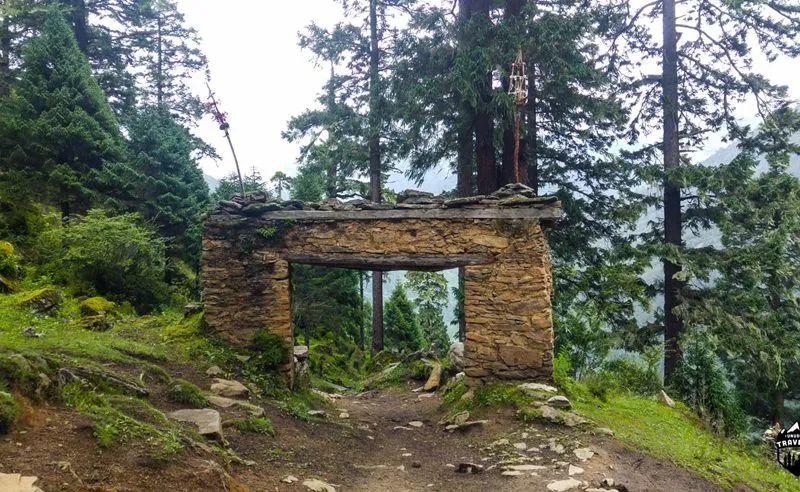
    The trail descends from Limithang through a damp, moss-hung forest filled with birdcalls before rising to the ancient stone gate that marks the boundary of Laya territory.

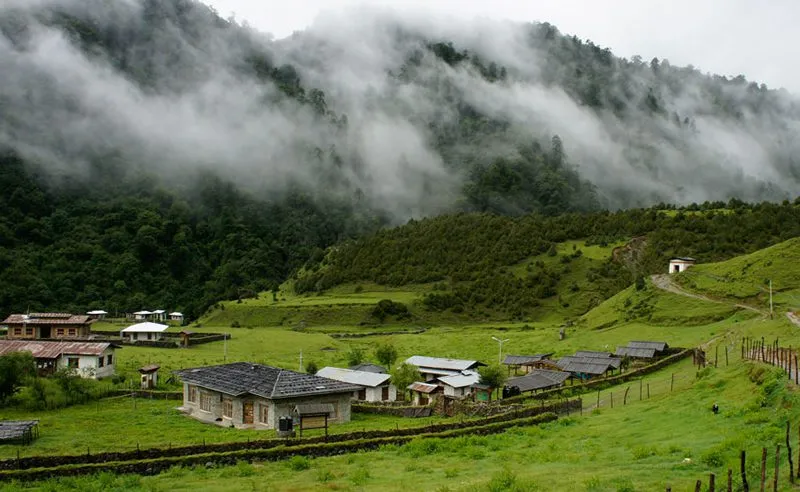
    The village appears gradually as the trail climbs the final approach, approximately 110–140 houses spread across a hillside at 3,840 m, backed by the walls of Tsendagang peak (7,100 m).

    The Layap people, with their distinctive pointed bamboo hats and traditional highland dress, are among the most ethnographically fascinating communities accessible to trekkers anywhere in the Himalayas. Accommodation: tented camp at Laya (3,840 m).

  • Day
    12

    Rest Day at Laya (3,840 m)

    A full day in Laya for acclimatization and cultural engagement. Guided walks through the village allow observation of traditional yak butter production, bamboo hat weaving, and barley cultivation.

    Village women sometimes stage traditional Layap circle dances and songs at camp in the evening. The army checkpoint above the village marks the boundary of the restricted zone. Permits are verified here.

    Optional walks to the monastery above the village or to nearby ridges with views toward the Tibetan Plateau. Accommodation: tented camp at Laya (3,840 m).

  • Day
    13

    Trek to Koina (3,050m)

    The trail winds up and down along the Mo Chu river, avoiding natural obstacles and affording breathtaking views of the crashing river, feeder streams and water-falls.

    The beginning of the trek is past an army camp and the route junction for the Snowman trek. Campsite at Koina is one of the worst campsites on this trek but need to be used due to non availability of camp sites or availability of water.

    Overnight at Camp. (Walking time 6-7 hrs)(Breakfast/Lunch/Dinner included)

  • Day
    14

    Trek to Gasa (2,770m)

    The route may seem all the way downhill but needs to cross the last pass on this trek – Barila pass at 3900m after which is all the way down hill till reaching camp. The camp is near the Gasa Dzong and village.

    Or can go further 1-1/2 hours to Gasa Tsachu (hotspring) if hot spring dip is preferred than the Gasa village. The decision should have been made at the start of the trek and the camp staff should have been informed.

    Overnight at Camp. (Walking time 6-7 hrs)(Breakfast/Lunch/Dinner included)

  • Day
    15

    Trek to Geon Damji (2,430m)

    Today’s trail winds through rolling hillsides with vistas of fields, villages and Oak and Pine forests. Gasa Dzong will be visible behind, glued to the valley wall.

    Today’s walk goes through small settlements and finally at camp of Geon Damji village – a large village with rice terraces on the hillsides.

    Overnight at Camp. (Walking time 5-6 hrs)(Breakfast/Lunch/Dinner included)

  • Day
    16

    Trek to Tashithang (1,840m) & drive to Punakha (1,310m)

    Starting at Geon Damji (2430m) and ending at vehicle point at Tashithang (1840m) From here it is 18 km (1 hour drive) to Punakha but the initial 5-6 km is unpaved.

    Overnight at Hotel. (Walking time 5 hrs)(Breakfast/Lunch/Dinner included)

  • Day
    17

    Punakha – Thimphu (2,350m)

    After early breakfast, drive towards Thimphu for about 3 hours passing along Dochu La Pass at 3140m. On clear weather, the pass commands a wonderful panorama of the Eastern Himalayas. From the pass, the road descends through varied forest and finally emerging into the highly cultivated valley of Punakha.

    En-route take a short hike through beautiful rice fields to Chimmi Lhakhang, a temple dedicated to Drukpa Kuenley, who as a favorite saint of the Bhutanese people is known affectionately as “the Divine Madman”.
    Overnight at Hotel.(Breakfast/Lunch/Dinner included)

  • Day
    18

    Thimphu Sightseeing – Paro (2,250m)

    Morning start the sightseeing with Zelukha Nunnery, National Library, Memorial Chorten of Late King, Handicrafts Emporium, Post Office and walk around Thimphu city for shopping of souvenirs from Bhutan.

    If this day falls on a Saturday or Sunday a visit to the Weekend Market is a must. After lunch drive to Paro en-route visit to Simtokha Dzong the first fort built in 1627-29 by Shabdrung who unified the Kingdom and continue the journey following the Thimphu River till Chuzom (Confluence) and taking the direction toward Paro following Pa-chu for 2 hours.

    Overnight at Hotel.(Breakfast/Lunch/Dinner included)

  • Day
    19

    Paro – Hike to Taktsang Monastery ‘Tiger’s Nest’ (3120m)

    After breakfast drive towards the base camp of Taktsang for the hike up to the Taktsang Monastery-Tiger’s Nest. It’s about two hours hike up the cafeteria. From this point, enjoy the spectacular view of the monastery, where Guru Padmasambhava landed on the back of a tigress in 8th century.

    Then visit the Taktsang Monastery and hike back to the road point then drive to Kyichu Lhakhang, one of the oldest and most sacred shrines in Bhutan and Paro Rinpung Dzong. Afterwards, back to hotel.

    Overnight at Hotel (Breakfast/Lunch/Dinner included)(Breakfast/Lunch/Dinner included)

  • Day
    20

    Paro Depart

    After breakfast, transfer to the airport to catch the onward flight. Bid farewell to the remote and legendary Dragon Kingdom disappearing again behind its guardian mountains.(Breakfast only included)

The Package Includes

  • Airport pick-up and drop-off by private vehicle.
  • 3-star accommodation (4 & 5 stars may require an additional premium).
  • Bhutan visa fee – including all necessary processing
  • Route Permit
  • Three meals per day during your stay in Bhutan
  • A licensed Bhutanese tour guide
  • All land transportation by private vehicle
  • Camping equipment and haulage for trekking tours
  • Sightseeing as per itinerary
  • Monuments entrance fees where applicable
  • Drinking water
  • All internal taxes and charges
  • A sustainable development fee of $100. (This sustainable development fee goes towards free education, free healthcare, poverty alleviation, along with the building of infrastructure.)

The Package Excludes

  • Airfare & Travel Insurance
  • Expenses of personal nature, tips to guides and drivers
  • Expenses occurred due to unavoidable events, i.e., road wrecks, flight delays, etc.

Frequently Asked Questions

1. What is the total cost of the 20-Day Laya Gasa Trek Bhutan?

Package pricing varies based on group size, travel season, hotel category selection, and optional add-ons such as personal porters.

2. What services are included and excluded in the package price?

Full inclusions are listed in Section 8 (Cost Includes) and exclusions in Section 9 (Cost Excludes). In summary: the package covers all permits, SDF, guide and crew, camping equipment, all meals, hotel accommodation in Paro/Punakha/Thimphu, in-country transportation, and guided sightseeing. International flights, travel insurance, personal gear, personal porter hire, and gratuities are not included.

3. How difficult is the Laya Gasa Trek in Bhutan and do I need prior experience?

The trek is rated as strenuous to difficult. Prior high-altitude trekking experience above 3,500 m is strongly recommended. Trekkers who have completed multi-day Himalayan routes (Everest Base Camp, Annapurna Circuit, or comparable) are well-positioned for this trek. No technical climbing skill is required, but sustained physical conditioning over 12–16 weeks before departure is essential.

4. What is the best season to do the Laya Gasa Trek in Bhutan?

Spring (mid-March to May) and autumn (September to mid-November) are both excellent. Spring offers rhododendron blooms and the Himalayan Blue Poppy; autumn delivers the clearest mountain visibility of the year. March–April and October are the optimal months within each window.

5. How cold does it get during the trek, especially in spring or autumn?

Night temperatures at high campsites (Jangothang, Shomuthang, and Laya) range from -4°C to -12°C depending on month and season. Daytime temperatures for trekking are 6–15°C at altitude. A four-season sleeping bag rated to -15°C comfort and a down jacket rated to -10°C are the minimum gear requirements for staying warm.

6. What type of accommodation is provided during trekking and at hotels?

Hotel stays in Paro, Punakha, and Thimphu are 3-star or equivalent standard with en-suite rooms and hot water. All trekking nights use our expedition-standard two-person mountain tents with insulated sleeping mats. A dining tent and toilet tent are erected at every campsite.

7. Do I need travel insurance? What should it cover?

Travel insurance is mandatory and must be confirmed before booking is finalized. The policy must cover: emergency medical treatment (minimum USD 100,000), helicopter evacuation from high-altitude trekking terrain (above 4,000 m), trip cancellation, and baggage. Standard policies that exclude activities above 3,000–4,000 m are not sufficient; confirm altitude coverage with your insurer.

.

8. How fit do I need to be for this 20-day trek?

You should be able to walk 15–22 km per day with a 6–10 kg daypack over 6–9 hours of continuous movement, at altitudes between 3,000 m and 4,220 m, for 14 consecutive days. You need to have cardiovascular fitness equivalent to regular running (30+ km/week) or hiking with a loaded pack (10+ km/week) as the baseline requirement. Start structured training at least 12 weeks before departure.

9. What permits are required, and does your company arrange them?

Yes, all permits are arranged entirely by Tour in Bhutan. Required permits include the Bhutan Tourist Visa, Tourist Permit, Trekking Permit, Jigme Dorji National Park Entry Permit, and Restricted Area Permit for Laya. All are included in the package and managed through our TCB-licensed operations process. Applications begin upon receipt of your booking confirmation and passport details.

10. How many acclimatization days are included?

Two full acclimatization rest days are included: Day 5 at Jangothang (4,090 m) and Day 12 at Laya (3,840 m). Both are mandatory components of the itinerary and cannot be removed. Optional exploratory day hikes on rest days support physiological adaptation through 'climb high, sleep low' protocols.

11. What is the group size, and can I join a group or book a private trip?

We accommodate groups of a minimum of 2 and a maximum of 10 trekkers per departure. Private departures can be scheduled on most dates within the trekking season. Small shared-group departures are available at a lower per-person cost. Contact us to confirm current shared group departures.

12. What kind of meals are provided during the trek?

All meals on trekking days are included. Breakfasts are hot and cooked: porridge, eggs, toast, tea, and coffee. Packed lunches are prepared each morning: sandwiches, energy bars, fruit, and cheese. Our crew cooks hot three-course dinners each evening. We accommodate vegetarian, vegan, and gluten-free diets with advance notice.

13. Can beginners attempt the Laya Gasa Trek in Bhutan for 20 days?

This trek is not recommended for beginners with no prior multi-day trekking or high-altitude experience. Trekkers who have only done short day hikes or low-altitude trails should build up to this route over one to two seasons, with progressively more demanding treks, before attempting the 20-day Laya Gasa itinerary. Our team can recommend preparatory treks in Bhutan or Nepal for those building toward this objective.

Cancellations made 30–60 days before departure forfeit 50% of the total package cost, while cancellations within 30 days are non-refundable; only a processing fee applies to cancellations made earlier. Full terms are provided in the booking agreement document

14. What equipment do I need to bring from home?

Key personal items that must be brought from home include broken-in waterproof trekking boots, a four-season sleeping bag (rated -15°C), a down jacket, waterproof outer layers, glacier sunglasses, a daypack, a duffel bag, and any prescription medications. See Section 19 for the full gear checklist. Our team provides a detailed pre-departure gear list upon booking confirmation.

15. How do I make a booking, and what are the payment and cancellation policies?

To book, contact Tour in Bhutan via our website's inquiry form or email to initiate a consultation, itinerary discussion, and cost quotation. A deposit of 25% is required to confirm the booking and begin permit applications. Full payment is due 45 days before departure. Cancellations made more than 60

Additional Trekking Info

Cost of Laya Gasa Trek Bhutan Package

The Laya Gasa Trek Bhutan – 20 Days is a private, high-altitude trekking expedition that requires careful planning and personalized arrangements. Since we customize each departure to suit the trekker's preferences and travel requirements, the final package cost varies based on several factors, including:

  • Number of trekkers joining the expedition
  • Preferred travel dates and trekking season
  • Accommodation category before and after the trek
  • Private group size and customized itinerary requirements
  • Additional services or special arrangements
  • Flight assistance and other travel arrangements within Bhutan

The Laya Gasa Trek is not offered as a fixed group departure with a standard price. Every expedition involves customized logistics, including trekking permits, a licensed Bhutanese trekking guide, camping equipment, kitchen crew, private transportation, and full support throughout the journey.

To provide an accurate quotation, our trekking specialists will first discuss your preferred travel dates, group size, trekking experience, and specific requirements. Based on this information, we will prepare a personalized Laya Gasa Trek Bhutan itinerary along with a detailed cost breakdown, package inclusions, and available customization options.

Whether you are planning a solo adventure, a private group trek, or a customized Himalayan expedition, our team is ready to help you choose the best itinerary for your schedule, experience level, and budget. There is no obligation to book. Contact our Bhutan trekking specialists today for a personalized quotation and start planning your Laya Gasa Trek Bhutan with confidence.

Who Can Do the Laya Gasa Trek in Bhutan – 20 Days?

The Laya Gasa Trek is designed for trekkers with solid physical fitness, prior multi-day hiking experience at altitude, and a realistic appreciation of the effort involved in sustained high-altitude camping over two weeks. This is not a beginner trek.

The route covers approximately 166 km of mountain terrain over 14 active trekking days, with several days exceeding 17–22 km and cumulative elevation gains of 700–900 m. Campsites sit between 3,050 m and 4,220 m for the majority of the route, and the physiological demands of sleeping and exercising above 3,500 m should not be underestimated.

This challenge suits trekkers who have completed multi-day trails such as the Annapurna Circuit, Everest Base Camp, or a comparable Himalayan route.

No technical climbing experience is required for the standard 20-day itinerary. All passes are trail passes, not ice or rock routes.

However, the combination of distance, altitude, remote terrain, and variable weather from late spring onwards requires specific preparation. Trekkers should complete at least 12–16 weeks of aerobic conditioning before departure, including regular hill walking with a loaded pack. 

Participants with well-managed cardiovascular health, normal blood pressure, and no history of high-altitude pulmonary or cerebral edema can attempt this trek safely when supported by a professional guide.

Those over 50 or with any pre-existing health conditions should obtain medical clearance before booking. Our team at Tour in Bhutan assesses readiness during the booking consultation and can recommend pre-trek training frameworks if requested.

Why Book the Laya Gasa Trek in Bhutan With Us?

  • We holds a current Tourism Council of Bhutan (TCB) license and is fully compliant with all 2025 government regulations covering SDF, permits, and approved trekking routes
  • Our in-country team manages all pre-departure logistics: visa application support, restricted area permits for Laya, national park fees, and trekking authorisation documents, so everything is ready on arrival in Paro
  • Every trek is led by a trained, English-speaking government-certified guide with a minimum of 5 years’ route experience on the Laya Gasa corridor, supported by experienced assistant guides and cook staff
  • All camping equipment, including four-season mountain tents, insulated sleeping mats, dining tents, and kitchen provisions, is maintained to professional expedition standards
  • Our itinerary incorporates two planned acclimatisation days and flexible protocols for altitude-related concerns, with guides trained in Wilderness First Aid and AMS recognition
  • We operate small groups (maximum 8-10 trekkers) to maintain trail sustainability, reduce campsite congestion, and deliver a more personalized experience
  • Transparent, itemised pricing with no hidden charges; the quoted package price covers all inclusions listed in this document
  • Post-booking support throughout the preparation period, including gear advice, fitness guidance, flight booking assistance, and pre-departure briefings

Notable Mountains Along the Laya Gasa Trek

Mount Jomolhari (7,326 m)

Mount Jomolhari, translating from Tibetan as ‘Mountain of the Goddess,' rises to 7,326 m on the Bhutan-Tibet border above the Paro valley and is considered one of the most sacred peaks in the Himalayan Buddhist tradition.

The mountain is revered as the residence of the goddess Jomo, protector deity of the region, and its name appears throughout religious texts connected to both the Drukpa Kagyu and Nyingma traditions of Vajrayana Buddhism. 

Jomolhari’s south face dominates the skyline above Jangothang Base Camp (4,090 m) and is visible from the campsite with extraordinary clarity on clear mornings.

The first ascent was made by Frederick Spencer Chapman and Sherpa Pasang Dawa Lama in May 1937; subsequent attempts on the mountain have been severely restricted by the Bhutanese government out of respect for its sacred status.

Trekkers on the Laya Gasa route spend two nights directly below this peak, and the unobstructed early-morning views of the summit pyramid from Jangothang are consistently described as the most visually powerful moment of the entire journey.

Gangchhenta / Great Tiger Mountain (6,678 m)

Gangchhenta, known in Bhutanese as ‘Great Tiger Mountain,' stands at 6,678 m in the northern Bhutan Himalayas and is the dominant peak visible from the middle section of the Laya Gasa Trek between Lingshi and Laya.

The mountain sits within Jigme Dorji National Park and has never been summited; like several of Bhutan’s high peaks, it remains off-limits to climbing in honor of its spiritual significance. 

Gangchhenta is particularly prominent above the Shomuthang and Robluthang campsites (Days 8–9), where the peak’s western ridgeline defines the northern horizon across the high plateau.

The accompanying Masang Gang massif (7,194 m) is also visible from Laya village, forming a dramatic northern backdrop to the settlement’s terraced hillside.

Best Season for Laya Gasa Trek Bhutan – 20 Days

Spring, running from mid-March through May, is the primary recommended window for the Laya Gasa Trek. March and April bring gradually clearing skies after winter, stable daytime temperatures at altitude (0–8°C at camp, rising to 12–18°C during active trekking hours), and the spectacular bloom of rhododendrons across the forested sections between 2,800 m and 3,800 m. 

The Himalayan Blue Poppy, Bhutan’s national flower, begins to emerge in meadows above 3,500 m in late April and peaks through May. Mountain visibility is generally excellent in March and April before the pre-monsoon haze builds in late May.

Wildlife is more active during spring: Takin calves appear in the Chebisa and Tsharijathang corridors, and bird activity peaks along the entire route. 

Late May carries an increasing risk of afternoon rain and early monsoon moisture, particularly in the lower valley sections.

Many trekkers favor autumn, from September through mid-November, for its exceptional post-monsoon mountain clarity, making it the second major trekking window.

September and October deliver the clearest high-altitude skies of the year; photographers can capture Jomolhari and Gangchhenta against intensely blue horizons with no atmospheric haze. 

Deciduous forest in the lower and mid-altitude sections turns gold and red through October, adding visual richness to the descent from Laya toward Gasa. Temperatures are slightly colder than in spring at equivalent altitudes; at Shomuthang and Laya, night temperatures can fall to between -8°C and -12°C in October.

The trail is dry and firm through this period. November becomes increasingly cold above 4,000 m and is not recommended for inexperienced groups. Winter (December–February) and the full monsoon period (June–August) are not suitable for this route.

Weather, Temperature & Climate Information

The Laya Gasa Trek corridor spans elevations from 1,310 m (Punakha) to 4,220 m (Shomuthang campsite), and weather conditions vary substantially across this range. In spring (March–May), daytime temperatures at Paro (2,250 m) range from 10–18°C; at Jangothang (4,090 m) and Shomuthang (4,220 m), daytime highs rarely exceed 8–10°C and can drop to -4°C overnight. 

Wind is the primary weather challenge above 4,000 m, particularly at the high campsites and on-pass crossings; wind speeds of 40–60 km/h are not unusual at the Nyele La approach and Jarila Pass.

In autumn, the same altitude bands run 3–5°C colder than spring equivalents; overnight temperatures at Laya (3,840 m) in October commonly reach -6°C to -10°C. Precipitation is rare in the trekking seasons: March–April brings occasional light snow above 4,000 m, while September–October is statistically the driest period of the year.

All trekkers should carry full waterproof layers, an insulated down or synthetic jacket rated to a minimum of -10°C, and a four-season sleeping bag. Each morning, guides give weather briefings based on current mountain conditions.

Required Permits

All trekking in Bhutan is regulated by the Tourism Council of Bhutan (TCB), and independent trekking is strictly prohibited.

Every permit is arranged and submitted by Tour in Bhutan before the trekker arrives in Paro; no permits are collected or paid separately on arrival. The following permits are required for the Laya Gasa 20-Day itinerary:

  • Bhutan Tourist Visa: Required by all nationalities except Indian, Bangladeshi, and Maldivian nationals. The application was submitted through TCB via a licensed operator, and the processing fee is USD 40 per person.
  • Bhutan Tourist Permit (Visitor Permit): The primary entry authorization document, collected at Paro Airport and carried throughout the trip. Issued by TCB.
  • Trekking Permit: Required for all multi-day trekking routes. The licensed operator applied for it and verified it at the trailhead before Day 2.
  • Jigme Dorji National Park Entry Permit: Required for trekking within the park boundaries, which encompasses most of the Laya Gasa Trek route from Sharna onward. Park entry fee is included in the package cost.
  • Restricted Area Permit (Laya): Laya is classified as a restricted zone under Bhutanese government regulation. A special restricted area permit is required and must be submitted in advance. The permit is checked at the Bhutan Army camp at Laya on Day 11 and again at the army post above Gasa village on Day 14. This permit is arranged entirely by our team.
  • Sustainable Development Fee (SDF): USD 100 per person per night for international tourists (excluding Indian, Bangladeshi, and Maldivian nationals who pay USD 15 per person per night). Collected by the operator and remitted to the government. Children aged 6–12 receive a 50% discount; children under 6 are exempt.

Difficulty

The Laya Gasa Trek is rated strenuous to difficult and sits at the harder end of Bhutan’s multi-day trekking spectrum. The difficulty derives from three compounding factors: sustained duration (14 consecutive trekking days), consistent high altitude (9 of 14 trekking days above 3,800 m), and daily walking distances that regularly exceed 17–22 km with significant elevation changes. 

The trail surface ranges from well-maintained forest paths in the lower sections to rocky glacial moraine, exposed ridgeline traverses, and boggy high-altitude meadow in the central section between Lingshi and Laya.

There are no technical climbing sections; all passes are walk-up trail passes requiring only hiking fitness. The most demanding single day is Jangothang to Lingshi (Day 6), which involves the approach to Nyele La (4,870 m) and covers 17 km in 6–7 hours with an ascent of approximately 880 m.

Trekkers should begin structured physical preparation at least 12 weeks before departure. A recommended training framework includes four to five cardiovascular sessions per week (running, cycling, stair climbing, or swimming); two to three loaded day hikes per week over progressively longer distances and elevation gains; core and leg strength training twice weekly; and at least two overnight backpacking trips with a pack of 8–10 kg in the eight weeks before departure. 

No specific technical skills are required beyond standard mountain awareness. Trekkers should be comfortable reading trail conditions, adjusting pace for altitude, and communicating physical symptoms clearly to guides.

Previous experience on multi-day Himalayan treks at altitudes above 3,500 m is strongly recommended but can be substituted with comparable high-altitude fitness work under the guidance of our pre-trek preparation team.

Physical and Mental Preparation

Preparing for a 20-day high-altitude trek in Bhutan requires a structured approach covering both physical conditioning and mental readiness.

The physical demands of the Laya Gasa Trek are not just cardiovascular; muscular endurance in the legs and core, the ability to maintain focus and decision-making under fatigue, and tolerance for consecutive days in remote terrain without modern conveniences are all tested.

A progressive 12–16 week preparation plan should address all of these dimensions.

  • Begin cardiovascular training 12–16 weeks before departure: target 45–60 minutes of moderate-to-vigorous aerobic exercise five days per week
  • Include at least two loaded hill or mountain hikes per week, progressively increasing pack weight from 6 kg to 10 kg over the preparation period
  • Complete at least two overnight trekking trips in the final eight weeks to simulate consecutive trekking days
  • Train specifically for descent: eccentric leg exercises, downhill hiking, and lunges reduce DOMS and knee strain on long descent days
  • Maintain consistent hydration habits during training: aim for 2.5–3 litres of water daily and practice drinking regularly on the move
  • Consult a physician regarding acetazolamide (Diamox) prophylaxis for altitude sickness; obtain prescription before departure if recommended
  • Build mental resilience: practise tent sleeping in variable weather conditions, cold exposure management, and sustained activity without digital distraction
  • Review the gear list (Section 19) thoroughly and conduct at least one full gear test hike in all major items before departure
  • Obtain comprehensive travel insurance covering high-altitude trekking and helicopter evacuation before finalising the booking

Accommodation & Meals

We provide pre- and post-trek accommodation in Paro, Punakha, and Thimphu in 3-star or equivalent standard hotels, selected for location, cleanliness, and service quality.

In Paro, the opening and closing nights are spent in valley-view hotels within easy walking distance of the town center; in Thimphu and Punakha, central properties with en-suite rooms, hot water, and Wi-Fi are standard.

Hotel breakfasts are included in the package; dinners on city nights are either included (as specified) or at the trekker’s choice from local restaurants, which our guide can recommend.

Accommodation on the trek (Days 2–16) is exclusively in tented camps managed by our crew. All tents are maintained to expedition standards: two-person mountain tents with waterproof fly sheets, insulated sleeping mats, and wind-resistant pegging systems.

Separate dining tents with folding tables and chairs are erected at each campsite. A separate cook’s kitchen tent and toilet tent are standard at every camp.

Trekkers are responsible for their sleeping bags and personal items; sleeping bags are not provided but can be rented on request (a four-season rated bag is strongly recommended: minimum -15°C comfort rating).

All meals on the trek are prepared by our trained cook and kitchen staff from fresh provisions carried by pack animals. Breakfasts include porridge, eggs, toast, tea, and coffee.

Packed lunches comprise sandwiches, energy bars, dried fruit, cheese, and seasonal items. Hot dinners are three-course meals featuring rice, lentils (dal), seasonal vegetables, meat dishes (chicken or yak beef on most days), soup, and dessert. 

Dietary requirements including vegetarian, vegan, and gluten-intolerant diets are fully accommodated with advance notice at the time of booking. Clean drinking water is provided at all campsites; water purification tablets are also carried by all guides.

Trekkers are strongly advised to carry personal water bottles or hydration systems with a minimum 2-liter capacity. At city hotels, breakfast is the only included meal. Thimphu, Punakha, and Paro all have restaurants serving both Bhutanese cuisine and international food; our guides can make recommendations and, where requested, facilitate group dinners at local restaurants that showcase authentic Bhutanese dishes such as ema datshi (chili and cheese), phaksha paa (pork with red chili), and red rice with fresh vegetables. Bhutan’s national food culture, centered on chili as both a a vegetable and a spice, is a memorable part of the overall journey.

Transportation

All surface transportation within Bhutan for the 20-day package is provided in private, air-conditioned Toyota Land Cruisers or equivalent 4WD vehicles with experienced government-registered drivers. Airport pickup on arrival day and drop on departure day are included. All inter-city drives for sightseeing days (Punakha to Thimphu, Thimphu to Paro) and the trek trailhead transfer (Paro to Sharna via Drukgyel Dzong) are included. 

The key vehicular section within the trek is the Day 16 drive from Tashithang to Punakha along the Mo Chhu valley road (approximately 1 hour). International flights to and from Paro are not included in the package. Paro is served exclusively by Bhutan’s two national airlines Druk Air and Bhutan Airlines, with connections through Bangkok, Delhi, Kolkata, Kathmandu, Mumbai, and Singapore. 

Our team can assist with flight booking on request; Paro flight inventory is limited and early booking (3–6 months ahead) is strongly recommended for spring and autumn departures.

Travel Insurance

Comprehensive travel insurance is mandatory for all participants on the Laya Gasa Trek Bhutan 20-Day package and must be arranged before the booking is confirmed. The policy must include emergency medical treatment covering a minimum of USD 100,000; helicopter medical evacuation coverage specifically for high-altitude trekking above 4,000 m; trip cancellation and curtailment (recommended minimum USD 5,000); baggage and personal effects cover; and personal liability. 

Standard travel insurance policies often exclude high-altitude trekking above 3,000 m or 4,000 m; trekkers must verify that their policy explicitly covers activities at the altitudes encountered on this itinerary. Providers with proven Himalayan trekking coverage include World Nomads, Battleface, Safety Wing (Adventure plan), IMG Global, and Ripcord Rescue Travel; however, we recommend independent verification of specific policy terms before purchase. 

Proof of valid insurance must be submitted to Tour in Bhutan before departure documents are released. In the event of a medical emergency requiring helicopter evacuation, our guides coordinate with the nearest Bhutanese medical facility and the helicopter operator directly; insurance documentation must be accessible to the guide throughout the trek.

Gear & Equipment Checklist

Footwear & Lower Body

  • Waterproof mountain trekking boots with ankle support (broken in before departure — critical)
  • Camp shoes or lightweight sandals
  • Thermal base layer tights or leggings (2 pairs)
  • Trekking trousers, quick-dry (2 pairs)
  • Thick trekking socks (5–6 pairs wool or synthetic)
  • Liner socks (3–4 pairs)
  • Waterproof gaiters (for muddy passes and spring snow)

Upper Body & Insulation

  • Moisture-wicking base layer tops (3–4, long-sleeved)
  • Mid-layer fleece jacket
  • Down or synthetic insulated jacket (rated to -10°C minimum)
  • Waterproof, windproof hardshell jacket with hood
  • Softshell jacket (optional but useful for active trekking in cool conditions)

Sleeping & Camp

  • Four-season sleeping bag (comfort rating -15°C recommended; silk liner extends warmth)
  • Sleeping bag liner
  • Trekking poles (adjustable; strongly recommended for descents and pass crossings)

Head, Hands & Sun Protection

  • Warm beanie hat and balaclava or neck gaiter for high camps
  • Sun hat or peaked cap for daytime trekking
  • Lightweight gloves and warm insulated gloves for passes and cold mornings
  • Glacier sunglasses (UV400 or CE EN ISO 12312-1 category 3–4 for high-altitude snow glare)
  • High-SPF sunscreen (SPF 50+) and lip balm with UV protection

Pack & Carry

  • Trekking daypack (25–30 litres) for daily essentials
  • Main duffel bag (70–80 litres) for equipment carried by pack animals (maximum 15 kg)
  • Dry bags or waterproof pack liners (critical for valuables and electronics)
  • Small padlocks for duffel bag security

Health & Safety

  • Personal first aid kit: blister plasters, surgical tape, antiseptic wipes, ibuprofen, paracetamol, antihistamine, diarrhoea treatment, rehydration sachets
  • Prescription medications, including any altitude sickness prophylaxis (Diamox/acetazolamide) if prescribed
  • Personal water bottle (minimum 1 litre) or hydration bladder (2 litres)
  • Water purification tablets as backup
  • Hand sanitiser and biodegradable wet wipes

Technology & Documents

  • Headlamp with spare batteries (LED, minimum 200 lumens)
  • Portable power bank (20,000 mAh minimum; charging on trek is not available except at hotels)
  • Camera with spare batteries and memory cards
  • Passport, visa documents, permit copies (keep originals on person; secure copies separately)
  • Travel insurance documents with emergency contact numbers (accessible to guide)

Altitude Sickness & Prevention

Altitude sickness (Acute Mountain Sickness, AMS) is the most significant health risk on the Laya Gasa Trek and requires active management by every participant. AMS occurs when the body cannot adapt quickly enough to the reduced atmospheric oxygen pressure at altitude, typically above 2,500 m. 

On this itinerary, trekkers are at meaningful altitude risk from Day 3 onward (Thangthangka, 3,630 m) and remain above 3,800 m for nine of the fourteen trekking days. The two acclimatization rest days at Jangothang (4,090 m) and Laya (3,840 m) are medically significant and must not be skipped. Guides are trained in AMS recognition and carry emergency medication; however, individual awareness of symptoms is essential for safe trekking.

Symptoms of AMS (mild to moderate)

  • Persistent headache not relieved by standard analgesics
  • Fatigue and weakness disproportionate to exertion
  • Loss of appetite, nausea, or vomiting
  • Disturbed sleep or insomnia
  • Dizziness and mild disorientation

Symptoms requiring immediate descent (HAPE / HACE)

  • Severe headache with confusion, disorientation, or loss of coordination (HACE – High Altitude Cerebral Oedema)
  • Breathlessness at rest, persistent cough, or frothy/pink sputum (HAPE – High Altitude Pulmonary Oedema)
  • Inability to walk in a straight line
  • Extreme fatigue preventing forward movement

Prevention protocols

  • Follow the ‘climb high, sleep low’ principle: the daily net altitude gain at campsites is managed within 300–500 m above 3,000 m
  • Maintain fluid intake of 3–4 litres per day throughout the trek
  • Avoid alcohol at altitude; limit caffeine
  • Eat regular carbohydrate-rich meals to support metabolism under low-oxygen conditions
  • Report any symptoms immediately to your guide; never assume symptoms will resolve without action
  • If symptoms do not improve with one night of rest at the same altitude, the default response is descent; no schedule pressure justifies continuing with active AMS
  • Acetazolamide (Diamox) prophylaxis: Discuss with your physician before departure; standard preventive dose is 125–250 mg twice daily beginning 24 hours before ascent to altitude

Emergency and Medical Evacuation Services

Bhutan has an established emergency medical evacuation infrastructure that our team activates in the event of a serious medical incident on a trek. Our senior guides carry satellite communication devices and maintain direct contact with Tour in Bhutan's Paro operations center throughout the trek. In the event of AMS progression to HACE or HAPE, the immediate response is assisted rapid descent; our support crew carries Gamow bags (portable hyperbaric chambers) and supplemental oxygen on request. 

For trauma injuries, acute illness, or any condition requiring hospitalization, helicopter evacuation is available through Bhutan Government helicopter services operating from Punakha and Paro. Evacuation is coordinated through our operations center and requires the trekker’s travel insurance documentation; this procedure underlines the non-negotiable requirement for comprehensive trekking insurance before departure. 

The nearest hospital with surgical capacity to the trekking route is Punakha District Hospital; Thimphu National Referral Hospital (Jigme Dorji Wangchuck National Referral Hospital) provides the highest level of in-country care. For cases requiring international medical facilities, evacuation is to Kolkata or Bangkok depending on the treating physician’s recommendation. 

Guide and Porter

All Bhutan trekking packages must be accompanied by a government-certified guide; independent trekking is not permitted by law. We assign a senior English-speaking lead guide with a minimum of five years’ specific experience on the Laya Gasa corridor to each group. 

In larger groups, assistant guides accompany the rear and midsection of the trekking party to maintain pace management and monitor trekkers individually. Our lead guides hold first aid certification with wilderness protocols, carry emergency medication kits, and receive regular refresher training on AMS recognition and management. 

The support crew includes a trained cook, kitchen assistant, and horsemen who manage pack animal logistics. The horse handlers and pack animals carry all group camping equipment, kitchen provisions, and surplus communal gear; individual trekkers carry their own daypack with daily essentials. 

Personal porters for trekkers' duffel bags are available at an additional cost and can be arranged at booking; the standard weight limit for pack animal transport is 15 kg per trekker.

Important Notes

  • Bhutan does not permit independent trekking; every trekker must be accompanied by a TCB-licensed agency’s certified guide throughout the itinerary
  • The Laya Restricted Area Permit requires advance submission to TCB; applications through Tour in Bhutan should be initiated a minimum of 4–6 weeks before departure to guarantee processing
  • The SDF rate of USD 100 per person per night is fixed until August 2027 under the current TCB framework; verify current rates at the time of booking
  • The itinerary is designed with two mandatory rest days at Jangothang (Day 5) and Laya (Day 12) that cannot be shortened; doing so creates unacceptable altitude risk for subsequent days above 4,000 m
  • Pack animals (horses or mules) are used for group equipment; there are no wheeled vehicles accessible beyond the Sharna trailhead until Tashithang on Day 16; the trek is fully self-sufficient once underway
  • Mobile network coverage is absent throughout the trekking section (Days 2–16); satellite communication devices are carried by our guides and are the only reliable communication method in the backcountry
  • All waste generated on trek is carried out of the national park; no litter is left at campsites or on trail; trekkers should carry personal waste bags and follow Leave No Trace principles
  • Photography inside temples, dzongs, and religious sites is subject to restrictions; follow your guide’s direction and respect signage; drone photography in Bhutan requires a separate government permit not included in the standard package
  • Currency: The Bhutanese Ngultrum (BTN) is pegged 1:1 to the Indian Rupee; USD and major currencies are exchangeable at Paro Airport and banks in Thimphu and Paro; no currency exchange is available on the trekking section
  • The Bhutanese government bans plastic bags; trekkers should bring reusable bags and eco-friendly toiletry containers; biodegradable soap and shampoo are mandatory on all national park sections of the route
  • Altitude medication (Diamox) is not available over the counter in Bhutan; trekkers who have received a physician’s recommendation should bring an adequate supply from their home country
  • Booking cancellations made more than 60 days before departure incur a processing fee; cancellations within 30–60 days forfeit 50% of the package cost; cancellations within 30 days forfeit the full cost. Detailed cancellation terms are provided in the booking agreement

Book Your Laya-Gasa Trek Bhutan Expedition

The Laya Gasa Trek in Bhutan is one of the country's most spectacular Himalayan trekking adventures, combining breathtaking mountain scenery, authentic Bhutanese culture, and remote wilderness into an unforgettable journey.

Whether you are planning a private trek with friends, a challenging Himalayan adventure, or a once-in-a-lifetime journey through the remote villages of Laya and Gasa, our experienced Bhutan trekking team will create a personalized itinerary designed around your interests, fitness level, and travel schedule.

Ready to Experience the Laya Gasa Trek in Bhutan?

Contact our Bhutan trekking specialists today to:

  • Check available departure dates
  • Discuss your trekking experience and fitness level
  • Receive a customized Laya-Gasa Trek itinerary
  • Get your personalized quotation
  • Understand permits, logistics, and equipment requirements

Start Planning Your Laya-Gasa Trek Bhutan Adventure Today

Your journey through Bhutan's pristine Himalayan landscapes begins with a conversation. Contact our Bhutan trekking experts today and start planning your Laya Gasa Trek Bhutan with confidence.

Trip Reviews

[trustindex no-registration=google]
TripAdvisor
Rated Excellent by our travellers
★★★★★
"Best Bhutan Tour Operator"
"Aura Trails made our Bhutan trip absolutely unforgettable. Every detail was perfectly planned."
Sarah M.
Australia · Cultural Tour
TripAdvisor
★★★★★
"Exceeded All Expectations"
"From landing in Paro to our last day in Thimphu, everything was seamless. Highly recommend!"
James K.
USA · Trekking Tour
TripAdvisor
★★★★★
"A Dream Come True"
"The festival tour was magical. Our guide Karma was exceptional — so much local knowledge and warmth."
Emma L.
UK · Festival Tour
TripAdvisor
Read All Reviews on TripAdvisor →