
Black-Necked Crane Festival Tour

7 Days 6 Nights

Celebrate Bhutan’s remarkable wildlife and cultural heritage with our 7-day Black-Necked Crane Festival Tour. Journey to the beautiful Phobjikha Valley to witness the arrival of the rare black-necked cranes, enjoy traditional performances, and experience Bhutanese hospitality amidst stunning Himalayan landscapes. This tour combines nature, conservation, and local culture for an unforgettable Bhutan adventure.

  • Full board (breakfast, lunch and dinner)
  • Government approved 3 stars and Above
  • Private car, van or bus (Depends on group size)

Overview

Highlights of Black-Necked Crane Festival Tour

  • Attend the 2026 Black-Necked Crane Festival at historic Gangtey Monastery in Phobjikha Valley

  • Witness the famous Black-Necked Crane Dance and vibrant traditional Cham mask dances

  • Observe endangered black-necked cranes in one of their most important winter habitats

  • Explore the breathtaking Phobjikha Valley, renowned for its wetlands, forests, and glacial landscapes

  • Visit the sacred Gangtey Monastery, the spiritual heart of the valley

  • Learn about crane migration and conservation at the Black-Necked Crane Information Centre

  • Experience authentic Bhutanese culture through folk music, local traditions, and community celebrations

  • Discover traditional villages and enjoy genuine interactions with residents

  • Cross Dochula Pass (3,100 m) for spectacular Himalayan mountain views

  • Explore the magnificent Punakha Dzong, one of Bhutan's most beautiful fortresses

  • Visit the cultural landmarks of Thimphu, Bhutan's capital city

  • Hike to the iconic Tiger's Nest Monastery (Paro Taktsang), Bhutan's most famous landmark

  • Travel with experienced local Bhutanese guides and comfortable private transportation throughout the journey

Quick Facts 

Our 7-day Black-Necked Crane Festival Tour combines Bhutan's most famous cultural landmarks with one of the country's most important wildlife events. 

Attend the Black-Necked Crane Festival in Phobjikha Valley, explore Gangtey Monastery, Punakha Dzong, Thimphu, and Paro, and complete your journey with a hike to the iconic Tiger's Nest Monastery

The tour includes experienced local guides, comfortable hotels, private transportation, daily meals, and Bhutan visa assistance.

Trip Duration7 Days 
Festival Date11 November 2026
DestinationPhobjikha Valley, Bhutan
Best SeasonNovember
Meals Breakfast, Lunch & Dinner 
Group Size 2–12 People (Private Tours Available) 
Transportation Private Tourist Vehicle 
Tour TypeWildlife & Cultural Tour
DifficultyEasy to Moderate
Maximum Altitude3,120 m (Tiger's Nest)
Accommodation3-Star Hotels (Luxury Upgrades Available) 

Overview of Black-Necked Crane Festival Tour

The Black-Necked Crane Festival Tour is an unforgettable 7-day journey that combines Bhutan's rich Buddhist heritage, spectacular Himalayan landscapes, and one of Bhutan's most distinctive wildlife and cultural festivals.

Held annually at historic Gangtey Monastery in the beautiful Phobjikha Valley, the festival marks the arrival of endangered Black-necked cranes that migrate from the Tibetan Plateau to Bhutan each winter. 

Unlike Bhutan's traditional religious festivals, the Black-Necked Crane Festival brings together colorful cultural performances, Buddhist traditions, community celebrations, and conservation awareness, creating a unique experience found nowhere else in the Himalayas.

This trip caters to travelers with limited time. We carefully planned the itinerary showcasing Bhutan's most iconic destinations while ensuring you experience the festival at its best.

You will explore the vibrant capital of Thimphu, admire the breathtaking Himalayan views from Dochula Pass, visit the magnificent Punakha Dzong, and spend unforgettable moments in the tranquil Phobjikha Valley observing Black-necked cranes in their natural habitat. 

Our journey concludes with a rewarding hike to the legendary Tiger's Nest Monastery, Bhutan's most famous landmark, perched dramatically on a cliff above the Paro Valley.

This trip offers the perfect opportunity to witness one of Bhutan's most meaningful annual celebrations during the country's beautiful autumn. 

With experienced local Bhutanese guides, comfortable accommodations, daily meals, private transportation, and seamless travel arrangements, the Black-Necked Crane Festival Tour Package provides an unforgettable introduction to Bhutan's extraordinary culture, spectacular landscapes, and inspiring commitment to wildlife conservation.

Black-Necked Crane Festival Dates: 2026, 2027 & 2028

YearDatesDurationVenue
202611 November 20261 DayGangtey Goenpa, Phobjikha Valley
202711 November 20271 DayGangtey Goenpa, Phobjikha Valley
202811 November 20281 DayGangtey Goenpa, Phobjikha Valley

Note: Festival dates are based on the Bhutanese lunar calendar and should be reconfirmed before finalizing travel plans. We recommend booking your Black-Necked Crane Festival at least 3–4 months in advance, as flights and premium accommodations fill quickly during festival season. 

What is the Black-Necked Crane Festival?

The Black-Necked Crane Festival is one of Bhutan’s most unique festivals, held every year in November at Gangtey Monastery, located in the Phobjikha Valley.

The celebration was organized for the first time in 1998 to commemorate the arrival of the endangered black-necked cranes, which migrate from the Tibetan Plateau to Bhutan every winter.

Unlike Bhutan’s traditional tshechus, the Black-Necked Crane Festival is a cultural and environmental event that focuses on both the local wildlife and Buddhist traditions.

The main aim of the festival is to raise awareness about the need to protect the endangered species and the local wetland in Phobjikha Valley, which serves as the winter habitat for the cranes.

Local communities, schools, monasteries, and conservation groups participate in and support the event. The festival’s unique events and activities are held to promote environmental sustainability and tourism, as well as to highlight the importance of conservation efforts and local culture.

The Black-Necked Crane Festival centers on conserving the local wetland and wildlife, and its rich program reflects this commitment.

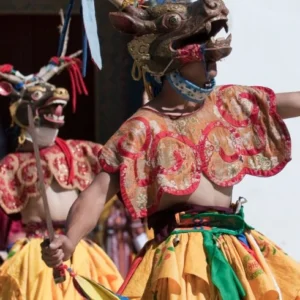
The organizers of the event offer a variety of cultural and educational activities for visitors, which include the traditional Black-Necked Crane Dance performed by local schoolchildren, as well as the Cham Dance performed by Buddhist monks.

In addition, attendees can enjoy traditional music and folk performances and visit the Black-necked Crane Information Centre and the local community.

Moreover, visitors can observe the black-necked cranes in their natural habitat and take part in the numerous conservation activities organized by local conservation groups.

The Black-Necked Crane Festival is a wonderful opportunity to enjoy Bhutan’s local culture and natural beauty while supporting the local communities and conservation efforts.

Black Necked Crane Festival Tour Itinerary

  • Day
    01

    Arrival Paro (2,250m) – Thimphu (2,350m)

    Arrive in Paro on the Bhutanese National Carrier (Druk Air), flying over the world’s highest mountains and finally landing in the lush green Paro valley. Cool and clean air greets the visitor as they step down from the plane, the first gift of Bhutan.

    After clearing customs and visa formalities, you will meet our representatives and the Bhutanese guide, who will provide a short tour briefing before transferring to Paro town for lunch.

    Then drive towards Thimphu, the capital of Bhutan, for about half an hour. En route to Thimphu, you can do a short hike to Tamchog Monastery, a private temple owned by the descendants of famous Tibetan bridge builder Thangthong Gaylpo. Later on, we continue the drive to Thimphu.

    In Thimphu, you will visit Buddha Point for a stunning view of the city and the Takin Compound. On the way to the viewpoint, you will pass the home of Bhutan’s national animal, the Takin.

    Then continue to Tashi Choe Dzong, the fortress of the glorious religion, which was initially constructed in 1641 and rebuilt by King Jigme Dorji Wangchuk in the 1960s, and then visit the Folk Heritage Museum, a 300-year-old traditional house converted into a museum, and the Centenary Farmers Market, the new authentic craft bazaar.

    Overnight at Hotel (lunch/dinner included)

  • Day
    02

    Thimphu – Wangdue – Gangtey (2,900m)

    After breakfast, we drive towards Gangtey via Wangdue. The road climbs steeply through a forest of pine and cedar, festooned with hanging lichen high up near Dochula Pass (3,050 m). This pass often offers panoramic views of the Himalayan mountain ranges on a clear day.

    After stopping for tea, descend along a series of hairpin bends to reach the fertile valley of Wangdue.

    Short visit to view the Wangdue Phodrang Dzong, dramatically located on the spur of a hill at the confluence of the Tsang Chu and Dang Chu rivers. Then a gradual climb goes into the valley of Gangtey (Phobjikha).

    There is an old monastery of Gangtey Gompa dating back to the 17th century. A few kilometres past the Gompa, on the valley floor, lies the fascinating Phobjikha Valley.

    The gently sloping hillsides of Phobjikha are described as “the most beautiful valley in the Himalayas."

    Overnight at Hotel. (Breakfast/Lunch/Dinner included)

  • Day
    03

    In Gangtey – Attend the festival

    After breakfast, join with the locals in their Crane Festival at the Gangtey Monastery. The monastery dates back to the 17th century. The valley of Phobjikha is well known as the winter home of the black-necked crane (Grus Nigricollis).

    Bhutan is home to around six hundred black-necked cranes, with Phobjikha being one of the popular places that the birds migrate to in the winter months from the Tibetan plateau. The elegant and shy birds You can observe the elegant and shy birds from early November to the end of March.

    Overnight at Hotel. (Breakfast/Lunch/Dinner included)

  • Day
    04

    Gangtey – Punakha (1,310m)

    Today we drive from Gangtey to Punakha, which takes about three-and-a-half hours. En route, take a short hike through beautiful rice fields to Chimmi Lhakhang, a temple dedicated to Drukpa Kuenley, who, as a favorite saint of the Bhutanese people, is affectionately known as “the Divine Madman." "The Divine Madman."

    And Punakha Dzong, located at the confluence of the Pho-chu (male river) and Mo-chu (female river), is arguably the most impressive dzong in the country.

    Overnight at Hotel. (Breakfast/Lunch/Dinner included)

  • Day
    05

    Punakha – Paro (2,250m)

    After breakfast, we trace the route back to Paro, which is about a four-and-a-half-hour drive. After lunch, visit Ta Dzong. Ta Dzong, once a watchtower, was built to defend Rinpung Dzong during inter-valley wars of the 17th century. It was inaugurated as Bhutan’s National Museum in 1968.

    Afterwards, visit Rinpung Dzong.  Rinpung Dzong was built in 1646 by Shabdrung Ngawang Namgyal, the first spiritual and temporal ruler of Bhutan; the Dzong continues its age-old function as the seat of the district administration, district court and monastic body.

    The southern approach to the Dzong has a traditional roofed cantilever bridge called Nemi Zam.

    (Breakfast/Lunch/Dinner included)

  • Day
    06

    Paro – Hike to Taktsang Monastery (3,120m)

    Early in the morning, we drive towards the base camp of Taktsang for the hike up to the Taktsang Monastery, the ‘Tiger’s Nest’. It’s about a two-hour hike up to the cafeteria. From this point, enjoy the spectacular view of the monastery, where Guru Padmasambhava landed on the back of a tigress in the 8th century.

    Afterwards, hike back to the road and drive towards Drukgyal Dzong, the ruined fort.  This fort once defended this valley against Tibetan invasions in the 17th century. Also visit the local farmhouse at Drukgyal to witness the daily life of the Bhutanese people.

    Later on, we drive to Kyichu Lhakhang, one of the oldest and most sacred shrines in Bhutan. PM: Stroll around the main shopping district in Paro.

    Overnight at the hotel (breakfast/lunch/dinner included).

  • Day
    07

    Paro Depart

    After breakfast, your memorable Black-Necked Crane Festival Tour comes to an end. Our guide will take you to Paro International Airport and help you with the departure process.

    As you leave Bhutan, take with you wonderful memories of the Black-Necked Crane Festival, the beautiful Phobjikha Valley, ancient monasteries, friendly local people, and Bhutan’s unique culture.

Cost Includes:

  • Airport pick-up and drop-off by private vehicle.
  • 3-star accommodation (4 & 5 stars may require an additional premium).
  • Bhutan visa fee—including all necessary processing
  • Route Permit
  • Three meals per day during your stay in Bhutan
  • A licensed Bhutanese tour guide
  • All land transportation by private vehicle
  • Camping equipment and haulage for trekking tours
  • Sightseeing as per itinerary
  • Monuments entrance fees where applicable
  • Drinking water
  • All internal taxes and charges
  • A sustainable development fee of $100. (This sustainable development fee goes towards free education, free healthcare, poverty alleviation, along with the building of infrastructure.)

Cost Excludes:

  • Airfare & Travel Insurance
  • Expenses of personal nature, tips to guides and drivers
  • Expenses occurred due to unavoidable events, i.e., road wrecks, flight delays, etc.

Frequently Asked Questions

1. What is the Black-Necked Crane Festival?

The Black-Necked Crane Festival is an annual cultural and environmental conservation event that celebrates the endangered Black-necked Crane's migration to the valley. The festival features traditional Cham mask dances, the Black-Necked Crane dance, folk performances, and exhibitions about the Black-Necked Crane.

2. Where is the Black-Necked Crane Festival held?

The Black-Necked Crane Festival is held at Gangtey Monastery in the Phobjikha Valley, Wangdue Phodrang District of Bhutan. In fact, this valley hosts one of Bhutan’s most significant wintering flocks of the rare black-necked crane during the winter season.

3. When can one see black-necked cranes in Bhutan?

One can see black-necked cranes in Bhutan in Phobjikha Valley from the end of October until late February or early March. However, November is the best time to see the Black-necked crane due to the Black-Necked Crane Festival, which is celebrated every year at Gangtey Monastery.

4. Are there any restrictions on attending the Black-Necked Crane Festival?

No. The Bhutanese government allows international visitors to take part in the Black-Necked Crane Festival. However, travelers must book with a Bhutan travel agency licensed to host foreign tourists. The agencies offer visa processing, accommodation, and tour packages.

5. Why do the black-necked cranes migrate to Bhutan?

The black-necked crane migrates to Bhutan because of the suitable climate and habitats in the Phobjikha Valley. For instance, the valley has wetlands, open farms, and clear landscapes that provide enough food and favorable roosting areas for the birds during their migration from the Tibetan plateau.

6. How does one get to Phobjikha Valley?

Visitors can access the valley from Paro International Airport. The road to Phobjikha Valley passes through the Dochula Pass, Thimphu, and Punakha. Moreover, it takes six to seven hours to reach the valley from Paro.

7. How much does the Black-Necked Crane Festival Tour cost?

The price of our Black-Necked Crane Festival tour depends on several factors, including group size, hotel category, and extra options chosen. Our 7-day package comprises accommodation, all meals, a private vehicle, a local Bhutanese guide, and visa assistance. We also offer luxury upgrades and custom private Bhutan tours on request. Contact us for more details regarding prices of our Black-Necked Crane Festival tour.

8. When is the Black-Necked Crane Festival in 2026?

The Black-Necked Crane Festival 2026 will be held on 11 November 2026 at Gangtey Monastery in Phobjikha Valley.

9. How many Black-necked cranes come to Bhutan?

About 500 to 700 black-necked cranes migrate to Bhutan to spend the winter in Phobjikha Valley. However, the number fluctuates from year to year.

10. Is the Black-Necked Crane Festival family-friendly?

Yes, the family-friendly Black-Necked Crane Festival is perfect for families, couples, solo travelers, photography lovers, birdwatching enthusiasts, and all types of travelers. Children love the cultural performances during the festival.

11. Are there other birds to see apart from the black-necked cranes?

Apart from the black-necked cranes, you might also spot ducks, geese, pheasants, raptors, and other migratory and resident Himalayan birds.

12. Do I need any birdwatching experience for the Black-Necked Crane Festival?

Not necessarily. Birdwatching is fun, and you can bond with fellow travelers and your local guide while discovering the migratory and resident birds of Phobjikha. Your local guide can also help you identify different species of birds and share fascinating information about them.

13. What are the best clothes to wear during the Black-Necked Crane Festival?

Since November mornings and evenings can be chilly in Phobjikha Valley, it is advisable to carry some warm clothing. We recommend bringing sunglasses, a hat, a warm jacket or sweater, and comfortable walking shoes for the festival.

14. Can I take photos and videos of the Black-Necked Crane Festival and the cranes?

You can capture wonderful photos and videos of the Black-Necked Crane Festival and the cranes. However, you should stay away from the religious rituals and ceremonies to avoid causing discomfort to the locals. You should also avoid using drones to take photos and videos of the cranes. If you are keen on taking pictures of the cranes, ask your local guide to assist you.

15. Can I customize my Black-Necked Crane Festival Tour?

Yes, we offer customizable Black-Necked Crane Festival tours. For instance, you can consider adding Bumthang, Haa Valley, and Trongsa to your travel plan, as they are some of Bhutan’s most scenic and charming destinations. We will be glad to customize your perfect Bhutan adventure tour.

16. What makes the Black-Necked Crane Festival unique?

The Black-Necked Crane Festival is one of Bhutan’s most unique festivals, as it is not only a Tshechu but also a wildlife event. Unlike most of Bhutan’s Tshechus, which are mainly religious festivals, the Black-Necked Crane Festival also supports the conservation of the black-necked crane.

17. Do I need to book the Black-Necked Crane Festival tour ahead of time?

Yes, most hotels in Bhutan are booked long before the start of the Black-Necked Crane Festival, which is one of the country’s most popular events alongside the Paro Tshechu. If you need any assistance with accommodation and visa support, contact us.

Additional Trip Info

Why Visit the Black-Necked Crane Festival in Bhutan?

1) Witness the Arrival of Rare Himalayan Cranes

Every year in autumn, hundreds of endangered black-necked cranes make their way from the Tibetan Plateau to the Phobjikha Valley in Bhutan for the winter. The event is celebrated nationwide as a sign of peace, harmony, and good fortune.

The Black-necked Crane Festival is one of the most anticipated festivals in Bhutan, as the valley is one of the most important wintering grounds for the rare bird species.

The festival is a great opportunity to witness the unique and beautiful black-necked cranes and learn about the conservation work carried out in the kingdom for the bird species and wetland preservation.

2) Experience Bhutan's Unique Nature Festival

Unlike Bhutan’s traditional festivals, which focus solely on religious celebrations, the Black-Necked Crane Festival also emphasizes cultural and environmental aspects. The animals’ migration to Gangtey Monastery coincides with the local Cham dancing festival.

The event is marked by traditional music and dances, including the Black-Necked Crane dance performed by local schoolchildren, as well as cultural performances and awareness events about the birds’ conservation. Local people, monks, students, conservation groups, and ordinary tourists join the dance to mark the day and express their respect for the bird and its habitat.

3) Explore the Beautiful Phobjikha Valley

The Black-necked Crane Festival is held in the beautiful Phobjikha Valley, an idyllic glacial valley cradled by pine forests, hills, marshes, and traditional Bhutanese villages. Enjoy nature walks, birdwatching, and insights into Bhutanese rural life.

An exciting cultural event showcasing Bhutan's serene landscape, set in one of the country’s most isolated and least explored regions.

4) Visit Gangtey Monastery

Gangtey Monastery is considered one of the country’s richest Nyingma Buddhist monasteries with superb traditional Bhutanese architecture, wooden carving, and painting. Perched on a hill overlooking the Phobjikha Valley, Gangtey Monastery offers a spectacular view of the valley, attracting locals and visitors to come and enjoy the wonderful sight during the festival.

The event provides a wonderful opportunity for participants and spectators to experience Bhutanese culture and traditions and learn more about the country’s unique historical places and their rich cultural heritage.

How Much Does a Black-Necked Crane Festival Tour Cost?

Planning a trip to Bhutan is a unique experience. The cost of the Black-Necked Crane Festival Bhutan Tour depends on how keen you are to explore this beautiful Himalayan kingdom. Unlike standard holiday packages with fixed prices, every Bhutan journey is customized according to your travel preferences, interests, and budget, unlike standard holiday packages with fixed prices.

The total cost of our Bhutan trip may vary based on several factors, including:

  • Number of travelers: Private tours, family holidays, and group trips have different pricing structures.

  • Accommodation choice: Select from comfortable 3-star hotels, premium 4-star stays, luxury 5-star properties, or exclusive luxury accommodations.

  • Travel season and dates: Bhutan tour costs can change depending on peak seasons, festivals, and travel availability.

  • Trip duration: The number of days you spend exploring Bhutan’s cultural landmarks, monasteries, valleys, and natural landscapes affects the overall cost.

  • Customized experiences: Special activities, private guides, unique cultural experiences, trekking options, and personal requests can influence your final package price.

    Since every traveller has different expectations, we do not offer fixed prices for our Bhutan tour packages. Instead, our Bhutan travel experts create a personalized itinerary and detailed quotation based on your requirements, ensuring you receive the best value for your journey.

    Just share your preferred travel dates, group size, accommodation preferences, and travel interests with us. We will design a customized itinerary with a transparent cost breakdown and no obligation to book.

    Request Your Personalized Bhutan Quote Today

    📧 Email: info@tourinbhutan.com
    💬 WhatsApp: +1 401 328 1478
    📞 Phone: +1 401 328 1478

Best Time to Visit the Black-Necked Crane Festival

November is the best time to visit Bhutan for the Black-Necked Crane Festival. This is when hundreds of endangered Black-necked cranes arrive in Phobjikha Valley after their annual migration from the Tibetan Plateau, making it the ideal season for wildlife viewing and photography.

Autumn also brings crisp air, sunny days, and some of the clearest Himalayan mountain views of the year. Comfortable daytime temperatures make sightseeing, nature walks, and the Tiger's Nest hike enjoyable, while the colorful festival adds a unique cultural dimension to your journey.

With spectacular landscapes, excellent birdwatching, and one of Bhutan's most distinctive festivals, November offers an unforgettable travel experience.

Accommodation

Throughout the Black-Necked Crane Festival Tour, you'll stay in carefully selected 3-star Bhutanese hotels that offer comfort, cleanliness, and warm local hospitality.

If you would like, we can arrange luxury hotel upgrades in Gangtey, Thimphu, Paro, and Punakha.

Typical accommodation includes:

  • Thimphu: Comfortable 3-star hotel with modern amenities and central location

  • Gangtey (Phobjikha Valley): Cozy lodge or hotel with beautiful valley views and traditional Bhutanese architecture

  • Punakha: Comfortable riverside or countryside hotel near the valley's major attractions

  • Paro: Well-appointed hotel with easy access to cultural landmarks and Paro town

All accommodations include private rooms with attached bathrooms, hot showers, Wi-Fi (where available), comfortable beds, and friendly Bhutanese hospitality.

Meals

This tour includes daily breakfast, lunch, and dinner, allowing you to experience Bhutan's traditional cuisine as well as a selection of international dishes.

Meals may include:

  • Traditional Bhutanese dishes such as Ema Datshi, Phaksha Paa, red rice, and seasonal vegetables

  • Fresh soups, noodles, curries, and locally grown produce

  • Continental and Asian breakfast options

  • Vegetarian meals available upon request

  • Special meals can be arranged if requested in advance.

  • Restaurants and hotel dining rooms provide clean, freshly prepared meals throughout the journey. 

Weather During the Black-Necked Crane Festival

November is among the best times to visit Bhutan. The weather is usually dry and clear, making it ideal for sightseeing, wildlife watching, photography, and hiking.

Typical temperatures:

DestinationDaytimeNight
Paro15–20°C2–7°C
Thimphu14–19°C1–6°C
Punakha20–25°C8–12°C
Gangtey (Phobjikha Valley)8–15°C−2–3°C

Expect sunny days, crisp mountain air, and cool mornings and evenings, particularly in Gangtey and Phobjikha Valley. Dressing in layers is recommended, especially during the festival and the Tiger's Nest hike.

Why Book The Black-Necked Crane Festival Tour With Us?

We are an established Bhutanese tour operator, familiar with the territory and with hundreds of satisfied clients, and we expertly design the Black-Necked Crane Festival Tour. Our local guide will give you insightful information about the history, Buddhism, environmentalism, and culture of Bhutan, as well as offer invaluable advice.

We arrange private transportation and comfortable accommodation throughout the trip. We also plan your sightseeing carefully so you can enjoy the festival’s main events, including the arrival of the black-necked cranes in Phobjikha Valley.

The Black-Necked Crane Festival tour is a responsible holiday: we dedicate ourselves to conservation and sustainable development, including preserving Bhutan’s wilderness and wildlife.

Who Should Join the Black-Necked Crane Festival Tour?

1) Wildlife Lovers

This tour is ideal for birdwatchers, wildlife enthusiasts, and conservation supporters who want to observe endangered black-necked cranes in one of their most important winter habitats while learning about Bhutan's successful conservation efforts.

2) Photographers

With dramatic Himalayan landscapes, traditional festivals, colorful cultural performances, ancient monasteries, and rare migratory birds, this tour offers outstanding photography opportunities for both amateur and professional photographers.

3) Families

Families looking for an educational and meaningful holiday will enjoy the combination of wildlife, culture, history, and outdoor activities. The tour offers a memorable introduction to Bhutan's traditions while inspiring an appreciation for nature and conservation.

4) Slow Luxury Travellers

Travelers who prefer immersive experiences over rushed sightseeing will appreciate Bhutan's peaceful atmosphere, scenic valleys, comfortable accommodations, authentic cultural encounters, and a slower pace of travel that encourages meaningful connections with the destination.

Responsible Wildlife Tourism

The Black-Necked Crane Festival celebrates one of Bhutan's most treasured migratory birds. By traveling responsibly, you help protect the cranes, preserve the fragile wetlands of Phobjikha Valley, and support local conservation efforts for future generations.

  • Observe from designated viewing areas to avoid disturbing the cranes and their natural behavior.

  • Maintain a respectful distance and never approach, chase, or attempt to interact with the birds.

  • Do not feed or touch wildlife, as human food and close contact can harm the animals and alter their natural habits.

  • Use quiet voices and avoid sudden movements, especially in birdwatching areas and during the festival.

  • Drones are strictly prohibited in crane habitats, as they can cause significant stress to the birds.

  • Follow your guide's instructions and respect all conservation guidelines established by local authorities.

  • Stay on marked trails to help protect sensitive wetlands, grasslands, and surrounding vegetation.

  • Take all rubbish with you and follow Leave No Trace principles throughout your journey.

  • Respect local customs, monasteries, and sacred sites by dressing modestly and observing cultural etiquette.

  • Support local communities by purchasing locally made handicrafts, dining at local establishments, and choosing responsible Bhutanese tour operators.

By traveling responsibly, you contribute to the long-term conservation of the endangered Black-Necked Crane while helping preserve Bhutan's unique natural and cultural heritage.

Black-Necked Crane Festival vs. Bhutan Tshechu Festivals

FestivalBest For
Paro TshechuTraditional Buddhist festivals, colorful Cham dances, and Bhutan's most famous cultural celebration
Thimphu TshechuBhutan's largest cultural festival with vibrant performances and local celebrations
Jambay Lhakhang DrupAncient religious rituals, the sacred Mewang Fire Ceremony, and the rare Tercham (Naked Dance)
Black-Necked Crane FestivalWildlife conservation, birdwatching, cultural performances, and experiencing Bhutan's unique harmony between nature and tradition

What to Pack for the Tour

November in Bhutan brings cool mornings, sunny days, and cold evenings, especially in Phobjikha Valley. Warm layers and comfortable walking gear support the festival, birdwatching, sightseeing, and the Tiger's Nest hike.

Warm Clothing

  • Warm insulated jacket

  • Fleece or down mid-layer

  • Thermal base layers

  • Long-sleeved shirts

  • Hiking trousers

  • Warm socks

  • Casual clothing for sightseeing and evenings

Footwear

  • Comfortable hiking boots or sturdy walking shoes

  • Lightweight shoes or sneakers for evenings and hotel use

Cold-Weather Accessories

  • Warm hat or beanie

  • Lightweight gloves

  • Sun hat or cap

  • UV-protection sunglasses

  • Reusable water bottle

Photography and Birdwatching Gear

  • Camera

  • Spare batteries

  • Extra memory cards

  • Telephoto lens (recommended for wildlife photography)

  • 8×42 or 10×42 binoculars

  • Lens cleaning cloth

Personal Essentials

  • Sunscreen (SPF 30+)

  • Lip balm

  • Personal medications

  • Small daypack

  • Power bank

  • Travel adapter (Type D, F, or G, depending on your accommodation)

Optional Items

  • Trekking poles for the Tiger's Nest hike

  • Rain jacket or lightweight waterproof shell

  • Hand warmers for early mornings in Phobjikha Valley

  • Notebook or wildlife field guide for birdwatching

Book Your Black-Necked Crane Festival Tour

Have you ever wanted to experience the black-necked crane event in Bhutan? Our 7-day Black-Necked Crane Festival Tour invites you to witness Bhutan’s unique wildlife and cultural events.

You will have a chance to explore the beauty of the Phobjikha Valley, enjoy the Black-Necked Crane Festival, and discover famous attractions such as Gangtey Monastery, Punakha Dzong, and Tiger’s Nest Monastery with local Bhutanese guides.

Reserve your place early, as accommodation in Gangtey and Phobjikha Valley fills quickly during the festival season.

Contact us today to customize your Black-Necked Crane Festival Tour and secure your preferred travel dates. 

Trip Reviews

[trustindex no-registration=google]
TripAdvisor
Rated Excellent by our travellers
★★★★★
"Best Bhutan Tour Operator"
"Aura Trails made our Bhutan trip absolutely unforgettable. Every detail was perfectly planned."
Sarah M.
Australia · Cultural Tour
TripAdvisor
★★★★★
"Exceeded All Expectations"
"From landing in Paro to our last day in Thimphu, everything was seamless. Highly recommend!"
James K.
USA · Trekking Tour
TripAdvisor
★★★★★
"A Dream Come True"
"The festival tour was magical. Our guide Karma was exceptional — so much local knowledge and warmth."
Emma L.
UK · Festival Tour
TripAdvisor
Read All Reviews on TripAdvisor →