
10-Day Bumthang and Ura Valley Tour

10 Days 9 Nights

Experience the spiritual Heart of Bhutan on our 10-Day Bumthang and Ura Valley Tour. This unique journey travels to some of Bhutan's most important cultural and religious regions. This tour expands beyond the boundaries of mass tourism and brings you to Bumthang's monasteries and temples and the quiet valleys that hold them.

After this, the tour brings you to the untouched, magical beauty of the Ura Valley. Ura Valley is famed for its preserved traditional stone house architecture, alpine beauty, and bucolic rural lifestyle. If you’re a cultural traveler or someone who prefers to take your time when traveling, this tour is perfect for you.

  • 3,120m/10,240 ft
  • March to May and September to November
  • Full board (breakfast, lunch and dinner)
  • Government approved 3 stars and Above
  • Private car, van or bus (Depends on group size)
  • Private Tour

Overview

Highlights of the 10-Day Bumthang and Ura Valley Tour

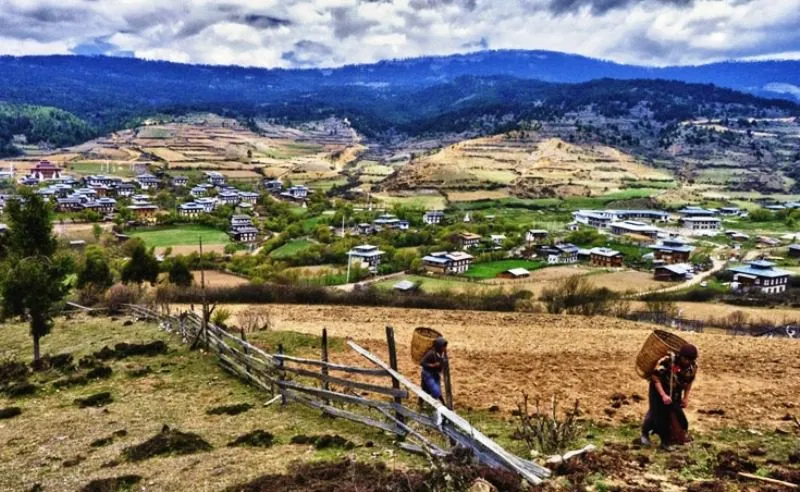
  • Ura Valley, at 3,200 meters, has remained unchanged for centuries, with stone houses, narrow lanes, and a village rhythm that has never adapted to tourism.

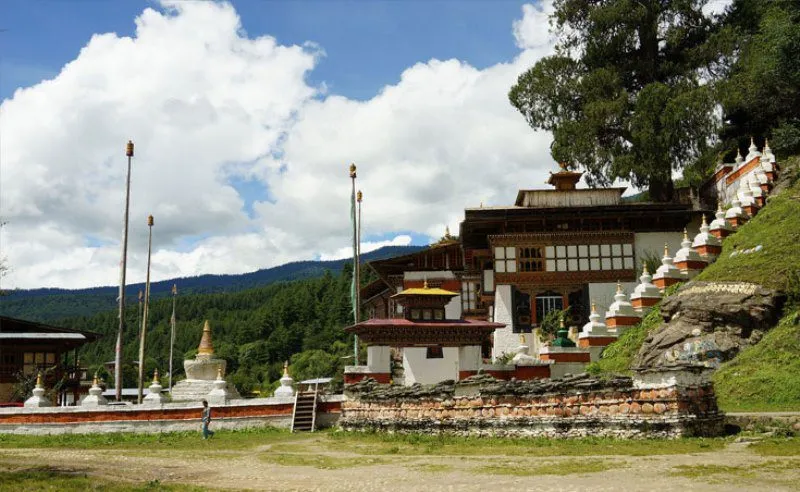
  • Kurjey Lhakhang is where Guru Rinpoche meditated in the 8th century, leaving a sacred body imprint in rock that pilgrims still travel far to touch.

  • Mebar Tsho, the Burning Lake, is a narrow river gorge in Tang Valley where Pema Lingpa retrieved sacred treasures from dark water by torchlight.

  • Jambay Lhakhang has stood since the 7th century, one of 108 temples built across the Himalayas in a single day by the Tibetan king Songtsen Gampo.

  • Pema Lingpa himself founded Tamshing Lhakhang in 1501, and he painted the murals on its interior walls with his hand.

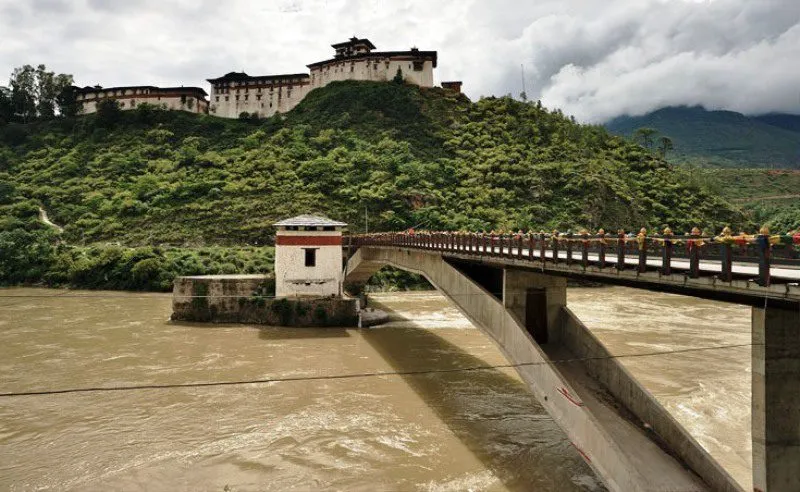
  • Jakar Dzong, the Castle of the White Bird, rises above Bumthang's Chokhor Valley, which serves as the administrative and spiritual anchor of Bhutan's most sacred region.

  • The Ura Yakchoe Festival transforms a quiet highland village into a celebration of masked dances and rituals attended almost entirely by Bhutanese, not tourists.

  • The drive between Trongsa and Bumthang crosses Yotong La Pass at 3,425 meters through legally protected forests, one of the most remarkable mountain roads in Asia.

  • Bumthang's weaving centers and the Swiss Farm offer an honest look at valley life, with textiles that take weeks to produce and dairy traditions rooted in real community.

Overview of Bumthang and Ura Valley Tour Package

The 10-Day Bumthang and Ura Valley Bhutan Tour takes you into the spiritual and ecocultural heartland of Bhutan, Bumthang, and the enchanting Ura Valley.

Far from the more visited western regions, central Bhutan offers a deeper, more intimate connection with the kingdom’s ancient Buddhist heritage, living traditions, and pristine natural beauty. 

As described by the Bumthang Dzongkhag Administration, this region stands as Bhutan’s spiritual heartland, blessed with rich heritage, resilient communities, and a harmonious blend of culture and nature.

Bumthang, often called the “beautiful field,” consists of four scenic valleys: Chokhor, Chumey, Tang, and Ura.

It is where Buddhism first took root in Bhutan in the 7th century, centuries before it took hold in the western valleys most visitors know.

The four valleys that make up Bumthang, Chokhor, Chumey, Tang, and Ura hold more ancient temples per square kilometer than anywhere else in the country.

Buckwheat fields and apple orchards fill the valley floors. Pine and fir forests climb the ridges above. At 2,800 meters, the air is cool and clean year-round.

This is not a region that has been polished for tourism. The temples are working monasteries where monks conduct daily rituals regardless of who is watching.

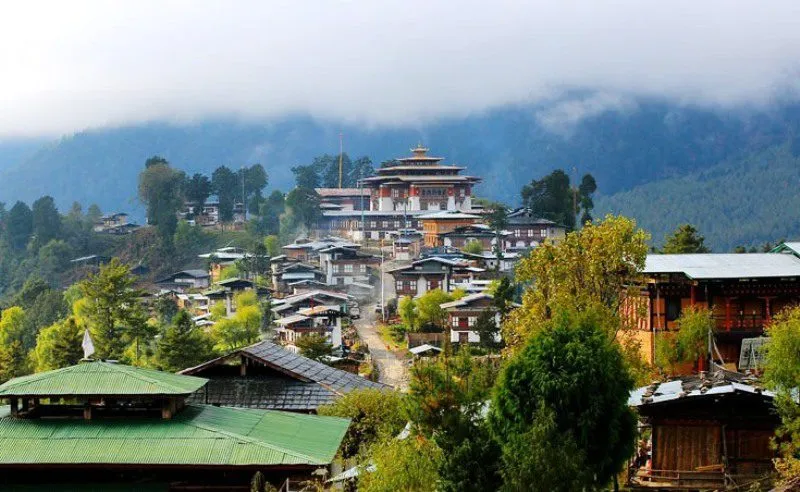
Starting at Paro and Thimphu, the path leads you east to Bumthang, the “spiritual soul of Bhutan.” In this region, you can discover the oldest temples of the country, such as Jambay Lhakhang and Kurjey Lhakhang.

You cross Dochula Pass at 3,100 meters and drop into Phobjikha Valley, letting the landscape begin to slow you down. Other sites feature tranquil valleys, lush fields of pine and apples, and a multitude of rivers.

Then comes the long drive east through Trongsa, one of the most spectacular mountain drives in Asia, before Bumthang opens up ahead of you.

You spend three full days in the Bumthang region, which is the right amount of time to go beyond surface-level visits and begin to understand what you are actually seeing. Ura Valley gets a full day of its own.

The return journey moves deliberately westward through Gangtey again, then down to subtropical Punakha before the final nights in Paro.

Tiger's Nest comes on Day 9. That placement is intentional; by then, you have spent nine days at an altitude between 2,800 and 4,000 meters, your body has adjusted, and the four-hour hike feels manageable rather than punishing.

The Tourism Council of Bhutan recorded just 145,065 visitors to the entire country in 2024. Bumthang and Ura receive a fraction of that number. The solitude is not a selling point; it is simply the reality of traveling in central Bhutan.

The Gross National Happiness Commission measures Bhutan's well-being across nine domains, from psychological health and cultural resilience to ecological diversity and time use. Travel through Bumthang, and you encounter that framework not as policy but as daily life. 

The villages are lived-in communities where farming and weaving continue as they have for centuries. Local interactions in Bumthang often feel natural and meaningful, offering genuine opportunities to learn about Bhutanese traditions, farming lifestyles, and daily life.

Farmers who finish their fields by afternoon and spend evenings at the lhakhang. Weavers who take three weeks to produce a single textile because the pattern demands it.

Monks who have memorized hundreds of pages of scripture and recite them before dawn, regardless of whether anyone is listening.

Bhutan's Department of Forest and Park Services protects over 70% of the country's land under forest cover, a constitutional requirement.

The forests you drive through between Trongsa and Bumthang are not scenic backdrops. They are legally protected ecosystems that Bhutan has chosen to keep intact while other nations cleared theirs.

This tour suits travelers who read slowly, walk without checking the time, and find more interest in a 500-year-old mural than a five-star infinity pool.

It works for couples, solo travelers, and families with older children. No strenuous trekking is required; the longest walk is the Tiger's Nest hike, which any reasonably fit person can complete at a comfortable pace.

The best seasons are March to May and September to November. Spring brings rhododendrons on every ridge and the Ura Yakchoe Festival in the valley below.

Autumn delivers crystalline skies and the first black-necked cranes arriving in Phobjikha. Both seasons are worth traveling for.

Central Bhutan does not ask you to rush. It does not compete for your attention with noise or spectacle.

It simply shows you what is ancient, careful, and genuinely unlike anywhere else, trusting that this experience will be enough. It always is.

Bumthang and Ura Valley Tour Itinerary

  • Day
    01

    Arrive in Paro, Transfer to Thimphu

    Paro Airport is one of the most dramatic landings in the world. Pilots bank between Himalayan ridges until the runway appears at the last second.

    Your guide meets you at arrivals and drives you 54 kilometers to Thimphu, Bhutan's small, unhurried capital with no traffic lights.

    Walk along the Wang Chhu river, have a quiet dinner, and let your guide explain what the next ten days hold. Tonight is for settling in, nothing more.

    Accommodation: Comfortable 3-star hotel in central Thimphu. Clean rooms, hot water, an ensuite bathroom, WiFi, and warm Bhutanese hospitality. Traditional architecture, convenient location, well-maintained throughout.

  • Day
    02

    Thimphu to Gangtey / Phobjikha Valley via Dochula Pass

    The drive climbs to Dochula Pass at 3,100 meters, where 108 white chortens line the ridge, built by the Queen Mother to honor fallen soldiers.

    On clear mornings, Gangkhar Puensum, Earth's highest unclimbed mountain at 7,570 meters, dominates the horizon.

    You descend into Phobjikha, a wide glacial valley ringed by the Black Mountains. Gangtey Monastery has anchored this valley for four centuries.

    Nearly 500 endangered black-necked cranes winter here. After dark, step outside; there is no light pollution for miles.

    Accommodation: Farmhouse-style valley lodge in Phobjikha. Simple, warm, and genuinely peaceful. The kind of quiet that is rare to find anywhere else in the world.

  • Day
    03

    Gangtey to Bumthang via Trongsa

    Five hours of mountain driving through alpine meadows, dense forests, and dramatic gorges. Stop at Trongsa Dzong, the fortress from which Bhutan's royal family rose to power, perched above the Mangde Chhu gorge in a position that once controlled all movement across the country.

    The road climbs to Yotong La Pass at 3,425 meters before dropping into Bumthang. Apple orchards appear first, then farmhouses, and finally the whitewashed walls of ancient temples. Upon arrival, you understand why this valley is called Bhutan's spiritual heartland.

    Accommodation: 3-star hotel in Bumthang's Chokhor Valley. Traditionally built, warm, and quietly situated. Reliable hot water, an ensuite bathroom, and staff who know this valley well. Your base for three full days.

  • Day
    04

    Bumthang Valley Full Day

    Bumthang's temples are not preserved ruins; they are active monasteries where monks have conducted daily rituals for centuries.

    Kurjey Lhakhang holds the cave where Guru Rinpoche left his body imprint in rock. Jambay Lhakhang is one of 108 temples built across the Himalayas in a single day in the 7th century.

    Tamshing Lhakhang, founded in 1501, contains murals painted by Pema Lingpa himself. In the afternoon, drive to Mebar Tsho, the Burning Lake, a narrow river gorge where sacred treasures once emerged from dark water.

    Accommodation: Same Bumthang hotel. After a full day on foot between temples, returning to a familiar and comfortable room feels exactly right.

  • Day
    05

    Day Excursion to Ura Valley

    Ura sits at 3,200 meters higher than Bumthang and is noticeably colder. The village is compact: stone houses arranged tightly around a central lhakhang, narrow lanes, and juniper-covered hills above.

    Very few tourists come here. The Ura Lhakhang contains detailed murals of Guru Rinpoche's life, and the resident monk will often show you around personally.

    If you visit in April or May, the Ura Yakchoe Festival transforms the village with masked dances and community rituals attended almost entirely by Bhutanese, not tourists. Return to Bumthang through rolling highland terrain in the late afternoon.

    Accommodation: Same Bumthang hotel. A stable, restful base for all three nights in the Bumthang region.

  • Day
    06

    Bumthang to Gangtey / Phobjikha Valley

    The return drive west passes Trongsa again; seen from the opposite direction, it looks like an entirely different fortress.

    Back in Phobjikha, walk the Gangtey Nature Trail at a pace that feels comfortable for you. Two hours through wetlands, wooden bridges, and forest edges that loop back to the monastery.

    This second visit to the valley feels quieter than the first, familiar enough now to simply be present without needing to take it all in at once.

    Accommodation: Valley lodge in Phobjikha. The second night here feels more settled than the first. Sit by the fire if the evening is cold.

  • Day
    07

    Gangtey to Punakha

    The descent from Gangtey drops 1,700 meters in under three hours. The temperature rises as alpine grassland gives way to subtropical valley floor; orange trees and banana plants replace pine forests.

    Punakha Dzong, built in 1637 at the confluence of the Pho Chhu and Mo Chhu rivers, is the most photographed building in Bhutan.

    Every king has been crowned inside its walls. Walk across the suspension bridge over the Mo Chhu in the late afternoon.

    The light on the dzong's whitewashed towers at that hour is something photographers travel specifically for.

    Accommodation: 3-star hotel in Punakha. After days at high altitude, the lower elevation and warmer air make this one of the most comfortable overnight stops of the entire journey.

  • Day
    08

    Punakha to Paro

    The drive back to Paro passes Dochula Pass once more. The 108 chortens feel familiar now, like old acquaintances on a road you know well.

    Paro is relaxed and effortless in the afternoon. The main street has excellent craft shops selling hand-woven textiles, thangka paintings, incense, and the carved wooden phallus talismans that guard Bhutanese homes.

    Use this afternoon for whatever the journey has not yet given you time for: a long lunch, a slow walk along the Paro Chhu, or simply sitting still somewhere quiet.

    Accommodation: 3-star hotel in Paro. Comfortable and well-located. Everything you need for the night before the longest walk of the trip.

  • Day
    09

    Paro, Hike to Tiger's Nest Monastery (3,120m)

    Taktsang Monastery was built in 1692 on a sheer granite cliff face that rises 900 meters above the valley floor.

    By Day 9, your body has spent over a week at an altitude between 2,800 and 3,200 meters, and the hike feels manageable. More importantly, after nine days of visiting temples and valleys, you have sharpened your eye.

    When you stand opposite those white walls on the cliff, you understand what you are looking at in a way no first-day visitor can. The monastery closes every Tuesday.

    Accommodation: Same Paro hotel. Celebratory dinner in town; you have earned it.

  • Day
    10

    Paro, Departure

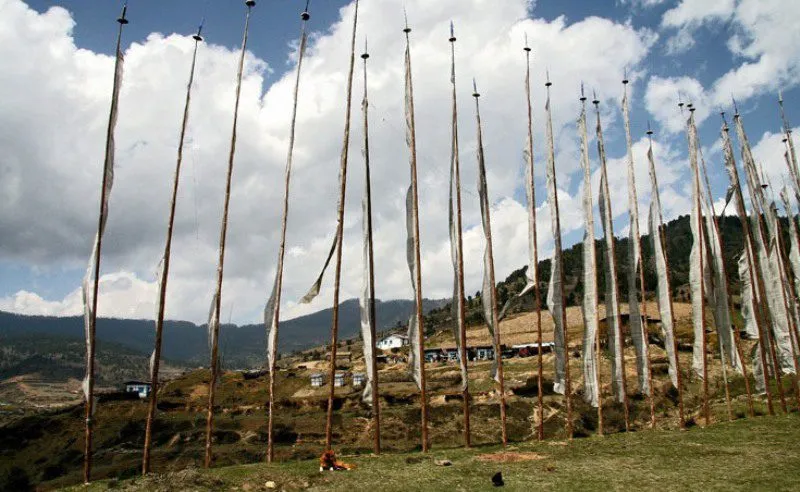
    The last morning arrives quietly. A final breakfast, a last walk along the Paro Chhu, a look at the ridge where prayer flags move in the early wind.

    Then comes the airport, the mountain corridor in reverse, and the return to wherever you came from. Bhutan does not try to hold you.

    It simply shows you that it is ancient, careful, and genuinely unlike anywhere else, and it trusts that the experience is enough. Ten days spent in Bumthang's temples, Ura's stone lanes, Phobjikha's cranes, and Punakha's rivers create a quiet that travels home with you.

Includes

  • Airport pick-up and drop-off by private vehicle.
  • 3-star accommodation is included, with 4- and 5-star options available at an additional premium.
  • Bhutan visa fee, including all necessary processing
  • Route Permit for all destinations
  • Three meals per day during your stay in Bhutan
  • A licensed Bhutanese tour guide for the entire journey
  • All land transportation by private vehicle
  • Sightseeing as per itinerary
  • All internal taxes and charges
  • Monument entrance fees, where applicable
  • A sustainable development fee of $100 per person per night (the fund fee goes towards free education, free healthcare, poverty alleviation and infrastructure.)

Excludes

  • International airfare & Travel Insurance
  • Expenses of a personal nature, tips to guides and drivers
  • Expenses arising from unforeseen events, such as flight delays, road conditions, or weather, do not receive coverage.

Additional Travel Info

Why can't I see the price for this tour?

Every trip to Bhutan is customized to suit your travel plans, so the tour price depends on several factors, including:

Number of travellers

Hotel category (3★, 4★, 5★ or Luxury)

Travel season and dates

Duration of your stay

Any special requests or customizations

To ensure you receive the best available price, please contact us with your travel requirements. We will prepare a personalized itinerary and send you a detailed quotation with no obligation.

Contact Details:

Email: info@tourinbhutan.com

WhatsApp: +1 401 328 1478 (WA Link)

Phone: +1 401 328 1478

Best Time for This Bhutan Tour

Bhutan works in every season, but what you experience changes completely depending on when you go.

  • Spring (March to May) is when the country looks its most alive. Rhododendrons cover the mountain slopes in red, pink, and white. Valley floors turn a deep green almost overnight. Temperatures are comfortably warm enough in the lower valleys and cool enough in the high passes to make walking genuinely pleasant. Several major religious festivals fall in this window, including the Ura Yakchoe Festival in late April or May, which is one of the most intimate and least-touristed celebrations in Bhutan. If you want to see the country at its most colorful and culturally active, spring is the answer.

  • Autumn (September to November) is the peak season for good reason. The monsoon clears in late August, and what follows are weeks of crystalline skies, sharp mountain panoramas, and golden harvest landscapes across Punakha and Bumthang. The light in autumn is exceptional for photography. Trekking conditions are as excellent as they get. In late October, the endangered black-necked cranes begin arriving in Phobjikha Valley from the Tibetan Plateau, one of the wildlife highlights of any Bhutan journey.

  • Winter (December to February) rewards travelers who prefer solitude over convenience. Monasteries are quieter. Roads through the high passes occasionally close after heavy snowfall, but the valleys remain accessible, and the skies are often strikingly clear. Phobjikha Valley holds its full crane population through February. Punakha, at a lower elevation, stays warm enough for comfortable sightseeing. If crowds are something you actively avoid, winter is worth considering seriously.

  • Monsoon (June to August) is not the season most travel companies recommend, but it deserves more credit than it gets. Bhutan's forests become genuinely extraordinarily dense, layered, and saturated with color. Waterfalls that are dry channels in October become thundering cascades. Rice terraces fill and turn a vivid green. The trade-off is occasional trail closures, mist that can obscure mountain views for days at a time, and road conditions that require patience. Travelers who appreciate beauty in dramatic, moody landscapes often rank their monsoon Bhutan experience above any other.

For this particular 10-day journey through Bumthang and Ura Valley, spring and autumn are the strongest choices: spring for festivals and flowers, and autumn for clarity and cranes.

Gears, Equipment & Other Essential Things

Essential Clothing

  • Lightweight clothing for daytime sightseeing.
  • Warm fleece or insulated jacket for cool mornings and evenings.
  • Waterproof jacket or rain shell, especially during the monsoon season.
  • Comfortable trousers suitable for walking and cultural visits.
  • Hat, gloves, and warm layers for winter departures.

Footwear

  • Comfortable walking shoes for daily sightseeing.
  • Hiking boots or trail shoes for Tiger's Nest and nature walks.
  • Extra pairs of warm socks for mountain regions.
  • Trekking poles (optional) for additional support on steep trails.

Personal Health & Safety Items

  • Personal medications and prescriptions.
  • Basic first-aid kit.
  • Sunscreen and lip balm with UV protection.
  • Sunglasses and a reusable water bottle.
  • Hand sanitizer and personal toiletries.

Electronics & Photography

  • A camera or smartphone for photography.
  • Power bank for long travel days.
  • Universal travel adapter.
  • Spare batteries, memory cards, and charging cables.

Travel Documents

  • A passport valid for at least six months.
  • Visa approval documents.
  • Travel insurance certificate.
  • Emergency contact information.
  • Copies of important documents stored separately.

Optional Comfort Items

  • Travel pillow for long drives.
  • Lightweight backpack for daily excursions.
  • Binoculars for wildlife and birdwatching in Phobjikha.
  • Notebook or journal for recording travel memories.

Accommodation 

The standard package includes comfortable 3-star hotels throughout the journey.

These are locally owned Bhutanese hotels built in traditional architectural style, with timber-framed windows, hand-painted interior details, ensuite bathrooms, reliable hot water, and the kind of hospitality that comes from staff who actually live in the valleys they work in.

They are well located in each destination and consistently maintained. For travelers who want more, upgrades to 4-star, 5-star, boutique, and luxury lodge properties are available at additional cost.

Bhutan's luxury lodges, particularly in Paro, Punakha, Gangtey, and Bumthang, are genuinely exceptional. Most have fewer than 20 rooms, sit in dramatic landscape positions, and offer locally sourced menus, private hot-stone baths, and a level of attentiveness that larger hotels simply cannot match.

If you are considering an upgrade, the strongest recommendations are Punakha (river-view lodge at the dzong confluence) and Paro (the final night before Tiger's Nest).

Luxury lodges in peak season book out months in advance. If an upgrade is something you want, request it early.

Travel Tips for Bhutan

  • Visa and Entry: All international visitors except Indian, Bangladeshi, and Maldivian nationals require a Bhutan visa, arranged exclusively through a licensed Bhutanese tour operator. The non-refundable fee is USD 40. Apply at least two to three weeks before departure. Carry both digital and printed copies of your approval letter; immigration requires the printed version.

  • Money: Bhutan's currency is the Ngultrum (BTN), pegged at 1:1 to the Indian Rupee. Indian Rupees are accepted across the country. USD is accepted at most hotels. ATMs exist in Thimphu and Paro but should not be relied upon in rural areas. The Sustainable Development Fee, currently USD 100 per person per night, is paid through your operator before arrival and funds free education, free healthcare, and conservation programs nationwide.

  • Cultural Respect: Walk clockwise around stupas, chortens, and prayer wheels always. Remove shoes before entering any temple or monastery. Remove hats inside religious buildings. Ask before photographing monks or residents. Photography is prohibited in all dzongs and monastery interiors, without exception. Accept food or gifts with both hands. These are not tourist guidelines; they reflect how Bhutanese people live, and observing them is the most basic form of respect you can show.

  • Altitude: This itinerary takes you between 1,200 meters and nearly 4,000 meters. Drink three to four liters of water daily. Avoid alcohol for the first two days. The gradual ascent structure of this 10-day route means most travelers acclimatize without difficulty, but altitude affects people differently. Report any symptoms, such as headache, nausea, or dizziness, to your guide immediately.

  • Connectivity: Mobile coverage is reliable in Thimphu and Paro. It becomes patchy in Bumthang and disappears in Ura and parts of Phobjikha. Most hotels offer WiFi; farmhouses and smaller lodges do not. Local SIM cards from Bhutan Telecom or TashiCell cost around USD 5 at the airport and work well in urban areas. Download everything you need before heading east.
  • Environment: Plastic bags have been banned in Bhutan since 1999. Bring a reusable bag. Smoking is prohibited in all public spaces and religious sites. Bhutan is constitutionally required to maintain at least 60% forest cover; it currently exceeds 70%. Travel here with the same care you would want someone to bring to your own home.

Additional Notes

On the day of departure, the ‘local agents’ host obligation shall be limited to providing breakfast only, and any extra requirements shall be payable on a usage basis.

Bumthang/Paro flights (with a day’s gap) are available to avoid the return overland journey to Paro from Bumthang.

Our entire Bhutan tour is a private journey and tailor-made program suited for any independent travelers according to their chosen traveling dates.

Should you wish, the tour can be easily customized to suit your interests and the activities you wish to pursue or spend more time at your places of interest. Contact us to customize this tour as per your requirements. This tour can be undertaken throughout the year.

Normally, during the monsoon season (June, July, Jul & Aug), the road conditions between Thimphu and Bumthang will be muddy and bumpy.

Other than Land Cruisers, the journey is difficult, and even with them, it remains bumpy. Another option will be flying into Bumthang and driving back or vice versa. But in other seasons, such is not the case.

Booking Guideline for 10-Day Bhutan Tour Package

To secure your place on this private 10-day journey through Bumthang and Ura Valley, complete your booking form and submit copies of all travelers' passports and confirmed flight details.

A deposit of 10% of the total package cost is required at the time of booking to confirm your reservation and lock in your departure dates.

The remaining 90% of the package amount is due no later than one month before your trip start date. Failure to complete payment within this window may result in cancellation of all services and forfeiture of the initial deposit.

The deposit payment can be made through bank wire transfer or secure online payment using all major credit cards.

Bhutan's visa fee and the mandatory $100-per-night Sustainable Development Fee must also be paid in full before the visa approval can be processed, as required by the Tourism Council of Bhutan.

Please note that once a Bhutan visa has been applied for, no refund will be made under any circumstances.

For our full cancellation policy, refund terms, and traveler responsibilities, please refer to our Terms and Conditions before confirming your booking.

If you have questions about payment options, accommodation upgrades, or customized departure dates, our team is ready to assist before you commit.

Trip Reviews

[trustindex no-registration=google]
TripAdvisor
Rated Excellent by our travellers
★★★★★
"Best Bhutan Tour Operator"
"Aura Trails made our Bhutan trip absolutely unforgettable. Every detail was perfectly planned."
Sarah M.
Australia · Cultural Tour
TripAdvisor
★★★★★
"Exceeded All Expectations"
"From landing in Paro to our last day in Thimphu, everything was seamless. Highly recommend!"
James K.
USA · Trekking Tour
TripAdvisor
★★★★★
"A Dream Come True"
"The festival tour was magical. Our guide Karma was exceptional — so much local knowledge and warmth."
Emma L.
UK · Festival Tour
TripAdvisor
Read All Reviews on TripAdvisor →