How Much Does the Bumthang Cultural Trek Cost?
Planning a trip to Bhutan is a unique experience. The cost of the Bumthang Cultural Trek package depends on how keen you are to explore this beautiful Himalayan kingdom.
Unlike standard holiday packages with fixed prices, every Bhutan journey is customized according to your travel preferences, interests, and budget, unlike standard holiday packages with fixed prices.
The total cost of our Bhutan trip may vary based on several factors, including:
- Number of travelers: Private tours, family holidays, and group trips have different pricing structures.
- Accommodation choice: Select from comfortable 3-star hotels, premium 4-star stays, luxury 5-star properties, or exclusive luxury accommodations.
- Travel season and dates: Bhutan tour costs can change depending on peak seasons, festivals, and travel availability.
- Trip duration: The number of days you spend exploring Bhutan’s cultural landmarks, monasteries, valleys, and natural landscapes affects the overall cost.
- Customized experiences: Special activities, private guides, unique cultural experiences, trekking options, and personal requests can influence your final package price.
Since every traveller has different expectations, we do not offer fixed prices for our Bhutan tour packages. Instead, our Bhutan travel experts create a personalized itinerary and detailed quotation based on your requirements, ensuring you receive the best value for your journey.
Just share your preferred travel dates, group size, accommodation preferences, and travel interests with us. We will design a customized itinerary with a transparent cost breakdown and no obligation to book.
Request Your Personalized Bhutan Quote Today
📧 Email: info@tourinbhutan.com
💬 WhatsApp: +1 401 328 1478
📞 Phone: +1 401 328 1478
Why Choose the Bumthang Cultural Trek?
Several features make the Bumthang Cultural Trek one of Bhutan's most rewarding trekking experiences.
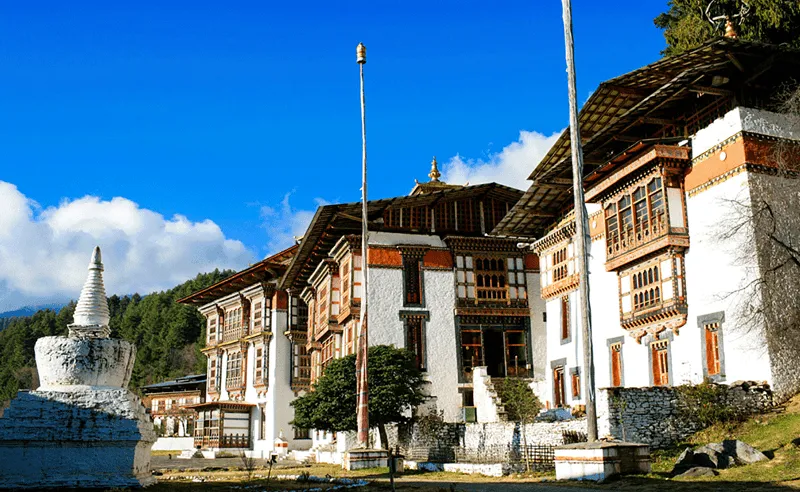
First, it runs through a country most visitors never see. Bhutan's oldest monasteries, Jambay Lhakhang, Kurje Lhakhang, and Ngang Lhakhang sit in this region, some dating back to the 7th century, and the trek connects them with a walking route rather than just a drive-by visit.
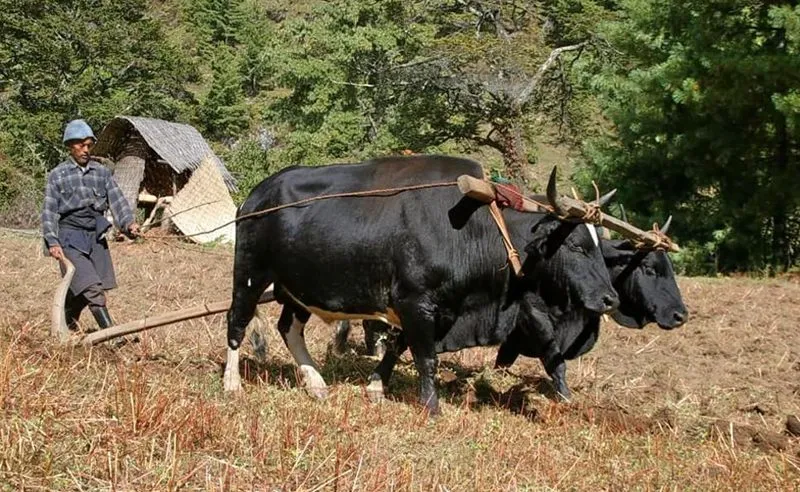
Between the temples, the trail passes through remote villages where farming and yak herding are still the basis of daily life, not a performance for visitors.
Second, there's very little crowding. Bumthang sees a fraction of the traffic compared to the Paro–Thimphu corridor or the standard Tiger's Nest day trip, making the trekking sections particularly quiet almost by default.
Third, it's a genuinely varied route: dense forest, open river valleys, working farmland, high pasture near Phephe La, and a proper pilgrimage trail linking temples that Bhutanese pilgrims still walk today.
Add in the wildlife and birdlife along the way, a real camping experience each night on the trail, and the chance to sit down with local families over butter tea, and you get a trek that is as much about immersion as it is about physical exertion.
For travelers who want Bhutan's Buddhist heritage and its Himalayan scenery in equal measure, this route delivers both without asking for a high-altitude expedition in return.
Who is the Bumthang Cultural Trip suitable for?
The Bumthang Cultural Trek is designed for travelers who want to experience Bhutan beyond its popular tourist destinations.
Combining easy Himalayan trekking with rich cultural exploration, this journey suits a wide range of travelers and requires no previous trekking experience.
This trek is ideal for:
- First-time trekkers looking for a comfortable introduction to trekking in the Himalayas.
- Cultural travelers interested in exploring Bhutan's ancient monasteries, dzongs, sacred temples, and traditional villages.
- Nature lovers who enjoy peaceful forests, mountain valleys, rivers, alpine meadows, and scenic Himalayan landscapes.
- Buddhist pilgrims and spiritual seekers wishing to visit sacred sites such as Kurje Lhakhang, Jambay Lhakhang, Tamshing Lhakhang, Mebar Tsho (Burning Lake), and the iconic Tiger's Nest Monastery.
- Wildlife and birdwatching enthusiasts hoping to spot Himalayan bird species and the endangered black-necked crane in Phobjikha Valley during winter.
- Photographers seeking spectacular landscapes, colorful monasteries, traditional Bhutanese architecture, and authentic rural life.
- Families with older children who enjoy walking and outdoor adventures in a safe, low-altitude environment.
- Senior travelers with a reasonable level of fitness looking for a slower-paced Himalayan journey without extreme physical challenges.
- Couples and small groups seeking an immersive cultural holiday with comfortable hotels and fully supported camping.
- Travelers looking for a balanced Bhutan experience, combining sightseeing, trekking, local culture, spiritual heritage, and breathtaking mountain scenery in a single itinerary.
With a maximum altitude of 3,360 m at Phephe La Pass, comfortable overnight stops below 3,000 m, and well-established trekking trails, the Bumthang Cultural Trek offers one of the most accessible and rewarding trekking experiences in Bhutan for travelers of all ages.
Bumthang Cultural Trekking Route
Paro → Thimphu → Dochula Pass → Punakha → Trongsa → Bumthang → Ngang Lhakhang → Phephe La → Tahung → Mesithang → Phobjikha → Paro
This 13-day journey begins in Paro before heading to Thimphu, Bhutan's capital, and continues across Dochula Pass to the historic valleys of Punakha and Trongsa. From there, you travel into Bumthang, Bhutan's spiritual heartland, where the three-day cultural trek begins.
The trekking route passes through peaceful forests, traditional villages, Ngang Lhakhang, and Phephe La Pass (3,360 m) before descending through Tahung and Mesithang.
After the trek, the journey continues to Phobjikha Valley, famous for its black-necked cranes, before returning to Paro for the iconic Tiger's Nest Monastery hike and your departure.
This itinerary combines Bhutan's most important cultural landmarks, scenic mountain landscapes, and gentle Himalayan trekking into one well-rounded adventure.
Attractions of the Trekking Destination
1) Paro
Tiger's Nest Monastery (Taktsang), clinging to a cliff 900 m above the valley; Rinpung Dzong; Kyichu Lhakhang, one of Bhutan's two oldest temples; the National Museum at Ta Dzong; the Paro Chhu river running through the valley floor; traditional farmhouses scattered across the valley; and the approach to Paro's airport itself, considered one of the most dramatic commercial flight paths in the world.
2) Thimphu
The giant Buddha Dordenma statue overlooking the city; the Memorial Chorten; Tashichho Dzong, seat of government and the throne room; the Motithang Takin Preserve, home to Bhutan's unusual national animal; the Folk Heritage Museum; the Textile Museum; and the craft bazaar and weekend market for local handicrafts.
3) Punakha
Punakha Dzong at the confluence of the Pho Chhu and Mo Chhu rivers, widely considered Bhutan's most beautiful fortress; Chimi Lhakhang, the Temple of Fertility, reached on foot through rice paddies; the long suspension bridge across the Mo Chhu; and the valley's terraced rice fields, some of the most productive farmland in the country.
4) Trongsa
Trongsa Dzong, the largest dzong in Bhutan and the traditional seat of the monarchy; the Ta Dzong museum above it, now the Royal Heritage Museum, tracing the history of the Wangchuck dynasty; and views down into the Mangde Chhu valley from the winding approach road.
5) Bumthang
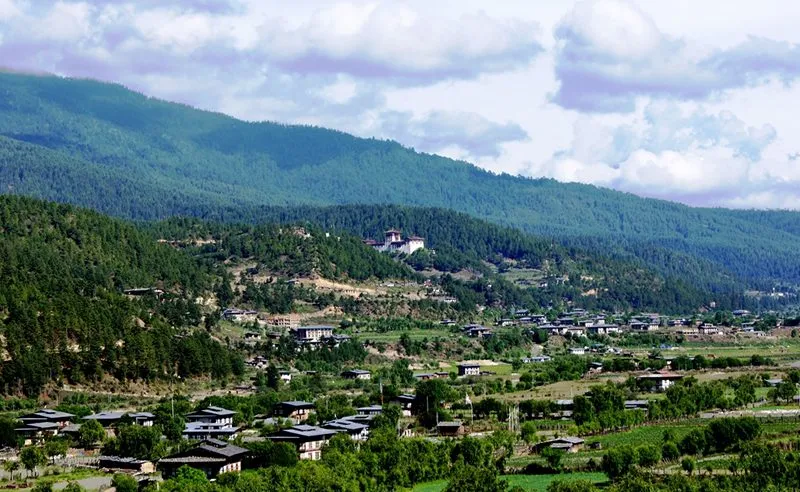
Bumthang is the most important stop on the trip, covering four valleys: Chokhor, Tang, Ura, and Chhumey. Highlights include Kurje Lhakhang, where Guru Rinpoche is said to have left a body imprint in the rock; Jambay Lhakhang, a 7th-century temple among Bhutan's oldest; Tamshing Lhakhang, founded in 1501 with well-preserved wall paintings; Jakar Dzong, the "Castle of the White Bird"; Mebar Tsho (the Burning Lake), a sacred site linked to the treasure-revealer Pema Lingpa; the Swiss Farm, known for local cheese and apple products; the Red Panda Brewery; and the region's traditional yathra weaving, a wool textile craft unique to Bumthang.
6) Phobjikha
Gangtey Monastery, the seat of the Pema Lingpa lineage of Nyingma Buddhism; the black-necked cranes that winter in the valley's wetlands; the marshland habitat itself, one of Bhutan's most important conservation areas; and the valley's well-marked nature trail, which offers a gentle walk through farmland and along the edge of wetlands.
7) Haa Valley (optional excursion)
Chele La Pass, one of the highest motorable passes in the country and a viewpoint for Mount Jomolhari on a clear day; Lhakhang Karpo (White Temple) and Lhakhang Nagpo (Black Temple); Haa's traditional villages, some of the least-visited in Bhutan; and the valley's apple orchards and old farmhouses.
Forests You'll Walk Through
Blue pine, fir, hemlock, juniper, oak, birch, rhododendron, and stretches of bamboo undergrowth lower down. Higher sections near Phephe La shift into moss-draped forest, and along the trail you'll pass a range of medicinal plants that locals still gather for traditional Bhutanese medicine.
Wildlife
Bumthang's forests and pastures support a fair range of Himalayan wildlife, but you may not see them.
Possible species include the Himalayan monal, blood pheasant, satyr tragopan, and kalij pheasant among the birds, along with musk deer, Himalayan serow, red fox, langur, and rarely Himalayan black bear.
In winter, the black-necked crane arrives in Phobjikha, one of the most reliable and rewarding wildlife sightings on the whole itinerary.
Bird Watching
Bhutan holds over 700 recorded bird species, and Bumthang's mixed forest and river valleys are a solid stretch for spotting some of them. Keep an eye out for the Himalayan monal, blood pheasant, nutcracker, laughing thrush, and various eagles and falcons working the ridgelines, plus the black-necked cranes in Phobjikha during winter months.
Buddhist Heritage
This trek follows a genuine pilgrimage route, and the names behind its temples matter. Guru Rinpoche (Padmasambhava) is credited with bringing Buddhism to Bhutan in the 8th century and is tied directly to Kurje Lhakhang and several other Bumthang sites.
Pema Lingpa, a 15th-century treasure-revealer born in Bumthang, founded Tamshing Lhakhang and shaped much of the region's religious life. Songtsen Gampo, the 7th-century Tibetan king, built Jambay Lhakhang as one of 108 temples meant to pin down a demoness across the Himalayas.
Thangtong Gyalpo, the "Iron Bridge Builder," constructed Tachogang Lhakhang and several of Bhutan's old chain bridges.
Chimi Lhakhang in Punakha honors Drukpa Kunley, the unconventional "Divine Madman."
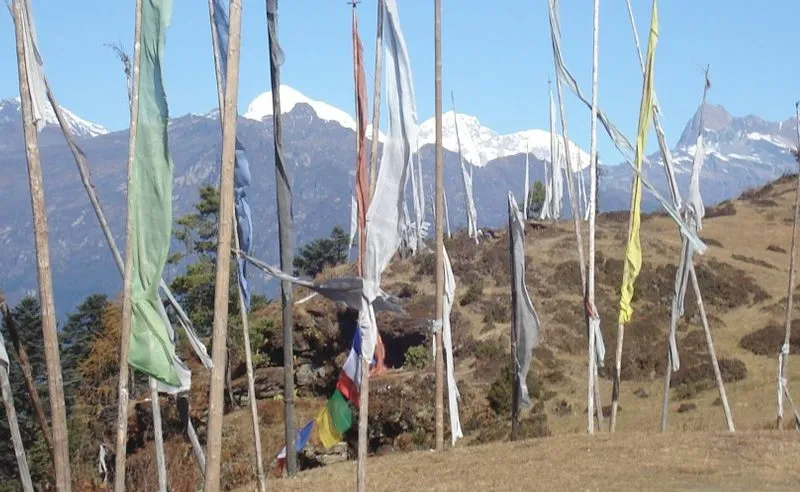
Along the trail, prayer wheels, mani walls, chortens, prayer flags, and meditation caves mark the route not as decoration, but as an active, ongoing part of how Bhutanese Buddhists relate to this landscape.
Culture
This trek puts you in contact with rural Bhutanese life in a way most standard tours don't. Expect to pass through working villages, meet yak herders and farmers going about ordinary days, and see buckwheat farming and traditional cheese-making up close.
Butter tea is a near-constant offering in farmhouses along the way, and if your timing coincides with a local festival, it's worth adjusting your schedule to see one. Hospitality here tends to be genuine rather than performative, reflecting a region that still receives relatively few visitors.
Scenic Highlights
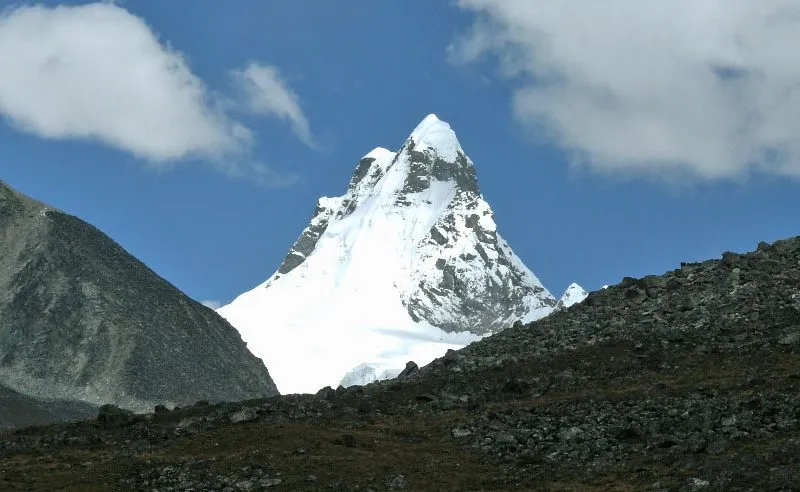
Mountain passes strung with prayer flags, river valleys running through pine forest, spring wildflowers, Punakha's rice terraces, ancient dzongs and temples at nearly every stop, the open glacial bowl of Phobjikha, and closing out the trip with Tiger's Nest Monastery above Paro.
Camping Experience
The three trekking nights include a fully supported camping setup with comfortable sleeping tents, mattresses, a dining tent, a kitchen tent, and a toilet tent managed by the support crew.
Where conditions allow, evenings around a campfire are part of the experience, along with genuinely dark, star-filled skies, a sharp contrast to the towns on either end of the trip. Mornings tend to bring lovely light and a quiet start before the day's walking begins.
This journey is a camping-only trek; there are no teahouses or lodges along the trail, unlike some trekking regions elsewhere in the Himalayas. The camping crew provides all accommodation and meals on the three trekking days.
Best Time to Trek
- Spring (March–May): Rhododendrons and wildflowers bloom across the trail, temperatures are comfortable, and birdlife is active, a strong season for photography.
- Summer (June–August): Monsoon rains bring lush, green forest but also muddy trails and reduced mountain visibility. The trail is quieter, but you may encounter rain.
- Autumn (September–November): Generally the best season, clear skies, dry trails, and the most reliable mountain views of the year. Several local festivals also fall in this window.
- Winter (December–February): Cold, especially at altitude, but the season is also when the black-necked cranes arrive in Phobjikha, which makes winter worth considering if that sighting matters to you. Snow occasionally dusts the higher sections of the trail.
Bumthang Trek Difficulty
Daily walking runs roughly 3–8 hours depending on the day, with the middle trekking day (over Phephe La) being the longest and most demanding.
Maximum altitude is 3,360 m, high enough to notice but well below the range where serious altitude sickness becomes a real concern.
Trail conditions are generally good: established paths through forest and farmland, with one sustained climb rather than repeated high passes. A reasonable level of fitness is enough preparation; no technical skill or prior trekking experience is required.
This makes the route well suited to beginners, families with older children, and photographers who'd rather move at an unhurried pace than push themselves over demanding distances.
Accommodation
Hotels (typically 3-star, with upgrades available) in Paro, Thimphu, Punakha, Bumthang, and Phobjikha, with full camping during the three trekking days: sleeping tents with mattresses, sleeping bags for the cold nights, a dining tent, and a toilet tent set up at each camp by the support crew.
Meals
Throughout the trek, we include breakfast, lunch, and dinner. Bhutanese staples make regular appearances: ema datshi (chili and cheese), kewa datshi (potato and cheese), phaksha paa (pork with radish or spinach), red rice, hoentay (buckwheat dumplings from Haa), and buckwheat pancakes, along with butter tea in farmhouses along the trek.
Hotels and restaurants also offer Indian, Chinese, and continental options, and they can arrange vegetarian or other dietary needs with advance notice. Fresh seasonal vegetables, soups, noodles, rice dishes, and international cuisine are also widely available throughout the journey.
Transportation
Private vehicles handle the whole trip, typically an SUV, Hiace, or Coaster, depending on group size, driven by experienced local drivers used to Bhutan's mountain roads, switchbacks, and passes.
Packing List
- Clothing: broken-in waterproof trekking boots, down jacket, fleece or warm mid-layer, thermal base layers, waterproof jacket and trousers, comfortable trekking trousers, moisture-wicking shirts, warm gloves, warm hat, sun hat, and spare socks and underwear.
- Trekking gear: daypack (25–35L), trekking poles, sleeping bag, headlamp with spare batteries, water bottle or hydration bladder, and rain cover for your pack.
- Personal care: sunscreen (SPF 30+), lip balm with SPF, toiletries, quick-dry towel, wet wipes, and hand sanitizer.
- Health and safety: basic first aid kit, personal medications, water purification, and blister treatment.
- Electronics: camera, spare batteries, memory cards, power bank, charging cables, and universal adapter.
Travel Information
- Visa: All international visitors need a Bhutan tourist visa, arranged through a licensed operator before arrival.
- SDF (Sustainable Development Fee): USD 100 per person per night, as per current Bhutan tourism policy, included in the trip cost.
- Currency: The ngultrum (BTN), pegged to the Indian rupee, which is also widely accepted. Card payment is limited outside major hotels, so carrying some cash is sensible.
- Internet and mobile coverage: Wi-Fi and mobile signal are generally reliable in hotels and towns across Paro, Thimphu, Punakha, and Bumthang. Coverage drops off or disappears entirely in the remote, forested sections of the trekking days.
- Electricity is available at hotels before and after the trek, but not at the trekking campsites, so bring a fully charged power bank or spare camera batteries for the trekking days.
- SIM card: Local SIMs are available in Paro and Thimphu for travelers who want data on the road.
- Tipping: Not mandatory but customary; most travelers tip their guide, driver, and camping crew at the end of the trip.
- Laundry: Available at most hotels; not possible during the trekking days.
- Insurance: Travel insurance covering trekking activity and emergency evacuation is strongly recommended.
- Altitude: Maximum altitude on this trek is 3,360 m at Phephe La, moderate by Himalayan standards, with a low risk of serious altitude sickness for most travelers.
Ready to Experience Bhutan's Spiritual Heartland?
Join our 13-day Bumthang Cultural Trek and experience sacred monasteries, peaceful Himalayan trails, authentic village life, and the unforgettable hike to Tiger's Nest Monastery.
Contact our Bhutan travel experts today to customize your itinerary and get a personalized quote. Reach out through our website contact form, by email, or by phone, and we'll take it from there.