Cost of Dur Hot Spring Trekking
The Dur Hot Spring Trekking is a private, high-altitude expedition that requires detailed planning and customized arrangements. Since every departure is tailored according to the trekker’s requirements, the final cost depends on multiple factors, including:
- Number of trekkers joining the expedition
- Preferred travel dates and trekking season
- Accommodation category before and after the trek
- Private group size and customized itinerary requirements
- Additional services or special arrangements
- Flight assistance and extra travel arrangements in Bhutan
The Bhutan hot spring trek is not a fixed group departure with a standard price. Every expedition requires individual arrangements, including restricted area permits, licensed Bhutanese guides, camping logistics, kitchen crew, transportation, and high-altitude support.
To provide an accurate quotation, our team will first understand your trekking experience, preferred dates, group size, and travel requirements. We will then prepare a personalized Dur Hot Spring Trek itinerary with a detailed cost breakdown and inclusions.
There is no obligation to book. Our trekking specialists will help you plan the right expedition based on your expectations, experience level, and budget.
Contact Our Bhutan Trek Specialists
Email: info@tourinbhutan.com
WhatsApp: +1 401 328 1478
Phone: +1 401 328 1478
Dur Hot Spring Trek Route
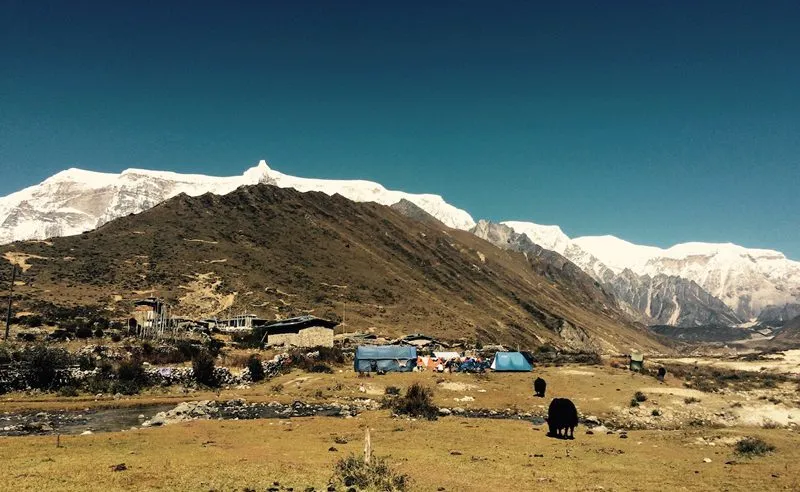
The Bhutan Dur Hot Spring Trek combines remote Himalayan wilderness, traditional mountain culture, and the healing waters of Dur Tsachhu in the heart of Bhutan’s Bumthang region. The journey begins with a scenic drive from Paro through Thimphu, Gangtey, Trongsa, and Bumthang before the trek starts at Gorsum. The trail passes through lush forests of blue pine, fir, spruce, and rhododendron, gradually ascending via Lungsum to the alpine meadows of Tsochenchen (3,780 m).
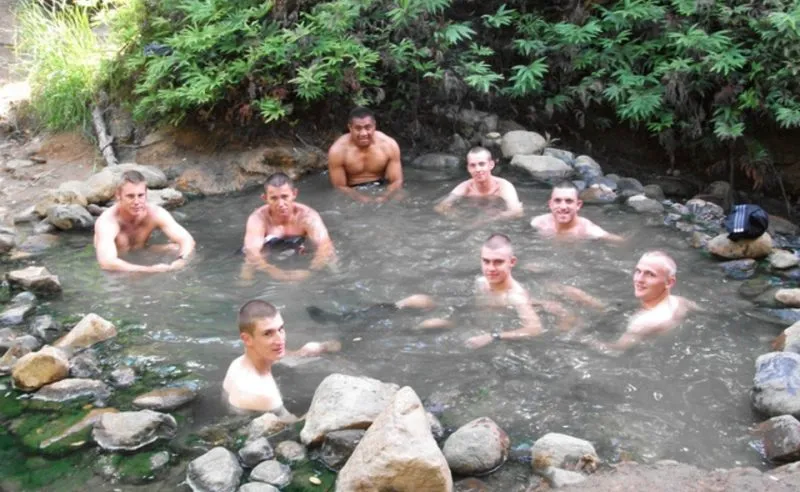
Along the way, trekkers encounter yak-herding settlements, mountain streams, and Himalayan mountain scenery. From Tsochenchen, the route descends to Dur Tsachhu (3,590 m), one of Bhutan’s most remote and revered natural hot springs, where a full rest day allows time to relax and enjoy the mineral-rich waters. The trek then retraces its path back to Bumthang before continuing through Gangtey, Punakha, and Paro, concluding with the iconic hike to Taktsang Monastery (Tiger’s Nest).
Who Can Do the Bhutan Dur Hot Spring Trek?
This Bhutan Dur Hot Spring Trek is designed for travelers who want a genuine Himalayan trekking experience without the extreme altitude, technical climbing, or long, multi-week commitment of routes like the Snowman Trek. Because the trail involves several consecutive days of walking through forest and alpine terrain, with some sustained ascents and descents, a reasonable level of fitness is required: the ability to walk 4–6 hours a day on uneven ground for multiple days in a row.
However, no prior mountaineering or technical trekking experience is necessary, making this trek an excellent choice for first-time Himalayan trekkers. This trip is particularly well-suited to cultural travelers visiting Bhutan who want to add a multi-day trekking component to their itinerary, nature lovers interested in Bhutan's forests and alpine wildlife, and anyone drawn to the idea of combining trekking with a wellness-focused hot spring experience.
Because Bhutan requires all tourists to travel with a licensed local guide, this trek is also a comfortable option for solo travelers, couples, and small groups who want the security of a fully supported camping trek without needing to organize logistics themselves.
Travelers should be aware that the trek involves multiple nights of camping at altitude, sometimes in cold and damp forest conditions, and basic facilities compared to hotel stays in Paro or Thimphu. Anyone with significant mobility limitations or pre-existing heart or respiratory conditions should consult a doctor before booking. All travelers are encouraged to arrive with a reasonable baseline of walking fitness built up in the weeks before departure.
Best Season for the Dur Hot Spring Trek
Spring (March to May)
Spring is one of the most popular times to undertake the Dur Hot Spring trek. Winter snow begins to melt from the higher trails. Forests come alive with blooming rhododendrons, and temperatures become more comfortable for multi-day camping. Visibility toward Gangkhar Puensum and the surrounding peaks tends to be excellent in the mornings. The combination of flowering forests and mountain views makes spring a particularly photogenic season for central Bhutan trekking.
Autumn (September to November)
Autumn is widely considered the prime trekking season in Bhutan. It offers stable weather, clear skies following the summer monsoon, and excellent visibility for mountain views throughout the Tang and Dur valleys. Temperatures are crisp but generally comfortable for trekking and camping, and trails are typically dry underfoot.
Winter (December to February)
Winter also holds appeal for this particular trek. While higher trails may see snow, this period is the traditional season when Bhutanese villagers themselves travel to Dur Tsachhu for healing baths. This offers travelers a chance to experience the hot spring as part of a living local tradition rather than purely as a tourist attraction.
Weather, Temperature & Climate Information
Weather and temperature on the Dur Hot Spring Trek vary with both season and altitude. The relatively mild climate of Bumthang Valley sits at around 2,600–2,800 m. Higher forested ridges and passes above 3,800m are noticeably colder.
During spring and autumn, daytime temperatures on the lower sections typically range from 10°C to 18°C, dropping to between 0°C and 5°C overnight at campsites. On the higher ridgelines near the trek's maximum altitude of approximately 4,210m, daytime temperatures can fall closer to 0–8°C, with overnight lows occasionally dropping below freezing, particularly in late autumn.
Winter brings significantly colder conditions, with possible snowfall on higher sections and overnight temperatures well below freezing. The lower valley around Dur Tsachhu remains accessible, and local pilgrims most frequently visit the hot springs during this time. The summer monsoon (June to August) brings heavy rainfall, leech-prone forest trails, and frequently obscured mountain views, making it the least favorable season for this trek.
Required Permits for Dur Hot Spring Trekking
All foreign visitors to Bhutan are required to travel with a licensed Bhutanese tour operator, and trekking in areas such as Bumthang and the Tang/Dur valleys involves additional permits beyond the standard tourist visa. Because this trek passes through forested areas near Bhutan’s northern border region and close to Gangkhar Puensum, permits must be processed in advance through your operator and are checked at entry points along the route.
- Bhutan tourist visa, processed in advance through your licensed tour operator
- Sustainable Development Fee (SDF), payable per person per night of stay in Bhutan
- Trekking permit / Restricted Area Permit (RAP) for the Bumthang–Tang–Dur trekking route, issued by the Department of Tourism
- Road permits for travel between districts (Dzongkhag) along the Paro–Bumthang overland route
- Any additional local permits required for camping in specific forest or community areas, arranged by your guide
Difficulty
Trekking difficulty on the Dur Hot Spring Trek is rated moderate, making it accessible to fit beginners while still offering several challenging days. The route involves sustained ascents and descents through forested terrain, occasional steep sections near the higher ridges, and multiple consecutive days of trekking with full camping support. While the trail does not reach the extreme altitudes found on routes like the Snowman Trek or Lunana Trek, the combination of altitude gain above 3,800m, forest trail conditions (which can be muddy or root-covered, especially after rain), and several long trekking days means a reasonable baseline of hiking fitness is important for an enjoyable experience. Climbing difficulty is not a factor on this trek.
There are no technical climbing sections, glacier crossings, fixed ropes, or use of specialized climbing equipment anywhere on the route, making it fundamentally different from peak-climbing trips in Nepal's Everest region. Training guidance should focus on building general hiking endurance: regular walks or hikes of 3–5 hours with some elevation gain, ideally on consecutive days in the weeks before departure, are excellent preparation. Required skills are minimal: comfort walking on uneven forest trails and basic familiarity with multi-day camping (or a willingness to adapt quickly), as your guide and crew handle all technical aspects of route-finding, camp setup, and logistics throughout the trip.
Physical and Mental Preparation
While the Dur Hot Spring Trek is less physically demanding than high-altitude expedition routes, proper preparation still makes a significant difference to your enjoyment of the trip, particularly given the multiple consecutive days of trekking and camping involved. Physical conditioning and realistic mental expectations about camp life, weather variability, and trail conditions will help you enjoy this unique Bhutanese trekking and cultural experience.
- Build general walking endurance with regular hikes of 3–5 hours, ideally on hilly or forested terrain
- Incorporate some elevation gain into training hikes to prepare for the trek’s ascents and descents
- Practice walking with a daypack to get comfortable carrying water, layers, and personal items
- Prepare mentally for variable weather, including the possibility of rain or cold in forested sections
- Set realistic expectations around camping facilities, which are comfortable but basic compared to hotels
- Pack layers and be prepared to adjust clothing frequently as temperatures shift between sun, shade, and evening
- Stay open to a slower pace of travel; this trek rewards those who embrace its reflective, cultural rhythm
- Communicate any health concerns to your guide early, so the itinerary can be adjusted if needed
Accommodation & Meals
Throughout the Bhutan Dur Hot Spring Trek, accommodation is provided on a full-board basis, ensuring a comfortable and hassle-free experience from arrival to departure. During the sightseeing and travel portions of the journey, guests stay in carefully selected 3-star hotels in Paro, Thimphu, Gangtey, Punakha, and Bumthang, offering clean rooms, private bathrooms, and warm Bhutanese hospitality. Travelers seeking additional comfort may upgrade to 4-star or 5-star hotels and luxury lodges at an additional cost, subject to availability.
During the trekking section, the trekking crew sets up fully supported tented camps for your accommodation. Each campsite includes comfortable sleeping tents, a dining tent, and basic toilet facilities, allowing you to enjoy Bhutan’s remote wilderness without sacrificing essential comforts.
Throughout the trip, we include all meals, providing breakfast, lunch, and dinner daily. Hotel meals include a mix of Bhutanese and international cuisine, while fresh, nutritious meals are prepared by the trek cook during the camping portion of the trip. With advance notice, we can accommodate vegetarian and special dietary requirements.
Transportation
All transportation throughout the Bhutan Dur Hot Spring Trek is provided by private vehicle with a professional driver, ensuring a comfortable and seamless travel experience from arrival to departure. The package includes airport transfers in Paro, all sightseeing excursions, and overland journeys between Paro, Thimphu, Gangtey, Punakha, Trongsa, and Bumthang.
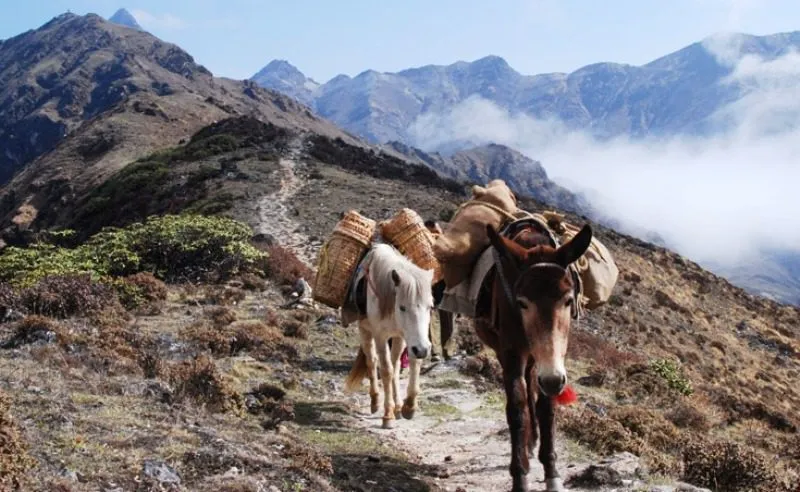
Travel is conducted in well-maintained private vehicles appropriate to the group size, allowing flexibility for sightseeing stops, photography opportunities, and rest breaks along Bhutan’s scenic mountain roads. During the trekking portion, pack animals such as horses or mules transport camping equipment, food supplies, and duffel bags between campsites, while trekkers carry only a light daypack with personal essentials.
From the moment you arrive at Paro International Airport until your departure, all ground transportation and trek logistics are fully organized and managed by our experienced local team, allowing you to focus entirely on enjoying Bhutan's mountain landscapes, cultural heritage, and trekking experience.
Travel Insurance
Comprehensive travel insurance is strongly recommended for the Dur Hot Spring Trek, even though the route doesn’t reach extreme altitudes or involve technical climbing. Because the trek takes place in a remote, forested region of Bumthang with limited road access along parts of the route, your policy should cover trekking up to at least 4,500m, medical treatment in Bhutan, trip cancellation or interruption, and emergency evacuation in case of injury or illness on the trail. As with any Himalayan trekking trip, it’s worth confirming that your policy doesn’t exclude multi-day trekking or camping activities, and we recommend keeping a copy of your policy details and emergency contact numbers with you throughout the trip.
Gear & Equipment Checklist
While this trek is less gear-intensive than a technical climbing expedition, proper layering and camping equipment are essential for comfort during multi-day treks in Bhutan’s forested mountain terrain.
Clothing
- Moisture-wicking base layers (tops and bottoms)
- Fleece jacket or warm mid-layer
- Insulated jacket (down or synthetic) for cold evenings at camp
- Waterproof and windproof outer jacket and pants
- Trekking pants (quick-drying recommended)
- Warm hat, sun hat, and gloves
- Trekking socks and a few pairs of regular socks
Footwear
- Sturdy, broken-in trekking boots with ankle support
- Comfortable camp shoes or sandals for evenings
- Gaiters (useful for muddy or wet forest trails)
Camping & Sleep
- Sleeping bag liner for added warmth and hygiene
- Headlamp with spare batteries
Hot Spring & Personal Items
- Swimwear or quick-dry shorts/top for bathing at Dur Tsachhu
- Lightweight quick-dry towel
- Flip-flops or sandals for use at the hot spring
Other Essentials
- Daypack (20–30L) for daily essentials
- Trekking poles
- Reusable water bottle and water purification tablets/drops
- Sunscreen, sunglasses, and lip balm with SPF
- Personal first aid kit and any personal medications
- Power bank and charging cables (limited charging available at camp)
Altitude Sickness & Prevention
Although the Dur Hot Spring Trek doesn’t reach the extreme altitudes of major Himalayan peak-climbing routes, its highest point at approximately 4,210 m is still high enough that Acute Mountain Sickness (AMS) can occur, particularly in travelers who ascend too quickly or who are not accustomed to elevations above 3,000 m. Because the itinerary involves a relatively rapid transition from Bumthang Valley (around 2,600–2,800 m) onto higher forested ridges, paying attention to early symptoms and pacing yourself is important for a comfortable trek.
Common Symptoms
- Headache
- Mild nausea or loss of appetite
- Fatigue beyond normal trekking tiredness
- Difficulty sleeping
- Shortness of breath on exertion
Prevention Strategies
- Pace yourself on ascents, especially on the trek’s higher days, and avoid rushing uphill sections
- Stay well-hydrated throughout each day’s trek
- Eat regular meals, even if appetite is reduced at higher elevations
- Avoid alcohol, particularly on higher-altitude nights
- Inform your guide immediately if you experience symptoms, however mild
- Descend to a lower camp if symptoms worsen and do not improve with rest
Emergency and Medical Evacuation Service
In the scenario of illness or injury during the trek, your guide maintains communication with our operations team and local authorities to coordinate the appropriate response, which may include arranging transport by horse or vehicle to the nearest accessible road point, followed by transfer to medical facilities in Bumthang or, if necessary, onward to Thimphu.
Because parts of the Dur Hot Spring Trek route are remote and not accessible by road, response times can be longer than in more developed trekking areas, which is why carrying comprehensive travel insurance with evacuation coverage, as outlined above, is strongly recommended.
Helicopter evacuation is occasionally possible in Bhutan for serious emergencies, subject to weather, location, and availability, and would be arranged in coordination with your insurance provider and our local team.
Guide and Porter
Bhutanese law requires all foreign tourists to be accompanied by a licensed local guide throughout their visit, and on this trek your guide will be supported by a dedicated cook and a team handling pack animals, typically horses or mules, that carry camping equipment, food supplies, and personal duffel bags between campsites. This setup allows trekkers to carry only a light daypack each day, while the guide manages route-finding, cultural interpretation, and overall trip logistics, and the cook ensures fresh, hot meals are ready at each camp. All guides and crew members have experience in the Bumthang region and meet Bhutanese tourism regulations for equipment, insurance, and compensation.
Important Note
- All foreign travelers to Bhutan must book through a licensed Bhutanese tour operator and travel with a licensed guide at all times.
- Your operator will handle the mandatory Sustainable Development Fee (SDF) and visa processing in advance.
- This itinerary serves as a guideline. Your guide may adjust the actual daily schedules based on weather, trail conditions, or group pace.
- The trek is camping-based throughout, with comfortable but basic facilities compared to hotel stays in Paro or Thimphu.
- Bring a warm, four-season sleeping bag, as nighttime temperatures at camp can drop well below freezing, especially in autumn and winter.
- Pack swimwear and a quick-dry towel to enjoy the hot spring soak at Dur Tsachhu.
- Mobile signal and charging facilities are limited or unavailable for much of the trekking section.
- Respect local customs at Dur Tsachhu and in villages along the route, particularly around the spiritual significance of the hot springs.
- Winter visits to Dur Tsachhu may coincide with local pilgrims bathing for healing purposes. Be mindful and respectful of this tradition.
- Travel insurance covering trekking up to 4,500m, medical treatment in Bhutan, and emergency evacuation is strongly recommended.
- This trek can be combined with cultural tours of Paro, Thimphu, and Punakha or with other Bhutan treks for a longer itinerary.
- Final trip costs may vary based on group size, season, and any additional services or destinations added to the standard itinerary.
Why Book the Bhutan Dur Hot Spring Trek with Us?
- Experienced, government-licensed Bhutanese guides with profound knowledge of Bumthang's culture, history, and trails.
- We handle all visa processing, Sustainable Development Fee (SDF) payments, and trekking permits on your behalf.
- We provide a full camping setup, including sleeping tents, a dining tent, and a toilet tent for added comfort on the trail.
- A dedicated trek cook prepares fresh, hot meals daily, paying attention to dietary needs and preferences.
- Pack animals (horses or mules) arranged to carry equipment and supplies, keeping your daypack light.
- Flexible itineraries that can combine this trek with cultural tours of Paro, Thimphu, and Punakha.
- Small group sizes for a more personal, immersive experience with local communities and landscapes.
- Transparent pricing with all mandatory Bhutanese fees and permits clearly explained before booking.
- Contact our team today to customize your Bhutan Dur Hot Spring Trek and create a personalized itinerary that combines trekking, culture, wellness, and Bhutan's mountain landscapes.
Book Your Dur Hot Spring Trek Expedition
The Dur Hot Spring Trek is one of the world’s most challenging and rewarding Himalayan adventures.
Whether you are planning a private expedition with friends, a personal Himalayan challenge, or a once-in-a-lifetime adventure.
Start planning your Dur Hot Spring Trek adventure in Bhutan today.
Your journey through Bhutan’s remote Himalayan wilderness begins with a conversation.