Nestled in Bhutan’s remote northwestern highlands, the Gasa Hot Spring Trek is a gentle yet rewarding journey through ancient forests, traditional villages, and sacred mountain landscapes. The trail follows the scenic Mo Chhu Valley, leading to the legendary mineral-rich thermal springs of Gasa Tsachu beneath the historic Gasa Dzong, a perfect blend of Himalayan adventure, cultural immersion, and natural wellness.
Natural hot springs at 2,240 meters with mineral-rich thermal baths known for their healing properties
Gasa Dzong, a 17th-century circular fortress perched above meditation caves at 2,760 meters
Clear-day views of Mount Jomolhari (7,314 m), the sacred Bride of the Himalayas
Alpine meadows and yak pastures home to blue sheep, takin, and other Bhutanese wildlife
Forest zones from subtropical oak and rhododendron to high alpine vegetation
Encounters with highland communities practicing traditional yak herding and farming
Historic trading route between Bhutan and Tibet with military significance in the 17th and 18th centuries
Gasa Tshechu festival in April with traditional masked dances by monks and village residents
Quick Facts
Duration: 3 to 10 days depending on route configuration and pre-trek cultural orientation
Highest trekking point: Balela Pass at 3,740m
Highest point on the full itinerary: Taktsang Monastery (Tiger's Nest) at 3,120m
Best Seasons: March to May (spring) and September to November (autumn)
Group Size: 1 to 16 participants per certified guide
Accommodation: Mix of teahouses in villages and designated tent camps near thermal springs
Transportation: Domestic flights to Paro; vehicle transfer via Punakha Valley
Starting Point: Tashitang Village
Ending Point: Gasa Tsachu (hot springs)
Daily Walking Distance: 14 to 19 kilometers
Daily Walking Duration: 4 to 7 hours
Visa Requirements: Pre-arranged through a tour operator
Overview of Gasa Hot Spring Trek
The Bhutan Gasa Hot Spring Trek is one of the most genuine and accessible trekking experiences the kingdom offers. Set in the remote northwestern district of Gasa, the route travels through the Mo Chhu Valley, known in Dzongkha as the Mother River, passing ancient forests, traditional villages, and open Himalayan landscapes before arriving at the celebrated mineral springs of Gasa Tsachu.
For travelers looking to experience Bhutan beyond its famous monasteries and dzongs, this trek offers something quieter and more personal: the rhythm of mountain life, the warmth of highland hospitality, and the remarkable healing culture that Bhutanese people have maintained for centuries.
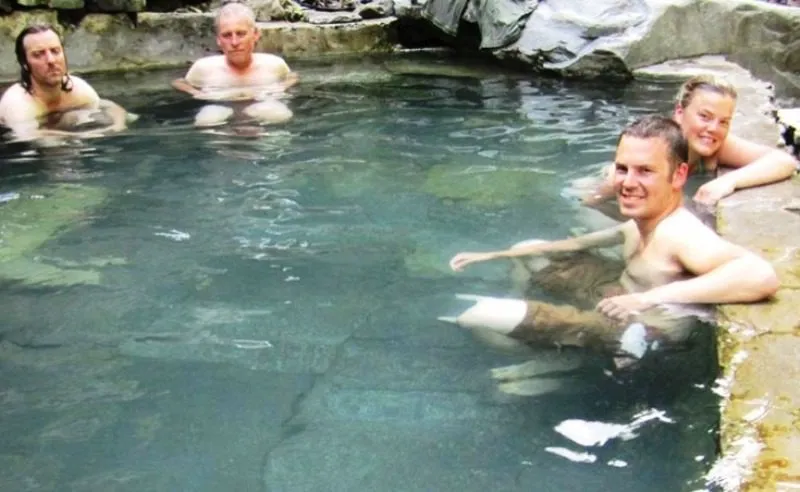
The centerpiece of the trek is Gasa Tsachu itself, which is located near the banks of the Mo Chhu River. The Gasa Hot Springs are among the most popular in Bhutan, attracting both tourists and local visitors throughout the year.
According to the Gasa Dzongkhag Administration, the complex consists of ten ponds, five for women and five for men, along with two exclusive pools for VVIPs and VIPs. Each pond maintains a different water temperature and is believed to carry its own distinct healing properties, allowing visitors to choose the pool best suited to their needs.
This is not a commercialized spa experience. It is a living tradition, and sitting in those pools alongside Bhutanese families who have traveled days to be there is one of the most quietly moving experiences the kingdom has to offer.
The springs carry deep spiritual significance. Two captivating oral traditions narrate the origins of Gasa Tsachu, and the Bhutanese believe strongly in the medicinal value of the waters. Many locals come regularly to alleviate joint pain, skin ailments, and fatigue.
They come to the springs as a health ritual, a spiritual practice rooted in Bhutan’s Buddhist traditions. Arriving as a trekker, you become part of this living custom rather than a visitor looking in from outside.
The trek follows the Mo Chhu valley northward, moving through subtropical forests of oak, rhododendron, and wild alder before the landscape opens into alpine meadows closer to Gasa. The main feature of the trek is soaking in the Gasa springs to relax the body and mind. The experience is enriched by walking through the Bhutanese countryside, where simple Buddhist communities live a harmonious and contented life, and by visiting important cultural landmarks including Punakha Dzong, Chimi Lhakhang, Paro Rinpung Dzong, and Kyichu Lhakhang.
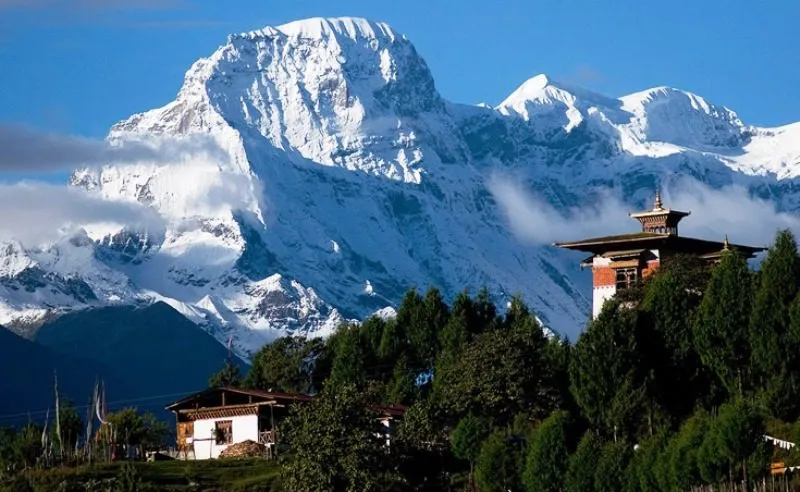
High above the hot springs, Gasa Dzong watches over the valley from its perch on the ridge. Known formally as Gasa Tashi Tongmön Dzong, this circular fortress was raised in the 17th century to protect Bhutan's northern frontier and remains one of the most striking dzongs in the country.
A two-hour climb from the springs brings you to its entrance, where the views open across the entire Gasa district. On clear days, the sacred Mount Jomolhari stands at 7,314 meters against the northern sky, and the permanent snowfields of Gangchhenta stretch across the horizon beyond it, a reminder of just how deep into the Himalayas this quiet valley reaches.
What sets this trek apart from most Himalayan routes is its balance. The walking is moderate and well within reach of first-time trekkers. The altitude stays manageable. The cultural depth is genuine. And at the end of the trail, there is actual rest, warm mineral water, river sounds, and mountain air, rather than another summit photograph.
Bhutan built its national philosophy around Gross National Happiness, and the Gasa Hot Spring Trek is perhaps the most direct way to experience that philosophy in practice. The land is protected, the culture is intact, and the springs have been welcoming people for healing since long before tourism arrived.
Itinerary of Gasa Hot Spring Trek
Day 01
Arrival Paro (2,250m) – Sightseeing
Arrive Paro by the Bhutanese National Carrier flying over the world’s highest mountains and finally landing at the lush green Paro valley. A cool and clean fresh air greets the visitor as stepping down from the plane, the first gift of Bhutan.
After clearing customs and visa formalities, meet the representatives and the Bhutanese guide, and a short tour brief by the guide then transfer to Paro town for lunch. After lunch visit Ta Dzong. Ta Dzong, once a watchtower, built to defend Rinpung Dzong during inter-valley wars of the 17th century.
It was inaugurated as Bhutan’s National Museum in 1968. Afterwards visit Rinpung Dzong. Rinpung Dzong built in 1646 by Shabdrung Ngawang Namgyal, the first spiritual and temporal ruler of Bhutan; the Dzong continues its age-old function as the seat of the district administration, district court and the monastic body. The southern approach to the Dzong has a traditional roofed cantilever bridge called Nemi Zam.
Overnight at Hotel.(Lunch/Dinner included)
Day 02
Paro – Thimphu (2,350m) Sightseeing
After breakfast, drive towards Thimphu (the capital of Bhutan) which is about 1 & half hours drive. En-route Thimphu, one can do a short hike to Tamchog Monastery, a private temple owned by the descendents of famous Tibetan bridge – builder Thangthong Gaylpo.
Later on continue the drive to Thimphu and visit Buddha point for a stunning view of Thimphu city and Takin Compound: One the way to the Viewpoint over Thimphu is the home of Bhutan’s national animal, the Takin, a strange looking beast which some say resembles a beestung moose.
The Bhutanese have their own story to narrate about how the Takin was created by the Master Drukpa Kuenley (the divine madman).(Breakfast/Lunch/Dinner included)
In Thimphu visit Tashi Choe Dzong: The fortress of the glorious religion was initially constructed in 1641 and rebuilt by King Jigme Dorji Wangchuk in the 1960s. Visit the Folk Heritage Museum – a 300 year old traditional house converted into a museum. (Both open Mon-Fri).
Brush shoulders with the everyday Bhutanese grocery shopping for local produce at the Centenary Farmers Market (Open Fri – Sun). Also see the new authentic craft bazaar (Close on Tue) of 80 stalls showcasing works by artisans from rural areas will showcase. Overnight at Hotel.(Breakfast/Lunch/Dinner included)
Day 03
Thimphu – Punakha (1,310m)
After early breakfast, drive towards Punakha which is about 1 & half hour passing along Dochu La Pass at 3140m. On clear weather, the pass commands a wonderful panorama of the Eastern Himalayas. From the pass, the road descends through varied forest and finally emerging into the highly cultivated valley of Punakha.
Take a short hike through beautiful rice fields to Chimmi Lhakhang, a temple dedicated to Drukpa Kuenley, who as a favorite saint of the Bhutanese people is known affectionately as “the Divine Madman”. The temple is on a hillside in the middle of rice fields and has become a pilgrimage site for childless couples.
In the afternoon, visit Punakha Dzong. Located at the confluence of the Pho-chu (male-river) and Mo-chu (female-river), the Punakha Dzong is arguably the most impressive dzong in the country. Overnight at Hotel.(Breakfast/Lunch/Dinner included)
Day 04
Drive to Tashithang (1,840m) & trek to Geon Damji (2,430m)
After an early breakfast, drive through the valley of Punakha on the Mo-chu side to Tashithang which will be approx. 18 km and 1 & half hours drive. Start the trek at Tashithang (1840m) and camp at Geon Damji (2430m).
First the trail gradually climbs up above the Mo-chu into the lush semi-tropical forest filled with banana trees, creepers and different kinds of orchids. If luck favours ‘Takin’ the national animal can be seen on the other bank of Mo-chu. Geon Damji is a large village with rice terraces along side.
Overnight at camp (Walking Duration: 5-6 hrs)(Breakfast/Lunch/Dinner included)
Day 05
Trek to Gasa Hotspring (2,240m)
Today, the trail gradually passes through oak forests and also different varieties of orchids can be spotted along the way. Before reaching Gasa, a Dzong can be seen from the view point. The trail to Gasa Hot spring is to descend through quite thick forest and mini bamboo.
Overnight at Camp. (Walking Durations: 4-5 hrs)(Breakfast/Lunch/Dinner included)
Day 06
Rest at Gasa Hotspring (2,240m)
The day will be at leisure and to try out the hot spring located by the bank of a stream. There are cement pools to dip into. The day can also be spent going up to Gasa Dzong with packed lunch. The trek to Gasa Dzong will be quite a tough climb and takes about 2 hours upto an elevation of 2770m.
Overnight at Camp.(Breakfast/Lunch/Dinner included)
Day 07
Trek to Geon Damji (2,430m)
The trail winds through rolling hillsides with vistas of fields, villages and Oak and Pine forests. Gasa Dzong will be visible behind glued to the valley wall as the trek proceeds ahead. The route goes through small settlements and finally at camp of Geon Damji – a large village with rice terraces on the hillsides.
Overnight at Camp. (Walking Duration: 5-6 hrs)(Breakfast/Lunch/Dinner included)
Day 08
Trek to Tashithang (1840m) & drive to Punakha (1,310m)
Start from Geon Damji and end at the vehicle point at Tashithang. From here it is 18 km (1 hour drive) to Punakha but the initial 5-6 km is unpaved road. Upon arrival in Punakha, check-in hotel.
Overnight at Hotel. (Walking Duration: 5 hrs)(Breakfast/Lunch/Dinner included)
Day 09
Punakha – Thimphu (2350m)
Drive to visit a stunning hill-top nunnery – Sangchen Dorji Lhundrup Chholing. Have a chat with the nuns and enjoy the charm of the surrounds! The main temple is dedicated to the bodhisattva of compassion (Avaloketeshvara) and next to the temple is a beautiful Stupa and there are slate carvings of religious figures. Re-crossing Dochula and drive towards Thimphu upon arrival check-in hotel.
Overnight at Hotel (Breakfast/Lunch/Dinner included)
Day 10
Thimphu – Day excursion to Haa Valley (2740m) – Paro
After breakfast, drive over the Chelela pass (3899 m). From the pass, good view of the Himalayan Ranges and the valley beyond can be spotted. Then continue the drive towards Haa. Haa is made up of five counties and was closed to outside world until 2002. There is a military camp by the Indian Army.
In Haa valley, visit Wangchucklo Dzong dating back to 1915 and Lhakhang Nakpo (Black temple) is said to have been built by pigeon emanation of King Songtsen Gampo in the 7th century and Lhakhang Karpo (white temple). After the visit drive to Paro.
Overnight at Hotel (Breakfast/Lunch/Dinner included)
Day 11
Paro – Hike to Taktsang Monastery (3,120m)
Early in the morning, make an excursion to Taktsang Monastery – this has to be the monastery with the most outstanding setting in Bhutan. Set on a vertical cliff face at 2950m above sea level, it defies all engineering logic. For the energetic, hike 2 hours up to get a more dramatic view of the monastery.
(The hike demands a certain level of fitness and a pony ride to the monastery can be arranged at additional cost). Just on the outskirts of Paro town, visit Kyichu Lhakang, one of the oldest temples in Bhutan and have the opportunity to meet the local villages in a local farm house.
Overnight at Hotel.(Breakfast/Lunch/Dinner included)
Day 12
Paro depart
After breakfast, drive to the Paro airport in time to catch the onward flight. Bid farewell to the remote and legendary Dragon Kingdom disappears again behind its guardian mountains.(Breakfast only included)
The Package Includes
Airport pick-up and drop-off by private vehicle.
3-star accommodation (4 & 5 stars may require an additional premium).
Bhutan visa fee, including all necessary processing
Route Permit
Three meals per day during your stay in Bhutan
A licensed Bhutanese tour guide
All land transportation by private vehicle
Camping equipment and haulage for trekking tours
Sightseeing as per itinerary
Monuments entrance fees where applicable
Drinking water
All internal taxes and charges
A sustainable development fee of $100. (This sustainable development fee goes towards free education, free healthcare, poverty alleviation, along with the building of infrastructure.)
The Package Excludes
Airfare & Travel Insurance
Expenses of personal nature, tips to guides and drivers
Expenses occurred due to unavoidable events, i.e., road wrecks, flight delays, etc.
Frequently Asked Questions
1. What is the Bhutan Gasa Hot Spring Trek?
The Bhutan Gasa Hot Spring Trek is a moderate multi-day trek through the Mo Chhu Valley, leading to the mineral-rich thermal springs of Gasa Tsachu beneath the 17th-century Gasa Dzong. It combines Himalayan scenery, Buddhist culture, and natural healing in one accessible journey.
2. How much does the Gasa Trek cost?
The Gasa Hot Spring Trek in Bhutan includes your licensed guide, accommodation, all meals, and private transport throughout the journey. The price also includes the mandatory Sustainable Development Fee of USD 100 per person per night. For a detailed and personalized price quote, don't hesitate to get in touch with us directly.
3. What is the best time to visit the Bhutan Gasa Hot Spring Trek?
The best time is March to May for clear skies and rhododendron blooms, and September to November for dry, stable weather with excellent mountain views. Both seasons offer comfortable walking temperatures and a rewarding overall experience in Bhutan.
4. Do I need previous trekking experience for the Gasa Hot Spring Trek?
No prior trekking experience is needed. The trail is beginner-friendly with clear paths and moderate daily distances. Good basic fitness and sturdy hiking shoes are enough to complete this trek comfortably and enjoy the full cultural experience along the way.
5. How physically fit do I need to be for the Gasa Hot Spring Trek?
You need a moderate fitness level to walk 4 to 7 hours daily over 14 to 19 kilometers on uneven terrain. No technical skills are required. Six to eight weeks of progressive hill walking before departure is strongly recommended for a comfortable journey.
6. How do I prepare for the Bhutan Gasa Hot Spring Trek?
Start training 6 to 8 weeks before departure with progressive hill walking, building to 90-minute sessions with a loaded pack. Focus on leg strength, cardiovascular fitness, and hydration. Ask your doctor about altitude medication and arrange comprehensive travel insurance well in advance.
7. Is altitude sickness a risk on the Gasa Hot Spring Trek?
The risk is low compared to higher Himalayan treks, but it is possible near Balela Pass at 3,740 meters. Common symptoms are headache, nausea, and tiredness. Staying hydrated, ascending gradually, and speaking to your doctor about Diamox will significantly reduce any altitude-related health concerns.
8. What are the health requirements for the Bhutan Gasa Hot Spring Trek?
You should be in excellent general health with no serious heart, lung, or mobility conditions. A medical assessment with your doctor before departure is advised. Travel insurance covering medical evacuation and emergency hospitalization is mandatory for all visitors entering Bhutan.
9. What kind of toilet facilities are available during the Gasa Hot Spring Trek?
Teahouses in Tashitang and Damji have basic shared toilet facilities. Near the Gasa Tsachu hot springs camp, the support crew sets up portable toilet tents. Carry biodegradable soap and follow responsible hygiene practices to protect the natural environment throughout the trek.
10. Can I do the Bhutan Gasa Hot Spring Trek solo?
Solo trekking is welcome, but Bhutan requires all visitors to travel with a certified licensed guide at all times. Your operator arranges all logistics, making solo travel completely effortless and stress-free. Group sizes range from one to sixteen participants per guide.
11. When should I book, and can I extend my Bhutan Gasa Hot Spring Trek holiday?
Book at least 8 to 12 weeks in advance to allow enough time for visa processing and trekking permits. You can also extend your itinerary with extra cultural visits, a Haa Valley excursion, or additional rest days based on your personal travel schedule.
12. What can I witness on the Bhutan Gasa Hot Spring Trek?
You can see panoramic views of Mount Jomolhari, ancient Gasa Dzong, mineral hot springs, subtropical forests, alpine meadows, yak pastures, takin and blue sheep, traditional highland villages, and the Gasa Tshechu festival with sacred masked dances performed by monks and residents.
Additional Trekking Info
Cost of Bhutan Gasa Hot Spring Trekking Package
The Gasa Hot Spring Trek is a private trekking adventure that requires careful planning and personalized arrangements. Since we tailor every departure to each trekker's preferences and travel requirements, several factors determine the final package cost, including:
Number of trekkers joining the expedition
Preferred travel dates and trekking season
Accommodation category before and after the trek
Private group size and customized itinerary requirements
Additional services or special arrangements
Flight assistance and other travel arrangements within Bhutan
The Gasa Hot Spring Trekking is not offered as a fixed group departure with a standard price. Every expedition is carefully organized with customized logistics, including trekking permits, a licensed Bhutanese trekking guide, accommodation, transportation, meals, and full trekking support throughout the journey.
To provide an accurate quotation, our trekking specialists will first discuss your preferred travel dates, group size, trekking experience, and specific travel requirements. Based on this information, we will prepare a personalized Gasa Hot Spring Trek itinerary along with a detailed cost breakdown, package inclusions, and available customization options.
Whether you are planning a solo adventure, a private group trek, or a customized Bhutan trekking experience, our team is here to help you choose the best itinerary for your schedule, experience level, and budget. There is no obligation to book. Contact our Bhutan trekking specialists today for a personalized quotation and start planning your Bhutan Gasa Hot Spring Trekking with confidence.
Bhutan Gasa Hot Spring Trek Route
The Gasa Hot Spring Trek follows the Mo Chhu River northward from the lowlands of Punakha into the alpine reaches of the Gasa district, covering around 32 kilometers of trekking on the core route.
Day 1 of Trekking: Tashitang to Damji
The trek starts at Tashitang village at 2,100 meters, about three hours by vehicle from Punakha town. The trail runs through forests of oak, rhododendron, and wild alder along the eastern bank of the Mo Chhu River. This day covers 16 kilometers over 5 to 6 hours, climbing 870 meters and descending 250 meters, ending at Damji village at 2,250 meters.
Day 2 of Trekking: Damji to Gasa Tsachu
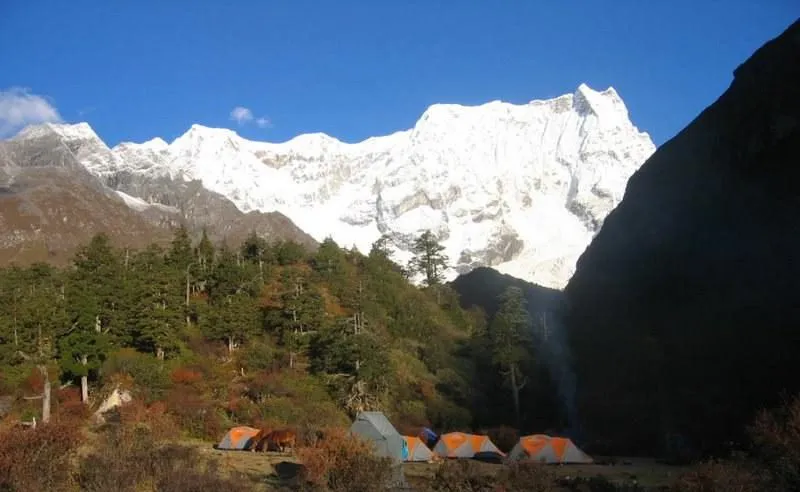
The second day starts at Damji and goes to the hot springs at Gasa Tsachu. The 16-kilometer walk takes 4 to 5 hours, with 470 meters of ascent and 480 meters of descent, arriving at the base camp at 2,240 meters. The trail moves from a forested valley into open alpine meadows. Camp areas sit right next to the thermal pools, where water flows at around 40 degrees Celsius.
Who Can Do This Trek?
The Gasa Vakkey Trek is one of Bhutan’s most beginner-friendly routes, open to a wide range of people. It is rated easy to moderate, with 4 to 6 hours of walking per day on clear trails and low altitude risk. It is a particularly suitable fit for first-time trekkers and people with average fitness, wellness travelers who want to relax in the hot springs, families with older children or teenagers, mature travelers aged 50 and above who prefer a slower pace, and solo travelers, couples, and small groups. It is not ideal for very young children, people with serious heart or lung conditions, those with significant mobility issues, or anyone looking for a technical high-altitude climb. With a licensed guide, private transport, and travel insurance in place, most people in reasonable health can enjoy this trek fully.
Why Book with Tour in Bhutan?
Tour in Bhutan, our company, has over a decade of experience in Bhutanese trekking. Every Gasa Hot Spring Trek itinerary is carefully planned and grounded in real local knowledge. All guides are certified through the Tourism Council of Bhutan’s Guide Management System, meeting full government standards.
We plan around seasonal conditions, including leech activity from April to September and ideal mountain photography windows. We work directly with teahouse owners and camp locations to make sure accommodation is comfortable and authentic. Every trek includes the Sustainable Development Fee required under Bhutan’s tourism policy.
All guides licensed through the Bhutan Tourism Council
Priority access to teahouses through direct operator relationships
Clear pricing with all permits and fees included
Flexible itineraries with pre-trek and post-trek extension options
Full pre-trek briefing covering acclimatization and gear
Porter services available on request
Emergency communication and evacuation systems in place
Post-trek review session to reflect on your experience
Visible Peaks Along the Route
Mount Jomolhari (7,314m)
Mount Jomolhari stands tall on the northwestern horizon and is visible from several points along the trek. Known locally as the Bride of Kanchenjunga, the mountain sits on the border between Bhutan and Tibet and holds profound spiritual meaning for Buddhist communities. Climbing is not permitted on Jomolhari as it is considered sacred.
Gangchhenta – Great Tiger Mountain (6,840m)
Gangchhenta rises prominently from the northern Gasa district. Its summit stays snow-covered year-round above roughly 5,500 meters. From Balela Pass and the upper Mo Chhu valley, the mountain’s east ridge stands clearly visible, often used by guides as a landmark along the route.
Best Season for the Trek
Spring: March to May
Spring is the best time to trek. Skies are clear, temperatures are comfortable, and rhododendrons bloom across the lower and mid-elevation forests. March brings stable conditions with cool nights around 0 to 5 degrees Celsius at 2,200 meters. April and May are warmer with peak flowering across the hillsides.
Autumn: September to November
Autumn is the second best window. Rainfall is low, visibility is excellent, and mountain views are at their clearest. September can have some afternoon clouds from late monsoon moisture. October is the most settled month. November stays comfortable for trekking, though temperatures begin to drop toward winter levels.
Elevation Zone
Location
Temperature (Best Seasons)
Lower Valley (2,100–2,500m)
Tashitang, Damji
18–25°C daytime
Mid-Elevation (~2,250m)
Damji Village
12–18°C daytime
Upper Elevation (~3,740 m)
Balela Pass
8–15°C daytime
Hot Springs (year-round)
Gasa Tsachu
~40°C pool temperature
Required Permits & Fees
All trekking in Bhutan requires permits through the Tourism Council of Bhutan. Your tour operator handles everything electronically before your arrival.
Permit / Fee
Details
Bhutan Visa Approval
Processed by your tour operator through TCB
Trek Route Permit
Submitted electronically before departure
Guide License Verification
Confirmed at gms.tourism.gov.bt
Sustainable Development Fee
USD 100 per person per night
Visa Fee
USD 40 per person
Monument Entrance Fees
Optional, paid on-site
Trek Difficulty
The Gasa Hot Spring Trek is rated moderately difficult, mainly because of several back-to-back walking days with moderate elevation changes. Daily distances of 14 to 19 kilometers over 4 to 7 hours make up the main challenge. There are no technical sections or scrambling involved. Conditions are harder during the monsoon season, from June to September, when trails become muddy and leeches are common. The highest point, Balela Pass at 3,740 meters, is a straightforward walk without exposed ridges or climbing gear.
How to Prepare
Start training 6 to 8 weeks before departure. Focus on hill walking rather than flat running. Begin with 45-minute sessions once a week and build up to 90-minute walks with a loaded backpack by week six.
Gradual acclimatization through low-altitude walking in weeks 1 to 3
Increase training load by around 10 percent each week
Train with your actual trek backpack and gear
Add yoga or swimming as recovery sessions
Eat iron-rich foods and maintain good protein intake
Maintain regular sleep through your training period
Get medical clearance from your doctor before travel
Accommodation & Meals
In Paro and Thimphu, you stay in comfortable 3-star hotels with private bathrooms, hot water, and restaurant dining. Upgrades to 4-star or 5-star rooms are available at extra cost. Our team handles all pre-bookings to match your guide meeting times and transfers.
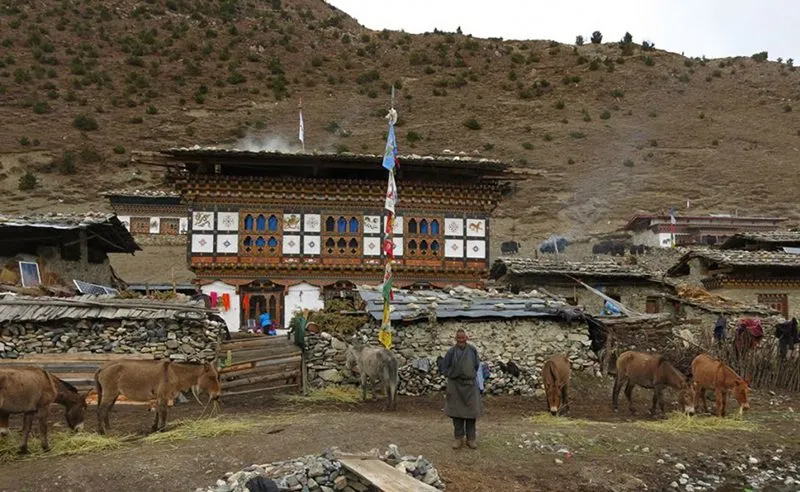
On the trail, teahouses in Tashitang and Damji offer basic shared rooms for 2 to 4 people with communal bathrooms. Rooms have solar lighting and gas heating but limited insulation, so a sleeping bag is essential for warmth at night. Shared dining areas in teahouses are a good place to meet other trekkers and local families.
At Gasa Tsachu, our team sets up weatherproof expedition tents for 1 to 2 people each, with a separate dining tent and cooking area managed by the support crew.
We include all three meals every day from arrival to departure. Breakfast includes porridge, bread, eggs, fruit, and tea or coffee. Lunch on trekking days is a packed meal of bread, cheese, dried fruit, and energy snacks. Dinner is a warm cooked meal, usually rice and curry, dal, vegetables, or soup with occasional meat. Please mention any dietary needs, including vegetarian, gluten-free, or food allergies, at the time of booking.
Travel Insurance
Travel insurance is required for all visitors to Bhutan. Your policy must cover medical emergencies, hospitalization, helicopter evacuation from remote areas, trip cancellation, and repatriation. The trek reaches altitudes up to 3,740 meters in locations with no nearby medical facilities. Make sure your policy includes adventure trekking activities and any pre-existing health conditions. Buy your insurance before arrival. Your licensed tour operator in Bhutan will confirm your coverage before the trek begins.
Gear & Equipment Checklist
Trekking backpack (50 to 65 liters) with padded hip belt
Hiking boots with ankle support and good grip
Merino wool or synthetic hiking socks (multiple pairs)
Sleeping bag rated for -5 to 0 degrees Celsius
Waterproof jacket with sealed seams
Warm hat and neck gaiter
Lightweight insulated gloves
Base layer shirts and long underwear
Fleece jacket and warm trousers for evenings
Two trekking poles
Water bottle or hydration pack (1.5 to 2 litres)
Sunscreen SPF 30 or higher and lip balm
Personal medications and basic first-aid kit
Headlamp with spare batteries
Camera and portable power bank
Biodegradable soap and personal hygiene items
High-grade insect repellent (essential from April to September)
Altitude Sickness: What to Know
Altitude sickness can develop when you move to elevations above 2,500 meters. On this trek, you spend time between 2,200 and 3,740 meters, which means some risk exists, though it is much lower than on longer high-altitude treks in Bhutan.
Symptoms to Watch For
Headache in the forehead or temples
Nausea and reduced appetite
Tiredness and body weakness
Broken sleep and breathing changes
Shortness of breath while resting
How to Reduce the Risk
Ascend gradually and allow your body time to adjust
Drink 2 to 3 litres of water each day
Eat carbohydrate-rich foods for better oxygen use
Keep a steady pace and avoid rushing on early mornings
Sleep at least 7 to 8 hours each night
Ask your doctor about Diamox before departure
Avoid alcohol and sleeping tablets throughout the trek
Transportation
Private transport is included for your full 12-day journey. A dedicated vehicle and experienced driver handle all road transfers, covering airport pick-up and drop-off in Paro; driving between Paro, Thimphu, Punakha, and Haa Valley; and transferring to and from the trek start and end points at Tashithang.
On trekking days, the support team manages all logistics while the vehicle stays on standby for emergencies or unplanned returns. All vehicles are well-maintained and suited to Bhutan’s mountain roads. Private transport allows you to stop for photos, rest, and sightseeing whenever you like.
Guide & Porter Services
Every Gasa Hot Spring Trek group travels with at least one certified guide licensed by the Tourism Council of Bhutan, as required by Bhutanese law. Guides complete government training in local geography, cultural practices, environmental care, and safety. Our guides bring 8 to 20 years of field experience.
Porter services are optional. Trekkers who carry their packs travel light, while those who hire porters have more logistical support on the trail. Porters charge between USD 15 and 25 per day depending on terrain. Both guides and porters receive meals and accommodation throughout the trek.
Important Notes
A certified guide must accompany you at all times in Bhutan
Your trek dates must match the itinerary submitted to the Department of Tourism
The Sustainable Development Fee of USD 100 per person per night is non-negotiable
Carry high-grade insect repellent if trekking between April and September
Dress modestly at Gasa Dzong; covered shoulders and knees are required
Always ask before taking photographs of individuals
Be honest with yourself about your fitness level before booking
All trekkers must carry valid personal travel insurance
Leave no waste and follow environmental guidelines throughout the trek
Book at least 8 to 12 weeks ahead to allow time for permit processing
Book Your Bhutan Gasa Hot Spring Trek Expedition
The Gasa Hot Spring Trekking is one of Bhutan's most rewarding trekking adventures, combining scenic mountain trails, traditional villages, pristine forests, and the famous Gasa Hot Springs into an unforgettable Himalayan journey. With seasonal trekking conditions, permit requirements, and carefully coordinated logistics, proper planning is essential to ensure a safe and enjoyable expedition.
Whether you are planning a private trek with friends, a relaxing Himalayan adventure, or a once-in-a-lifetime journey through Bhutan's breathtaking landscapes, our experienced Bhutan trekking team will create a personalized itinerary tailored to your interests, fitness level, and travel schedule.
Ready to Experience the Bhutan Gasa Hot Spring Trek?
Contact our Bhutan trekking experts today to:
Check available departure dates
Discuss your trekking experience and fitness level
Receive a customized itinerary
Get your personalized quotation
Understand permits, logistics, and equipment requirements
Start Planning Your Bhutan Gasa Hot Spring Trek Adventure Today
Your journey through Bhutan's spectacular Himalayan landscapes, traditional mountain communities, and rejuvenating Gasa Hot Springs begins with a conversation. Contact our Bhutan trekking specialists today and start planning your Bhutan Gasa Hot Spring Trek with confidence.
Trip Reviews
[trustindex no-registration=google]
Rated Excellent by our travellers
★★★★★
"Best Bhutan Tour Operator"
"Aura Trails made our Bhutan trip absolutely unforgettable. Every detail was perfectly planned."
Sarah M.
Australia · Cultural Tour
★★★★★
"Exceeded All Expectations"
"From landing in Paro to our last day in Thimphu, everything was seamless. Highly recommend!"
James K.
USA · Trekking Tour
★★★★★
"A Dream Come True"
"The festival tour was magical. Our guide Karma was exceptional — so much local knowledge and warmth."