
9-Day Rural Bhutan Tour Package

9 Days

Discover the soul of Bhutan on a 9-day rural Bhutan tour crafted for travelers who seek meaning beyond monuments. Journey from the fortress gateway of Paro through Punakha's river valley, explore the seldom-visited villages of Talo and Samtengang, soar over Gangtey's glacial crane sanctuary, and ascend to Tiger's Nest Monastery, the defining icon of the Himalayas. This is slow travel in a kingdom that has chosen happiness over growth.

  • 3,120m/10,240 ft
  • March to May and September to November
  • Full board (breakfast, lunch and dinner)
  • Homestays/Government approved 3 stars and Above hotels
  • Private car, van or bus (Depends on group size)
  • Private Tour

Overview

Highlights of the Bhutan rural tour package

  • Ascend 900 meters above the Paro Valley to Bhutan's most sacred cliff-clinging monastery, built in 1692, where Guru Rinpoche meditated.

  • Experience Bhutan's most scenic mountain pass, crowned by 108 hand-built stupas honoring fallen soldiers, with sweeping Himalayan panoramas on clear days.

  • Explore Bhutan's most magnificent dzong, built in 1637, where every king has crowned himself, set at the meeting of two sacred rivers.

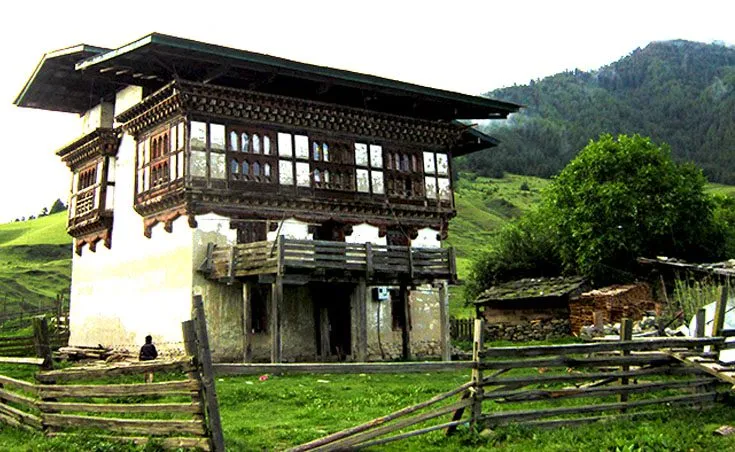
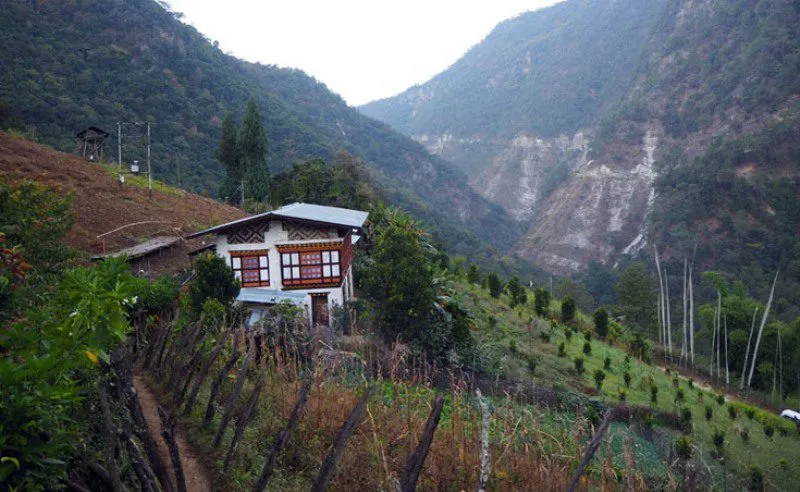
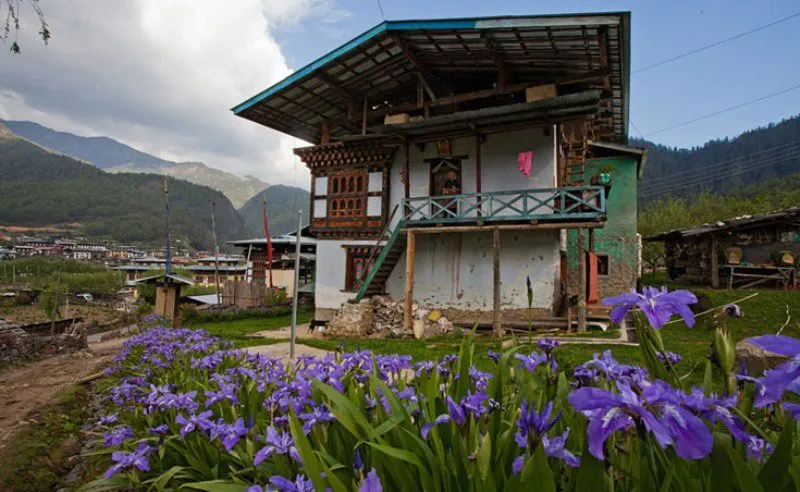
  • Explore centuries-old slate-roofed farmhouses in two rarely visited royal villages along the Mo Chhu river, encountering unscripted Bhutanese rural life.

  • Visit a 17th-century Nyingmapa monastery overlooking a glacial valley hosting nearly 500 endangered black-necked cranes migrating annually from the Tibetan Plateau.

  • Crossing Bhutan's highest motorable pass, draped in prayer flags, you descend into one of the country's most isolated and authentic valleys, which only opened in 2002.

  • Discover the world's only capital without traffic lights; visit the 51.5-meter gilded Buddha Dordenma, Tashichho Dzong, and vibrant weekend market stalls.

  • Enjoy Bhutan's national dish of fiery chili and yak-cheese stew, nutty crimson-red rice, and butter tea flavors inseparable from the Himalayan landscape itself.

Overview of the Rural Bhutan travel package

Why choose this Bhutan tour? Because Bhutan doesn't reward those who rush. This Rural Bhutan Tour Package is designed for the traveler who wants to slow down to sit with a monk at dawn prayers, walk terraced rice fields at dusk, and understand why this tiny Himalayan kingdom measures its wealth in Gross National Happiness rather than in GDP.

Bhutan is not a destination you visit. It is a destination that visits you, leaving something behind long after you return home. GNH, introduced by Bhutan's Fourth King Jigme Singye Wangchuck, rests on four pillars: sustainable development, environmental conservation, cultural preservation, and good governance. 

This is not a tourism slogan. It is national policy, written into Bhutan's constitution and measured annually by the Gross National Happiness Commission.

That philosophy shapes every road your vehicle travels, every valley your guide leads you through, and every farmhouse meal you share. You feel it within hours of landing.

According to the Tourism Council of Bhutan, Bhutan welcomed just 145,065 visitors in all of 2024. Compare that to the 8 million who visit Nepal annually, or the 14 million who pass through Thailand.

The solitude you experience here is not incidental; it is the result of a deliberate, decades-long national commitment to high-value, low-impact tourism. 

Bhutan's Sustainable Development Fee directly funds free education, free healthcare, poverty alleviation, and conservation. When you travel here, your presence contributes rather than extracts.

Most standard Bhutan packages follow a predictable triangle: Paro, Thimphu, Punakha, and Tiger's Nest. This journey goes further, and it does so deliberately and meaningfully.

You begin in Paro at 2,250m, Bhutan's only international gateway, where the approach through Himalayan peaks ranks among the world's most dramatic landings.

From there, the route moves into Punakha, Bhutan's former winter capital, where Punakha Dzong, the Palace of Great Bliss, built in 1637 by Zhabdrung Ngawang Namgyal, sits at the sacred confluence of the Pho Chhu and Mo Chhu rivers. Every king of Bhutan has been crowned within its walls.

Where other tours stop here, this itinerary continues deeper. The rarely visited villages of Talo, Nobgang, and Samtengang along the Mo Chhu river provide genuine and unscripted farmhouse experiences, communities that have welcomed very few international visitors and where your guide translates not just language but meaning. 

Then comes Phobjikha Valley at 2,900m, a glacial bowl recognized by Bhutan's Department of Forest and Park Services as critical winter habitat for nearly 500 endangered black-necked cranes migrating annually from the Tibetan Plateau.

The valley holds Gangtey Monastery, a 17th-century Nyingmapa masterpiece, and night skies with zero light pollution.

Haa Valley follows, one of Bhutan's most isolated regions, only opened to foreign visitors in 2002, accessed via Chele La Pass at 3,988m, Bhutan's highest motorable road. Finally, on Day 8, the journey builds to its defining moment: the ascent to Taktsang Palphug Monastery, Tiger's Nest, clinging to a cliff face 900 meters above the Paro Valley floor, built in 1692, where Guru Rinpoche meditated after arriving from Tibet on the back of a flying tigress.

This itinerary is sequenced intentionally. Each valley builds on the last. Each monastery visit is contextualized by everything that came before.

By the time you stand before Tiger's Nest on Day 8, your body is acclimatized, your eyes have been trained, and the monastery lands entirely differently than it would on Day 2 of a rushed package tour.

You will share meals inside rural farmhouses, witness dawn prayer ceremonies at living monasteries, and walk through protected forests that cover over 70% of Bhutan's land, a country that is not merely carbon-neutral but carbon-negative, the only one on Earth that absorbs more CO₂ than it produces.

Bhutan does not let you leave the same person who arrived. That is the only promise this journey makes, and it keeps it, every step with us.

Rural Bhutan Tour Package-Short Itinerary

Day 01: Arrive in Paro (2,250m) – Rest and acclimatize.

Day 02: Paro to Punakha via Dochula Pass (3,100m) 

Day 03: Punakha to Talo & Nobgang Village Heritage Day.

Day 04: Punakha to Samtengang Rural Excursion.

Day 05: Punakha to Gangtey / Phobjikha Valley (2,900m).

Day 06: Gangtey to Paro (Stop in Thimphu for lunch & sightseeing, but sleep in Paro).

Day 07: Paro, Day Excursion to Haa Valley via Chele La Pass, and Return to Paro.

Day 08: Paro, Hike to Tiger’s Nest Monastery (3,120m).

Day 09: Paro, Departure.

The Bhutan Tour Package – Detailed Guided Itinerary

  • Day
    01

    Day 01: Arrive in Paro, Rest & Acclimatize 

    Welcome to Bhutan. As your plane threads between Himalayan giants, you'll understand immediately this place is different.

    Paro Airport is one of Earth's most breathtaking landings. Settle into your hotel, then stroll beside the glacial Paro Chhu river as monastery bells drift across the valley.

    Tonight, over warm ema datshi and red rice, your guide introduces you to Bhutanese culture, sharing its rhythms, its reverence, and its unhurried pace.

    Don't rush. Don't plan. Simply arrive. This kingdom asks only one thing of you on Day One: breathe it in.

  • Day
    02

    Paro to Punakha via Dochula Pass (3,100m) 

    This morning, the Himalayas reveal themselves. At Dochula Pass, 108 white stupas stand in silent tribute to fallen Bhutanese soldiers, commissioned by the Queen Mother herself.

    On clear days, peaks exceeding 7,000 meters crown the horizon, a panorama that silences even the most well-traveled.

    Then descend into subtropical Punakha, where jacaranda blooms and rice paddies replace pine forests.

    Your day ends at Punakha Dzong, the Palace of Great Bliss, glowing golden at the confluence of two sacred rivers. Stand there at dusk. Few sights in Asia rival it.

  • Day
    03

    Punakha to Talo & Nobgang Village Heritage Day 

    Today, you leave the tourist trail entirely. Talo village wraps around a royal monastery, its farmhouse courtyards alive with daily Bhutanese life spinning, weaving, and drying chillies on sun-warmed rooftops.

    In Nobgang, slate-roofed homes line the Mo Chhu riverbank, unchanged across centuries. Sit down with a local family for lunch. Grind chili paste by hand.

    Listen to stories passed between generations that no guidebook has ever printed. This is the Bhutan that most visitors never find generous, genuine, and quietly extraordinary.

    Let your guide translate not just language but meaning.

  • Day
    04

    Punakha to Samtengang Rural Excursion 

    Few travellers have ever heard of Samtengang. Fewer still have walked it. This ridge-top village floats above terraced Punakha farmland on a moderate loop trail that takes 3 to 4 hours and threads through chortens, forest corridors, and working farms.

    Bhutan shelters over 770 bird species and 5,400 plant varieties, and the trail reveals them at every turn: a flash of color in the canopy, wild orchids underfoot.

    Photographers will run out of memory cards. Walkers will run out of superlatives. Return to Punakha quietly changed, carrying views that simply don't exist anywhere else on the map.

  • Day
    05

    Punakha to Gangtey / Phobjikha Valley (2,900m) 

    Descending into Phobjikha feels like entering a painting. This glacial bowl, cradled by the Black Mountains, holds Gangtey Monastery, a 17th-century Nyingmapa masterpiece overlooking sacred wetlands.

    Each October, nearly 500 endangered black-necked cranes migrate here from the Tibetan Plateau, filling the valley with their haunting calls.

    Walk the Gangtey Nature Trail through open meadows as afternoon light turns the marshgrass gold.

    Tonight, stay in the valley. After dark, step outside. With zero light pollution and altitude-crisp air, the stars over Phobjikha are among the most spectacular you will ever witness.

  • Day
    06

    Gangtey to Thimphu to Paro 

    Bid the valley farewell and wind toward Thimphu, the world's only national capital with no traffic lights, governed instead by a white-gloved policeman in a ceremonial booth.

    Over lunch, absorb the city's curious blend of monks on smartphones and traditional architecture beside modern cafés.

    Visit the colossal Buddha Dordenma, 51.5 meters of gilded bronze gazing serenely over the valley, and then Tashichho Dzong, the seat of Bhutan's government.

    Browse the Weekend Market if timing allows. By evening, continue to Paro rested, full, and ready for what the final days hold.

  • Day
    07

    Paro to Haa Valley via Chele La Pass (3,988m) 

    Chele La is Bhutan's highest motorable pass, and the drive alone is worth the journey. Prayer flags by the thousands stream across a skyline of snow peaks.

    Yaks graze the alpine meadow beside the road as if posing for mythology. Below lies Haa Valley, one of Bhutan's most isolated regions, only opened to foreign visitors in 2002.

    Inside, the ancient Lhakhang Karpo and Lhakhang Nagpo the White and Black Temples, predate written records.

    This is a valley that time protected rather than forgot. Return to Paro as the last light fades over the pass.

  • Day
    08

    Paro, Hike to Tiger's Nest Monastery (3,120m) 

    This is the day the journey has been building toward. Taktsang Palphug Monastery clings to a sheer cliff face 900 meters above the valley floor, built in 1692 around the cave where Guru Rinpoche meditated, arriving from Tibet on the back of a flying tigress.

    The 6.4km round-trip ascends through pine forest and prayer flags, rewarding every step with a view more astonishing than the last.

    Your body is acclimatized. Your eye has been trained by eight days in Bhutan.

    When you finally stand before those white walls on the rock face, you'll understand why you came.

  • Day
    09

    Paro, Departure 

    The last morning arrives gently. Browse Paro's craft shops for hand-woven textiles, thangka paintings, incense bundled in rice paper, and the carved wooden phallus talismans that guard Bhutanese homes.

    Then your vehicle winds toward the airport for the final time. The same Himalayan peaks that greeted your arrival nine days ago stand unchanged on the horizon, but you are not unchanged.

    Bhutan does not let you leave the same person who arrived. That, more than any monastery or mountain, is the real gift of this journey. Safe travels, and thank you for walking this path with us.

The Cost Includes

  • Airport pick-up and drop-off by private vehicle.
  • 3-star accommodation is available, with 4- and 5-star options available at an additional premium.
  • Bhutan visa fee, including all necessary processing
  • Route Permit for all destinations
  • Three meals per day during your stay in Bhutan
  • A licensed Bhutanese tour guide for the entire journey
  • All land transportation by private vehicle
  • Sightseeing as per itinerary
  • All internal taxes and charges
  • Monument entrance fees, where applicable
  • A sustainable development fee of $100 per person per night (the fund fee goes towards free education, free healthcare, poverty alleviation and infrastructure.)

The Cost Excludes

  • International airfare & Travel Insurance
  • Expenses of a personal nature, tips to guides and drivers
  • We do not cover expenses arising from unforeseen events, such as flight delays, road conditions, or weather.

Additional Travel Info

Best Time for 9-Day Rural Bhutan Tour Trip

  • Spring Peak Season (March – May): Rhododendrons blaze across the Himalayan slopes. Jacaranda trees frame Punakha Dzong in lilac. Clear mountain views. It is ideal for the Tiger's Nest hike and village walks in warm, dry weather.

  • Autumn Peak Season (September – November): Post-monsoon skies turn crystal clear, revealing the best Himalayan panoramas from Dochula and Chele La. Late October brings 500 black-necked cranes to Phobjikha Valley. Golden harvest rice fields in Punakha.

  • Winter Off-Peak (December – February): Cold but rewarding monasteries are empty, Haa Valley is snow-dusted, and Punakha blooms early. Tiger's Nest is hiker-friendly in clear conditions. Best for solitude and photography without crowds.

  • Monsoon Lush Season (June–August): Heavy rainfall brings lush green valleys and dramatic waterfalls. Hikes can be slippery; Chele La Pass sometimes closes. It is suited for budget travelers and those who love a misty mountain atmosphere.

Tiger's Nest closes every Tuesday. Plan your Day 8 accordingly; your guide will adjust the itinerary if needed.

Gears, Equipment, Other Essential Things

Footwear & hiking

  • Sturdy waterproof hiking boots (ankle support for Tiger's Nest)
  • Lightweight trail shoes for village walks
  • Warm woollen socks: at least 3 pairs
  • Trekking poles optional but useful for descents

Clothing layers

  • Moisture-wicking base layers (merino wool recommended)
  • Mid-layer fleece or light down jacket
  • Waterproof outer shell: rain is unpredictable
  • Modest clothing for monasteries: no shorts or sleeveless
  • Warm hat, gloves, and neck gaiter for high passes

Health & safety

  • Personal first-aid kit with blister treatment
  • Diamox (acetazolamide): consult a doctor pre-trip for altitude
  • High SPF sunscreen (UV is intense at altitude)
  • Insect repellent for the monsoon season and low valleys
  • Electrolyte sachets for hydration at high passes

Photography & tech

  • DSLR or mirrorless camera monastery interiors are dim
  • Note: Photography is prohibited inside all temples and dzongs
  • Power bank: Electricity in rural villages is intermittent
  • Universal travel adapter (Bhutan uses Type D/G plugs)
  • Offline maps downloaded from the internet is limited in valleys

Daypack essentials

  • 20–25L daypack for Tiger's Nest hike
  • 2L reusable water bottle, plastic waste is a concern
  • High-energy trail snacks: nuts, energy bars, dried fruit
  • Light rain cover for your pack

Documents & money

  • Passport valid 6+ months beyond travel date
  • Printed visa approval letter and SDF receipt
  • USD cash for SDF payment and tips
  • Travel insurance covering high-altitude trekking
  • Emergency contact card with the guide's local number

Accommodation Details

This tour package includes comfortable 3-star Bhutanese hotels as standard accommodation. These properties feature traditional Bhutanese architecture, clean en-suite bathrooms, reliable hot water, and warm local hospitality.

They are well-maintained and conveniently located in each valley, offering excellent value within Bhutan’s sustainable tourism model. Guests can upgrade to 4-star or 5-star luxury lodges and boutique resorts at any point in the itinerary for an additional cost.

Bhutan’s luxury lodges and boutique resorts (5-star) are among the finest in the country, perched over valley floors with spectacular floor-to-ceiling Himalayan views.

These intimate properties (typically 10–24 rooms) are built from local stone, timber, and handwoven textiles and offer locally sourced cuisine along with traditional private hot-stone baths.

Mid-range 4-star properties provide a step up in space, amenities, and location compared to the standard 3-star hotels.

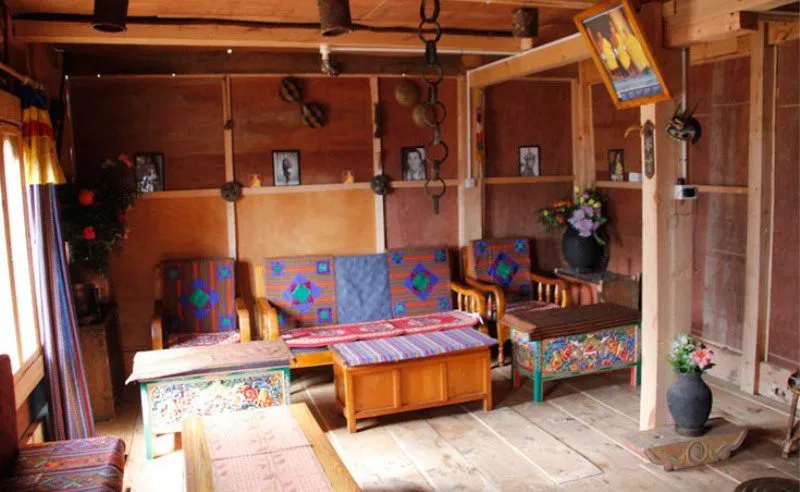
The itinerary also includes at least one night in a traditional rural farmhouse or certified homestay, which serves as the experiential highlight of the journey.

Guests stay in authentic timber-and-stone homes, enjoy family-style meals cooked over a wood fire, and wake to the sound of monastery bells. While facilities are basic, they remain clean and comfortable, with hot-stone baths sometimes available.

Upgrades are particularly recommended for Paro (especially the final night before the Tiger’s Nest hike) and Punakha (river-view lodges).

Additional enhancements such as hot-stone bath experiences, private dining, and helicopter transfers between valleys can also be arranged at extra cost. All upgrades are subject to availability and should be requested at the time of booking.

Travel Tips for Bhutan

  • Visa & Entry Requirements: All foreign visitors (except Indians, Bangladeshis, and Maldivians) must obtain a visa through a licensed Bhutanese tour operator. The USD 40 visa fee is non-refundable. Apply 2–3 weeks in advance. Indian nationals need only a passport or a Voter ID. 

  • Currency & Money: Bhutan uses the Ngultrum (BTN), pegged to the Indian Rupee. Carry sufficient USD cash, as ATMs are limited outside Thimphu and Paro. Credit cards are accepted only at upscale hotels. Tip guides USD 15–20/day and drivers USD 10/day. 

  • Clothing & Dress Code: Dress modestly in Bhutan’s conservative Buddhist culture. Cover knees and shoulders when visiting monasteries and dzongs. Layer clothing for varying climates from subtropical Punakha to cold high passes. Remove shoes before entering temples. 

  • Cultural Etiquette: Walk clockwise around stupas and prayer wheels. Never point feet toward altars or monks. Ask permission before photographing locals. Photography is banned inside dzongs and temples. Accept gifts with both hands and remove hats in religious sites. 

  • Altitude Awareness: Most places range from 2,250m (Paro) to 3,988m (Chele La). Acclimatize gradually, drink 3–4 liters of water daily, and avoid alcohol initially. If you experience a headache or nausea, please report it to your guide immediately. Consult a doctor about Diamox before travel. 

  • Internet & Connectivity: Mobile signal is good only in Thimphu and Paro. Rural areas often have no coverage. Buy a local SIM at the airport. Download offline maps and entertainment before heading to remote valleys. WiFi is limited to upscale hotels.

  • Food & Dining: Bhutanese cuisine is spicy. Inform your guide in advance about dietary preferences. Try traditional dishes like Ema Datshi and red rice. Drink bottled water only. Hot-stone baths and farm-to-table meals are highlights of rural stays. 

  • Sustainability & Responsible Travel: Bhutan is carbon-negative. Respect the environment by using reusable bags (plastic ban since 1999) and avoiding single-use plastics. Support local communities through community-based tourism and homestays. 

  • Health & Safety: Travel insurance with high-altitude and evacuation coverage is essential. Pack basic medicines, sunscreen, and insect repellent. Smoking is prohibited in public and religious places. Emergency services are limited outside major towns. 

  • Photography & Drones: Ask permission before photographing people, especially monks. Drones require special permits and are restricted near dzongs, airports, and borders. Avoid military areas. Sunrise and sunset offer the best Himalayan photography opportunities.

Additional Notes:

On the day of departure, the ‘local agents’ host obligation shall be limited to providing breakfast only, and any extra requirements shall be payable on a usage basis.

Our entire Bhutan tour is a private journey and tailor-made programs suited for any independent travelers according to their chosen traveling dates.

Should you wish, the tour can be easily customized according to your interests and the activities you wish to get involved in or spend more time at your places of interest.

Contact us to customize this tour as per your requirements. You can undertake this tour throughout the year.

Plan Your Trip With Us 

Ready to discover the hidden heart of the Himalayas on our Bhutan rural tour package?

Step off the beaten path to hike pristine valleys, explore ancient monasteries, and share authentic meals with local families, all at a relaxed pace with a free mind.

Disconnect from the rush of daily life and immerse yourself in a culture rooted in happiness and mindfulness. Spaces on this intimate journey are strictly limited. Request your free custom itinerary today and secure your ultimate Himalayan escape.