
6 Days Bhutan Overland Tour

6 Days

This 6-day overland tour takes you from the India-Bhutan border town of Phuentsholing all the way to Paro's famous Tiger's Nest. Along the way, you travel through Thimphu (the capital), cross a high mountain pass, and visit one of Asia's most beautiful forts. The pace is relaxed, the landscapes are stunning, and your licensed local guide will help you understand the culture, not just see it.

  • 3,120m/10,240 ft
  • March to May and September to November
  • Full board (breakfast, lunch and dinner)
  • Government approved 3 stars and Above
  • Private car, van or bus (Depends on group size)
  • Private Tour

Overview

Key Highlights of the Bhutan Overland Tour 

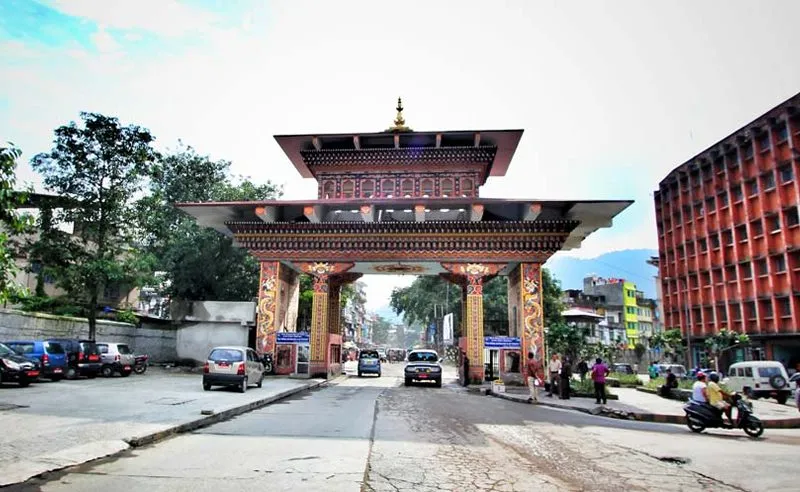
  • Enter Bhutan at Phuentsholing, the main India-Bhutan land border at 250m, where subtropical lowlands and traditional Bhutanese architecture offer your first glimpse of the kingdom.
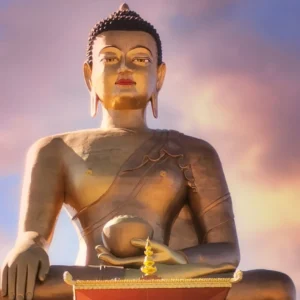
  • Explore Thimphu, the world's only capital without a traffic light. Visit Tashichho Dzong, the 51.5m Buddha Dordenma statue, National Memorial Chorten, and the riverside weekend market.
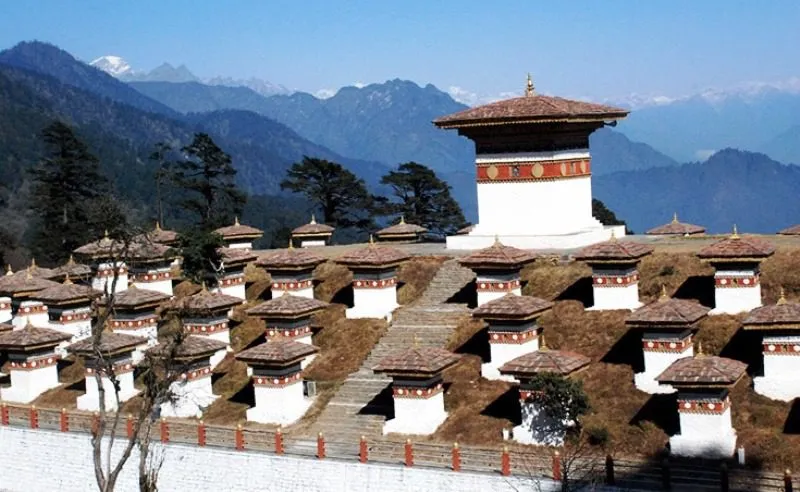
  • Cross Dochula Pass at 3,100m, decorated with 108 white chortens. On clear days, the entire eastern Himalayan range stretches across the horizon in one unbroken panorama.
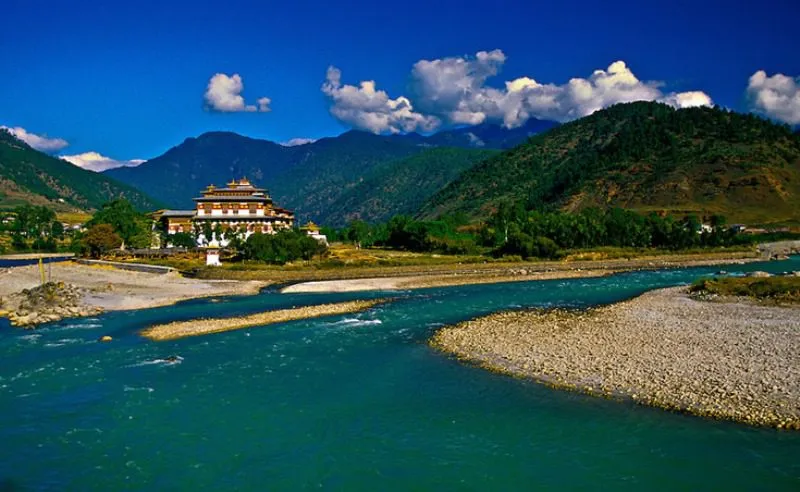
  • Visit Punakha Dzong, built in 1637 at the meeting point of two rivers. It served as Bhutan's royal capital for over 300 years and remains the country's most beautiful fortress.
  • Explore Paro valley at 2,250m, home to Bhutan's only international airport, the 7th-century Kyichu Lhakhang temple, and the 15th-century Rinpung Dzong rising above the river.
  • Hike to Tiger's Nest Monastery at 3,120m, clinging to a sheer cliff 900m above Paro valley. The 4- to 5-hour round trip is Bhutan's most iconic and rewarding walk.
  • Travel the full overland route from 250m to 3,120m across 420 kilometers of mountain roads, rice terraces, pine forests, and remote villages, experiencing Bhutan's altitude and culture firsthand.

Overview of 6-Day Bhutan Overland Tour Package

Bhutan is one of the few places left on earth where the government measures national progress not by GDP but by Gross National Happiness, a philosophy built on four pillars: sustainable development, environmental conservation, cultural preservation, and good governance.

It shapes everything you will see, hear, and feel during your 6 days here: the way forests are protected by law, the way monks move through daily life, the way villages are built, and the way locals interact with visitors.

We have been running this overland route for over 15 years and have taken hundreds of travelers through these valleys. In that time, we have learned where the light hits best, which stops are worth slowing down for, and how to pace the journey so it never feels rushed. 

October mornings at Dochula Pass consistently offer the clearest Himalayan views we have seen, and the Punakha Valley in late February, when the cherry blossoms bloom around the dzong, is something most travelers never forget.

This 6-day Bhutan overland tour covers the country's three most important western valleys—Thimphu, Punakha, and Paro, connected by one of the most scenic road journeys in Asia. You will travel approximately 420 kilometers in total across winding mountain roads, most of which did not even get paved until the 1960s. 

Bhutan only opened to tourism in 1974, making it one of the last countries in the world to welcome visitors, and it has maintained strict control over tourism ever since through the Sustainable Development Fee (SDF) system.

The overland entry point at Phuentsholing is what makes this itinerary genuinely different from a standard fly-in tour. Starting at 250m in the tropical lowlands and ascending gradually to 3,120m, you feel every meter of altitude change in your body, your breathing, and the landscape around you. 

The transition from Indian border chaos to Bhutanese mountain silence happens within just a few kilometers of the Bhutan Gate and it is one of the most striking contrasts in any travel experience in Asia.

Every destination on this route carries real historical and spiritual weight. Thimphu has been the capital since 1961 but contains monasteries and temples that are over 500 years old. For over 300 years, Punakha was the royal capital and held Bhutan's first National Assembly in 1953. 

Paro is home to Bhutan's oldest surviving temple and the monastery that attracts more pilgrims than any other site in the country. These are not just photo stops; these places are living, working centers of Bhutanese civic and religious life.

The Tiger's Nest hike is the defining physical and spiritual experience of the entire journey. The monastery was built in 1692 but the sacred cave inside it is considered to date back to the 8th century, when Guru Padmasambhava (Guru Rinpoche) is said to have flown here on the back of a tigress from Tibet. 

Four main temples, several smaller shrines, and a waterfall that splits the cliff make the site extraordinary even beyond its famous setting. The hike itself gains roughly 500 meters in elevation over about 4.5 kilometers one way, manageable for most travelers with a reasonable fitness level, though poles and sturdy shoes are strongly recommended.

This tour is suitable for first-time visitors to Bhutan, couples, solo travelers, families with older children, and small groups of up to 12. It does not require any prior trekking experience. The pace is deliberately unhurried: mornings for travel, afternoons for sightseeing, and evenings free for personal exploration, rest, or conversation with your guide about Bhutanese life, Buddhism, and local culture.

Short itinerary of Bhutan Overland Tour

Day 01: Arrive in Phuentsholing (250m)
Day 02: Phuentsholing to Thimphu (2350m)
Day 03: Thimphu to Punakha (1310m)
Day 04: Punakha to Paro (2250m)
Day 05: In Paro—Hike to Taktsang Monastery, Tiger's Nest (3120m)
Day 06: Paro to Phuentsholing (250m)

Bhutan Overland Tour Package Detailed Itinerary:

  • Day
    01

    Arrive in Phuentsholing (250m)

    Your journey into Bhutan starts here, at the southern border town of Phuentsholing. It is a busy, slightly chaotic place sitting right next to the Indian town of Jaigaon, separated by nothing more than the Bhutan Gate.

    Once you cross through, the change in atmosphere is rapid and hard to describe until you feel it yourself. Your guide will sort out the immigration paperwork and entry permit, which usually takes an hour or two.

    After checking in, take the evening at your own pace. Walk the market streets, stop at the Zangto Pelri Lhakhang temple, try the local food, and get a first feel for Bhutan before the real journey begins tomorrow. Overnight in Phuentsholing.

  • Day
    02

    Phuentsholing to Thimphu (2350m)

    After breakfast, you head up into the mountains. The drive to Thimphu is about 176 kilometers and takes roughly 4 to 5 hours, climbing from the warm lowlands all the way up to 2,350m.

    The road runs alongside the Wang Chhu river, winding through thick forest with waterfalls dropping off the hillsides and small villages tucked in along the way. There is a stop at Chukha Dam where you can stretch your legs and take in the view.

    By midday you should be in Thimphu. The afternoon is for sightseeing: the National Memorial Chorten, the massive Buddha Dordenma statue sitting above the valley, and Tashichho Dzong, the fortress at the heart of the Royal Government. Finish the day with a walk along the riverbank market, which is busiest on weekends. Overnight in Thimphu.

  • Day
    03

    Thimphu to Punakha (1310m)

    Today you will leave Thimphu after breakfast and drive up to Dochula Pass at 3,100 meters. On a clear morning this is one of the best viewpoints in the country, with the Himalayan range stretched out in front of you and 108 white chortens lining the hillside.

    It is worth stopping here for a while. From the pass, the road drops down into the Punakha Valley, which feels completely different from Thimphu: warmer, greener, and much quieter. Punakha Dzong is the highlight here, a fortress built in 1637 where two rivers meet, and it is genuinely one of the most beautiful buildings in Bhutan.

    Walk across the suspension bridge nearby and take some time to explore the villages around the valley. Overnight in Punakha.

  • Day
    04

    Punakha to Paro (2250m)

    After breakfast, drive back over Dochula Pass and continue through Thimphu toward Paro, about 130 kilometers in total and around 4 hours on the road. Paro is a wide, green valley at 2,250m and noticeably different in feel from both Thimphu and Punakha.

    It is also where Bhutan's only international airport sits, tucked between the mountains. In the afternoon, visit Rinpung Dzong, a 15th-century fortress perched above the Paro Chhu river, and Ta Dzong just above it, which now houses the National Museum with over 3,000 historical artifacts. Walk the riverside path back into town when you are done. Overnight in Paro.

  • Day
    05

    In Paro – Hike to Taktsang Monastery ‘Tigers’ Nest’ (3120m)

    This is the day most people come to Bhutan for. After an early breakfast, drive about 10 kilometers north of Paro to the trailhead and start the hike up to Taktsang Monastery, better known as Tiger's Nest. The trail gains around 500 meters over 4.5 kilometers, climbing through pine and rhododendron forest with prayer flags and open cliff views along the way.

    Stop at the teahouse halfway up for tea and your first proper look at the monastery clinging to the rock face above you. From there, the path dips into a gorge and crosses a waterfall before reaching the monastery entrance. Inside are four temples built around the cave where Guru Rinpoche is said to have meditated in the 8th century. No photography inside.

    The full round trip takes about 4 to 5 hours at a relaxed pace. Return to Paro and rest. Overnight in Paro.

  • Day
    06

    Paro to Phuentsholing (250m)

    Your last day in Bhutan. After breakfast in Paro, you begin the 5-hour drive back down to Phuentsholing, about 246 km, descending from the alpine valley all the way back to the subtropical lowlands near the border.

    The journey is scenic and you stop along the route for lunch. Once you reach Phuentsholing, your guide will be on hand to help with any last needs before the border crossing into India. The tour ends here at the border. 

The Cost Includes

  • Airport pick-up and drop-off by private vehicle.
  • 3-star accommodation (4 & 5-star options available at an additional premium).
  • Bhutan visa fee—including all necessary processing
  • Route Permit for all destinations
  • Three meals per day during your stay in Bhutan
  • A licensed Bhutanese tour guide for the entire journey
  • All land transportation by private vehicle
  • Sightseeing as per itinerary
  • All internal taxes and charges
  • Monument entrance fees, where applicable
  • A sustainable development fee of $100 per person per night (the fund fee goes towards free education, free healthcare, poverty alleviation and infrastructure.)

The Cost Excludes

  • International airfare. Travel insurance is not included; travelers must arrange their own comprehensive travel insurance before arrival. Note: travel insurance is mandatory for entry into Bhutan.
  • Expenses of a personal nature, tips to guides and drivers
  • Expenses arising from unforeseen events, such as flight delays, road conditions, or weather, are not covered.

Additional Travel Info

Cost structure

Our pricing is transparent and all-inclusive, covering accommodation, meals, guides, transport, and the Sustainable Development Fee.

Group Size Per Person Per Night 
Single USD 290 
2 people USD 240 
3–4 people USD 230 
8–12 people USD 210 

Prices are per person in USD and are subject to 5% GST introduced January 2026. All totals are calculated for 5 nights and include accommodation, all meals, a licensed Bhutanese guide, private transport, monument entrance fees, route permits, visa processing, and the Sustainable Development Fee (SDF) of USD 100 per person per night. 

Festival Supplement: An additional charge of USD 30 per person applies for travel during major Tshechu festival dates.

Best Time for 6 Days Bhutan Overland Tour

The best times to visit Bhutan are autumn (September to November) and spring (March to May). Both offer excellent weather, clear mountain views, and comfortable conditions for hiking, sightseeing, and driving the overland route through Paro, Thimphu, and Punakha.

  • Autumn: Best for first-time visitors (Sep – Nov)

The most popular time to visit. Skies are clear, air is crisp, and the Himalayan views from Dochula Pass are at their best. Dry roads make driving and hiking easy. October is the single most reliable month of the year.

  • Spring: Great for festivals and flowers (Mar – May)

Mild temperatures and blooming rhododendrons make the valleys beautiful. Spring often lines up with the Paro Tshechu festival, so you may catch traditional mask dances and local celebrations during your stay.

  • Summer: possible but not ideal (Jun–Aug)

Monsoon season brings lush green landscapes and fewer crowds. However, rain can cloud the mountain views and occasionally disrupt roads. Fine for those who don't mind some wet weather.

  • Winter: quiet and cheaper (Dec – Feb)

Fewer tourists and lower prices, but it gets cold. Higher passes like Dochula may have snow. A good option for experienced travelers who want a quieter trip and don't mind the chill.

Packing list 

Essential Documents & Money

  • Valid passport (minimum 6 months' validity)
  • Bhutan Visa Approval Letter (provided by your tour operator)
  • Printed flight tickets and travel itinerary
  • Travel insurance documents (mandatory for entry)
  • Photocopies of passport and important documents (kept separately)
  • Cash in USD (small denominations) — ATMs are limited
  • Credit/debit cards (for emergencies)

Clothing & Footwear

  • Comfortable walking/hiking shoes or boots with good grip (essential for Tiger's Nest hike)
  • Lightweight quick-dry long pants (2–3 pairs); modest coverage required
  • Short and long-sleeve tops (breathable, mix of T-shirts and shirts)
  • Fleece jacket or light sweater
  • Waterproof/windproof jacket (light rain possible)
  • Warm scarf, beanie or light hat, and gloves (for early mornings and evenings)
  • Comfortable socks including hiking socks
  • Modest outfit for temples (shoulders and knees fully covered)
  • Sandals or flip-flops for hotel use

Health & Personal Care

  • Personal medications and prescriptions
  • Altitude sickness remedies (e.g. Diamox if advised by doctor) and ginger chews
  • Basic first-aid kit (band-aids, antiseptic, painkillers)
  • Hand sanitizer, wet wipes, and toilet paper (public toilets may lack supplies)
  • Sunscreen (high SPF), lip balm, and sunglasses
  • Reusable water bottle
  • Insect repellent (mild)

Gear & Equipment

  • Daypack (20–30L) for daily excursions and Tiger's Nest hike
  • Trekking poles or walking stick (highly recommended for the steep hike)
  • Headlamp or small flashlight
  • Power bank and chargers
  • Rain cover for your daypack

Accommodation 

All hotels in Bhutan are government-approved for tourists and fall into standard categories: 3-star (standard comfort), 4-star (boutique/upscale), and 5-star/luxury resorts. Your tour operator will arrange 3-star hotels as the base package. Upgrades to 4-star or luxury properties are available for an additional cost and significantly enhance comfort, views, service, and overall experience and are highly recommended for this itinerary.

Travel Tips 

  • Visa and entry

All tourists need a visa through a licensed Bhutan operator. Pay the USD 40 visa fee plus a USD 100 per night Sustainable Development Fee. Your passport must be valid for at least 6 months and travel insurance is required.

  • Currency and money

Bhutan uses the Ngultrum (Nu), equal to the Indian Rupee. Bring USD cash in small notes. ATMs are limited, so carry enough for shopping, tips, and donations.

  • Clothing

Cover your shoulders and knees at temples. Layer up — mornings and evenings get cold. Wear comfortable hiking shoes, especially for the Tiger's Nest hike.

  • What to pack

Pack light. Key items: daypack, reusable water bottle, sunscreen, hat, rain jacket, power bank, snacks, personal medicines, and hand sanitizer.

  • Altitude safety

The tour climbs from 250m to 3,120m. Drink plenty of water, avoid alcohol at first, and walk slowly. A mild headache is normal; rest if needed and let your guide know.

  • Internet and SIM

Hotel Wi-Fi works but can be slow. Pick up a local tourist SIM (B-Mobile or TashiCell) at Phuentsholing for better mobile data throughout the trip.

  • Etiquette

Remove shoes before entering temples. Speak quietly and always ask before photographing locals or monks. Follow your guide's instructions and be respectful throughout.

  • General advice

Book early during peak season. Travel with an open mindset and respect local traditions. Let your operator know in advance about any dietary needs or health conditions.

Plan Your 6-Day Bhutan Overland Tour Today

Ready to travel Bhutan the way it was meant to be experienced: overland, unhurried, and deeply immersive? Whether you are a first-time visitor or returning to go deeper, this 6-day Bhutan Overland Journey covers the best of western Bhutan with expert local guidance every step of the way. Contact us today for 6 Days Bhutan Overland Tour and we will take care of the rest.