The Samtengang Winter Trek is a short and rewarding cultural trek through the rural landscapes of western Bhutan. Designed for the winter season, the route combines traditional village life, peaceful forest trails, and panoramic Himalayan views while remaining accessible to travelers with an average level of fitness.
Winter trekking through the lesser-visited Samtengang region of Wangdue Phodrang
Four days of trekking (within a 10-day Bhutan itinerary) passing oak and rhododendron forests, terraced rice fields, and subtropical valley floors
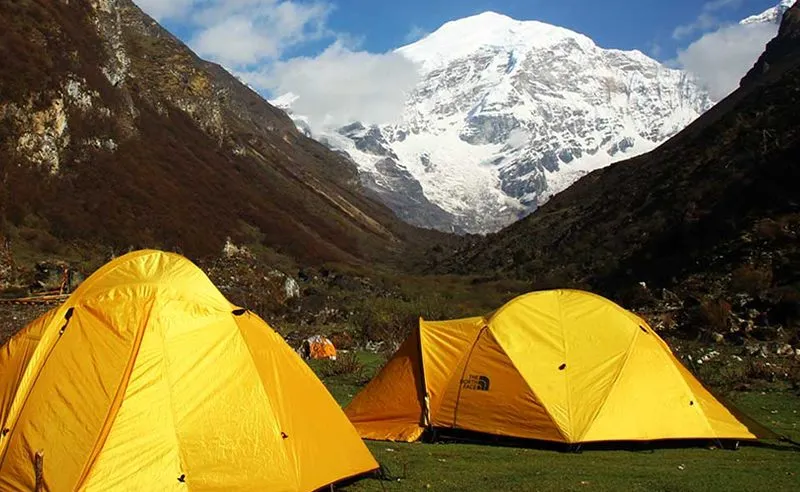
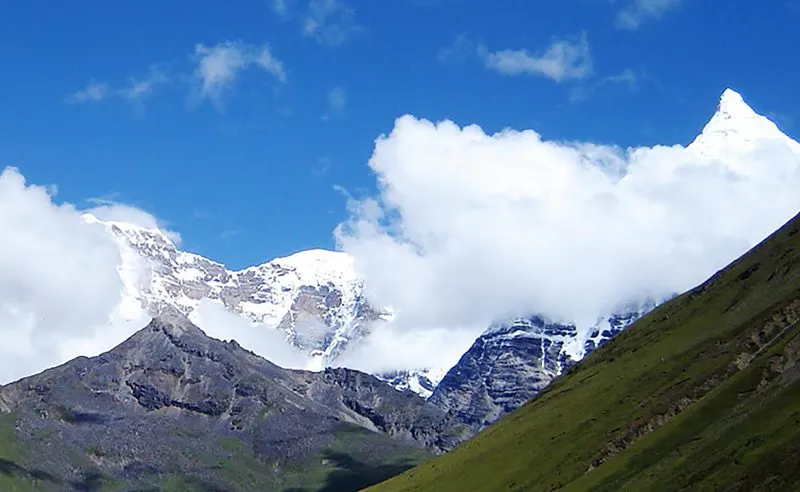
Clear winter skies offering distant views of Gangkhar Puensum and Jichu Drake
Village encounters in Limukha, Chungsakha, and Samtengang, away from main tourist corridors
Visit to Punakha Dzong, situated at the confluence of the Mo Chhu and Pho Chhu rivers
Scenic drive over Chele La Pass (3,988 m), Bhutan's highest motorable road, into the remote Haa Valley
Hike to Taktsang Monastery (Tiger's Nest) at 3,120 m as the journey's closing day
Elevation range of 650 to 1,980 m on the trekking days, eliminating serious altitude risk
Full-board meals on trek and hotel accommodation in Thimphu, Paro, and Punakha
Quick Facts
Duration
10 days (7- to 10-day customizable options available)
Best Season
Late November to February (Winter)
Trek Grade
Easy to Moderate
Maximum Altitude
1,980 m on trek; 3,120 m at Taktsang Monastery
Minimum Altitude
650 m at Samtengang Village
Daily Walking
4 to 6 hours on well-defined trails
Group Size
2 to 12 people (private and group departures)
Start / End
Paro International Airport
Trek Start
Khuruthang, near Punakha
Accommodation
Hotels in Thimphu, Paro, Punakha, Wangdue; lodges and homestays on trek
Meals
Meals: Full-board throughout the itinerary
Permits Needed
Tourist Visa, Sustainable Development Fee (SDF), Trekking Route Permit, Forest/Park Entry Permit (any additional area-specific permits confirmed at time of booking)
SDF
USD 100 per person per night (valid through August 2027)
Overview
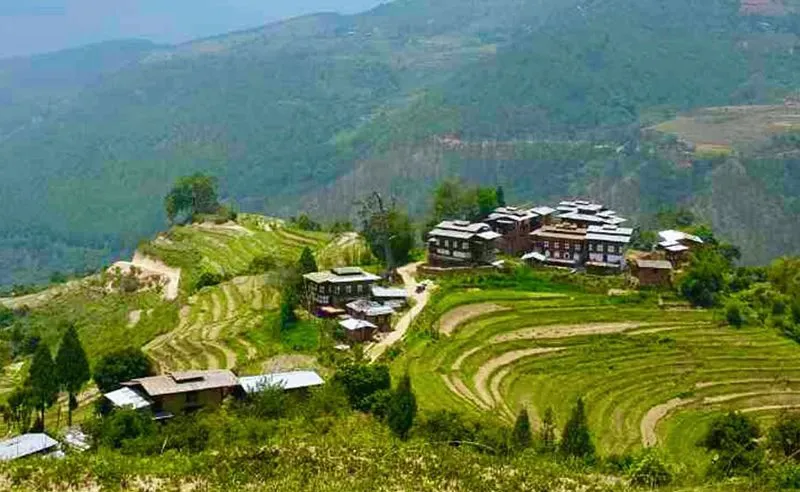
The Samtengang Winter Trek takes travelers off Bhutan's well-worn Paro–Thimphu circuit and into the Wangdue Phodrang district, where winter sunshine, dry trails, and quiet farming villages create one of the country's most relaxed trekking experiences. Over four trekking days, the route passes through Limukha, Chungsakha, and Samtengang, threading through oak and rhododendron forests, terraced rice fields, and warm subtropical valley floors.
Along the way, prayer flags, chortens, and mani walls offer glimpses into a Drukpa Buddhist way of life that has changed little for generations. The journey begins and ends at two of Bhutan's most rewarding cultural stops: Punakha Dzong, perched at the confluence of the Mo Chhu and Pho Chhu rivers, and a closing-day hike to Taktsang Monastery, the legendary Tiger's Nest, at 3,120 meters (visited as a single-day excursion). A scenic drive over Chele La Pass into the remote Haa Valley adds further depth for travelers who want to see a side of Bhutan that few visitors reach.
With an elevation range of just 650 to 1,980 meters on the trekking days themselves, altitude sickness isn't a concern (the higher-altitude Tiger's Nest hike is saved for the end once you are well-acclimatized), making this route accessible to a wide range of fitness levels. Winter, from late November through February, is the recommended season, offering dry trails, clear skies, and distant views toward peaks such as Gangkhar Puensum and Jichu Drake.
Daily walking typically runs four to six hours on well-graded paths, with full-board meals on the trek and comfortable hotel stays in Thimphu, Paro, and Punakha rounding out the experience. The trekking portion sits within a broader 10-day itinerary that also includes cultural sightseeing in Thimphu, Punakha, Wangdue, Haa Valley, and Paro, so travelers get four days of walking alongside six days of cultural touring and acclimatization. This combination of manageable trekking and rich cultural exposure makes the route especially well suited to families, retirees in good health, photographers, and first-time visitors to the Bhutanese Himalaya.
Bhutan's tourism sector has also seen renewed momentum, which is relevant context for anyone planning a trip. According to reporting by the Bhutan Broadcasting Service (BBS), the country welcomed close to 210,000 tourists last year. It is an increase of over 44 percent compared to 2024, while the Sustainable Development Fee revenue reached just over USD 43 million for the year.
Off-the-beaten-path districts like Wangdue Phodrang are central to this push toward year-round, regionally balanced tourism, which makes a trek like Samtengang increasingly relevant for travelers seeking something beyond the standard itinerary.
Travelers should also note that Bhutan introduced a 5% Goods and Services Tax on certain goods and services starting 1 January 2026, which can affect costs outside the SDF. Your TCB-licensed operator arranges these fees and permits, but for the latest visa, SDF, and entry regulations, consult Tour in Bhutan.
Altogether, the Samtengang Winter Trek pairs a gentle, well-supported trekking experience with genuine cultural immersion, set against the backdrop of a country actively investing in sustainable, regionally diversified tourism.
Samtengang Winter Trek Itinerary
Day 01
Arrival Paro (2,250m)
Arrive Paro by the Bhutanese National Carrier flying over the world’s highest mountains and finally landing at the lush green Paro valley. A cool and clean fresh air greets the visitor as stepping down from the plane, the first gift of Bhutan.
After clearing customs and visa formalities, meet the representatives and the Bhutanese guide, and a short tour brief by the guide then transfer to Paro town. Today is rest at Paro for better acclimatizing (rest at the hotel) or Paro town can also be explored during the evening.
Overnight at Hotel.(Lunch/Dinner included)
Day 02
Paro – Thimphu (2,350m)
After breakfast, drive towards Thimphu (the capital of Bhutan) which is about 1 & half hours drive. En-route Thimphu, one can do a short hike to Tamchog Monastery, a private temple owned by the descendents of famous Tibetan bridge – builder Thangthong Gaylpo.
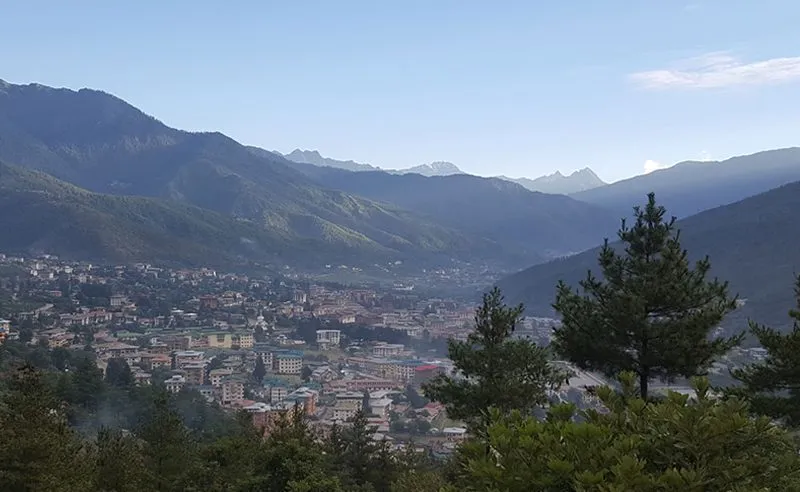
Later on continue the drive to Thimphu and visit Buddha point for a stunning view of Thimphu city and Takin Compound: One the way to the Viewpoint over Thimphu is the home of Bhutan’s national animal, the Takin, a strange looking beast which some say resembles a beestung moose. The Bhutanese have their own story to narrate about how the Takin was created by the Master Drukpa Kuenley (the divine madman).
In Thimphu visit Tashi Choe Dzong: The fortress of the glorious religion was initially constructed in 1641 and rebuilt by King Jigme Dorji Wangchuk in the 1960s. Visit the Folk Heritage Museum – a 300 year old traditional house converted into a museum. (Both open Mon-Fri).
Brush shoulders with the everyday Bhutanese grocery shopping for local produce at the Centenary Farmers Market (Open Fri – Sun). Also see the new authentic craft bazaar (Close on Tue) of 80 stalls showcasing works by artisans from rural areas will showcase.
Overnight at Hotel.(Breakfast/Lunch/Dinner included)
Day 03
Thimphu – Punakha (1,310m)
After breakfast, drive for about 3 hours to Punakha. Climb up the mountain road to Dochula La at 3140m. On clear weather, the pass commands a wonderful panorama of the Eastern Himalayas. From the pass, descend through varied forest and finally emerging into the highly cultivated valley of Punakha.
Take a short hike through beautiful rice fields to Chimmi Lhakhang, a temple dedicated to Drukpa Kuenley, who as a favorite saint of the Bhutanese people is known affectionately as “the Divine Madman”. The temple is on a hillside in the middle of rice fields and has become a pilgrimage site for childless couples.
Enjoy some tea and snacks at the end of hike while overlooking the fields. Afterwards, visit Punakha Dzong. Located at the confluence of the Pho-chu (male-river) and Mo-chu (female-river), the Punakha Dzong is arguably the most impressive dzong in the country.
Overnight at Hotel.(Breakfast/Lunch/Dinner included)
Day 04
Khuruthang – Limukha (1,980m)
Drive to Punakha Dzong (1250m) and the trek starts from here. It is a gradual climb through chir pine forest and paddy fields, this route is also used to go to the village of Shegana.
Overnight at Camp. (Walking Duration: 4 hrs)(Breakfast/Lunch/Dinner included)
Day 05
Trek to Chungsakha (1,550m)
Today the trail goes through Rhododendron and oak forested area. En-route pass via famous Drukpa Kuenley’s temple.
Overnight camp. (Walking time 5 hrs)(Breakfast/Lunch/Dinner included)
Day 06
Trek to Samtengang (1650m)
This day the trail goes through the villages of Sha, under Wagdue District.
Overnight camp. (walking time 5 hrs)(Breakfast/Lunch/Dinner included)
Day 07
Trek to Chuzomsa / Wangdue (1,310m)
The trail is downhill and the trek ends at Chumzomsa. From here it is a 20 minute drive to Wangdue. Afternoon at leisure or explore Wangdue town or Rinchengang village.
Overnight at Hotel. (Walking time 5 hrs)(Breakfast/Lunch/Dinner included)
Day 08
Wangdue – Haa Valley (3050m) – Paro (2250m)
After breakfast, drive over the Chelela pass (3899 m). From the pass, good view of the Himalayan Ranges and the valley beyond can be spotted. Then continue the drive towards Haa. Haa is made up of five counties and was closed to outside world until 2002.
There is a military camp by the Indian Army. In Haa valley, visit Wangchucklo Dzong dating back to 1915 and Lhakhang Nakpo (Black temple) is said to have been built by pigeon emanation of King Songtsen Gampo in the 7th century and Lhakhang Karpo (white temple). After the visit drive to Paro.
Overnight at Hotel (Breakfast/Lunch/Dinner included)
Day 09
Paro – Hike to Taktsang Monastery ‘Tiger’s Nest’ (3,120m)
After breakfast drive towards the base camp of Taktsang for the hike up to the Taktsang Monastery-Tiger’s Nest. It’s about two hours hike up the cafeteria. From this point, enjoy the spectacular view of the monastery, where Guru Padmasambhava landed on the back of a tigress in 8th century.
Then visit the Taktsang Monastery and hike back to the road point then drive to Kyichu Lhakhang, one of the oldest and most sacred shrines in Bhutan. Afterwards, back to hotel.
Overnight at Hotel (Breakfast/Lunch/Dinner included)
Day 10
Paro depart
After breakfast, drive to the Paro airport in time to catch the onward flight. Bid farewell to the remote and legendary Dragon Kingdom disappears again behind its guardian mountains.(Breakfast only included)
The Package Includes
Airport pick-up and drop-off by private vehicle.
3-star accommodation (4 & 5 stars may require an additional premium).
Bhutan visa fee – including all necessary processing
Route Permit
Three meals per day during your stay in Bhutan
A licensed Bhutanese tour guide
All land transportation by private vehicle
Sightseeing as per itinerary
Monuments' entrance fees where applicable
Drinking water
All internal taxes and charges
Sustainable Development Fee (SDF) as required by the Royal Government of Bhutan (currently USD 100 per person per night through August 2027)
The Package Excludes
Airfare & Travel Insurance
Expenses of personal nature, tips to guides and drivers
Expenses occurred due to unavoidable events, i.e., road wrecks, flight delays, etc.
Frequently Asked Questions
1. What makes this trek a excellent choice for winter travel in Bhutan?
High-altitude routes across Bhutan are frequently snowbound between late November and February. This trail operates below 2,000 m throughout, remaining snow-free and dry during those same months. Winter also brings exceptionally clear skies and high-pressure stability, making it the best season for mountain photography along this specific route.
2. Is this trek appropriate for first-time trekkers?
Yes. The route is classified as easy to moderate. Daily walking stages cover 4 to 6 hours on established paths through forested terrain and farming villages. Prior high-altitude trekking experience is not required, and the itinerary includes gradual acclimatization through the pre-trek town days in Thimphu and Punakha.
3. What is the highest altitude on this trek, and is altitude sickness a risk?
The trekking route reaches a maximum of 1,980 m at Limukha. Acute mountain sickness typically becomes a concern above 3,000 m, placing this trek well below that threshold. Travelers will be at 3,120 m during the Taktsang hike on Day 9, but by that point, their bodies will be conditioned after four days of walking. Standard acclimatization medication is not necessary for this itinerary.
4. Why does the trail descend to just 650 m above sea level at Samtengang?
The Punakha and Wangdue Phodrang valley floors sit at subtropical elevations. The trail design follows the natural topography, dropping from temperate oak and rhododendron forests into the lower river valleys where terraced rice, maize, and chili fields characterize the agricultural landscape. This altitudinal variation is one of the route's ecological highlights.
5. Will there be views of Himalayan peaks during the trek?
On clear winter days, ridge viewpoints along the route offer distant views of Gangkhar Puensum, the world's highest unclimbed mountain, and the distinct profile of Jichu Drake. Winter is the best season for these sightlines due to dry, high-pressure atmospheric conditions.
6. How does this trek differ from Bhutan's more famous trekking routes?
Routes such as the Snowman Trek or the Laya Gasa Trek are primarily alpine wilderness experiences at high altitude. The Samtengang route is explicitly a cultural trek at low to moderate elevations, passing through inhabited villages like Limukha, Chungsakha, and Samtengang, where interaction with farming communities is a central part of the experience.
7. Why is Haa Valley included in the itinerary after the trek?
Haa Valley remained closed to foreign visitors until 2002 and continues to see very limited tourist traffic. Adding it to the post-trek driving day exposes travelers to a contrasting landscape, high alpine with traditional stone villages and pine forests, compared to the subtropical valleys covered on foot. It extends the geographic range of the trip without adding trekking days.
8. Is the Tiger's Nest hike manageable after four days of trekking?
Most travelers find the Tiger's Nest hike manageable after completing the trek, although the final ascent remains moderately challenging. The 4- to 5-hour round-trip hike typically feels like a fitting end to the journey.
9. What type of accommodation is available on the trekking days?
Depending on group size and itinerary configuration, trekking accommodation is in village lodges, local guesthouses, or family homestays. Homestays offer direct contact with Bhutanese household life, traditional wood-fired cooking, and home-prepared meals. All meals on the trek are included and prepared fresh by the trekking crew or host family.
10. What temperatures should you expect during the winter trekking season?
Daytime temperatures while walking typically range between 10 and 18 degrees Celsius, depending on elevation and cloud cover. After sunset, temperatures drop sharply to between 0 and 5 degrees Celsius, occasionally below freezing. A layered clothing system that can be adjusted throughout the day is the most practical approach.
11. Are special permits required, and do we need to arrange them ourselves?
All permits for this trek, including the Tourist Visa, Sustainable Development Fee, Trekking Route Permit, Restricted Area Permit, and Forest/Park Entry Permit, are managed by our team as part of the package. Travelers do not need to apply independently. As part of Bhutan's regulated tourism framework, the licensed operator is legally required to secure all clearances before arrival.
12. Is this trek suitable for travelers whose primary interest is culture rather than trekking?
It is well-suited to this profile. The trekking stages are short enough to leave energy for cultural engagement at each village. The overall itinerary also includes significant time in Thimphu, Punakha, and Paro, covering major historical monuments, a dzong fortress, and local markets alongside the walking days.
Additional Trekking Info
Bhutan Samtengang Winter Trek Cost
The Samtengang Trek in Bhutan is a private trekking adventure that requires careful planning and personalized arrangements. Since we tailor every departure to each trekker's preferences and travel requirements, several factors determine the final package cost, including:
Number of trekkers joining the expedition
Preferred travel dates and trekking season
Accommodation category before and after the trek
Private group size and customized itinerary requirements
Additional services or special arrangements
Flight assistance and other travel arrangements within Bhutan
The Bhutan Samtengang Winter Trek is not offered as a fixed group departure with a standard price. Every expedition is carefully organized with customized logistics, including trekking permits, a licensed Bhutanese trekking guide, transportation, accommodation, meals, and full trekking support throughout the journey.
To provide an accurate quotation, our trekking specialists will first discuss your preferred travel dates, group size, trekking experience, and specific travel requirements. Based on this information, we will prepare a personalized Samtengang Winter Trek itinerary along with a detailed cost breakdown, package inclusions, and available customization options.
Whether you are planning a solo adventure, a private group trek, or a customized Bhutan trekking experience, our team is here to help you choose the best itinerary for your schedule, experience level, and budget. There is no obligation to book. Contact our Bhutan trekking specialists today for a personalized quotation and start planning your Samtengang winter trek with confidence.
Required Permits
Our team arranges all permits as part of the package. Travelers do not need to apply independently.
Permit
Notes
Bhutan Tourist Visa
Mandatory for all foreign nationals except Indian, Bangladeshi, and Maldivian citizens, who require entry permits
Sustainable Development Fee (SDF)
USD 100 per person per night; government-mandated; contributes to conservation, healthcare, and education. Valid through August 2027
Trekking Route Permit
Issued by the Department of Tourism for travel along designated trekking routes
Restricted Area Permit
Required for portions of the Samtengang and Wangdue Phodrang region, subject to current regulations
Forest/Park Entry Permit
Applicable where the route passes through protected forest or conservation zones
The Royal Government of Bhutan sets current SDF rates and permit categories, which may be revised. Confirmed figures are verified at the time of booking. Official information: www.bhutan. travel
Difficulty and Fitness
Trek Grade: Easy to Moderate
The Samtengang Winter Trek follows well-maintained trails with gradual ascents and descents. Daily walking lasts 4 to 6 hours. The maximum altitude on the trekking route is 1,980 m, keeping altitude-related risk minimal. No technical climbing, glacier travel, or use of ropes or crampons is involved.
A baseline level of fitness is sufficient for most healthy adults. Trekkers should be comfortable walking 4 to 6 hours on uneven terrain for four consecutive days. Prior high-altitude experience is not a prerequisite.
Recommended Preparation
Begin a walking or hiking routine 4 to 6 weeks before departure
Incorporate stair climbing or hill walking to build leg strength
Practice walking with a loaded daypack for 3 to 4 hours
Strengthen knees with squats and lunges to handle downhill sections
Stay well-hydrated in the weeks before travel
Consult a physician if you have pre-existing medical conditions
Weather and Best Time of Samtengang Winter Trek
The Samtengang Winter Trek is designed for the winter window of late November through February. At the elevations this route covers (650 to 1,980 m), winter brings dry, stable conditions with minimal precipitation and no significant snowfall on the trail itself.
Condition
Daytime
Nighttime
Temperature on Trail
10°C to 18°C
0°C to 5°C
Precipitation
Minimal; occasional light frost in shaded areas
–
Visibility
Excellent; high-pressure winter days
Clear
Humidity
Low
Low
Snow on Trail
Rare at these elevations
–
Layered clothing is essential given the 10- to 15-degree difference between midday temperatures while walking and post-sunset temperatures at camp.
Accommodation and Meals
Accommodation on this trip is divided between town hotels and on-trail lodging. In Paro, Thimphu, Punakha, and Wangdue, guests stay in 3-star hotels (upgrades to 4- and 5-star are available at a supplement). On trekking days, guests stay in village lodges, guesthouses, or homestays, where they can experience local Bhutanese household life and cooking.
All meals are provided on a full-board basis during trekking days. A dedicated crew prepares three meals per day using fresh ingredients, including traditional Bhutanese dishes such as ema datshi (chili and cheese), red rice, lentil dal, and momos, alongside familiar pasta and vegetable options. Throughout the itinerary, breakfast, lunch, and dinner are included and served either at hotels, local restaurants, or trekking lodges, depending on the day's program.
Altitude and Health
The trek itself remains below 2,000 m, well beneath the threshold at which Acute Mountain Sickness (AMS) typically presents. Travelers arriving from low elevations may experience mild headaches or fatigue in Paro (2,250 m) or Thimphu (2,350 m) during the first day or two; these resolve with rest and hydration. Acetazolamide (Diamox) is not necessary for this route. Basic analgesics for headaches are sufficient.
Preventive Measures
Drink 3 to 4 liters of water daily, even in cool conditions
Ascend at a steady, moderate pace; avoid rushing on uphill sections
Avoid alcohol and excessive caffeine during the first two days
Eat light meals in the evenings, particularly early in the trip
Report any persistent headache, nausea, or breathlessness to your guide immediately
Carry basic analgesics as advised by your physician prior to departure
Emergency and Medical Evacuation
Bhutan's centralized aeromedical network supports all trekking programs in the country. In the event of a medical emergency, the guide contacts the Health Help Center (emergency line: 112) to initiate a rescue protocol. The Bhutan Emergency Aeromedical Retrieval (BEAR) team, operating in conjunction with Royal Bhutan Helicopter Services Limited (RBHSL) and the national referral hospital, can dispatch medically trained personnel and life-support equipment to the trail when road-based extraction is impractical.
Because the Samtengang route runs near roads and settlements throughout, road-based assistance is typically the first response option. Helicopter evacuation remains available for severe cases, subject to weather and terrain conditions. Standard tour costs do not include emergency evacuation; comprehensive travel insurance covering helicopter rescue is mandatory for participation.
Travel Insurance
Comprehensive travel insurance covering medical treatment, trip interruption, and emergency evacuation is strongly recommended for all trekkers. Some operators may require proof of coverage before departure. The policy should cover:
Emergency medical treatment and hospitalization
Emergency medical evacuation, including helicopter rescue where required
Trip cancellation or interruption
Baggage loss or delay
Travelers are responsible for selecting and purchasing their insurance. Our team can advise on minimum coverage requirements during the booking process.
Gear and Equipment Checklist
Clothing
Insulated down or synthetic jacket
Fleece or wool mid-layer
Thermal base layers, top and bottom
Trekking trousers and warm hiking pants
Waterproof and windproof outer jacket
A warm hat/beanie and a sun hat
Lightweight and insulated gloves
Wool or synthetic trekking socks (multiple pairs)
Buff or scarf for neck and face
Footwear
Broken-in trekking boots with ankle support
Comfortable sandals or camp shoes for lodge evenings
Equipment and Personal Items
Trekking poles
Daypack (25 to 35 liters)
Duffel bag for main luggage
Headlamp with spare batteries
Reusable water bottles or hydration bladders (minimum 2-liter capacity)
Water purification tablets or filter
Sunglasses with UV protection
Sunscreen and lip balm (SPF 50 recommended)
Personal first aid kit with prescribed medications
Power bank and charging cables
Camera or smartphone
Who Should Choose the Samtengang Winter Trek?
The Samtengang Trek is well-matched to a wide range of travelers:
Beginner and intermediate trekkers looking for a first Bhutan walking itinerary
Families with children aged ten and above who are comfortable with half-day walks
Retirees in reasonably good health seeking a manageable but culturally substantive Himalayan journey
Photographers, nature enthusiasts, and travelers with a primary interest in Buddhist culture
Anyone wanting to experience rural Bhutan beyond the Paro–Thimphu tourist corridor
This trip is less suited for travelers who want to experience high-altitude passes, glacier terrain, or technical climbing objectives. For those itineraries, our team can recommend the Laya Gasa Trek, Jomolhari Yaksa Trek, or Snowman Trek.
Why Book with Us?
Locally based in Bhutan with direct, first-hand knowledge of the Samtengang region and its trails
All visas, SDF payments, and trekking permits managed on your behalf
Winter departures planned around verified weather windows for best visibility and trail conditions
Experienced, licensed, English-speaking guides with deep cultural and regional knowledge
Flexible private-group, family, and customized departure options
Transparent pricing with a detailed breakdown of inclusions and exclusions
24/7 support before, during, and after travel, including emergency assistance protocols
TCB-licensed operator with a consistent record of delivering regulated, responsible Bhutan travel
Important Notes
Itineraries may be adjusted due to weather, road closures, or unforeseen circumstances; guide and operator safety decisions are final
Flights to and from Paro are subject to weather-related delays; building buffer days into international connections is advisable
Winter nights at lodges and camps are significantly colder than midday; pack adequate insulation
Personal medications should be carried on trek, as pharmacies are not available along the route
Respect for local customs, monasteries, and religious sites is expected; appropriate dress and behavior are required
Photography inside monasteries may be restricted; always request permission before photographing religious interiors or ceremonies
Tipping for guides, drivers, and porters is customary and appreciated, though not obligatory
Confirm all booking details, including dates, group size, and upgrades, well in advance to secure availability
Book Your Bhutan Samtengang Winter Trek Expedition
The Samtengang Winter Trek Itinerary is one of Bhutan's most enjoyable winter trekking experiences, offering peaceful mountain trails, traditional villages, rich cultural heritage, and spectacular views of the eastern Himalayas. With seasonal trekking conditions, permit requirements, and carefully coordinated travel logistics, proper planning is essential for a safe and memorable adventure.
Whether you are planning a private trek with friends, a cultural hiking experience, or a once-in-a-lifetime journey through Bhutan's scenic countryside, our experienced Bhutan trekking team will create a personalized itinerary tailored to your interests, fitness level, and travel schedule.
Ready to Experience the Samtengang Winter Trek?
Contact our Bhutan trekking experts today to:
Check available departure dates
Discuss your trekking experience and fitness level
Receive a customized itinerary
Get your personalized quotation
Understand permits, logistics, and equipment requirements
Your journey through Bhutan's tranquil mountain landscapes, traditional villages, and breathtaking winter scenery begins with a conversation. Contact our Bhutan trekking specialists today and start planning your Bhutan Samtengang Winter Trek with confidence.
Trip Reviews
[trustindex no-registration=google]
Rated Excellent by our travellers
★★★★★
"Best Bhutan Tour Operator"
"Aura Trails made our Bhutan trip absolutely unforgettable. Every detail was perfectly planned."
Sarah M.
Australia · Cultural Tour
★★★★★
"Exceeded All Expectations"
"From landing in Paro to our last day in Thimphu, everything was seamless. Highly recommend!"
James K.
USA · Trekking Tour
★★★★★
"A Dream Come True"
"The festival tour was magical. Our guide Karma was exceptional — so much local knowledge and warmth."