Bhutan is a beautiful country tucked high up in the Himalayas with remote monasteries, rich cultural heritage and with spectacular Himalayan views. It’s the land where high-altitude peaks are forbidden to climb and Gross National Happiness is more important than Gross National Product. Here are things to know before traveling to Bhutan to make your journey even more fruitful and enjoyable.
Flying to Bhutan
Flying into Bhutan airport, Paro International Airport, which is the only international airport of Bhutan, is heavily dependent on weather conditions, which can be quite unpredictable. All take-offs and landings at Paro Airport are by visual flight rules. This means pilots can only take off or land if they are able to see the runway and the surrounding hills. At nighttime or in poor weather conditions, flights don’t operate so flights will be delayed. Paro airport is in a deep valley surrounded by mountain peaks as high as 18,000ft (5,000m).
Another important thing to note while is airlines flying to Paro Bhutan which is only two airlines. One is the national flag carrier, ‘Druk Air’ and other is ‘Bhutan Airlines’- a private company. These two airlines flying to Bhutan also flies only from certain cities in Asia like Kathmandu, Delhi, Kolkata, Bangkok, and Singapore. Thus, one needs to connect their flight from their home country to one of these cities as per convenience.
Bhutan road safety
Most of the cities and towns in Bhutan are connected by road, but the roads are mountainous and have sharp bends. You are suggested to wear seat belts and avoid driving at night since mountainous roads are poorly lit. Leaving your valuables in your car at tourist sites or villages is also discouraged.
Internet speed in Bhutan
B-Mobile SIM and Tashi Cell are the two mobile network providers in Bhutan. Your guide shall help you buy a SIM for you on arrival, but make sure you unlock your phone before inserting the SIM card. 2G and 3G connectivity are available throughout the country. Most of the hotels in major cities have wi-fi. Internet speed in Bhutan can be erratic.
Bhutan dress code for tourists
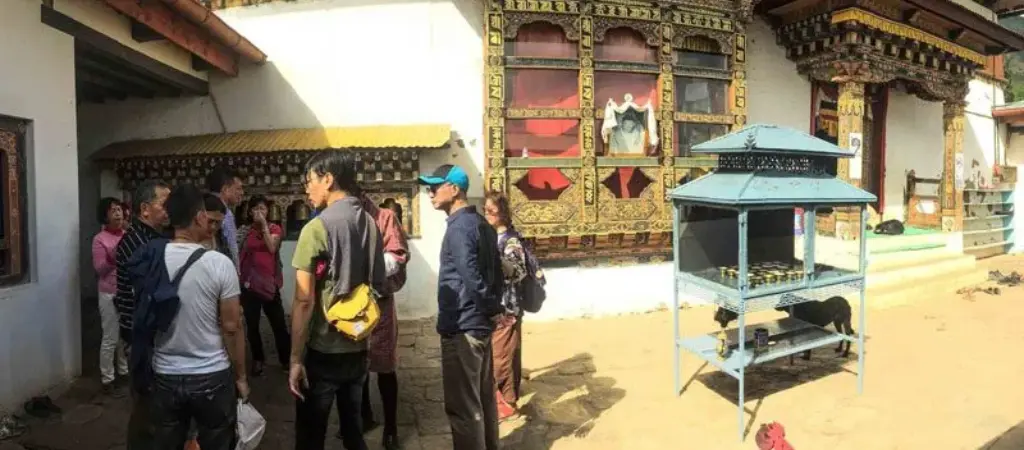
There are many ‘dzong,’ which is an ancient fortress with towers, courtyards, temples, and administrative offices. Tourists entering such dzongs must dress appropriately. You can’t wear jeans, wrap your jacket around your waist, or have it unbuttoned or unzipped. No hats, shorts, short skirts, flip-flops, or t-shirts can be worn inside. Please make sure your clothing covers your arms and legs.
ATM services in Bhutan
Major towns in Bhutan have ATMs. Bank of Bhutan, Bhutan National Bank and Druk Punjab National Bank are the three banks that accept foreign credit cards. Visa or MasterCard is acceptable but one should be beware of the extra fees. The best option is to withdraw cash in Paro or Thimphu before your tour in other towns. Bhutanese currency is ‘Ngultrum’ Nu which is only accepted in Bhutan. Foreign currencies can be exchanged for Nu. US$100 has a higher exchange rate than other lower-denomination dollar notes.
Walk to the Tiger’s nest monastery Bhutan
Tiger’s Nest or Taktsang Monastery, located outskirts of Paro town is the most important highlight of a Bhutan tour. It was built in 1692 and is a sacred Buddhist monastery at 3,120 meters above sea level perched in a vertical cliff. To reach the monastery, you need to drive from Paro (20 min) to the base and hike upwards. If you already acclimatized in Paro (2,350 meters) then this single day trip is not so difficult. Wearing sturdy hiking boots and using walking poles during ascent and descent is suggested. Drink lots of water before and during the hike to stay hydrated.
Bhutan travel requirements
One can’t individually get a visa and travel to Bhutan like other countries. They need to come through a registered travel company in Bhutan or any of its travel partners outside Bhutan. When a tour is booked, you need to send a clear copy of your passport to apply for the visa, which your travel agent will do. Upon full payment of your tour’s cost only then is a visa clearance letter sent to you. You need to bring this letter while coming to Bhutan and show it at the Paro airport to get your passport stamped with the actual Bhutan visa. A Visa clearance letter is sent once full payment of your Bhutan tour is made.
Bhutanese food
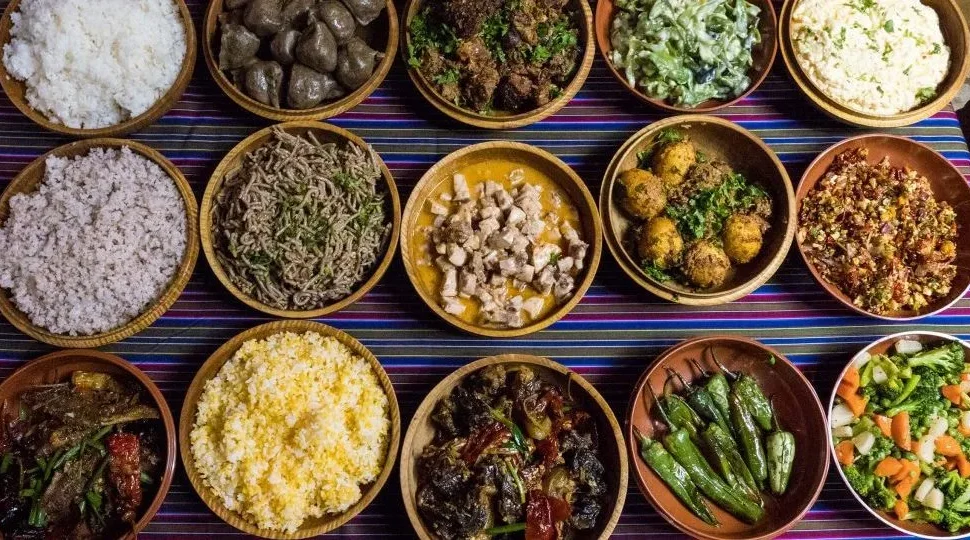
Bhutanese food is spicy and delicious. The popular food is ‘Ema datshi,’ which is rice and spicy chilies topped off with a delicious cheese sauce. Similarly ‘Kewa datshi’ is sliced potatoes and cheese – usually with chilies, too. You can try ‘shakam paa’ which is dried beef cooked again with chilies and radish. You can find momo, ‘dumplings’, everywhere in Bhutan. They come fried or steamed inside a flour dough with either meat, cheese or vegetables. all restaurants and street food stalls have momos. You can also try ara – a hot, highly alcoholic treat. If these foods don’t appeal to you then try fried fern stalks or a tasty yak curry. But continental or Indian cuisines are also available at the restaurants.
Off the beaten track in Bhutan
Most tourists travel to Paro, Thimphu, Punakha, and back to Paro. Traveling to the southeast of Paro, near the town of Samdrup Jongkhar, takes you off the tourist trail in Bhutan. Samdrup Jongkhar is a border with India and connects to the Assam plains in India. Travelers rarely visit eastern Bhutan which has much to see. Here one can discover secluded valleys and nature reserves, including black-necked cranes at Phobjikha Valley in Gangtey.