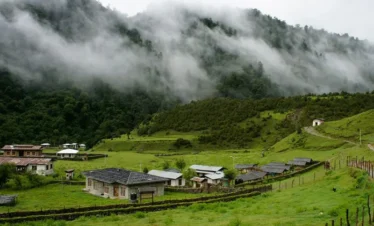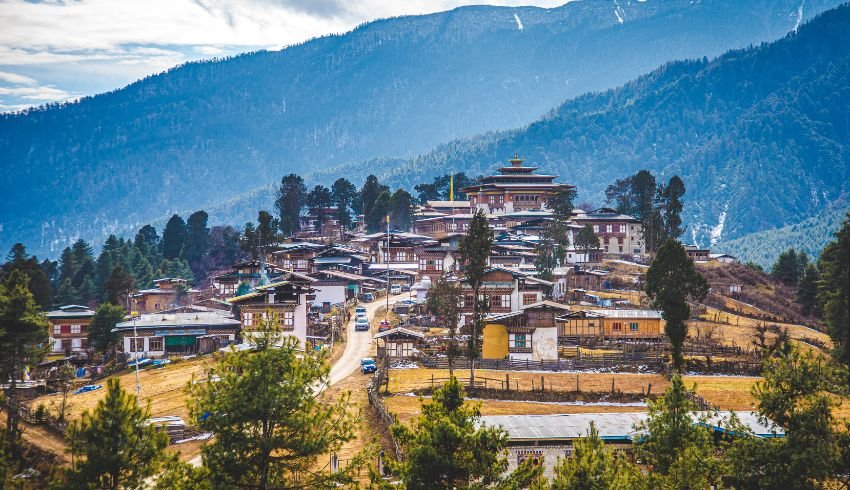
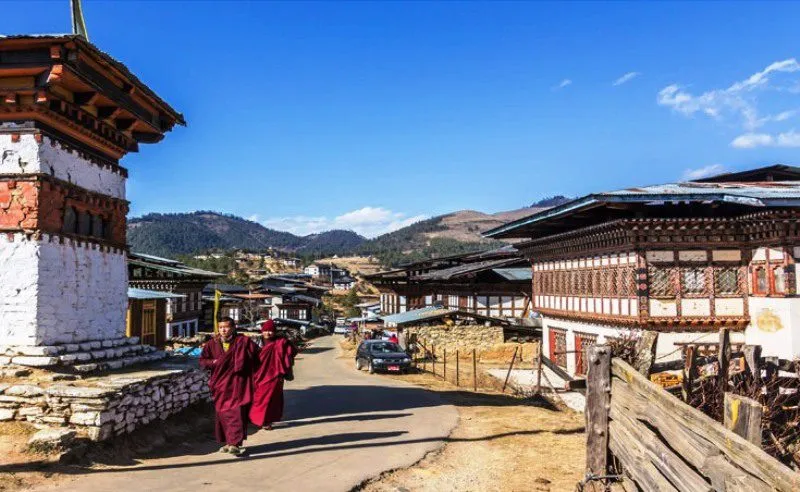
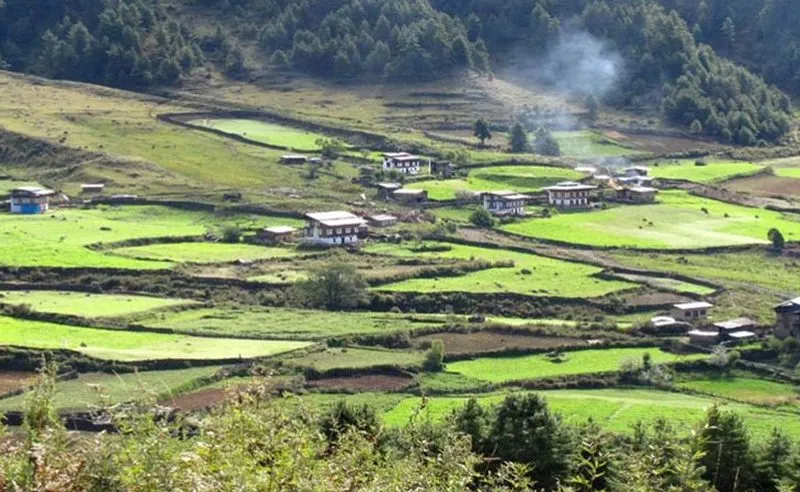
The Gangtey Valley Trek is one of Bhutan’s most accessible and culturally immersive trekking experiences, combining the glacial landscapes of Phobjikha Valley, traditional Bjop villages, sacred monasteries, and gentle Himalayan trails. The journey offers a rare opportunity to experience Bhutan’s living traditions without the physical demands of high-altitude expeditions.
-
3,120m/10,240 ft
-
March to May and September to November
-
Full board (breakfast, lunch and dinner)
-
Government approved 3 stars and Above
-
Private car, van or bus (Depends on group size)
-
Private Tour
Highlights
- Trek the glacial Phobjikha Valley (3,000 m), Bhutan’s only wintering ground for globally endangered black-necked cranes, where the peak migration is October-November.
- Visit Gangtey Monastery, a revered 17th-century Nyingmapa Buddhist center overlooking the valley and one of central Bhutan’s most sacred sites.
- Cross Tselela La (3,440 m) and Shobju La (3,410 m) through mixed conifer forests of juniper, rhododendron, magnolia, and fir.
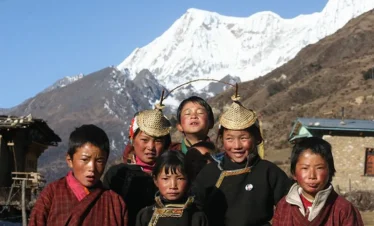
- Engage with the Bjop community in remote villages Gogona and Khotokha. They maintain nomadic pastoral lifestyles and speak their dialect.
- The most iconic hike in Bhutan ascends 900 meters through pine forests decorated with prayer flags to the legendary Taktsang Monastery, clinging dramatically to a cliff face 900 meters above Paro Valley.
- Daily walking: 5 to 7 hours on well-graded, low-altitude trails. Easy-to-moderate difficulty. Suitable for first-timers, seniors, and families with children 10+.
- Experience urban heritage: Paro Dzong, Thimphu’s Memorial Chorten and Buddha Dordenma statue, and Punakha Dzong (Bhutan’s most beautiful fortress monastery).
- All-inclusive packages include permits, licensed English-speaking guides, 3-star hotels, camping equipment, meals, transportation, and pack animals.
Quick Facts
- Duration: 10 Days (including cultural sightseeing and trekking days)
- Trekking Distance: Approximately 25 to 30 kilometres
- Maximum Altitude: 3,500 m (trek high point); passes at Tselela La (3,440 m) and Shobju La (3,410 m)
- Starting Point: Paro International Airport, Bhutan
- Ending Point: Tikke Zampa (1,500m), transferred back to Paro/Thimphu
- Best Seasons: Spring (March to May) and Autumn (September to November)
- Difficulty Level: Easy to Moderate
- Daily Walking Hours: 5 to 7 hours per trekking day
- Group Size: Flexible; typically 2 to 15 people (private groups available)
- Accommodation: 3-star hotels in Paro/Thimphu/Punakha; lodge/farmhouse guesthouses or camping tents on trek
- Meals: All meals included (breakfast, lunch, dinner) throughout the trek
- Transportation: International flights to Paro (Drukair / Bhutan Airlines); private vehicle transfers for sightseeing; pack animals for equipment on trail
- Sustainable Development Fee: USD 100/night (international); INR 1,200 for Indian nationals
- Recommended Min: Age 10+ years (with parental discretion)
- Physical Fitness: Moderate; ability to walk 5 to 7 hours daily with a light daypack
- Pack Animals: Available to carry main luggage on trekking days
- Guides: Licensed Bhutanese guide mandatory (arranged by operator)
- Porter/Staff: Trekking cook, camp staff, and optional porter included in full packages
- Visa: Required for all nationalities except India, Bangladesh, and Maldives (arranged by operator)
Overview of Gangtey Valley Trek
The Gangtey Valley Trek is a rare journey where every step combines athletic accessibility with cultural richness.
Threading through the glacial U-shaped bowl of Phobjikha Valley at around 3,000 meters, this trek is Bhutan’s most accessible and emotionally resonant experience, crafted for those who want to engage deeply with the kingdom’s landscape without sacrificing cultural immersion for altitude.
Ancient monasteries emerge from forested ridgelines, nomadic hamlets dot the valley floor, and the silence of the Himalayas creates a meditative atmosphere. The Gangtey Valley Trek reveals what Bhutan truly offers beyond the headlines and postcards.
The trek weaves directly through living communities: villages where the Bjop people still speak their dialect, farmhouses where yaks and horses graze in open meadows, and the 17th-century Gangtey Gompa, one of the most important Nyingma Buddhist monasteries in central Bhutan.
Spiritual seekers, wildlife enthusiasts, and photography-focused travelers all find significant experiences here. The valley is also the only known wintering ground in Bhutan for the globally endangered black-necked crane, which migrates from the Tibetan Plateau every October, making the autumn season a notable wildlife event of natural significance.
The route typically spans 10 days, beginning with an iconic flight into Paro International Airport, one of the most dramatic landings in the world, followed by cultural explorations of Thimphu, Punakha, and the Black Mountains before the actual trek commences at Tabiting near Gangtey Gompa.
The trail passes through mixed forests of juniper, magnolia, rhododendron, and fir; crosses gentle passes such as Tselela La (3,440 m) and Shobju La (3,410 m); and moves through the remote villages of Gogona and Khotokha before descending to Tikke Zampa at 1,500 m.
With daily walking hours of 5 to 7 hours on well-graded, low-altitude trails, this trek sits firmly in the easy-to-moderate category, perfect for first-time Bhutan trekkers, seniors with reasonable fitness, families with older children, and anyone seeking a meaningful Himalayan journey without extreme physical demands.
The entire route covers approximately 25 to 30 kilometers of trekking distance. This trek caters to the slow traveler, the mindful explorer, and the culturally curious adventurer who prefers immersive storytelling over summit-chasing.
It represents an ideal introduction to trekking in Bhutan: unhurried, culturally immersive, and deeply connected to the landscapes and communities it passes through.
Tour in Bhutan expert team handles every detail: permits, guided trekking, cultural experiences, and comfortable accommodations.
Gangtey Valley Trek Itinerary
Arrive Paro by the Bhutanese National Carrier flying over the world’s highest mountains and finally landing at the lush green Paro valley. A cool and clean fresh air greets the visitor as stepping down from the plane, the first gift of Bhutan.
After clearing customs and visa formalities, meet the representatives and the Bhutanese guide, and a short tour brief by the guide then transfer to Paro town for lunch.
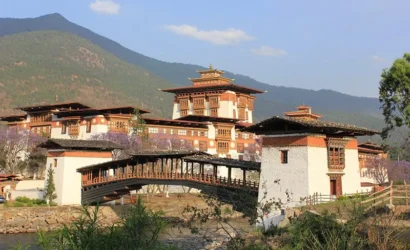
After lunch visit Rinpung Dzong built in 1646 by Shabdrung Ngawang Namgyal, the first spiritual and temporal ruler of Bhutan; the Dzong continues its age-old function as the seat of the district administration, district court and the monastic body.
The southern approach to the Dzong has a traditional roofed cantilever bridge called Nemi Zam.
Overnight at Hotel.(Lunch/Dinner included)
After breakfast, drive to Thimphu (1 hour) following Pa Chhu downstream. In Thimphu, drive on to the Buddha Terrance for a stunning view of the valley and take a drive to visit Takin Preserve to see Takin, Bhutan’s national animal – a strange looking beast which some say resembles a beestung moose!
Take a view of the majestic Tashichoe Dzong, the seat of the government before circumventing the Memorial Chorten – a monument erected in memory of Bhutan’s third king H.M. Jigme Dorji Wangchuk.
Visit Centenary Farmers Market, the new authentic craft bazaar, National Institute of Traditional Medicine that still dispenses traditional herbal medicines to the locals, the Folk Heritage Museum – a 300 year old traditional house converted into a museum.
Overnight at Hotel (Lunch/Dinner included)
Today’s drive will be 6-7 hours. The first half of the drive is about 3 hour’s leisurely drive over the Dochula pass (3,150m) to Wangdue. En-route spot some of the highest peaks in Bhutan including Gangkhar Puensum (7541m), the highest unclimbed mountain in the world.
The descend through the temperate forest colored with Rhododendrons and Magnolias will enter the semi-tropical zone of orange, bananas and cactus and to the valley of Wangdue. Visit the town of Wangdue, after lunch drive towards Gangtey Gompa for another 3 hours.
Accommodation will be in a farm house at Tabiting (2830m) converted into a small guest house or camp if rooms are not available.
Overnight at Lodge/Camp.(Breakfast/Lunch/Dinner included)
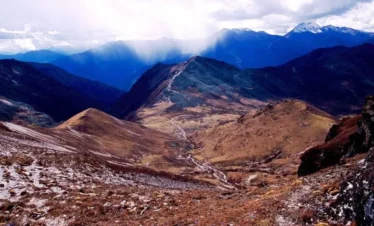
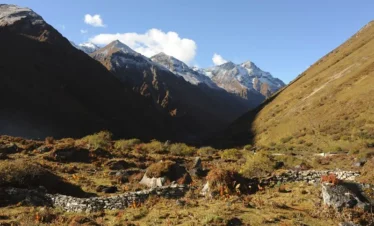
Start the trek from Tabiting at 2830m towards Gogona. Today is a moderate trek passing through meadows and fields then ascends the Tselela pass at 3440m through mixed forest of Juniper, bamboos, Rhododendrons and Magnolias.
After crossing Tselela, the trail crosses several meadows, and descends through forest to Gangak (3020m) – a beautiful hilltop overlooking a long valley. Gogona us reached upon a short climb. Gogona is a small village with an outstanding monastery under the care of Gangtey Gompa.
En-route come across people who speak different dialect called Bjop-kha (language spoken by nomads in Bhutan). Because of their isolation they continue using their own dialect and a life of their own.
Overnight in Camp. Walking Duration: 6-7 hrs.(Breakfast/Lunch/Dinner included)
The trial gently goes up from Gogona village and climbs into a forest of fir, oak, spruce, dwarf rhododendron, miniature azaleas, cypress and juniper. Then a long but gradual climb leads to Shobju La pass (3410m).
The trail down from the pass is rocky and muddy, weaving through the forest and criss- crossing a small stream. Eventually, at about 3000m, the trail meets a rough trail used by tractors to collect wood from the forest. Follow the road, with a few short cuts through the woods, to sawmill and woodcutters camp at Dolonaga (2830m).
Still heading down, the trail overlooks the broad Khothangkha valley and eventually reaches a clearing, Chorten Karpo, where four Chortens are located dedicated to the four Je Khenpos who came from this area.
Set camp in this clearing at 2,790 m beside a forest of a large blue pines overlooking the valley and the village of Khothangkha.
Overnight camp. Walking Duration: 6-7 hrs.(Breakfast/Lunch/Dinner included)
A short climb will reach the Tashila pass at 2800m. Then the trail does down through a beautiful forest changing from rhododendrons to magnolia to ferns and dwarf bamboos.
This stretch of trail is one of the finest bird-watching areas in Bhutan where species like laughing thrush, shrike, magpie and woodpecker can be spotted.
The trail then plunges down past steep terraced wheat fields to a cluster of houses at Whachay. The trail eventually meets the road near Tikke Zampa at 1500m. Drive from Tikke Zampa to Punakha which is around 30 minutes drive.
Overnight at Hotel. Walking Duration: 5 hrs.(Breakfast/Lunch/Dinner included)
In the morning, visit Punakha Dzong located at the confluence of the Pho-chu (male-river) and Mo-chu (female-river), the Punakha Dzong is arguably the most impressive dzong in the country.
Take a short hike through beautiful rice fields to Chimmi Lhakhang, a temple dedicated to Drukpa Kuenley, who as a favorite saint of the Bhutanese people is known affectionately as “the Divine Madman”.
The temple is on a hillside in the middle of rice fields and has become a pilgrimage site for childless couples. Afterwards, drive to Thimphu which is about 3 hours drive.
Overnight at Hotel.(Breakfast/Lunch/Dinner included)
After breakfast, drive over the Chelela pass (3899 m). From the pass, good view of the Himalayan Ranges and the valley beyond can be spotted. Then continue the drive towards Haa. Haa is made up of five counties and was closed to outside world until 2002. There is a military camp by the Indian Army.
In Haa valley, visit Wangchucklo Dzong dating back to 1915 and Lhakhang Nakpo (Black temple) is said to have been built by pigeon emanation of King Songtsen Gampo in the 7th century and Lhakhang Karpo (white temple). After the visit drive to Paro.
Overnight at Hotel (Breakfast/Lunch/Dinner included)
After breakfast drive towards the base camp of Taktsang for the hike up to the Taktsang Monastery-Tiger’s Nest. It’s about two hours hike up the cafeteria. From this point, enjoy the spectacular view of the monastery, where Guru Padmasambhava landed on the back of a tigress in 8th century.
Then visit the Taktsang Monastery and hike back to the road point then drive to Kyichu Lhakhang, one of the oldest and most sacred shrines in Bhutan. Afterwards, back to hotel.
Overnight at Hotel (Breakfast/Lunch/Dinner included)
After breakfast, drive to the Paro airport in time to catch the onward flight. Bid farewell to the remote and legendary Dragon Kingdom disappears again behind its guardian mountains.(Breakfast only included)
Includes/Excludes
The Package Includes
- Airport pick-up and drop-off by private vehicle.
- 3-star accommodation (4 & 5 stars may require an additional premium).
- Bhutan visa fee – including all necessary processing
- Route Permit
- Three meals per day during your stay in Bhutan
- A licensed Bhutanese tour guide
- All land transportation by private vehicle
- Camping equipment and haulage for trekking tours
- Sightseeing as per itinerary
- Monuments entrance fees where applicable
- Drinking water
- All internal taxes and charges
- A sustainable development fee of $100. (This sustainable development fee goes towards free education, free healthcare, poverty alleviation, along with the building of infrastructure.)
The Package Excludes
- Airfare & Travel Insurance
- Expenses of personal nature, Tips to guides and drivers
- Expenses occurred due to unavoidable events i.e. road wrecks, flight delays etc.
Trip Map
Frequently Asked Questions
Yes. The Gangtey Valley Trek is considered one of Bhutan's most accessible and culturally rewarding treks, combining Himalayan scenery, black-necked crane habitat, traditional villages, and sacred monasteries without the extreme altitude of more demanding routes.
The total cost depends on group size, season, accommodation standard, and customization preferences. Most packages include accommodation, meals, permits, guides, transportation, camping equipment, and trekking support.
Contact us for a personalized quotation.
The itinerary spans 10 days, including cultural sightseeing and 3 trekking days through the Gangtey Valley region. Shorter and longer customized versions are also available.
Activities include high-altitude trekking, monastery visits (Gangtey, Taktsang), valley walks, wildlife observation (black-necked cranes, songbirds), village interactions, dzong sightseeing, and photography. Acclimatization days accommodate cultural tours in Thimphu and Punakha.
Yes. The Gangtey Valley Trek is one of Bhutan's most beginner-friendly treks. No previous trekking experience is required, although participants should be comfortable walking 5–7 hours per day and should prepare with regular exercise before the trip.
Days 4 to 5 (Gogona to Khotokha stretch) offer alpine meadows and panoramic peaks. Gangtey Valley itself is iconic for black-necked cranes (November to March). Taktsang Monastery on Day 9 provides dramatic cliff-side scenery and cultural depth.
Yes. Given that Bhutan's mandatory fees cover healthcare, education, and conservation, the cost reflects genuine sustainable tourism rather than simply commercial pricing. The all-inclusive package structure, permits, guides, meals, accommodation, transportation, and trekking support mean there are no significant hidden costs once booked.
The itinerary includes comfortable 3-star hotels in Paro, Thimphu, and Punakha, while trekking nights are typically spent in fully supported camps or local guesthouses depending on the itinerary design.
Meals consist of traditional Bhutanese cuisine and trekker-friendly fare. Lodging includes hot water, blankets, and basic toilets. Mobile coverage is limited above 3,000 m. Porters carry supplies. Medical support is accessible via guides. Emergency helicopter evacuation is available.
Trekking off established trails is prohibited to protect wildlife habitats and alpine flora. Drone flights require permits (rarely granted). Photography of military installations is forbidden. Alcohol sales are restricted. Guides enforce cultural respect protocols at monasteries and villages.
Yes. Bhutan requires international visitors to travel through licensed tour operators and with certified guides. Your operator arranges all trekking permits, logistics, and guiding services.
Absolutely. Popular extensions include eastern Bhutan, the Bumthang Cultural Trek, or the Jomolhari Trek. Inform the operator in advance, and Tour in Bhutan will customize an itinerary to suit the schedule and interests.
Additional Trekking Info
Cost of Bhutan Gangtey Valley Trek Package
The Gangtey Valley Trek is a private trekking adventure that requires careful planning and personalized arrangements.
Since we tailor every departure to each trekker’s preferences and travel requirements, several factors determine the final package cost, including:
- Number of trekkers joining the expedition
- Preferred travel dates and trekking season
- Accommodation category before and after the trek
- Private group size and customized itinerary requirements
- Additional services or special arrangements
- Flight assistance and other travel arrangements within Bhutan
The Bhutan Gangtey Valley Trek is not offered as a fixed group departure with a standard price. Every expedition is carefully organized with customized logistics, including trekking permits, a licensed Bhutanese trekking guide, accommodation, transportation, meals, and full trekking support throughout the journey.
To provide an accurate quotation, our trekking specialists will first discuss your preferred travel dates, group size, trekking experience, and specific travel requirements.
Based on this information, we will prepare a personalized Gangtey Valley Trek itinerary along with a detailed cost breakdown, package inclusions, and available customization options.
Whether you are planning a solo adventure, a private group trek, or a customized Bhutan trekking experience, our team is here to help you choose the best itinerary for your schedule, experience level, and budget.
There is no obligation to book. Contact our Bhutan trekking specialists today for a personalized quotation and start planning your Bhutan Gangtey Valley trek with confidence.
Gangtey Valley Trek Route
The trek begins with arrival at Paro (2,250m), where exploration includes Paro Dzong and the National Museum.
Day 2 continues to Thimphu (2,350 m) for city landmarks, including Thimphu Dzong and the Memorial Chorten.
Day 3 takes the route through forested terrain to Gangtey Gompa (2,900m), the spiritual gateway to Phobjikha Valley. Active trekking begins on Day 4 with a trail through rhododendron forests to Gogona village (3,100m), home to the isolated Bjop community.
Day 5 descends through mixed conifer forests to Khotokha (2,790m), followed by Day 6’s final descent to Tikke Zampa (1,500m) and a drive to warm, low-lying Punakha (1,310m).
Day 7 returns via Thimphu (2,350m) with visits to Punakha Dzong and Chimi Lhakhang.
Day 8 offers a scenic excursion to remote Haa Valley (2,740m) before returning to Paro.
Day 9 features the iconic hike to Taktsang Monastery, Tiger’s Nest (3,120m), before a final evening.
Day 10 is departure from Paro.
Who Can Do the Bhutan Gangtey Valley Trek?
The Gangtey Valley Trekking is one of the most inclusive and accessible trekking adventures in the Himalayas, designed for a broad spectrum of travelers who share a genuine curiosity about nature, culture, and the art of slow travel.
Because the maximum trekking altitude stays below 3,500 meters and the passes involved are gentle rather than high-altitude extremes, this trek does not require prior trekking experience, specialized mountaineering skills, or exceptional physical conditioning.
The core requirement is simply the ability to walk comfortably for 5 to 7 hours per day with a light daypack on trails that are occasionally steep but never technically demanding.
First-time trekkers and cultural travelers who have never been on a Himalayan trail will feel comfortable here. The manageable altitude, forested paths, and consistent guide support make the Gangtey Valley Trek an ideal first Bhutan experience.
It equally suits senior travelers with good general health who want to experience a Himalayan trek without the stress of extreme altitude or long ascent days.
Families with children aged 10 and above will find the pace and terrain welcoming, while the cultural richness of monasteries, local villages, and wildlife sightings keeps younger trekkers engaged.
Nature enthusiasts, birdwatchers (particularly those hoping to see the black-necked crane), wildlife photographers, Buddhist culture seekers, and mindful wellness travelers also find this trek highly worthwhile.
In short, if someone is passionate about authentic travel, respectful of local culture, and capable of a moderate level of physical activity, the Phobjikha Gangtey Valley Trek is well suited to their interests.
Gangtey Valley Trek – Mountain Panoramas
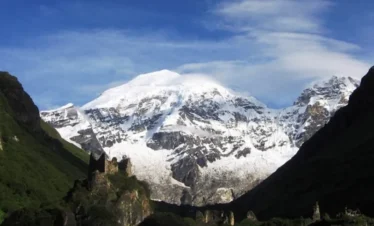
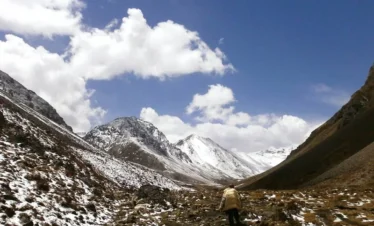
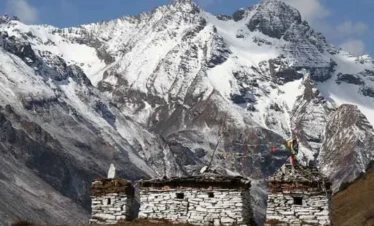
While the Gangtey Valley Trek itself is not a peak-bagging expedition, the surrounding Himalayan panoramas form an inseparable part of the trek’s visual identity. Two peaks in particular dominate the consciousness of everyone who travels through this region of Bhutan.
Gangkhar Puensum (7,570m) is not just the highest mountain in Bhutan; it is the highest unclimbed peak in the entire world, a distinction of extraordinary significance in the age of commercialized Himalayan mountaineering.
Visible from the highway approach to Gangtey on clear days, this colossal and permanently snow-capped massif rises above the Black Mountains in silent, dignified defiance of human ambition.
Bhutan has banned all peak climbing since 2003 out of respect for the spiritual beliefs that consider high-altitude mountains sacred abodes of protective deities.
Gangkhar Puensum remains untouched, unsummited, and likely to remain so, embodying the country’s extraordinary commitment to preserving what is sacred over what is achievable.
For trekkers on the Gangtey Valley Trek, catching a distant glimpse of this legendary giant on the drive through Wangdue is one of those quietly profound moments that stay in memory long after the journey ends.
Jomolhari (7,326m), sometimes spelled Chomolhari and known as the ‘Bride of Kangchenjunga,’ is Bhutan’s second-highest peak and one of the most revered sacred mountains in the Bhutanese Buddhist tradition.
Though the dedicated Jomolhari Trek offers a closer approach to its flanks from Paro, the mountain is visible from certain vantage points along the central Bhutan corridor and looms over the country’s collective spiritual imagination.
Jomolhari is deeply embedded in Bhutanese mythology as a goddess, a living mountain deity whose sanctity is observed through prayer flags, butter lamp offerings, and the prohibition of any human summit attempt.
For travelers on the Gangtey Valley Trek, understanding Jomolhari and Gangkhar Puensum reveals something fundamental about Bhutan itself: in this kingdom, the mountains are not conquered; they are revered.
Best Season for the Gangtey Valley Trekking
Spring (March to May) is one of the finest times to trek Gangtey Valley. Rhododendrons, magnolias, and wildflowers paint the hillsides in vivid pinks and purples.
Skies are generally clear, and daytime temperatures sit comfortably between 10°C and 18°C. Spring also coincides with major Bhutanese festivals (Tsechus) in Paro and Punakha, and bird activity peaks, making it ideal for wildlife photographers and nature lovers alike.
Autumn (September to November) is widely considered the absolute best season. The monsoon retreats in September, leaving clear skies, vivid green valleys, and outstanding mountain visibility across the entire trek corridor.
Temperatures range from 8°C to 16°C, perfect for walking. Most compellingly, October brings the arrival of the globally endangered black-necked cranes to Phobjikha Valley, and early November hosts the celebrated Black-Necked Crane Festival at Gangtey Monastery, a wildlife and cultural event unlike anything else in the Himalayas.
Weather, Temperature & Climate Information
The Bhutan Gangtey Valley Trek climate is shaped by the valley’s elevation of approximately 3,000 meters, its glacial topography, and its position at the convergence of the Black Mountains and Bhutan’s central highland belt.
Spring (March to May) brings mild to warm days (10°C to 18°C), fresh mountain air, and occasional afternoon cloud build-ups, with the risk of light rain increasing toward late May as pre-monsoon moisture arrives from the Bay of Bengal.
The monsoon season (June to August) is generally unsuitable for trekking. Persistent heavy rainfall makes the high trails slippery, activates leeches in forested sections, and dramatically reduces valley visibility. Autumn (September to November) is characterized by stable, predominantly clear skies (especially in October).
Daytime temperatures range from 8°C to 16°C at valley level, while cold nights drop to 0°C to 5°C on the higher passes, making a warm sleeping bag and layered clothing essential. Winter (December to February) brings harsh cold to Phobjikha, with freezing night temperatures and occasional snowfall on the passes.
However, the season is paradoxically one of the most magical times to visit the valley itself, as the black-necked cranes are in full winter residence and the frosty landscape has an ethereal stillness.
Trekkers should always pack for temperature variability, as conditions at 3,000 to 3,500m can shift rapidly. Warm afternoons can give way to cold, wet evenings within hours, particularly in shoulder-season months.
Required Permits
Bhutan requires permits for all tourists. Don’t worry, your tour operator handles everything. You won’t fill out forms or deal with paperwork. All visitors must book through a licensed Bhutanese tour operator. They sponsor your trip and arrange all permits. Everything is done online and digitally.
What You Need
- Bhutan Tourist Visa. Required for everyone except Indian, Bangladeshi, and Maldivian citizens. Your operator applies through the government. Takes at least 7 working days. Cost is included in the daily fee below.
- Sustainable Development Fee (SDF). USD 100 per person per night (international visitors); INR 1,200 per person (for Indian nationals). This money goes to Bhutan’s free healthcare, free schools, and conservation. You pay upfront through your operator.
- Trekking Permit. This permit is required for multi-day treks like this one. Your operator arranges it and carries it. You need to have it with you on the trail.
- Environmental/National Park Permit. Some parts of the route pass through protected areas. A small additional fee may apply. Your operator handles it.
- Filming Permit. Only if you’re doing commercial or professional filming with equipment or drones. A filming permit is not needed for regular photos and videos. Fees vary.
Difficulty
Is This Trek Hard? No. It’s Easy to Moderate. You don’t need trekking experience. The highest point is 3,440 to 3,500 meters (the Tselela La and Shobju La passes).
That’s high enough to feel altitude, but not extreme. Most healthy adults adapt fine. You’ll walk 5 to 7 hours per day on good dirt trails and forest paths. No rock climbing, no ropes, no crampons, just hiking boots and a daypack.
What You Need to Know
- No technical climbing. The terrain is forest, meadows, and some rocky sections. Standard trekking boots work fine.
- Start training 6 to 8 weeks before. Walk daily. Do some jogging. Go on 2 to 3 practice hikes on hills, carrying a light pack.
- Learn downhill technique before you go. The Shobju La descent is steep and can hurt your knees if you don’t pace yourself.
- No prior high-altitude experience needed.
Physical and Mental Preparation
The better you prepare, the better the trek. Start 6 to 8 weeks early. Physical: Do cardio 45 to 60 minutes daily (walking, jogging, cycling). Add leg exercises 3 times a week (squats, lunges, step-ups, and calf raises).
Do 2 to 3 practice day hikes with a light backpack on hilly ground. Mental: Stay patient. Be ready for simplicity. Be open to meeting people. Curiosity beats rigid expectations.
Before You Go
- Do cardio exercise (walking, jogging, or cycling) for 45 to 60 minutes daily, 6 to 8 weeks before.
- Leg training 3 times per week: squats, lunges, step-ups, and calf raises.
- Do 2 to 3 practice day hikes carrying a light pack (4 to 5 kg) on hills.
- Practice going downhill carefully. Your knees need to be ready for the steep Shobju La descent.
- See a doctor. Get checked for heart health, joint problems, and breathing issues.
- Ask your doctor about Diamox (a medication for altitude). Get a prescription if recommended.
- Consult your physician or travel health clinic regarding recommended vaccinations and preventive health measures before traveling to Bhutan.
- Practice slow, steady breathing and the “rest step” technique on practice hikes.
- Get used to no phone service. The Gogona and Khotokha section has no connectivity. Think of it as part of the experience, not a problem.
- Learn about Bhutanese Buddhism and etiquette: walk clockwise around religious monuments, remove shoes at monastery doors, and dress respectfully.
Accommodation & Meals
Hotels in Town
In Paro, Thimphu, and Punakha, you stay in 3-star hotels. Clean rooms, private bathrooms, hot showers, Wi-Fi, and meals included. The hotels have a traditional Bhutanese style, timber architecture, valley views, and delicious food (both Bhutanese and regular cuisine).
Want more comfort? Upgrade to 4-star or luxury lodges like Amankora or Six Senses. Costs extra, but worth it if that’s your style.
Camping on the Trek
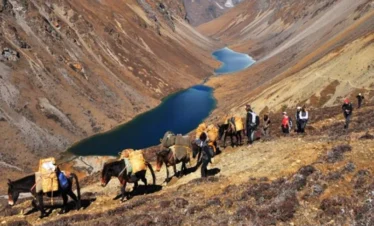
On Days 4 and 5 (Gogona and Khotokha), you camp. Your operator provides everything: a tent, a sleeping mat, a warm sleeping bag, a cook tent, and a toilet. Pack animals carry all of it between campsites.
A cook makes meals at camp. Breakfast: porridge, eggs, tea. Dinner: rice dishes, vegetables, local food. Fresh and hot..
Transportation
From arrival at Paro International Airport to final departure, we fully arrange all ground transportation throughout the Bhutan-Gangtey Valley trek.
Inter-city travel between Paro, Thimphu, Punakha, Wangdue, Gangtey, and the Haa Valley excursion is handled in a comfortable private vehicle, driven by an experienced local driver and accompanied by the licensed guide throughout.
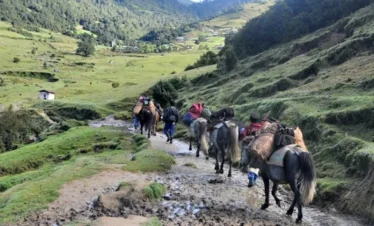
On trekking days, the trail does not require vehicles. Pack animals carry all camp equipment and main luggage between stages. At the trek’s conclusion at Tikke Zampa (1,500m), the vehicle is ready to take the group directly to Punakha.
Package costs include all domestic airport transfers, driver fees, fuel costs, and road logistics, with transparent pricing and no hidden charges.
Travel Insurance
Travel insurance is strongly recommended for every trekker joining the Bhutan Gangtey Valley Trek. While the route is accessible and well-supported, travel through a remote Himalayan environment carries the potential for unexpected situations such as injury, sudden illness, flight cancellation, or weather disruption.
A comprehensive policy should cover medical treatment, emergency evacuation, and trip cancellation at minimum. Since sections of the trek reach 3,500 meters, the policy must explicitly include high-altitude trekking, as many standard travel plans exclude mountain activities by default.
Gear & Equipment Checklist
Clothing
- Moisture-wicking base layer (long-sleeve top and long johns)
- Fleece mid-layer (mid-weight; essential for evenings and high passes)
- Waterproof and windproof outer shell jacket (Gore-Tex or equivalent)
- Waterproof trekking trousers or lightweight hiking pants
- 2 to 3 pairs of moisture-wicking trekking socks (merino wool recommended)
- Thermal hat/warm beanie
- Sun hat or cap with brim
- Light gloves (fleece-lined; essential for morning departures and pass crossings)
- Gaiters (lightweight; useful in muddy/snowy sections)
- One outfit of modestly dressed clothing for monastery visits (no sleeveless tops; knee-length minimum)
Footwear
- Waterproof trekking boots with ankle support (broken in before the trek)
- Camp sandals or lightweight shoes for evenings
Trekking Equipment (Personal)
- Daypack (25 to 30 liters) for personal items on trail
- Trekking poles (adjustable; highly recommended for descents)
- Headlamp with spare batteries
- Water bottles (1 to 2 liters capacity) or hydration reservoir
- Water purification tablets or UV purifier (backup to boiled water provided)
- Sunglasses (UV400, polarized recommended)
- SPF 50+ sunscreen and lip balm
- Personal first aid kit (blister pads, bandages, antiseptic, ibuprofen, antidiarrheal, antacid)
- Diamox (acetazolamide), with a doctor’s prescription for altitude prevention
- Insect repellent (DEET-based for forested sections)
- Hand sanitizer
Electronics and Documents
- Camera with spare batteries/memory cards (charging opportunities are limited on trek)
- Portable power bank (10,000 to 20,000 mAh)
- Universal travel adapter
- Passport (6+ months validity), visa documentation, and permit copies
- Emergency contact card and travel insurance documents (physical copies)
- Cash in Bhutanese Ngultrum (BTN) or Indian Rupees (widely accepted). ATMs are unavailable on the trekking route.
Camping Equipment (Provided by Operator)
- Mountain tent, sleeping mat, and warm sleeping bag (provided or hire option)
- Cook tent and dining tent setup
- Camp toilet facilities
Altitude Sickness & Prevention
Although the Bhutan Gangtey Valley Trek altitude stays below 3,500 meters, significantly lower than many Himalayan adventures, altitude sickness (Acute Mountain Sickness, or AMS) can affect individuals at elevations as modest as 2,500 meters, particularly those who ascend rapidly, are poorly hydrated, or have an individual susceptibility regardless of fitness level.
The Phobjikha Valley itself sits at approximately 3,000 meters, meaning the body will begin adapting to reduced oxygen levels from arrival in the Gangtey area.
The pre-trek cultural touring days in Paro (2,280m) and Thimphu (2,320m) serve a valuable acclimatization function. Most trekkers arrive in the valley already adjusted to moderate altitude and experience no issues.
However, the crossing of the Tselela La and Shobju La passes at 3,440 m and 3,410 m, respectively, represents the highest physical exertion of the trek, and it is precisely at this point that symptoms may manifest in susceptible individuals.
Symptoms of Altitude Sickness (AMS) to Watch For
- Persistent headache, particularly behind the forehead, not relieved by ibuprofen
- Nausea, vomiting, or significant loss of appetite
- Dizziness or loss of balance
- Unusual fatigue or weakness disproportionate to exertion
- Difficulty sleeping despite exhaustion
- Shortness of breath at rest (not only during exertion)
- Confusion, disorientation, or slurred speech (signs of severe HACE—descend immediately). Persistent dry cough or gurgling breath sounds (signs of HAPE—descend immediately).
Prevention Strategies
- Ascend gradually. The itinerary is designed with acclimatization in mind. Never rush ahead of the group.
- Stay well hydrated throughout the trek. Aim for 3 to 4 liters of water daily. Avoid alcohol and sedatives.
- Eat regular, light meals even when appetite is suppressed.
- Consult a doctor about prophylactic Diamox (acetazolamide) before departure if there is a history of AMS.
- Rest at the first campsite and avoid strenuous activity for the first 24 hours at a new altitude.
- Please communicate any early symptoms to the guide immediately. Early reporting saves lives.
- Never ascend with active AMS symptoms. Descent is the only reliable treatment for moderate to severe AMS.
- Sleep at lower altitudes when possible. The ‘climb high, sleep low’ principle applies here.
Emergency and Medical Evacuation Service
The Gangtey Valley Trek route through Phobjikha Valley is one of the more accessible trekking corridors in Bhutan relative to its remote neighbors, which is a meaningful safety advantage.
While the valley’s road connectivity to Wangdue and Punakha means that vehicle-based evacuation to hospital facilities is feasible within several hours for most emergencies, trekking operators maintain emergency protocols for all scenarios.
All licensed Bhutanese trekking guides carry a comprehensive first aid kit and are trained in basic wilderness first aid and AMS recognition.
In the event of a serious medical incident such as a cardiac emergency, severe AMS, acute injury, or HAPE/HACE, the standard protocol is immediate stabilization, followed by the fastest available evacuation route.
Depending on the nature of the emergency, evacuation may be conducted by road or, in serious cases, coordinated through Bhutan’s emergency services and aviation providers, subject to weather conditions and government authorization.
Helicopter landing zones are available near Phobjikha Valley. Operators maintain direct communication lines with Bhutan’s emergency medical services, and travel insurance (which must include helicopter evacuation coverage) is essential for cost-free access to this service.
The nearest equipped hospital is in Wangdue or Punakha. Thimphu’s Jigme Dorji Wangchuck National Referral Hospital provides the most advanced medical care in the country.
Guide and Porter
Every trekker on the Gangtey Valley Trek in Bhutan is accompanied by a licensed Bhutanese government guide, which is not just a practical requirement of Bhutan’s regulated tourism model but also one of the most enriching dimensions of the experience.
The guide is far more than a route-finder. They serve as a cultural interpreter, a living encyclopedia of Bhutanese Buddhism, local history, and ecological knowledge; a safety-conscious companion trained in wilderness first aid; and often a deeply warm human being who makes the journey feel personal.
Guides are certified by Bhutan’s Department of Tourism, fluent in English, and intimately familiar with the Gangtey Valley corridor and the communities travelers will pass through.
They facilitate authentic interactions with local villagers, explain the cultural protocols at monasteries and sacred sites, interpret wildlife sightings, and manage the entire support team on trekking days.
Porters are not traditionally required on this trek because pack animals (horses or yaks) carry main luggage and camp equipment between stages, but personal porters can be arranged on request for trekkers who prefer to walk entirely unencumbered.
In Bhutan’s trekking culture, guides and support staff warmly appreciate tips as a meaningful acknowledgement of their expertise and effort.
Important Notes
- Licensed Operator Requirement: All international tourists must book through a licensed Bhutanese tour operator. Independent travel is not permitted, and a visa will not be issued without a confirmed operator booking.
- Sustainable Development Fee (SDF): USD 100 per person per night is mandatory for all international visitors. This fee is non-negotiable and paid in advance through your operator.
- Mobile Connectivity: Very limited to non-existent in remote sections, especially between Gogona and Khotokha. Inform your family about communication gaps and do not rely on your phone for navigation or emergencies.
- Cash Requirements: ATMs are unavailable in Phobjikha Valley and along the trek. Carry sufficient Bhutanese ngultrum (BTN) or Indian rupees from Thimphu or Paro.
- Dress Code: Dress modestly at monasteries and dzongs. Cover shoulders and knees. Remove shoes at sacred entrances. Always seek permission before photographing monks or religious interiors.
- Environmental Responsibility: Minimize single-use plastic. Carry out all personal waste. Follow Bhutan’s strict zero-trace trekking policy.
- Travel Insurance: Comprehensive insurance with helicopter evacuation coverage is mandatory due to the remote terrain and potential weather delays.
- Black-Necked Crane Festival: Held annually in early November at Gangtey Monastery. A highly recommended cultural highlight if your dates align.
- Paro Flights: Highly weather-dependent with frequent delays/cancellations. Add at least one buffer day on both ends of your trip and avoid same-day international connections.
- Health Advisory: Children under 10 and individuals with heart, respiratory, or joint conditions should obtain medical clearance before joining.
- Electricity: Bhutan uses 230V/50Hz with Type D/F plugs. Bring a universal adapter and a power bank, as charging is limited on the trail.
- Documents: Carry physical copies of your passport, visa, and permits at all times. Your guide will keep the originals.
Why Book this Trek with Us?
- The Tour in Bhutan team has licensed Bhutanese guides and trekking specialists with deep local knowledge at every stage of the journey.
- Our small-group and private trek formats guarantee a personalized, uncrowded experience that honors the ‘high value, low impact’ spirit of Bhutan’s tourism philosophy and provides clients with genuine access to local life.
- We provide comprehensive packages, including airport transfers, 3-star hotel accommodation, all meals, experienced guides, support staff, camping equipment, and pack animals with no hidden costs.
- Our carefully planned, acclimatization-friendly itineraries include rest days, gradual altitude gain, and pace flexibility, prioritizing health and safety at every step.
- We maintain emergency evacuation protocols and carry first-aid-equipped guide teams on all treks and can coordinate helicopter evacuation from Phobjikha Valley in the event of a genuine medical emergency.
- We operate with deep respect for the principles of sustainable and responsible tourism, supporting local Bhutanese communities, minimizing our environmental impact, and contributing to the cultural preservation goals that make Bhutan extraordinary.
- We offer fully customizable itineraries. Whether travelers want to add the Black-necked Crane Festival, extend into eastern Bhutan, or design a private luxury trekking experience, we tailor every journey to their exact interests and travel.
Book Your Gangtey Valley Trek Expedition
The Bhutan Gangtey Valley Trek is one of Bhutan’s most scenic and culturally enriching trekking adventures, offering peaceful forest trails, beautiful alpine meadows, traditional villages, and breathtaking views of the Phobjikha Valley.
With seasonal trekking conditions, permit requirements, and carefully coordinated logistics, proper planning is essential for a safe and memorable journey.
Whether you are planning a private trek with friends, a cultural Himalayan adventure, or a once-in-a-lifetime journey through Bhutan’s stunning valleys and mountain landscapes, our experienced Bhutan trekking team will create a personalized itinerary tailored to your interests, fitness level, and travel schedule.
Trip Reviews
Posted on Google![Google]()
![Amees Florence profile picture]() Amees Florence
Amees FlorenceTrustindex verifies that the original source of the review is Google.
Posted on Google![Google]()
![Ravi Jaisi profile picture]() Ravi Jaisi
Ravi JaisiTrustindex verifies that the original source of the review is Google.
Posted on Google![Google]()
![Silent Shadow profile picture]() Silent Shadow
Silent ShadowTrustindex verifies that the original source of the review is Google.
Posted on Google![Google]()
![Bishnu Gaire profile picture]() Bishnu Gaire
Bishnu GaireTrustindex verifies that the original source of the review is Google.
Posted on Google![Google]()
![Tena Rosser profile picture]() Tena Rosser
Tena RosserTrustindex verifies that the original source of the review is Google.
Experiencing Bhutan and it’s people and it’s culture and tradtions is a beautiful travel experience in itself. It’s a magical journey into the land high up in the Himalayas. We were lucky that we found this company ‘Happiness Drukyul Holidays’ who were completely flexible, professional and up to the mark. Mr. Sonan, our guide did his job well and introduce to Bhutan’s unique culture and traditions. We learnt more of Buddhism from him. Highly recommended & thank you for this beautiful holiday experience.Posted on Google![Google]()
![Landslake Chef profile picture]() Landslake Chef
Landslake ChefTrustindex verifies that the original source of the review is Google.
We did a 6 day tour with our guide Sonam. He was extremely helpful, very knowledgeable about the history and culture of Bhutan and overall friendly and relaxed. Highly recommended.