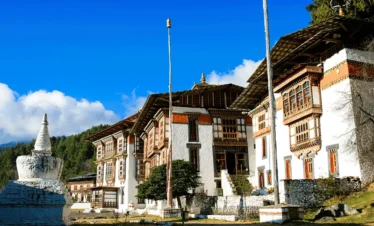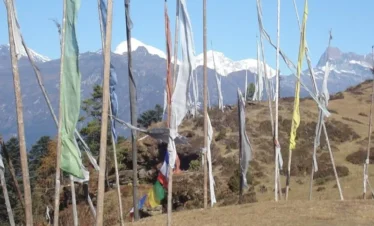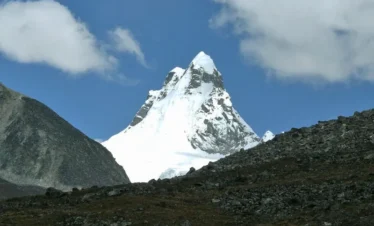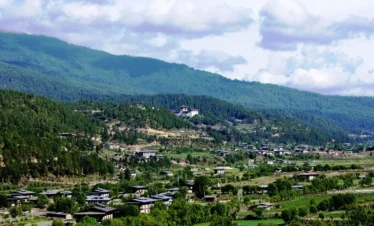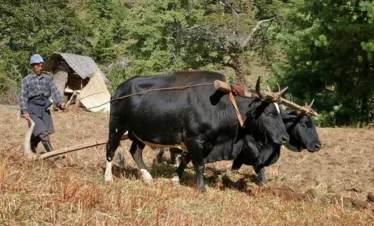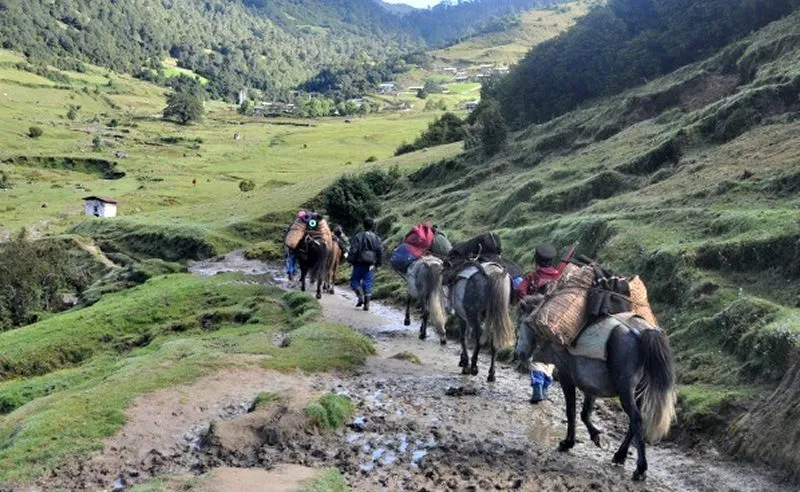
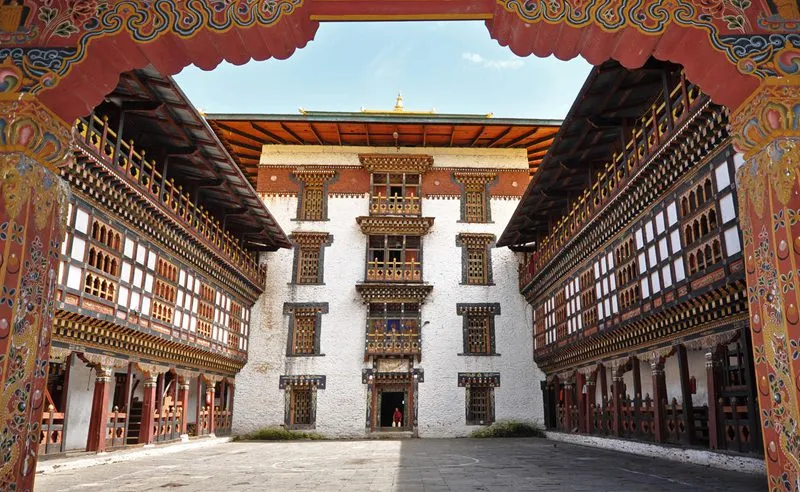
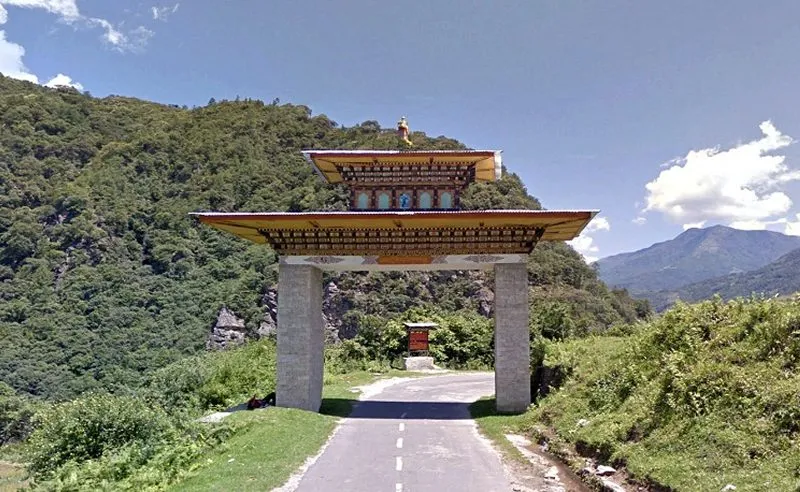
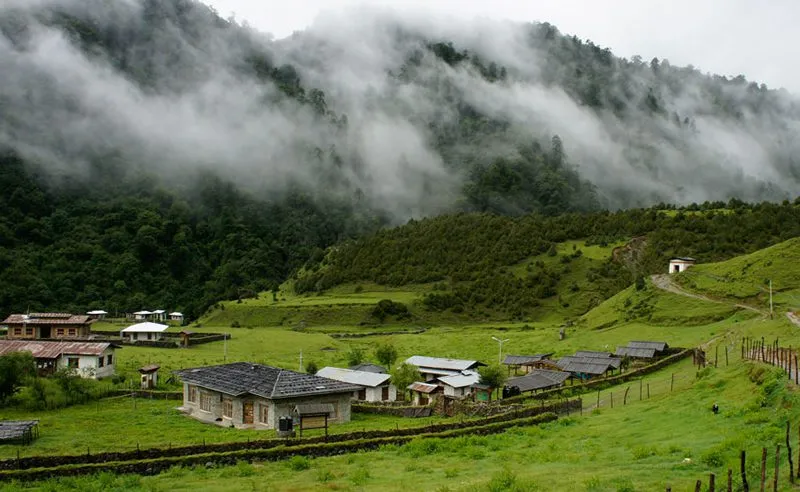
The Merak Sakteng Trek is one of Bhutan’s most remote and least visited routes, a rare journey into the living culture of the Brokpa people through the protected highlands of eastern Bhutan. Welcome to the land of the thunder dragon.
-
4090 m (13,500 feet)
-
March to June / September to November
-
Moderate
-
Breakfast lunch and dinner
-
3 stars hotels in City, Teahouses during trek
-
Private car, van or bus (Depends on group size)
-
Private Tour
Highlights
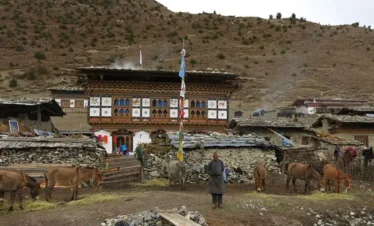
- Brokpa Cultural Immersion: Spend unhurried time with local families in the remote highland villages of Merak and Sakteng.
- Ancient Traditions: Witness the daily use of the tshitpi zham, a centuries-old, five-tentacled felt rain hat.
- The Nachungla Pass: Conquer the trek’s highest point at 4,153 meters (13,625 feet), the most demanding alpine crossing.
- Triple-Border Panoramas: Take in sweeping, clear sightlines stretching across Bhutan, Tibet, and Arunachal Pradesh (India).
- Striking Landscapes: Contrast the windswept, tightly clustered ridge of Merak with the wide, open valley floor of Sakteng.
- Active Silk Weaving: Visit Radhi, one of Bhutan’s last surviving centers for traditional bura silk weaving.
- Protected Wilderness: Trek through mossy rhododendron forests, alpine meadows, and habitats of red pandas and snow leopards.
Quick Facts of Merak Sakteng Trek (18 Days)
| Duration | 18 days (Days 4–10 active trekking; Days 1–3 and 11–18 cultural extension) |
| Trekking Days | 7 days on trail (Chaling to Phongmey) |
| Total Distance | Approximately 70 km |
| Maximum Altitude | 4,153 m (13,625 ft) — Nachungla Pass |
| Minimum Altitude | 1,500 m, Trashigang Valley approach |
| Altitude Range | 1,500 m to 4,153 m |
| Trek Difficulty | Moderate to moderately demanding |
| Best Seasons | Spring: late March to May | Autumn: late September to November |
| Peak Month | October (most stable weather; clearest pass conditions) |
| Starting Point | Chaling, Trashigang District, eastern Bhutan |
| Ending Point | Phongmey, Trashigang District, eastern Bhutan |
| Gateway City | Guwahati (India) — overland entry via Samdrup Jongkhar border |
| International Airport | Paro International Airport (exit point) |
| Meals | Full board (breakfast, lunch, dinner) throughout trek |
| Permits Required | Tourist visa, SDF, restricted area permit, Sakteng Wildlife Sanctuary permit |
| Protected Area | Sakteng Wildlife Sanctuary (~742.46 sq km) |
| Cultural Focus | Brokpa semi-nomadic communities, Dakpa dialect, and tshitpi zham headgear |
| Solo Travellers | Matched to group departures or private departure with single supplement |
| Flora Highlight | 35 of Bhutan’s 46 rhododendron species; eastern blue pine; Blue Poppy |
| Booking Deposit | 30% of total package cost; balance due 30 days before departure |
Overview
Explore the Merak Sakteng Trek with Tour in Bhutan. Most Bhutan treks take you through mountains. The Merak and Sakteng Trek takes you on a journey through time.
Tucked into Bhutan’s easternmost corner along the border with Arunachal Pradesh, this trail leads into one of the last corners of the Himalayas where modernity has barely arrived. Here, semi-nomadic Brokpa yak herders still live by ancient rhythms, a wildlife sanctuary officially protects the habitat of the Migoi (Yeti), and the silence between villages is the loudest sound you will hear all day.
The Merak Sakteng Trek Bhutan lies within the Sakteng Wildlife Sanctuary in the Trashigang Dzongkhag, encompassing a total area of 742.46 square kilometers managed across three ranges: the Merak Range, the Sakteng Range, and the Joenkhar Range. The area officially opened to controlled tourism in 2010. Since then, only a handful of foreign visitors have reached this remote highland region, making it one of the most exclusive and culturally preserved trekking routes in the entire Himalayan arc.
This moderate trek ranges between 1,500 m and 4,153 m, beginning from Chaling in Trashigang and ending in Phongmey. It crosses two major passes, including the dramatic Nachungla Pass, at 4,153 m, and passes through the culturally unique Brokpa villages of Merak and Sakteng.
The Brokpa people have lived in these high valleys for centuries, descending from Tibetan nomads who crossed the mountains long ago and made eastern Bhutan their home. While the rest of the world has moved on, the Brokpa have remained deeply connected to their roots. Life here runs on ancient rhythms, not on Wi-Fi.
They maintain a distinct identity, their dialect, unique traditions, including polyandry, and striking yak-hair hats with five tentacles designed to ward off rain. In Merak and Sakteng, livestock rearing is the main socio-economic activity, generating 83% of household income from livestock husbandry.
The Sakteng Wildlife Sanctuary frames the entire trek and is ecologically extraordinary. It harbors 35 of Bhutan’s 46 rhododendron species, turning the hillsides into a riot of color in spring, and the national flower, the blue poppy, along with Primula and Gentiana species, grows in abundance across the alpine pastures.
The sanctuary has been recognized on Bhutan’s Tentative List for UNESCO World Heritage inclusion. It is also the only wildlife reserve in the world dedicated in part to protecting the habitat of the Yeti, the abominable snowman, deeply rooted in Brokpa belief and ritual.
Merak Sakteng requires a special eastern region permit in addition to the standard tourist visa and sustainable development fee, and independent trekking is not permitted under Bhutan’s tourism policy.
Our 18-day trekking itinerary seamlessly combines this authentic trek with cultural highlights in Trashigang, Rangjung Monastery, Bumthang, Punakha, and the iconic Tiger’s Nest hike in Paro. At Tour in Bhutan, we provide comfortable camping tents, full logistical support, experienced local guides, and personalized service so you can focus entirely on the journey.
Merak and Sakteng Trek Itinerary
Drive approximately 100 km from Guwahati through Assam tea gardens and cross the Brahmaputra River. Complete immigration at the Bhutan border. Check in early and rest up.
Explore the frontier town in the evening, a unique blend of Indian and Bhutanese culture. Keep your travel documents handy throughout the day. Overnight Stay at Samdrup Jongkhar
A long 180 km, 6–7 hour scenic drive north. Stop at Narphung for bamboo crafts, have lunch in Wamrong, and pass Sherubtse College in Kanglung. The road carves through sheer cliffs at Melong Bra; stay alert. Arrive in Trashigang at a 1,500 m elevation. Eat well and sleep early for the full day ahead. Overnight Stay at Trashigang
Full orientation day. Visit Trashigang Dzong in the morning; built in 1659, it commands the ridge above the Dangmechu River. Browse the local market, where Brokpa nomads from Merak and Sakteng may be trading.
Use this day to finalize trekking gear, brief your guide, and acclimatize before the trek begins tomorrow.
Overnight Stay at Trashigang
A short, beautiful 10.5 km walk along river bends and open valley terrain. Get there early. In Merak, a traditional Brokpa village of stone homes, wool weavers, and yaks, your guide will introduce you to local families. Your guide will introduce you to local families. Take your time exploring before dusk. Altitude is real here; drink water, move slowly, and don’t skip meals. Camp: Merak (3,520 m)
The hardest and most rewarding day: 16 km, 6 hours. Cross Nachungla Pass at 4,153 m, the highest point of the trek. On clear days, peaks of Bhutan, Arunachal Pradesh, and Tibet are all visible. Descend through alpine meadows full of rhododendrons. Start early, carry snacks, and pace yourself carefully on the high pass crossing. Camp: Miksateng (3,060 m)
A short 6.5 km, 2–3 hour morning walk. Descend to the river, cross via a small pass marked by a chorten, and arrive in Sakteng, the second Brokpa village. It is quieter and more spread out than Merak. The village sits inside the Sakteng Wildlife Sanctuary. Visit the local monastery in the afternoon and settle in for a peaceful evening. Camp: Sakteng (2,950 m)
Explore the wildlife sanctuary, home to red pandas, snow leopards, Himalayan black bears, and 35 rhododendron species. Walk the forest with your guide. Spend time with Brokpa families unhurriedly. If the annual Merak Tshechu festival coincides with your visit, the yak dance and Ache Lhamo performances are unmissable. The valley itself is a reward enough. Camp: Sakteng (2,950 m)
Trek 17 km south in 6–7 hours, descending through temperate forest and open ridges. As you descend to 1,733 meters, the air becomes noticeably warmer. Joenkhar, Teng, is a mixed Brokpa and Sharchop community with a school and health clinic. Sleep under a completely dark sky tonight, with no city lights anywhere. The trekking section is nearly complete. Camp: Joenkhar Teng (1,733 m)
The trek ends here after a short final 8 km walk to Phong My over suspension bridges. Drive to Trashigang, stop at Rangjung Monastery for reflection, and then continue 2–3 hours west to Mongar. A comfortable hotel and a real bed await after 7 days of trekking. Treat yourself to a warm shower, a full meal, and solid rest. Stay: Mongar
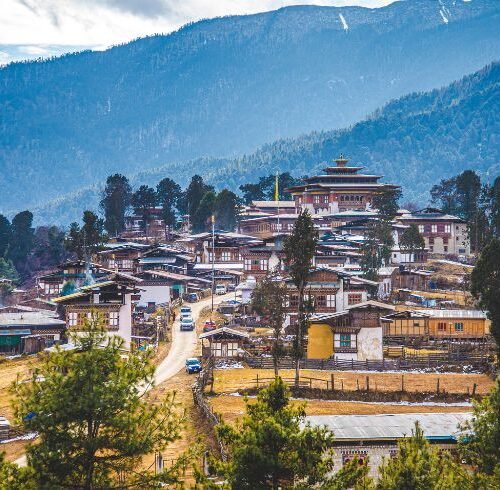
A full day’s drive west, one of Bhutan’s remarkable cross-country journeys. The road crosses Kiki La and Ura La, passes through deep forest and deep gorges before dropping into the broad Bumthang Valley. Bumthang is Bhutan’s spiritual heartland; two-thirds of the district is protected land. Arriving here feels like reaching a quiet, sacred center of the country. Overnight Stay at Jakar, Bumthang (2,600 m)
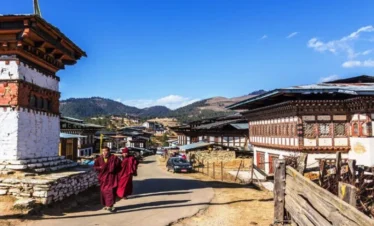
Visit Jakar Dzong (Castle of the White Bird) on a ridge above Chamkhar Valley, Kurje Lhakhang with Guru Rinpoche’s body print in stone, and 7th-century Jambay Lhakhang. In the afternoon, explore the Chumey Valley for Yathra weaving on backstrap looms. Try locally made Swiss-style cheese and Bumthang apple cider before the evening settles in. Overnight Stay at Jakar, Bumthang
Drive west past Trongsa Dzong, the ancestral seat of Bhutan’s royal family, perched over a deep gorge. Cross Pele La at 3,420 m, where yaks and prayer flags are found. Descend to the subtropical Punakha Valley. Stay near Punakha Dzong (1637), built at the confluence of two rivers and considered the most beautiful dzong in all of Bhutan. A genuinely spectacular day. Overnight stay at Punakha
A two-hour drive over Dochu La Pass at 3,100 m, where 108 memorial chortens stand in a cluster, is stunning on clear mornings. Arrive in Thimphu, the capital that still feels like a large town: no traffic lights, traditional building fronts, and a human pace. Visit the riverside weekend market, National Memorial Chorten, and Tashichho Dzong in the afternoon. Overnight stay at Thimphu
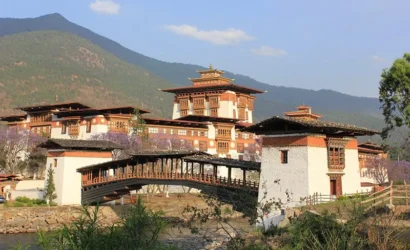
A short one-hour river road drive opens into the wide, flat Paro valley, rice terraces, painted farmhouses, and a willow-lined river. Visit Rinpung Dzong and the old covered bridge. Spend the afternoon at the National Museum in the watchtower above the dzong, or simply sit at a riverside café watching valley life. Sleep well; tomorrow’s hike is a full effort. Overnight Stay at Paro
Prepare for tomorrow’s Taktsang hike. Visit Kyichu Lhakhang, believed to have been built in the 7th century, where butter lamps have burned for over a thousand years. Walk the old quarter and browse local crafts for hand-woven textiles and lacquerware. Eat a proper, nourishing meal. Set your alarm early; a dawn start tomorrow means fewer crowds and the best morning light. Overnight Stay at Paro
A 2-hour climb through pine and oak forest to the teahouse viewpoint, followed by a final descent and re-climb to the monastery, which clings 900 m above the valley. Guru Rinpoche meditated here in the 8th century. Explore the sacred temples and meditation caves inside. Descend slowly, carrying the weight of the full 18-day journey. Return to Paro for a final night. Overnight Stay at Paro
Take a few quiet minutes before the airport transfer. Watch the Paro Valley at dawn, mist in the terraces, prayer flags in the early light, and mountains above everything. The flight out over the Himalayas is the final gift: an aerial farewell to the forests, dzongs, and high passes of eastern and central Bhutan. A journey truly worth every moment. Depart from Paro Airport
Includes/Excludes
The Package Includes
- Airport pick-up and drop-off by private vehicle.
- 3-star accommodation (4 & 5 stars may require an additional premium).
- Bhutan visa fee, including all necessary processing
- Route Permit
- Three meals per day during your stay in Bhutan
- A licensed Bhutanese tour guide
- All land transportation by private vehicle
- Camping equipment and haulage for trekking tours
- Sightseeing as per itinerary
- Monuments entrance fees where applicable
- Drinking water
- All internal taxes and charges
- A sustainable development fee of $100. (This sustainable development fee goes towards free education, free healthcare, poverty alleviation, along with the building of infrastructure.)
The Package Excludes
- Airfare & Travel Insurance
- Expenses of personal nature, tips to guides and drivers
- Expenses occurred due to unavoidable events, i.e., road wrecks, flight delays, etc.
Trip Map
Frequently Asked Questions
Trekking beginners with good baseline fitness and a willingness to prepare seriously over six to eight weeks can complete the Merak and Sakteng Trek. The route does not require prior Himalayan experience. However, beginners who arrive undertrained, without altitude experience, or without adequate cold-weather gear are at significantly higher risk of AMS, injury, and trip curtailment. Tour in Bhutan reviews the fitness and experience details provided at booking and gives honest guidance if a proposed itinerary mismatches a participant's background.
Trekkers are responsible for bringing their own clothing and footwear: waterproof trekking boots (broken in before departure), moisture-wicking base layers, insulating mid-layer, durable-shell waterproof jacket and trousers, warm hat, gloves, trekking socks, and sun hat. Personal items including sunscreen (SPF 50+), lip balm, personal first aid and prescription medications, a headlamp, sunglasses (Category 4 UV), trekking poles, a daypack, and camera equipment should also be brought from home. Tour in Bhutan provides camping equipment, sleeping bags, and duffel bags. A full gear list is sent to confirmed participants six weeks before departure.
The Merak and Sakteng Trek is rated as moderate to moderately demanding. The standard route does not require technical trekking, mountaineering, crampons, or ice axes. The primary difficulty is sustained multi-day trekking with one high-altitude pass crossing at 4,153 meters. Prior Himalayan trekking experience is an advantage but is not a strict requirement for fit, well-prepared travelers. Six to eight weeks of structured pre-trek training covering cardiovascular fitness and weighted pack walking is strongly recommended.
The two recommended trekking windows are spring (late March to May) and autumn (late September to November). October offers the most stable weather and clearest pass conditions. Spring brings rhododendron bloom on the lower forest sections but carries a higher risk of late-season snowfall at Nachungla Pass before mid-April. The monsoon period (June to mid-September) makes the route difficult and is not recommended. Winter (December to February) is inaccessible at high altitude without specialist equipment.
In early April at village altitude (3,100 to 3,500 meters), daytime temperatures range from 5 to 12 degrees Celsius in fair weather, dropping to minus 5 degrees or below at night. At Nachungla Pass (4,153 meters), the wind chill can reduce the effective temperature to between minus 10 and minus 15 degrees Celsius, even on a clear day. In October, daytime temperatures at village altitude are 8 to 16 degrees Celsius, with nights at or below minus 5 degrees Celsius above 4,000 meters. Cold-weather sleeping gear and insulating layers are essential in both seasons regardless of daytime warmth.
Accommodation in Merak and Sakteng villages is in licensed homestays or basic local guesthouses: simple wooden rooms with mattresses and blankets, shared or basic private toilet facilities, and no hot running water. On the trail between villages, accommodation is provided in three-season tents with sleeping bags rated to -10 degrees Celsius. Pre- and post-trek accommodation in Thimphu, Trashigang, or Bumthang is in licensed three-star hotels or boutique guesthouses with private en-suite bathrooms.
Tour in Bhutan arranges all mandatory permits as part of the standard package: Bhutan tourist visa, Sustainable Development Fee registration, restricted-area permit for Merak and Sakteng, and Sakteng Wildlife Sanctuary entry permit. No permit requires direct action from the traveler beyond providing passport details and a recent passport photograph at the time of booking confirmation. The restricted-area permit application must be initiated at least thirty days before the trek start date.
The standard Tour in Bhutan Merak and Sakteng itinerary incorporates two nights in Thimphu (2,334 meters) at the beginning of the Bhutan cultural tour, providing meaningful pre-acclimatization before travel to eastern Bhutan. One acclimatization rest day is built into the itinerary at Merak (3,500 meters) before the Nachungla Pass crossing. The cultural extension drive through Bumthang (2,800 meters) also contributes to gradual altitude adjustment. Total dedicated acclimatization time is two to three days depending on the chosen itinerary variant.
Standard group departures operate with a minimum of two and a maximum of eight trekkers, in compliance with the access conditions of Sakteng Wildlife Sanctuary. Solo travelers are matched to compatible scheduled departures on request or may book a private departure with a single supplement. Custom private departures for families, corporate groups, or specialist interest groups (textile research, wildlife photography, or ethnography) are available with bespoke itinerary design.Tour in Bhutan does not operate large group packages of more than eight on this specific route.
Three meals per day are provided from trek departure through the final trail day. The trail kitchen serves a combination of Bhutanese and continental options: rice, lentil soup, ema datshi (chilli and cheese), vegetable curries, buckwheat pancakes, eggs, porridge, and seasonal produce. Trail snacks are distributed at midday stops. Dietary requirements, including vegetarian, vegan, and gluten-free, are accommodated with advance notice of at least four weeks before departure. Bottled water and hot beverages are provided at camp; water purification is managed by the guide team for natural water sources on long stages.
At Tour in Bhutan, making a booking is simple and secure. Visit us, explore our luxury Bhutan tours and adventures, select your preferred dates and customizations, create an account (or book as a guest), and complete your reservation with standard payment methods during checkout.
Payment is handled securely at booking (deposit or full amount depending on the tour), with full tracking available in your account. Cancellation policies are flexible and customer-friendly; we offer free cancellation options where possible, though specific fees may apply closer to departure based on the package and suppliers. Full details are provided during checkout and in your booking confirmation for complete transparency.
Contact us at +1 (401) 328-1478 or tourinbhutan for personalized assistance.
The Merak and Sakteng Trek has no technical sections requiring climbing equipment, fixed ropes, or specialist mountaineering skills. The most demanding section is the Nachungla Pass crossing at 4,153 meters, which involves a sustained ascent of approximately 600 meters on a well-defined trail and a steep, sometimes loose descent on the Sakteng side. Trekking poles and excellent ankle-supporting boots are sufficient. Early season snowpack on the north-facing descent from Nachungla may require careful footing; microspikes are an optional addition for April departures but are not mandatory.
Additional Trekking Info
Cost of Merak Sakteng Trek
The Merak Sakteng Trek in Bhutan is a private, high-altitude expedition that requires detailed planning and customized arrangements. Since every departure is tailored according to the trekker’s requirements, the final cost depends on multiple factors, including:
- Number of trekkers joining the expedition
- Preferred travel dates and trekking season
- Accommodation category before and after the trek
- Private group size and customized itinerary requirements
- Additional services or special arrangements
- Flight assistance and extra travel arrangements in Bhutan
The Merak Sakteng Trek is not a fixed group departure with a standard price. Every expedition requires individual arrangements, including restricted area permits, licensed Bhutanese guides, camping logistics, kitchen crew, transportation, and high-altitude support.
To provide an accurate quotation, our team will first understand your trekking experience, preferred dates, group size, and travel requirements. We will then prepare a personalized Merak and Sakteng Trek Bhutan itinerary with a detailed cost breakdown and inclusions.
There is no obligation to book. Our trekking specialists will help you plan the right expedition based on your expectations, experience level, and budget.
Merak and Sakteng Trek Route
The Merak and Sakteng Trek covers about 70 kilometers of trail through the remote highlands of the Trashigang and Trashiyangtse districts in eastern Bhutan, one of the most restricted and least-visited areas of the Himalayan region. The route begins in Chaling, a village accessible by road from Trashigang town, and gains elevation steadily through mixed conifer and rhododendron forest before reaching the Brokpa settlement of Merak at roughly 3,500 meters.
The opening two days establish the trekking rhythm: forested ridgelines, yak pastures, and stone-walled villages where electricity arrived only recently and mobile coverage remains sparse. This is not a trail designed for those seeking infrastructure; it is a corridor into one of Bhutan’s most protected cultural landscapes.
From Merak, the route climbs northeast toward Jangothang and then crosses Nachungla Pass at 4,153 meters (13,625 feet), the highest and most demanding section of the entire circuit. Clear weather at the pass delivers unobstructed sightlines across the Dongkola Range into Arunachal Pradesh to the south and toward the Tibetan plateau to the north.
The descent from Nachungla drops sharply into the Sakteng valley, where the trail widens into an open alpine meadow and the second Brokpa village comes into view. Sakteng sits at approximately 3,100 meters and spreads across a broader valley floor than Merak, with a distinct settlement layout and its own local variation of Brokpa dress and dialect. This high pass connects the two villages, which share heritage but experience themselves as separate communities with separate rhythms.
The exit route from Sakteng leads south through Sakteng Wildlife Sanctuary, descending through temperate forest zones that shelter red pandas, Himalayan black bears, and the elusive snow leopard before reaching the Bura silk-weaving community of Radhi. From Radhi, the trail continues to Phongmey, where the valley road connects trekkers back to Trashigang.
The complete circuit takes seven to nine days of active trekking and is typically combined with an eastern Bhutan cultural extension taking in Trashigang Dzong, Gom Kora, and the drive through the Gamri River valley. The Merak and Sakteng Trek route is classified as a restricted-area trek by the Tourism Council of Bhutan, requiring a special permit in addition to the standard tourist visa and Sustainable Development Fee.
Who Can Do the Merak and Sakteng Trek?
The Merak and Sakteng Trek is designed for travelers with a genuine interest in indigenous Himalayan culture who also carry a baseline of physical fitness. It is not a technical mountaineering route, but crossing Nachungla Pass at 4,153 meters demands sustained cardiovascular effort across multiple consecutive days.
Walkers who regularly hike for four to seven hours, manage uneven terrain with a daypack, and have some experience above 3,000 meters are well placed to complete this circuit. Prior Himalayan trekking experience is an advantage but not a strict prerequisite as long as you undertake adequate preparation in the months before departure.
The trek is particularly suited to culturally motivated travelers: anthropologists, textile researchers, wildlife enthusiasts, and those specifically seeking contact with Bhutan’s indigenous communities outside the standard Western tourist circuit. Because Merak and Sakteng are closed to unguided access and require a restricted-area permit, the trail sees very few visitors compared to the Snowman or Druk Path treks, making it appropriate for those who prioritize solitude and authenticity over amenity.
Senior trekkers in excellent health with high-altitude experience have completed this route successfully, as have fit travelers in their twenties encountering Himalayan conditions for the first time. The key variables are acclimatization, pacing, and realistic self-assessment before booking.
Travelers with cardiovascular conditions, uncontrolled hypertension, or severe respiratory issues should consult a physician before committing to any itinerary that crosses above 4,000 meters. Children over the age of twelve with trekking experience can undertake the lower sections of the route; the Nachungla crossing should be assessed individually.
All participants must enter Bhutan on a tourist visa arranged through a TCB-licensed operator such as Tour in Bhutan. Independent trekking is not permitted under Bhutan’s tourism policy, meaning every participant treks with a licensed Bhutanese guide and porter team for the duration of the circuit.
Why Book With Tour in Bhutan?
- Tour in Bhutan holds full TCB (Tourism Council of Bhutan) licensing and arranges the restricted-area permit for Merak and Sakteng directly through official government channels, removing bureaucratic uncertainty from the booking process.
- All itineraries are designed by experienced Bhutanese guides with firsthand knowledge of eastern Bhutan’s trail conditions, seasonal closures, and local community protocols, not assembled from generic template packages.
- Sustainable Development Fee (USD 100 per person per night, fixed by the Bhutanese government until August 2027) is built transparently into every quote with a full line-item breakdown; no hidden surcharges appear at departure.
- Group sizes are kept deliberately small, typically two to eight trekkers, to meet the access conditions of Sakteng Wildlife Sanctuary and to maintain the quality of homestay and cultural encounters in Merak and Sakteng villages.
- Emergency evacuation coordination is handled in-house through established contacts with the Royal Bhutan Army’s search-and-rescue network and with helicopter evacuation providers operating out of Paro and Bumthang.
- Guides are licensed Bhutanese nationals fluent in Dzongkha and English, with specific cultural and linguistic knowledge of the Brokpa communities in Trashigang district, enabling substantive conversation rather than surface-level commentary.
- Pre-trip support includes altitude acclimatization planning, gear review, permit timeline management, and direct WhatsApp contact with the operations team throughout the lead-up period and during the trek itself.
- After the trek, you can add cultural extensions to Trashigang Dzong, Gom Kora, Rangjung, and the Gamri River valley to the same booking, so you don’t have to work with a second operator for the non-trekking part of your eastern Bhutan journey.
Merak and Sakteng: The Two Highland Villages
Merak is the first Brokpa village encountered on the standard circuit and sits at approximately 3,500 meters on a windswept ridge above the Chaling valley. Its built form is compact and dense: stone-walled houses cluster tightly against one another along narrow pathways, a layout historically driven by the need for shared warmth and mutual defense across harsh highland winters. Yak corrals, grain storage structures, and community prayer flag poles define the settlement’s edges.
The Brokpa of Merak are semi-nomadic pastoralists whose livelihood rests primarily on yak herding; yak butter, dried meat, and fermented barley are dietary staples, and the yak remains the primary measure of household wealth. The tshitpi zham, a distinctive felt hat with five rain-channelling tentacles worn by Brokpa men and women, is seen daily throughout the village, unchanged in design for at least several centuries. Cultural evidence and oral histories suggest Brokpa ancestry traces to migrations from the Tibetan plateau, and the community’s dialect, Dakpa, is distinct from both Dzongkha and the Sharchop spoken elsewhere in eastern Bhutan.
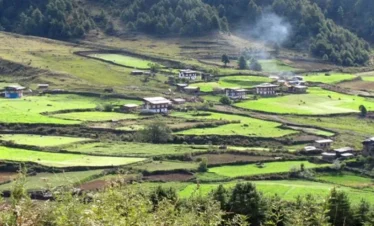
Sakteng lies roughly twenty kilometers from Merak across the Nachungla watershed and sits at approximately 3,100 meters on a broader valley floor. Where Merak feels compressed and ridge-bound, Sakteng is open: houses spread across a wider terrain, yak pastures extend outward from the settlement toward forested slopes, and the surrounding landscape gives a sense of space that Merak does not. Sakteng is the administrative focal point of Sakteng Gewog and hosts a small healthcare post and a primary school, making it the more institutionally developed of the two villages while remaining firmly outside mainstream tourism infrastructure.
The surrounding Sakteng Wildlife Sanctuary, established in 2003 and covering approximately 750 square kilometers, protects a temperate ecosystem that is home to red pandas, snow leopards, Himalayan black bears, and a documented population of Asian wild dogs. The sanctuary is one of Bhutan’s most ecologically significant protected areas and forms the biological and cultural buffer that has, in large part, maintained Sakteng’s isolation. Trekkers spend one to two nights in the village, giving adequate time to observe daily life, attend the local market if timing aligns, and walk the immediate surroundings before the descent toward Radhi begins.
Best Season for the Merak and Sakteng Trek
The Merak and Sakteng Trek is accessible during two primary trekking windows: spring (late March to May) and autumn (late September to November). Spring offers the most visually distinctive conditions in terms of flora: rhododendron forests across the lower approach sections bloom in red and white from late March through April, and the high pastures around Merak hold patches of wildflowers from late April onward.
Daytime temperatures at village altitude (3,100 to 3,500 meters) range from 5 degrees Celsius to 15 degrees Celsius in spring, with colder nights between minus 5 and 2 degrees depending on elevation and cloud cover. Nachungla Pass typically clears of heavy snow by mid-April in a normal year, though late-season snowfall can push the safe crossing window into early May in years with anomalous precipitation. Spring trekkers should carry full cold-weather sleeping gear regardless of the calendar date.
Autumn is the more consistently reliable season for high-altitude trekking in eastern Bhutan. The monsoon retreats from the region by mid-September, and October in particular brings stable high-pressure systems, dry trail surfaces, and the clearest panoramic conditions of the year at Nachungla Pass. The sightlines into Arunachal Pradesh and toward the Tibetan plateau are sharpest in October and early November. Daytime temperatures in October range from 8 to 16 degrees Celsius at village altitude, with night temperatures dropping to minus 5 or below above 4,000 meters.
November remains viable but should be booked early and monitored for first snowfall at the pass; the trail becomes significantly more demanding once snow accumulates above 3,800 meters. The monsoon period from June through mid-September brings heavy precipitation, leeches on lower forest trails, and muddy passage through the sanctuary; the route is not recommended during this window. Winter months (December through February) are cold and largely inaccessible above 4,000 meters without mountaineering-grade equipment.
Weather, Temperature & Climate Information
Eastern Bhutan’s Trashigang district sits in a rain shadow relative to central and western Bhutan, making it one of the drier and sunnier regions of the country overall, but the high-altitude terrain above Merak and Sakteng operates under Himalayan weather rules that diverge significantly from valley conditions.
At Nachungla Pass (4,153 m), temperature swings of 20 degrees Celsius between noon and midnight are routine, and afternoon cloud buildup during spring can convert a clear morning crossing into a cold, wet descent within two hours. Trekkers should plan early starts from camp to complete the pass crossing before noon.
Precipitation in the Merak and Sakteng area peaks between June and August, when the Indian monsoon drives moisture northward through the Brahmaputra corridor into Arunachal Pradesh and across the eastern Bhutanese ranges. Annual precipitation at village altitude is estimated at 800 to 1,200 millimeters, with the majority falling during the monsoon window.
Outside this period, the climate is characterized by dry air, strong UV radiation above 3,500 meters, and rapidly shifting afternoon weather that requires layered clothing regardless of the season. Wind at the pass can be sustained and cold; a windproof outer layer and warm gloves should remain accessible in the top of the daypack throughout the Nachungla crossing section.
Humidity drops sharply above 3,500 meters, increasing the risk of dehydration even on days that feel cold; consistent water intake is essential across all weather conditions on this route.
Required Permits
The Merak and Sakteng Trek requires a distinct permit structure compared to standard Bhutan tourism visits. Because both villages sit within a restricted-access cultural zone and the route passes through Sakteng Wildlife Sanctuary, trekkers must hold valid documentation across several categories before the trek begins. Tour in Bhutan arranges all permits on behalf of clients as part of the standard package; no permit application can be submitted independently by travelers without a TCB-licensed operator’s endorsement.
- Tourist Visa: Issued by the Royal Government of Bhutan through the Tourism Council of Bhutan (TCB). The licensed tour operator applies for the tourist visa on behalf of the traveler before arrival. Cannot be obtained on arrival at the border.
- Sustainable Development Fee (SDF): USD 100 per person per night, payable for each night spent in Bhutan. Applicable to all international tourists (except Indian, Bangladeshi, and Maldivian nationals, who pay a separate rate). Fixed at this rate until August 2027 under current TCB policy.
- Restricted Area Permit (RAP): Required specifically for entry into the Merak and Sakteng restricted zone. Issued by the Immigration Department and endorsed by the Ministry of Home and Cultural Affairs. The permit must be obtained in advance through the tour operator; it cannot be arranged in Trashigang upon arrival.
- Sakteng Wildlife Sanctuary Entry Permit: Required for passage through the sanctuary section of the route between Sakteng village and Radhi. Arranged by the tour operator in coordination with the Department of Forests and Park Services.
- National Park / Protected Area Fee: A conservation levy applicable for trekking within the protected area boundaries.
- Trekking Route Registration: The guide registers the trekking group and route with the relevant district administration in Trashigang before departure from the road. Compliance documentation is checked at monitoring posts along the route.
Difficulty
The Merak and Sakteng Trek is rated as a moderate-to-strenuous 18-day expedition, primarily due to its remote geography and sustained altitude rather than technical climbing. While the trails are physically demanding, requiring 5 to 7 hours of daily hiking over rugged, muddy, and steep terrain, the highest pass on the route, Nachungla Pass at 4,153 meters (13,625 feet), presents a serious challenge for altitude sickness and requires a high level of cardiovascular fitness. Additionally, the route’s isolation in eastern Bhutan means amenities are extremely basic, demanding high mental endurance for continuous wilderness camping, variable alpine weather, and a complete lack of modern infrastructure.
Physical and Mental Preparation
Adequate preparation for the Merak and Sakteng Trek begins at minimum six to eight weeks before departure and should address cardiovascular capacity, muscular endurance, altitude awareness, and psychological readiness for remote conditions. Trekkers who arrive having trained consistently complete the circuit with significantly less discomfort, recover faster between stages, and retain mental resilience on the harder days. The minimum standard of physical preparation includes comfortably walking five to seven hours with a six-kilogram pack on consecutive days, managing 600 to 900 meters of daily elevation gain, and sustaining aerobic effort at moderate intensity without distress. Trekkers from low-altitude home environments should, if possible, spend two to three days at an intermediate altitude (2,000 to 3,000 meters) before the trek begins. Thimphu at 2,334 meters and Paro at 2,200 meters are both good options for pre-acclimatization if the cultural tour comes before the trekking section.
- Begin structured cardiovascular training (hiking, cycling, or running) at least six weeks before departure, with sessions of sixty to ninety minutes three to four times per week.
- Include weighted pack walks of increasing duration in the final four weeks, building toward five to six hours with a six-kilogram load.
- Strengthen knees and ankles with step-downs, lunges, and single-leg balance exercises, particularly if trekking on uneven terrain is unfamiliar.
- Practice early morning starts; on the Nachungla crossing day, departure from camp before 7:00 am is recommended.
- Sleep hygiene at altitude matters: avoid alcohol and sedatives in the first two nights above 3,000 meters, and sleep with a small pillow under the head to reduce the discomfort of sleeping at elevation.
- Review medication options (acetazolamide/Diamox) with a physician at least four weeks before departure; carry a prescribed course even if prophylactic use is not planned.
- Mental preparation should include realistic expectations: variable food, cold nights, limited washing facilities, and trail fatigue are normal features of this route, not anomalies.
- Practice a daily hydration routine of two to three liters of water before the trek to establish the habit; the same intake is required on the trail.
Accommodation & Meals
Your accommodations are in three-star hotels with private en-suite bathrooms, Wi-Fi, and breakfast. In Merak and Sakteng, accommodation is in traditional Brokpa homestays: simple, warm, and genuinely local. Meals are shared around the family hearth, providing direct access to daily Brokpa life. On the trail, Tour in Bhutan provides all camping equipment, including tents and sleeping bags rated to -10 degrees Celsius. The trail kitchen crew serves three meals daily: Bhutanese and continental options, hot beverages, and trail snacks. We accommodate vegetarian, vegan, and gluten-free diets with advance notice.
Transportation
A licensed Bhutanese driver will provide all transportation throughout the 18-day Merak and Sakteng Trek itinerary in a private, air-conditioned vehicle. From the moment you are picked up at Paro International Airport to your final drop-off on departure day, every road transfer is handled exclusively for your group. No shared shuttles, no public buses, and no waiting for other passengers. The vehicle is sized for your group and remains dedicated to your itinerary for the entire journey, including the long drives in eastern Bhutan, cultural stops, and all transfers between the start and end points of the trek.
Travel Insurance
Travel insurance is mandatory for all Merak and Sakteng Trek participants and must be confirmed before the first trekking day. Given the remote location, high-altitude pass crossing at 4,153 meters, and limited medical infrastructure in the Trashigang district, your policy must specifically cover helicopter emergency medical evacuation, high-altitude trekking to at least 4,500 meters, and trip cancellation or curtailment. Standard travel insurance won’t cover this trek. You need a policy that explicitly covers high-altitude trekking and helicopter evacuation. Please send us your proof of insurance before the trek begins so we can ensure you are safe from day one.
Gear & Equipment Checklist
Trekking Clothing & Footwear
- Waterproof, ankle-supporting trekking boots, broken in before departure
- Moisture-wicking base layer top and bottom (two sets)
- Insulating mid-layer (fleece or down jacket rated to at least minus 10 degrees Celsius)
- Waterproof, windproof hard-shell jacket and trousers
- Lightweight trekking trousers (two pairs) and quick-dry shorts for lower stages
- Warm hat covering ears, sun hat or cap for lower elevations
- Balaclava or neck gaiter for Nachungla Pass crossing
- Lightweight liner gloves and insulated waterproof outer gloves
- Merino wool or synthetic trekking socks (four to six pairs), gaiters
- Trekking sandals or camp shoes for evenings at homestay
Trekking Equipment
- Trekking poles (telescopic, with wrist straps)
- Daypack of 25 to 35 litres for daily carry
- Duffel bag of 60 to 80 litres for porter carry (provided by Tour in Bhutan if required)
- Headlamp with spare batteries or USB-rechargeable model
- Sleeping bag rated to minus 10 degrees Celsius (provided by Tour in Bhutan; personal bag acceptable)
- Trekking tent (provided and erected by porter team)
- Trekking poles, high-quality sunglasses with UV protection (Category 3 or 4)
- Dry bags or heavy-duty garbage bags for waterproofing kit inside pack
Health & Medical Kit
- Personal prescription medications in original packaging with sufficient supply plus five days extra
- Acetazolamide (Diamox) if prescribed; confirm dosage with physician before departure
- Ibuprofen and paracetamol for pain and headache management
- Oral rehydration salts (at least six sachets)
- Blister care kit: moleskin, sports tape, antiseptic, needle
- High-SPF sunscreen (SPF 50+) and lip balm with UV protection
- Water purification tablets or personal filter (Sawyer or equivalent)
- Anti-diarrhoeal and antihistamine medication
- Personal first aid including bandages, wound closure strips, and antiseptic wipes
Documents & Essentials
- Passport (valid at least six months beyond return date) and visa documentation
- Insurance policy documentation with emergency assistance number highlighted
- Physical and digital copies of all permits
- Emergency contact list and next-of-kin details provided to Tour in Bhutan before departure
- USD cash in small denominations for personal purchases in Thimphu, Trashigang, and villages; card payment is not available on the trail.
- Power bank (10,000 mAh minimum) for charging devices; electricity is unavailable on trail
- Camera equipment and spare batteries; cold temperatures at altitude reduce battery life significantly
Altitude Sickness & Prevention
Acute Mountain Sickness (AMS) is the most common medical concern on the Merak and Sakteng Trek and the primary reason some trekkers do not complete the Nachungla Pass crossing. AMS results from the failure of the body to adequately adapt to reduced atmospheric oxygen pressure at altitude. The risk increases with speed of ascent, individual physiological variance, dehydration, overexertion, and alcohol consumption. On this route, the critical altitude threshold is the climb from Merak (approximately 3,500 meters) to the Nachungla Pass camp at approximately 4,000 meters; trekkers who have not acclimatized in Thimphu (2,334 meters) and at Merak itself before attempting the pass are at higher risk. Descent is the definitive treatment for serious AMS; guides are trained to recognize symptoms and are authorized to initiate descent protocols without waiting for client consent if a situation deteriorates toward High-Altitude Pulmonary Edema (HAPE) or High-Altitude Cerebral Edema (HACE), both of which are life-threatening.
Symptoms requiring immediate monitoring:
- Persistent headache unresponsive to paracetamol or ibuprofen after thirty minutes
- Nausea or vomiting, particularly if combined with headache
- Fatigue disproportionate to exertion level
- Dizziness or loss of balance
- Difficulty sleeping combined with frequent waking (Cheyne-Stokes breathing pattern)
- Cough, especially a persistent dry cough above 3,800 metres
- Breathlessness at rest (distinct from breathlessness during ascent, which is normal)
- Confusion, disorientation, or difficulty with simple tasks: these indicate HACE and require immediate descent
Prevention measures:
- Acclimatise in Thimphu (2,334 metres) for a minimum of two nights before travel east
- Maintain daily hydration of two to three litres on trail; monitor urine colour as a hydration indicator
- Ascend no more than 300 to 500 metres of sleeping altitude per day above 3,000 metres
- Avoid alcohol, sleeping pills, and excessive exertion on the first night at each new altitude
- Eat small, frequent, high-carbohydrate meals; appetite suppression is common at altitude and must not be allowed to result in under-fuelling
- Carry and know how to use acetazolamide (Diamox) if prescribed; discuss dosage and side effects with a physician before departure
- Report any symptoms immediately to the guide; do not attempt to push through AMS without informing the guide team
Emergency and Medical Evacuation Service
Our company maintains an emergency response protocol for all trekking groups that operates independently of clients’ insurance coverage. On the trail between Chaling and Phongmey, the guide team carries a satellite communication device that enables contact with the Tour in Bhutan operations center in Thimphu, regardless of mobile network availability, which is absent for the majority of the route. In the event of a medical emergency requiring evacuation, the guide initiates contact with the operations center, which coordinates the identification of helicopter landing sites, emergency medical personnel, and insurer notification simultaneously.
Helicopter evacuation from the Merak-Sakteng area is operationally feasible in suitable weather conditions; the most commonly used landing zones are the village clearings in Merak and Sakteng and open pasture areas below Nachungla. In poor weather, helicopter access can be delayed by twelve to forty-eight hours, which is a primary reason guides are trained to apply conservative descent decisions early rather than waiting for condition deterioration.
The nearest hospital with surgical capacity to Trashigang is in Thimphu; Trashigang District Hospital can provide emergency stabilization but has limited specialist capacity. All clients are required to provide emergency contact details and insurance policy numbers to Tour in Bhutan before the trek departure date, and a copy of this information is retained at both the Trashigang office and the Thimphu operations center throughout the trekking period.
Guide and Porter
A licensed Bhutanese trekking guide, who holds current Tourism Council of Bhutan certification, accompanies the Merak and Sakteng Trek-18 Days. Guides on this route are selected specifically for their familiarity with eastern Bhutan’s trail network and their knowledge of Brokpa cultural practices, which is distinct from the cultural knowledge required for central or western Bhutan itineraries. The guide serves as the primary point of contact for all route decisions, weather assessment, altitude monitoring, and community liaison throughout the trek. In Merak and Sakteng villages, the guide facilitates introductions to homestay families, interprets conversations where Brokpa dialect is in use, and ensures that photography and cultural observation protocols respectful to the community are maintained. A separate assistant guide joins groups of five or more trekkers to maintain adequate supervision across the group on the Nachungla crossing section.
Porters carry all camping equipment, kitchen supplies, and client duffel bags, with individual loads capped at 25 kilograms in compliance with Bhutan’s porter welfare guidelines. Porter welfare standards upheld by Tour in Bhutan include weather-appropriate clothing and footwear provided at no cost to the porter, shelter within the camp tent system, meals equivalent in quality to those served to trekking clients, and rest days on stages exceeding standard duration. Tipping is not mandatory but is customary; the guide team guides appropriate amounts relative to group size and trek duration. Personal tipping decisions are made individually at the end of the trek, not pooled without consent. Porters are local hires from the Trashigang district, where availability permits, ensuring that the economic benefits of the trek remain within the communities along the route.
Important Notes
- The Merak and Sakteng restricted-area permit must be applied for at least thirty days before the trek start date; last-minute applications are not guaranteed approval and may result in itinerary modification.
- Photography inside homes and of individuals in Brokpa communities requires explicit permission each time; the guide will facilitate requests and translate where needed. Community members may decline, and that decision must be respected without negotiation.
- No single-use plastic bottles are permitted within Sakteng Wildlife Sanctuary; all trekkers must carry a reusable water bottle. Tour in Bhutan provides water purification and refill systems at camp.
- Mobile network coverage is absent for the majority of the route between Chaling and Phongmey. The guide’s satellite device provides emergency communication, and families and employers should know about this communication gap before departure.
- The Sustainable Development Fee of USD 100 per person per night is a non-negotiable government levy and cannot be discounted, waived, or deducted from the package price, regardless of any promotional agreements. Any operator offering below this rate is operating in violation of TCB policy.
- Currency exchange and ATM access are available in Thimphu and Trashigang town; there are no banking facilities in Merak, Sakteng, or Radhi. Carry sufficient ngultrum (or Indian rupees, which are accepted at parity) for the full trekking period plus a reasonable contingency.
- The trail between Sakteng and Radhi passes through active wildlife habitat within the sanctuary; trekkers must remain on the established path, avoid loud noise in forest sections, and follow guide instructions regarding wildlife encounters.
- Bhutan has a strict policy against smoking in public spaces and cultural sites; smoking is not permitted at homestays, within village boundaries, or in the national park and sanctuary areas without moving to a designated distance from camp.
- Departure for the Nachungla Pass crossing should begin no later than 7:00 am to complete the descent to Sakteng camp before afternoon cloud and wind conditions develop at the pass.
- Trekkers who develop AMS symptoms at any point should inform the guide immediately; attempting to manage symptoms without disclosure to the guide delays treatment and increases evacuation risk. The guide’s descent decision is final and non-negotiable on medical grounds.
- The trek operates as a minimum two-person booking; solo travelers are matched to departures with compatible group members or may book a private departure at the applicable single supplement rate.
- All waste generated on the trail, including food waste, human waste (in cat holes away from water sources), and packaging, is managed under Leave No Trace principles; the guide and kitchen crew conduct a daily camp inspection before departure from each site.
Book Your Merak Sakteng Trek Expedition
The Merak and Sakteng trek is one of the world’s most challenging and rewarding Himalayan adventures. Due to its restricted route, limited trekking season, permit requirements, and complex logistics, planning is essential.
Whether you are planning a private expedition with friends, a personal Himalayan challenge, or a once-in-a-lifetime adventure through Bhutan’s remote northern valleys, our team will help create a trekking experience designed around your goals.
Start planning your Merak and Sakteng trek adventure in Bhutan today.
- Email: info@tourinbhutan.com
- WhatsApp: +1 401 328 1478
- Phone: +1 401 328 1478
Your journey through Bhutan’s remote Himalayan wilderness begins with a conversation.
Trip Reviews
Posted on Google![Google]()
![Amees Florence profile picture]() Amees Florence
Amees FlorenceTrustindex verifies that the original source of the review is Google.
Posted on Google![Google]()
![Ravi Jaisi profile picture]() Ravi Jaisi
Ravi JaisiTrustindex verifies that the original source of the review is Google.
Posted on Google![Google]()
![Silent Shadow profile picture]() Silent Shadow
Silent ShadowTrustindex verifies that the original source of the review is Google.
Posted on Google![Google]()
![Bishnu Gaire profile picture]() Bishnu Gaire
Bishnu GaireTrustindex verifies that the original source of the review is Google.
Posted on Google![Google]()
![Tena Rosser profile picture]() Tena Rosser
Tena RosserTrustindex verifies that the original source of the review is Google.
Experiencing Bhutan and it’s people and it’s culture and tradtions is a beautiful travel experience in itself. It’s a magical journey into the land high up in the Himalayas. We were lucky that we found this company ‘Happiness Drukyul Holidays’ who were completely flexible, professional and up to the mark. Mr. Sonan, our guide did his job well and introduce to Bhutan’s unique culture and traditions. We learnt more of Buddhism from him. Highly recommended & thank you for this beautiful holiday experience.Posted on Google![Google]()
![Landslake Chef profile picture]() Landslake Chef
Landslake ChefTrustindex verifies that the original source of the review is Google.
We did a 6 day tour with our guide Sonam. He was extremely helpful, very knowledgeable about the history and culture of Bhutan and overall friendly and relaxed. Highly recommended.