Additional Trekking Info
Dagala Thousand Lakes Trek Cost
The Dagala Thousand Lakes Trek is a private trekking adventure that requires careful planning and personalized arrangements. Since we tailor every departure to each trekker’s preferences and travel requirements, several factors determine the final package cost, including:
- Number of trekkers joining the expedition
- Preferred travel dates and trekking season
- Accommodation category before and after the trek
- Private group size and customized itinerary requirements
- Additional services or special arrangements
- Flight assistance and other travel arrangements within Bhutan
The Thousand Lakes Trek is not offered as a fixed group departure with a standard price. Every expedition is carefully organized with customized logistics, including trekking permits, a licensed Bhutanese trekking guide, camping equipment, a professional kitchen crew, private transportation, and full trekking support throughout the journey.
To provide an accurate quotation, our trekking specialists will first discuss your preferred travel dates, group size, trekking experience, and specific travel requirements. Based on this information, we will prepare a personalized Dagala Thousand Lakes Trek itinerary along with a detailed cost breakdown, package inclusions, and available customization options.
Whether you are planning a solo adventure, a private group trek, or a customized Himalayan journey, our team is here to help you choose the best itinerary for your schedule, experience level, and budget. There is no obligation to book. Contact our Bhutan trekking specialists today for a personalized quotation and start planning your Bhutan Thousand Lakes Trek with confidence.
Dagala Thousand Lakes Trek Route
The Dagala Trek Bhutan begins in Paro (2,250 m), Bhutan’s only international airport, before transferring to Thimphu (2,350 m), the country’s capital city, for acclimatization and cultural sightseeing.
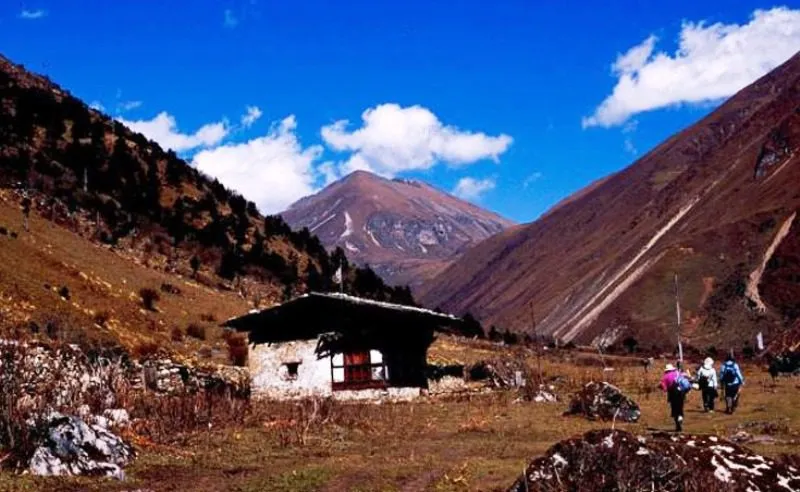
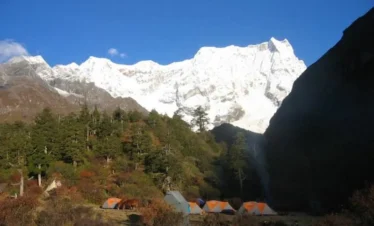
The actual trekking journey starts from Geynikha (2,950m), a small village reached by road from Thimphu, where the trail enters dense forests of oak, fir, and rhododendron, climbing steadily toward Gur (3,350m), the first overnight camp surrounded by alpine woodland.
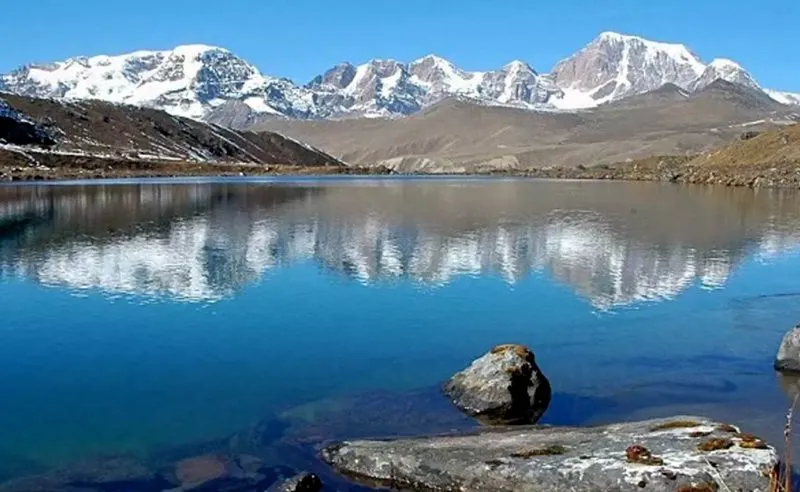
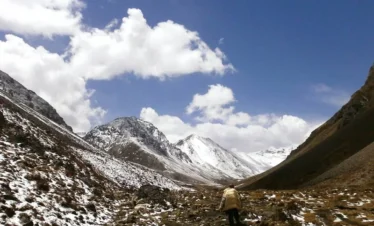
From Gur, the route ascends sharply through forested ridgelines into open alpine terrain, reaching Labatamba (4,300 m), the heart of the Dagala Lake region and home to several glacial lakes.
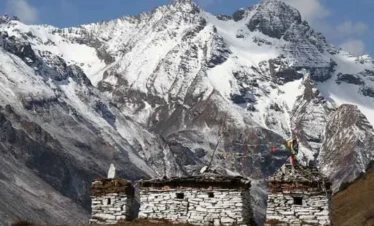
A built-in rest day at Labatamba allows trekkers to acclimatize properly while exploring nearby lakes, ridges, and panoramic Himalayan viewpoints, including views toward Mount Jomolhari and Gangkar Puensum on clear days.
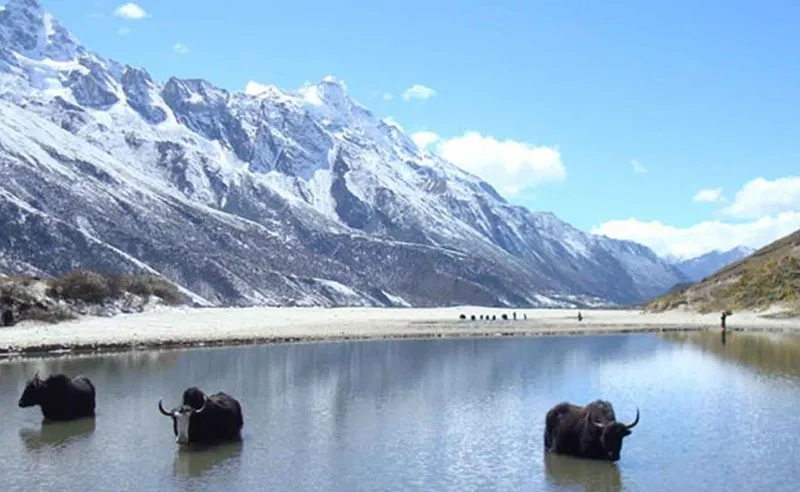
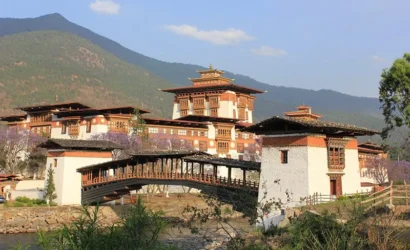
The descent route continues from Labatamba to Panka (4,000m), passing additional alpine lakes and yak pastures, before dropping further to Talakha (3,080m), home to a scenic monastery overlooking the Thimphu valley.
From Talakha, the trail descends to Thimphu, completing the trekking portion. The journey concludes with a return drive to Paro for departure, making this route a combination of alpine wilderness, lakes, and Bhutanese cultural immersion near the capital region.
Who can trek the Thousand Lakes Trek in Bhutan?
This trek is best suited for physically fit individuals with prior high-altitude trekking experience, ideally having completed at least one trek above 4,000 meters before attempting this route.
Given the camping-based nature of the journey and the cold temperatures encountered even during the best seasons, trekkers should be comfortable with basic camping conditions, variable weather, and several consecutive days of walking without access to towns or facilities.
While the Dagala Trek does not require technical climbing skills, a reasonable level of cardiovascular fitness and mental resilience is necessary to handle daily walking durations of 5 to 7 hours across uneven, often steep terrain.
Trekkers aged 18 to 60 in excellent health, without serious cardiac, respiratory, or joint conditions, are generally suitable candidates. Those with chronic medical conditions should consult a physician before booking and inform their guide of any concerns prior to departure.
This trek is particularly appealing to nature photographers, solitude-seekers, and travelers who have already experienced Bhutan’s more popular trails (such as the Druk Path) and are looking for something wilder and less visited.
Families with older teenagers who are experienced hikers and small groups of friends looking for a challenge will find this route well suited to their pace and interests.
Why Book the Dagala Thousand Lakes Trek with Us?
- Locally based Bhutanese guides with deep knowledge of the Dagala region’s terrain, flora, and culture
- Fully customizable itineraries to match fitness level, schedule, and interests
- All necessary permits, park fees, and government documentation handled on the client’s behalf
- High-quality camping equipment, including insulated tents and sleeping arrangements suited for alpine conditions
- Experienced cooks preparing nutritious, hygienic meals adapted to high-altitude trekking needs
- Small group sizes ensuring a personalized, low-impact trekking experience
- Transparent pricing with no hidden costs and dedicated 24/7 support throughout the journey
- Strong safety protocols, including altitude monitoring and emergency evacuation arrangements.
Best Season for the Dagala Thousand Lakes Trek
The Dagala Thousand Trek runs well in two distinct windows each year: spring (April to June) and autumn (September to November). Each season brings different trail and landscape conditions, but both offer reliable weather, dry paths, and clear enough skies to appreciate the alpine lake basin that defines this route.
Spring (April to June)
Spring is the greener of the two seasons. The lower forest sections between Geynikha and Gur are dense with new growth, and rhododendron trees bloom at mid-elevations from late April through May, adding color to a trail that otherwise runs through muted forest tones. Daytime temperatures at lower camps are warm enough for comfortable walking in light layers, though nights at Labatamba (4,300 m) remain cold through the season. Early April departures may encounter residual snow on the high passes and ice on some of the upper Dagala lakes; by late May and June, most of the basin has thawed, and the lakes are fully reflective. Clouds build over the peaks by afternoon on many spring days, so Jomolhari and Gangkar Puensum are most reliably visible in the early morning hours from the Labatamba ridgelines.
Autumn (September to November)
Autumn is the more popular season for practical reasons. The monsoon clears from western Bhutan by mid-September, leaving the sky washed and stable for weeks at a time. Visibility across the Himalayan range is at its annual peak during October, and the Dagala lakes are at their most mirror-like calm, clear, and framed by the sharp outlines of surrounding ridges and peaks. Temperatures are cooler than in spring, but the air is dry, which makes the cold more manageable. Trail conditions are firm and well-drained following the summer’s heavy rainfall. October is the optimum month within this window; November brings progressively colder nights and the first hints of winter conditions at the upper camps by month’s end.
Seasons to Avoid
The summer monsoon, running from mid-June through late August, brings sustained and heavy rainfall to western Bhutan. High passes become slippery, river crossings rise, leeches are active on the lower forested sections, and cloud cover obscures mountain views for days or weeks at a stretch. The trek is technically possible during this window, but the conditions work against the route’s primary appeal. Winter (December to February) closes the upper basin under snow, freezes the trail surface above 4,000 m, and makes the high camp at Labatamba genuinely harsh. Neither period is recommended for this trek.
Weather and Temperature
Conditions on the Dagala Thousand Lakes Trek vary considerably between lower and upper elevations and between day and night at the same campsite. During the recommended trekking seasons, the lower section from Geynikha to Gur sits in a temperate forest zone where daytime temperatures range from 12 to 20 degrees Celsius and nights cool to between 4 and 8 degrees Celsius, cold enough for a fleece layer but manageable without heavy insulation.
As the trail climbs into the mid-elevation transition zone between 3,500 and 4,000 m, daytime highs drop to between 8 and 15 degrees C, and nights begin approaching or falling below freezing, making a properly rated sleeping bag necessary from this point onward.
At Labatamba (4,300 m), where trekkers spend two nights, daytime temperatures typically reach between 5 and 12 degrees C under clear conditions, while nights regularly drop to -5 to -10 degrees C. Departures before mid-May or after late October will encounter temperatures at the colder end of that range and should plan gear accordingly.
Weather behavior at altitude follows a recognizable pattern through both recommended seasons: mornings are generally clear and calm, with clouds building over the ridgelines through the afternoon and occasional light precipitation or snow flurries by evening.
Wind increases substantially on open passes and exposed ridgelines, where even moderate gusts lower the effective temperature well below the air reading. Layered clothing that can be adjusted throughout the day and a sleeping bag rated to at least -10 degrees C are essential for this trek regardless of which season the departure falls in.
Difficulty
The Dagala Trek in Bhutan is rated moderate to challenging. The rating reflects sustained high-altitude walking rather than technical difficulty; no climbing equipment, rope use, or glacier travel is required under normal seasonal conditions.
The challenge arises from combining factors that compound across the trekking days rather than from any single section. The route spends multiple consecutive days above 4,000 m, with high passes reaching approximately 4,300–4,500 m and Labatamba camp itself sitting at 4,300 m, which places consistent physiological demand on the body regardless of fitness level. Daily walking runs five to seven hours over uneven, rocky, and often steep terrain, accumulating fatigue across what is a back-to-back schedule with only one built-in rest day.
Overnight temperatures at the upper camps regularly drop to -5 to -10 degrees C, requiring adaptation to cold camping conditions in a setting far from any town or facility. There is no teahouse infrastructure along this route; the trek is fully camping-based from Geynikha to Talakha, meaning trekkers carry personal gear and rely entirely on the crew for shelter, meals, and logistical support throughout.
Trekkers who have completed at least one prior high-altitude route above 4,000 m are well prepared for this journey. The experience of sleeping at altitude, recognizing early AMS symptoms, and pacing across multi-day terrain makes a measurable difference in both safety and enjoyment on a route of this profile. Those attempting their first high-altitude trek should build a strong cardiovascular baseline in the weeks before departure and discuss their medical history openly with the guide before the ascent to Labatamba on Day 05.
Physical and Mental Preparation
A structured preparation period of at least six to eight weeks before departure significantly improves performance and reduces the risk of altitude-related illness. The following routine is recommended:
- Cardiovascular work (hiking, jogging, cycling, stair climbing) three to four sessions per week, building duration progressively
- Loaded backpack hikes on hilly terrain to simulate actual trekking conditions
- Upper and lower body strength training with attention to legs, core, and lower back
- Practice with multi-day walking if no prior experience with consecutive trekking days exists
On the trek itself, the most important practices are:
- Drinking three to four litres of water per day, dehydration accelerates AMS symptoms
- Walking at a slow, controlled pace, particularly on high-altitude days
- Sleeping at or below the day’s highest point where possible
- Reporting any headache, nausea, or unusual fatigue to the guide immediately rather than waiting to see if it passes
Altitude and AMS
Acute Mountain Sickness (AMS) is a practical consideration on this trek from Day 05 onward. The ascent to Labatamba (4,300 m) involves a significant elevation gain in a single day, and trekkers arriving without prior acclimatization at altitude are at higher risk.
Common AMS Symptoms
- Persistent headache, particularly at the temples or behind the eyes
- Nausea or reduced appetite at mealtimes
- Lightheadedness or difficulty maintaining balance
- Unusual fatigue relative to the day’s exertion level
- Disturbed sleep or difficulty getting to sleep at high camp
- Shortness of breath at rest or with minimal movement
Prevention Measures
- Ascend at a measured pace and resist the urge to move faster than the guide recommends
- Maintain hydration throughout each day, including at rest
- Avoid alcohol and sedative medications during the trek
- Eat regular, calorie-sufficient meals even if appetite is reduced
- Consult a travel medicine physician about Diamox (acetazolamide) at least two weeks before departure
If symptoms persist or worsen despite rest and hydration, descent is the correct response. The proximity of this trek to Thimphu makes evacuation logistics more manageable than on more remote Bhutanese routes, but trekkers should carry travel insurance that explicitly covers helicopter evacuation.
Required Permits
The licensed tour operator arranges all permits and documentation for the Dagala Trek Bhutan as part of the package. Trekkers are not required to apply independently. The following clearances are required:
- Bhutan Visa (processed through a licensed Bhutanese tour operator prior to arrival)
- Trekking Permit issued by the Department of Tourism (DoT), Bhutan.
- Restricted Area Permit (applicable for certain route variations)
- Entry permits for any protected zones traversed
- Sustainable Development Fee (SDF) payment confirmation
Bhutan does not issue independent tourist visas. All visits, including trekking itineraries, must be arranged through a DoT-licensed operator. This policy applies to all nationalities except Indian, Bangladeshi, and Maldivian passport holders, who follow a separate entry process.
Accommodation and Meals
Accommodation on this trek divides cleanly between city hotels and camping:
City Nights (Paro and Thimphu)
You will spend your pre- and post-trek nights in Paro and Thimphu at well-rated hotels that offer private rooms, hot showers, and comfortable beds. Standard and superior room categories are available. These nights allow proper rest before and after the physical demands of the trek.
Trekking Nights (Camping)
No teahouses exist along the Dagala route. All accommodation during the trekking section is camping-based, using four-season tents equipped with insulated sleeping mats. A communal dining tent is erected at each campsite where meals are served.
Meals
Meals are prepared by an experienced trekking cook and cover all three daily sittings during the camping section. The menu draws from Bhutanese, continental, and general Asian styles, adjusted to provide adequate caloric density for high-altitude exertion. Typical items include porridge, eggs, rice, dal, stir-fried vegetables, pasta, soups, and hot beverages. Drinking water is boiled or treated with approved purification methods at every camp. Dietary requirements, such as vegetarian, gluten-free, and others, can be accommodated with advance notice.
Guide
Government-licensed Bhutanese trekking guides, holding certification from the Department of Tourism (DoT), Bhutan, lead every Dagala Trek departure. Guides are selected for their familiarity with the Dagala region, specifically its trail variations, weather behavior, and the ecology of the lake basin.
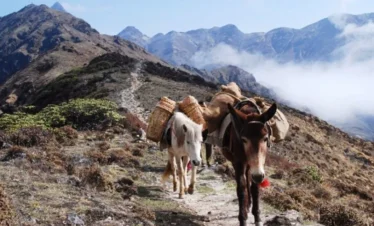
Pack animals (horses or yaks, depending on season and availability) carry camping equipment, food, and group gear. Trekkers carry only personal daypacks. A cook and kitchen assistant travel with the group for the full trekking section. The support-to-trekker ratio on private departures is adjusted to maintain an attentive, low-pressure trekking environment.
Gear and Equipment Checklist
Clothing
- Insulated down jacket (at least 600-fill or equivalent for temperatures to -10 degrees C)
- Fleece mid-layer (1 to 2 pieces)
- Waterproof and windproof hard-shell jacket and trousers
- Thermal base layers, top and bottom (2 sets recommended)
- Quick-dry trekking trousers (1 to 2 pairs)
- Warm hat and sun hat
- Neck buff or balaclava
- Insulated gloves and lightweight liner gloves
- Wool or synthetic trekking socks (minimum 4 pairs) and moisture-wicking liner socks
Footwear
- Waterproof, ankle-supporting trekking boots, broken in before departure
- Camp sandals or lightweight shoes for evenings
Equipment
- Trekking poles (strongly recommended for descent days)
- Sleeping bag rated to at least -10 degrees C
- Headlamp with spare batteries or rechargeable option
- 40 to 50 L trekking backpack; lightweight daypack for exploring from camp
- Water bottles (minimum 2 x 1 L) or hydration bladder
- Water purification tablets as backup
- Sunglasses with UV 400 protection (essential at altitude)
Personal Items
- Sunscreen SPF 50+ and lip balm with UV protection
- Personal first-aid kit including any prescribed medications and basic blister care
- Toiletries and quick-dry travel towel
- Power bank for camera and phone charging (no electrical outlets on the trek)
- Passport photocopy and printed insurance documents
Transportation
International access to Bhutan is through Paro International Airport, served by Druk Air and Bhutan Airlines from Delhi, Kathmandu, Bangkok, Singapore, and other regional hubs. The approach into Paro involves low-altitude passes through the Himalayan foothills and ranks among the most technically demanding commercial approaches in the world.
Ground transport throughout the itinerary is by private vehicle. The package includes airport transfers, the Paro-Thimphu corridor, the Thimphu-to-Geynikha trailhead transfer, and the return from the trek endpoint. Experienced local operators drive air-conditioned private vehicles.
Travel Insurance
Comprehensive travel insurance is mandatory for this trek. Standard travel policies often exclude high-altitude trekking. Before purchasing, the policy should be confirmed to explicitly cover the following:
- High-altitude trekking to at least 5,000 m
- Emergency helicopter evacuation and associated costs
- Emergency medical treatment abroad
- Trip cancellation and interruption
- Baggage loss or delay
Carry both digital and printed copies of the insurance certificate and the insurer’s 24-hour emergency contact number throughout the trek. Policy documents should be accessible without mobile connectivity in the event of an incident on the upper trail.
Important Notes
- All Bhutan visits must be arranged through a DoT-licensed operator under the country’s high-value, low-impact policy. Independent trekking is not permitted.
- A passport valid for at least six months beyond the travel dates is mandatory.
- Bhutanese Ngultrum (BTN) or USD cash should be carried for personal expenses; ATMs are inaccessible from the trail.
- Mobile coverage is limited or absent on most trekking days. Offline maps should be downloaded and contacts informed of expected communication gaps before departure.
- All non-biodegradable waste must be packed out; Bhutan’s environmental standards require zero waste left along the trail.
- Photography at certain monasteries and of local community members requires prior permission from the guide.
- Weather can change itinerary logistics at altitude; build flexibility into connecting travel plans.
- Arriving at least one day before the trek start date for acclimatization and equipment checks in Thimphu is strongly recommended.
- Routine health checks and altitude-specific vaccinations (if advised by a travel medicine physician) should be completed before departure.
- Dress modestly when visiting religious sites: covered shoulders and below-knee length at minimum.
Book Your Dagala Thousand Lakes Trek Expedition
The Dagala Thousand Lakes Trek in Bhutan is one of Bhutan’s most scenic and rewarding trekking adventures, offering pristine alpine lakes, panoramic Himalayan views, and an unforgettable journey through the country’s remote mountain landscapes. With seasonal trekking conditions, permit requirements, and carefully coordinated logistics, proper planning is essential to ensure a safe and enjoyable expedition.
Whether you are planning a private trek with friends, a peaceful Himalayan escape, or a once-in-a-lifetime adventure through Bhutan’s spectacular highlands, our experienced Bhutan trekking team will create a personalized itinerary tailored to your interests, fitness level, and travel schedule.
Ready to Experience the Dagala Trek?
Contact our Bhutan trekking experts today to:
Check available departure dates
Discuss your trekking experience and fitness level
Receive a customized itinerary
Get your personalized quotation
Understand permits, logistics, and equipment requirements
Start Planning Your Dagala Thousand Lakes Trek Adventure Today
Email: info@tourinbhutan.com
WhatsApp: +1 401 328 1478
Phone: +1 401 328 1478
Your journey through Bhutan’s breathtaking alpine landscapes and tranquil mountain lakes begins with a conversation. Contact our Bhutan trekking specialists today and start planning your Dagala Thousand Lakes Trek in Bhutan with confidence.