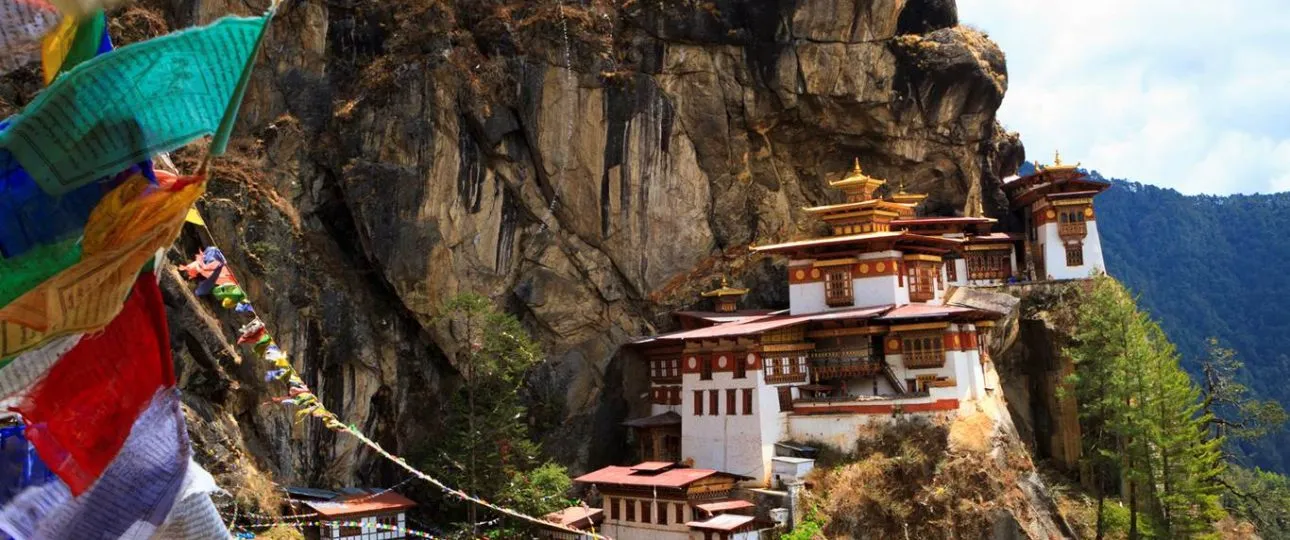
Paro Taktsang, better known as the Tiger’s Nest monastery, is one of the most visited sites in Bhutan. You can wonder how popular this place is because when you search for Bhutan on Google, you’re likely to find the first image of Tiger’s Nest. It is a temple complex hanging on one side of a cliff, at an elevation of 2,950 m above sea level.
One of the most prominent Buddhist sacred sites in Bhutan, it is located 900 m above the Paro Valley. It was first built in 1692 by Gyalse Tenzin Rabgye. This monastery is dedicated to Guru Rinpoche, who is believed to have introduced Buddhism in Bhutan.
This sacred Buddhist site is not only a top attraction in Bhutan but also a spiritual journey for travelers visiting the Kingdom of Bhutan. Every year, thousands of visitors hike to Tiger’s Nest to experience its breathtaking views, deep cultural significance, and peaceful Himalayan surroundings.
Whether you are visiting Bhutan for a short tour or a long itinerary, the Tiger’s Nest hike is a must-do experience.
Quick Facts About the Tiger’s Nest
| Category | Details |
|---|---|
| Location | Paro Valley, Bhutan |
| Altitude | ~3,120 meters |
| Trek Distance | ~4.5 km (one way) |
| Total Hike | ~9 km round trip |
| Difficulty | Moderate |
| Duration | 4–6 hours total |
| Entry Fee | Included in the SDF/tour package |
| Opening Hours | 8:00 AM – 4:00 PM |
| Built | 1692 by Gyalse Tenzin Rabgye |
Why Tiger’s Nest Is Famous
Tiger’s Nest is not just a famous trekking destination; it is also famous for these things.
- One of the most scenic cliff monasteries in the world
- The most photographed monastery in Bhutan
- A sacred meditation site of Guru Rinpoche
- A UNESCO-style heritage experience (tentative recognition interest)
- A symbol of Bhutan’s spiritual identity
Tiger’s Nest Hiking Overview
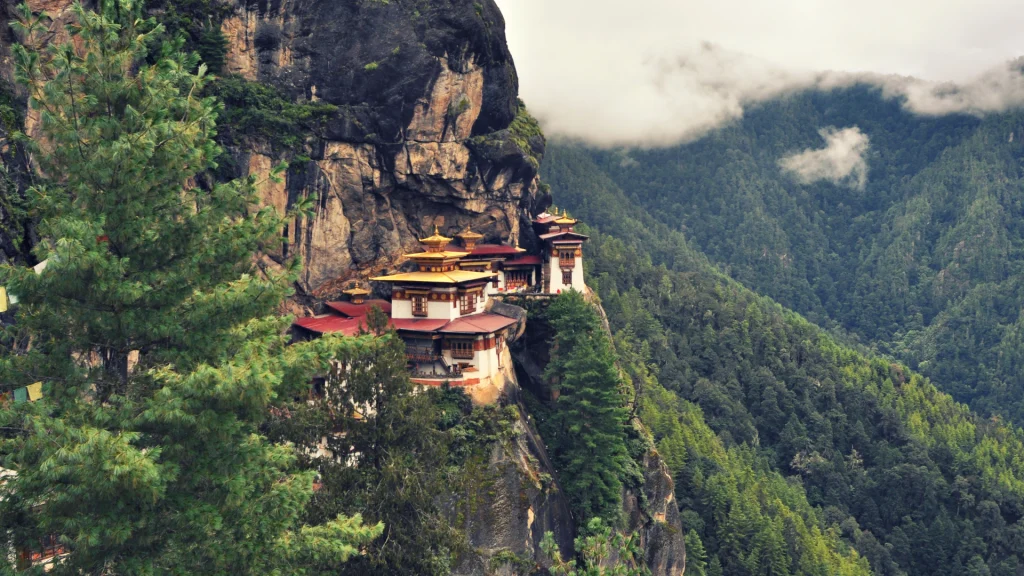
The hike to Paro Taktsang (Tiger’s Nest Monastery) begins at the designated base camp in Paro Valley, where travelers start their journey into one of Bhutan’s most iconic trekking experiences.
From here, the trail gradually ascends through a well-maintained but continuously uphill path that winds through dense blue pine forests, fluttering prayer flags, and panoramic viewpoints overlooking the Paro Valley.
The entire route is designed as a moderate-level trek, making it accessible for most travelers with average fitness. Hikers are rewarded with peaceful natural surroundings, occasional waterfalls, and many places to stop and enjoy the Himalayan scenery along the way.
Legend of Tiger’s Nest
“According to local tales, Guru Rinpoche flew to this location from Tibet on the back of a tigress who is believed to be a former wife of an emperor known as Yeshe Tsogyal. Guru Padmasambhava (Rinpoche) meditated in a cave for three years, three months, three days, and three hours to tame a demon.
Thus, it gave this monastery the name ‘Tiger’s Nest ‘. Ever since Guru Padmasambhava meditated here in the 8th century, many others have come to meditate at this holy place.”
Unfortunately, a fire broke out in the main building on 19th April 1998, caused by an electrical short circuit. However, it has been fully restored, and it is more beautiful than ever (completed in 2005).
Getting to Tiger’s Nest
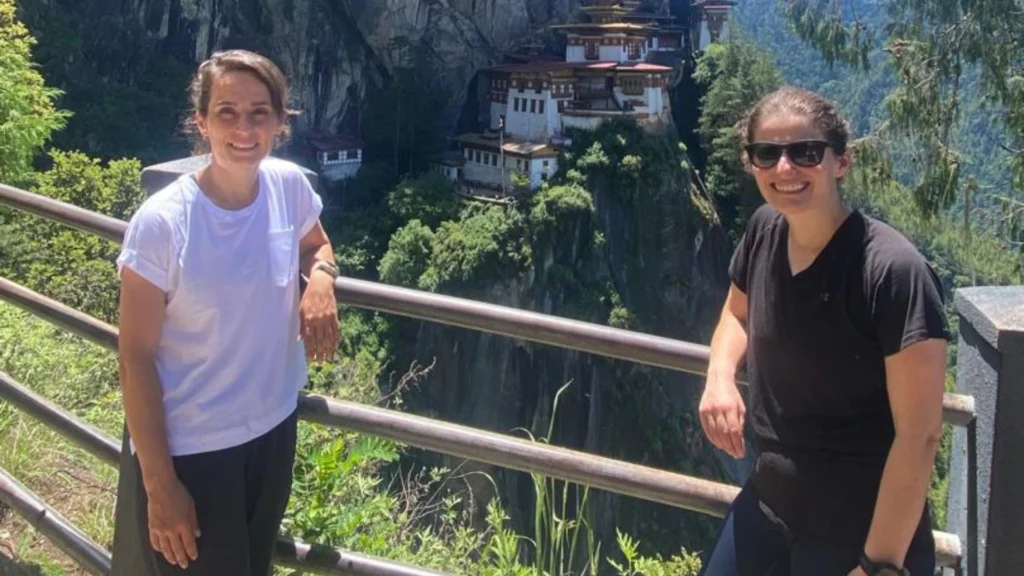
Paro town to the base of Paro Taktsang (30 minutes)
A short drive of 30 minutes from the main town of Paro will take you to Tiger’s Nest, one of the major tourist attractions in Bhutan. At the starting point of your Tiger’s Nest hike, you can rent a horse and hiking poles.
There are restrooms as well as souvenir shops put up by the locals. They usually wrap up at 5 to 6 pm. The horses can hike only halfway up. Thus, you’ll have to walk anyway.
Base to Paro Taktsang Cafeteria (45 minutes)
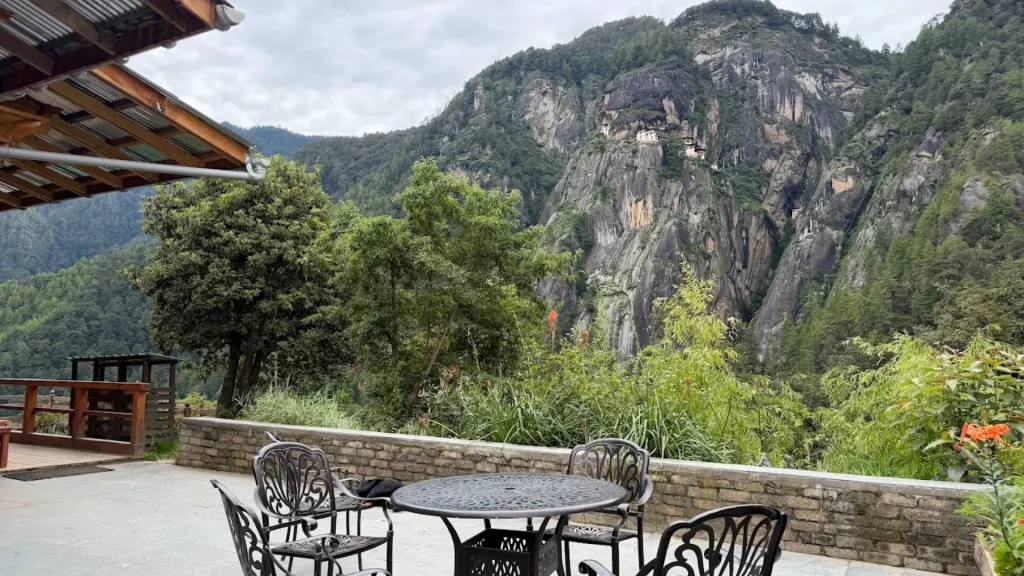
After a short time, you’ll get the first glimpse of the Taktsang, while at other times it will play hide-and-seek among the tall trees. The Tiger’s Nest trail is a wide, dirt trail that is entirely uphill but not oversteep. In short, it is doable for beginners with adequate rest time from time to time.
Remember, slow and steady wins the race! A bridge crosses over a large waterfall that drops by 60 m into a sacred pool. When you reach the famous and only Paro Taktsang Cafeteria, you’ve reached halfway up. You walk under tons of prayer flags. The higher you walk, the better the views you get to see of the beautiful Paro Valley.
Paro Taktsang Cafeteria to the Viewpoint (25 minutes)
There’s a point where many people decide to take an iconic picture of Tiger’s Nest, which is situated on another hill that will be reached after walking for about 25 minutes. Covering the distance of nearly 1.2 km, you’ll walk through the greenest part of the trail.
Along the trek route, blue pine trees accompany you, restoring your energy with fresh air and lovely scenes. Prayer flags seem to be motivating you to reach the monastery by fluttering. This route is scattered with some temples.
The Viewpoint to Paro Taktsang (20 minutes)
From the viewpoint, the way to the Paro Taktsang climb faces down a stone stair and then crosses a bridge draped in colorful prayer flags. Finally, a slightly strenuous climb up will take you to the monastery. The hike terminates at the main monastery, where colorful paintings are displayed.
What to see in Paro Taktsang?
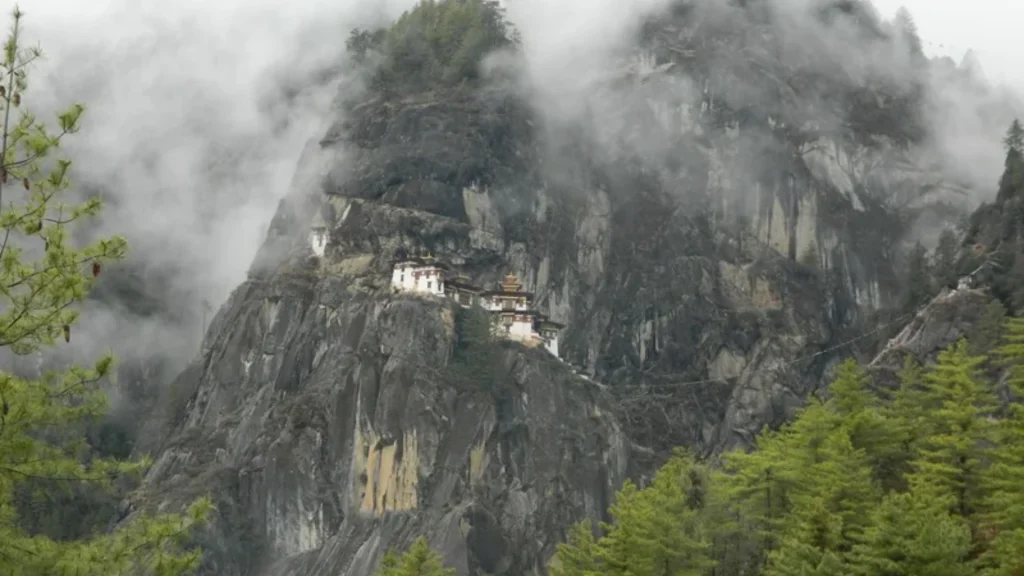
The monastery consists of four temples, which have residential accommodation for monks. Despite daily visits by tourists, Paro Taktsang still functions as a monastery. The magnificent prayer hall inside the monastery shelters a gigantic statue of Guru Padmasambhava.
The main shrine of the monastery, the prayer wheel, is located in the courtyard of the temple. Every morning at 4 am, monks rotate it to mark the beginning of a new day. The interior design of the temple impresses with its luxurious beauty, the gold-plated dome, and flickering lights that illuminate golden idols.
A large statue of a tiger is kept in the Hall of Thousand Buddhas, which is carved into the rock. The tiger is worshipped as the symbol of Paro Taktsang because of the legend it holds.
There are 8 caves around the Paro Taktsang. There is a small cell where sacred scripture is placed, which has been inscribed with gold dust and the crushed bone powder of a divine Lama. The monks who practice Vajrayana Buddhism at the cave monastery live here for 3 years and seldom go down to Paro Valley.
All the buildings are interconnected through steps and stairways made of rocks. Each building has a balcony providing lovely views of scenic Paro Valley down below.
Getting back to the base
Along the descent, you can stop by the Tiger’s Nest Cafeteria. This is the only rest point with delicious Bhutanese food and breathtaking views.
The way now becomes a little steep, so you need to be careful not to slip. The monastery remains open from 8 am to 4 pm. The entry fee is Nu 500 per person (which is already included in your minimum daily package).
Tips for the Tiger’s Nest Hike in Bhutan
Best time to visit Tiger’s Nest
Autumn (October–December) is the best time to visit Tiger’s Nest when the weather is clear and cool. Spring (March-May) is also a good time to enjoy the blooming flowers and beautiful scenery.
During the winter, heavy snow can block your way, while the monsoon in late summer can make the trails slippery. However, you can do the Paro Taktsang hike all year round, except for some heavily snowing or rainy days.
Photography in Tiger’s Nest
Cameras and mobile phones are strictly prohibited inside the monastery. But still, you can click the photos of the Taktsang or the lovely views on your way. The best lighting for capturing the majestic Tiger’s Nest is midday. Getting there early helps to avoid the crowd, but you still need to wait till midday for an amazing photograph.
What to pack for the Tiger’s Nest hike
Bring your best hiking shoes, bottled water, a few snacks, and of course your camera. You can get lunch at the cafeteria. You might as well bring a hiking pole or rent one at the base to support your knees while descending.
You’ll also need a light jacket, as it is windier in the monastery, but you might want to tuck it into your bag or tie it around your waist during your climb, because you’re going to sweat a lot while climbing.
Things to remember:
• Wear layers of clothes. A light jacket is recommended, as it is windier at the top.
• Walk slowly with adequate rest.
• Take a liter of water and some chocolates.
• Don’t try to run.
• Listen to your guides.
• Remove your shoes and hats before entering the monastery.
• Get yourself a pair of sturdy hiking boots.
Plan Your Tiger’s Nest Hiking Experience
After learning about the legendary hike to Paro Taktsang (Tiger’s Nest Monastery), the next step is to experience it in real life. You will best enjoy this iconic Bhutan trek with an authorized travel agency like us and an organized Bhutan tour package, which will ensure safety, comfort, and a deeper cultural understanding.
Our Bhutan tour packages include:
- Licensed local guide and private transport
- Entry assistance and permit arrangements
- Comfortable itinerary planning
- Customized trekking support for the Tiger’s Nest hike
- Full Bhutan cultural experience (Paro, Thimphu, Punakha & more)
Recommended Bhutan Tour Packages
The following are our best tour packages covering the Tiger’s Nest Hike in Bhutan.
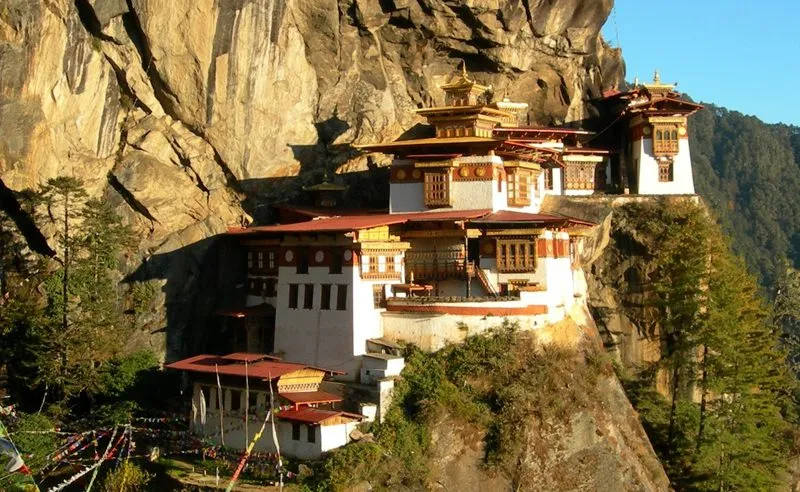
3-Day Paro Thimphu Tour
Bhutan’s essential introduction — Thimphu’s capital landmarks and the Tiger’s Nest hike, in one short private trip.
- ✓Tiger’s Nest hike (3,120m)
- ✓Buddha Dordenma & Tashichho Dzong
- ✓Kyichu Lhakhang (7th century)
- ✓Private guide & vehicle
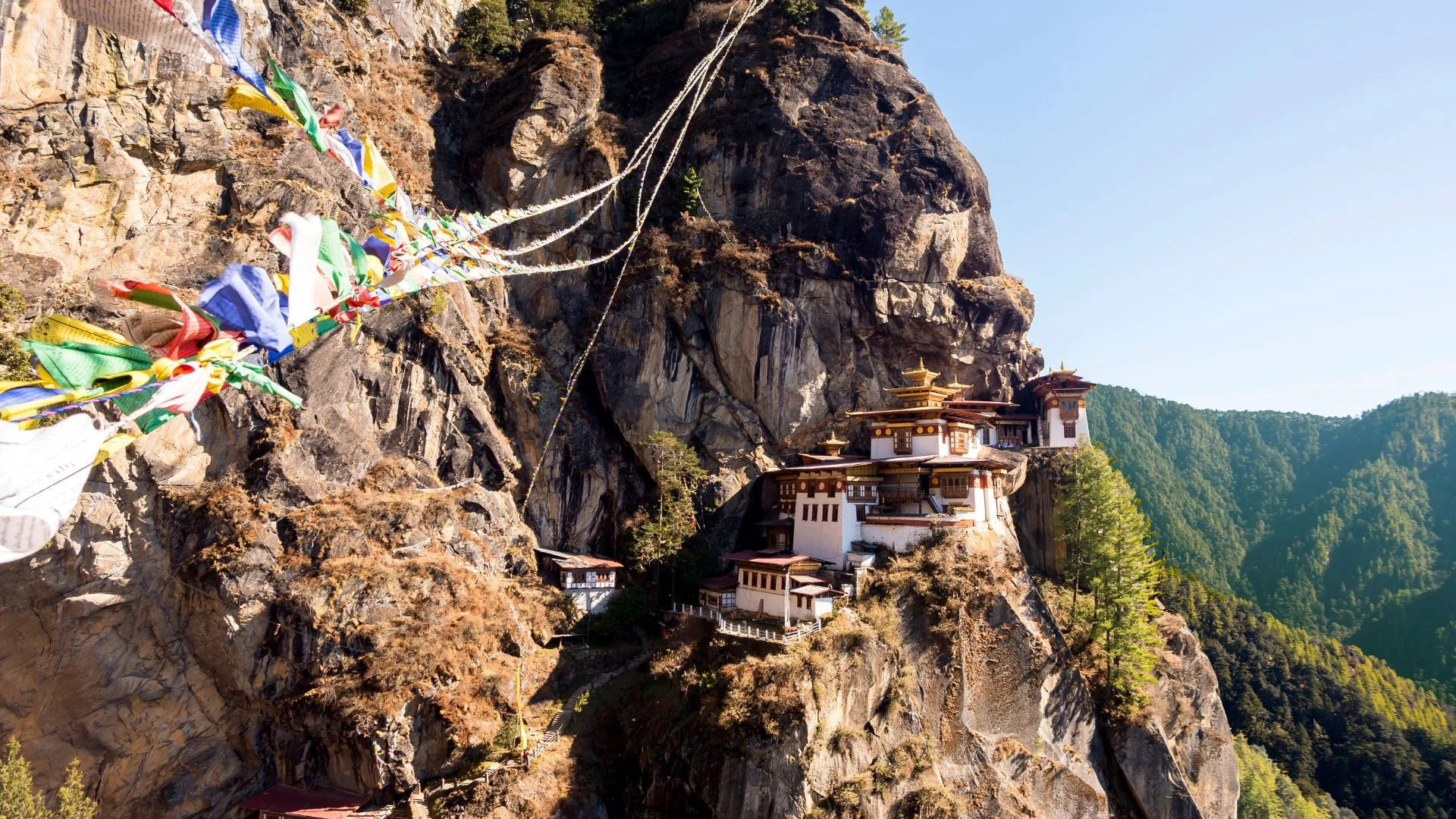
Tiger Nest Bhutan Tour Package
The hike itself is the trip — straight to Paro Taktsang, Bhutan’s most sacred and photographed monastery.
- ✓Tiger’s Nest Monastery hike
- ✓Rinpung Dzong & National Museum
- ✓Kyichu Lhakhang temple
- ✓Easy to moderate difficulty
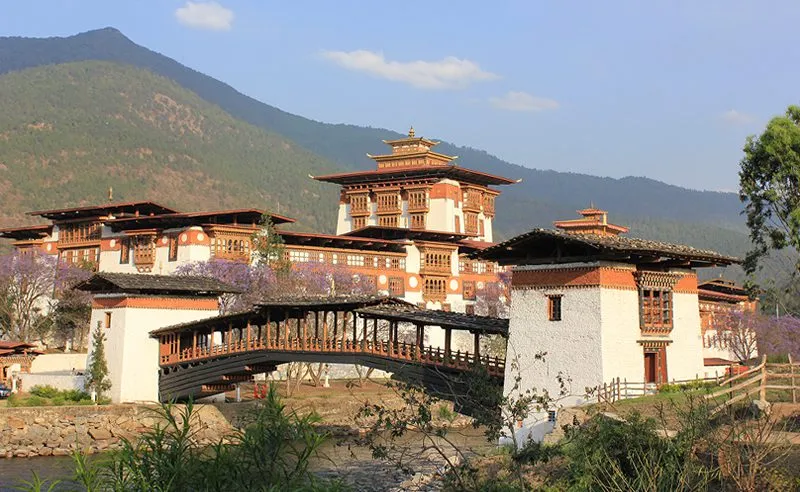
Bhutan Highlights Tour
Paro, Thimphu and Punakha — the essential Bhutan, at a pace that lets you actually feel the country.
- ✓Tiger’s Nest hike
- ✓Punakha Dzong
- ✓Dochula Pass
- ✓Private guide & vehicle
Conclusion
Paro Taktsang, better known as Tiger’s Nest, has religious importance and a lot of natural beauty. Although Paro Taktsang has a mythological history, Bhutanese people hold on to it and pass the same beliefs to their next generation. People visiting Bhutan for 3, 4 days, or a month don’t forget to include this monastery in their itinerary. This is because it is near Paro, where Bhutan has its only international airport.
Frequently Asked Questions by Travellers (FAQs)
What is the trek distance to Tiger’s Nest Monastery?
Ans: The trek distance to Tiger’s Nest Monastery is 4.5 km one way and 9 km total.
What is the entry fee for Tiger’s Nest Monastery?
Ans: The entry fee for Tiger’s Nest Monastery is Nu 500, which is already included in your minimum daily package.
How far is Tiger’s Nest Monastery from Paro?
Ans: Tiger’s Nest Monastery is 12 km north of Paro and takes a 30-minute drive.
How difficult is the Tiger’s Nest monastery trek?
Ans: The Tiger’s Nest monastery is a moderately graded trek. It also depends on your physical fitness.
How do you get to Paro Taktsang?
Ans: You can reach the base by a 30-minute taxi ride from Paro and reach the monastery by hiking for about 5–7 hours.
When does the Tiger’s Nest monastery close?
Ans: The Tiger’s Nest monastery closes at 4 pm.
When does the Paro Taktsang open?
Ans: Paro Taktsang opens at 8 am.
Is photography allowed inside the monastery?
Ans: Like other monasteries in Bhutan, photography is not allowed inside Tiger’s Nest because you need to keep your belongings, along with your phone and camera, inside a locker. However, scenery and landscapes can be captured from outside the monastery.
Why is it called Tiger’s Nest?
Ans: According to the legend, Guru Padmasambhava flew to this location on the back of a tigress and meditated to subdue a demon. That is why it is called Paro Taktsang, or Tiger’s Nest.