There are so many reasons to visit Bhutan that you’ll never run out of them. Bhutan is a typically Buddhist country that has been accepting modernity on its own terms. Being politically stable, it is one of the safest countries to visit. It is one of the few places where myths and legends are written as history, and school children listen to these stories at bedtime and read about them in their textbooks.
Bhutanese society is centered on the practice of Buddhism. A large dzong dominates each valley or district. Once every year, a dzong holds a religious festival, ‘Tshechu,’ where people come for several days of religious observance and socializing. The central activity is a fixed set of religious mask dances in a large courtyard. Inspired by the teachings of Buddha, the Bhutanese people are sweet, welcoming, and warm-hearted. Belonging to the happiest country, they love to spread smiles and get themselves photographed.
Isolated from the rest of the world until the mid-20th century, Bhutan has retained its true charm. Bhutan welcomed its foreign tourists for the first time in 1974 in order to raise revenue and promote Bhutanese culture. However, the government is aware of the negative impacts of tourism. In order to avoid those impacts, they came up with a tourism policy as unique as their culture. ‘High Value, Less Impact’ makes the visitors buy a tour package from a licensed tour operator before arrival and charges a fixed amount for spending a night in Bhutan. The amount is called the minimum daily package, which is not seen anywhere else in the world.
Although Bhutan is expensive, it is a good bargain. The sole purpose of Bhutan charging a huge amount is to invite responsible travelers and also to avoid mass tourism that can harm the pristine environment of Bhutan. In addition, a part of the charge you pay is utilized directly for free education and healthcare for the people.
Here are the top 11 reasons to visit Bhutan:
• Tiger’s Nest
• Glorious history and unique culture
• Tshechus
• Dzongs
• Last Himalayan Kingdom
• Gross National Happiness
• Highest unclimbed mountain
• Breathtaking trekking routes
• 13 arts and crafts
• Cuisines
• Unusual religious symbol
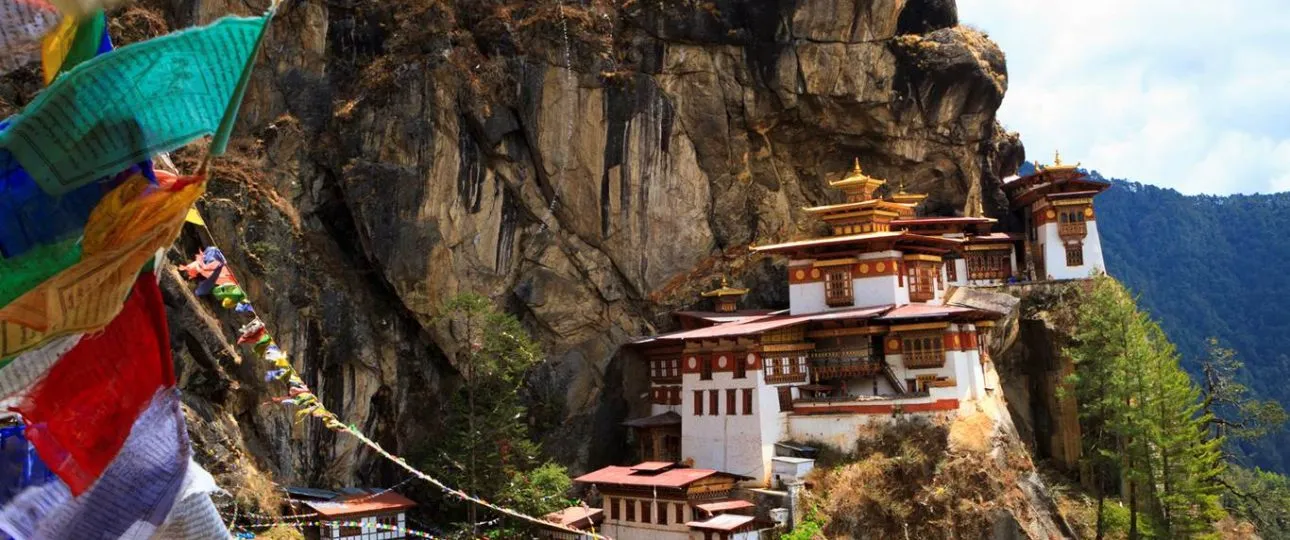
Tiger’s Nest (Paro Taktsang)
It is the most sacred site in Bhutan that is amazingly beautiful. As it hangs on the side of a cliff 900 m above Paro Valley, a hike of about 2 hours will take you to this place. From here, you’ll get the best view of Paro. This hike is the ultimate goal of any tourist going to Bhutan. There is a cafeteria serving delicious Bhutanese food. Most people stop by it for lunch. There is a viewpoint on the way from where people love to picture the iconic Paro Taktsang. It is believed that Guru Rinpoche flew on the back of a tigress and meditated here for three years, three months, three weeks, three days, and three hours. However, Tiger’s Nest has the perfect blend of religious and natural significance.
Glorious history and unique culture
Bhutan is one of the few countries that have been independent throughout their history; never conquered, occupied, or governed by an outside power. Bhutan has continuously and successfully defended its sovereignty. In 747, a Buddhist saint, Padmasambhava, came to a location (Paro Taktsang) on the back of a tigress and meditated to subdue a demon. After coming out, people saw him in 8 forms. He then introduced Buddhism to Bhutan. Tibet has a strong influence on Bhutan, which is why it also shapes the national religion. Thus, Bhutan has a rich and lasting cultural heritage that dates back thousands of years.
Tshechus
Tshechus are Bhutanese festivals held in the major dzongs of all dzongkhags (districts). This is the best chance to gain a deep insight into Bhutanese culture. Almost all Tshechus are dedicated to Guru Rinpoche. Festivals include mask dances performed by monks and laymen. It is also a social gathering of people from far and near dressed at their finest. The tshechus pack up by unfolding the world’s largest religious thangka scroll, Thongdrel, featuring all 8 manifestations of Guru Padmasambhava, which is believed to wash away the sins and misfortune of those who witness. The Thongdrel is rolled up before the first ray of the sun strikes it. Various tshechus are held around Bhutan, including Paro Tshechu in Paro, Thimphu Tshechu in Thimphu, Punakha Tshechu in Punakha, Wangdue Tshechu in Wangdue Phodrang, and Jakar Tshechu in Bumthang.
Dzongs
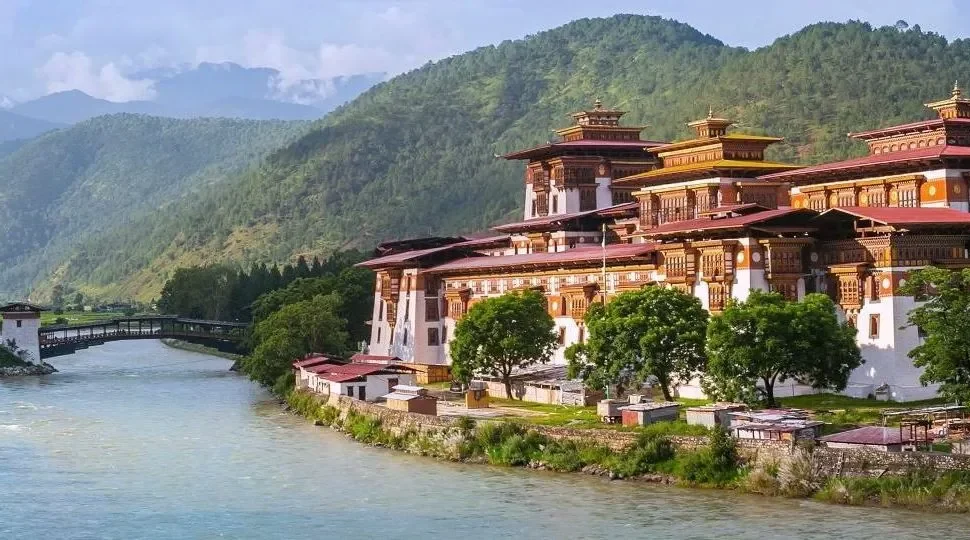
Dzongs were once forts built strong enough to defend and to avoid the chances of invasion. Most dzongs were built in the 17th century to ward off invading Tibetan armies. At this time, these dzongs are living museums with proud and glorious history which are used as administrative centers. Dzongs follow typical Bhutanese architecture with a wide base and tapering top. They are also ornately decorated in various colors and shapes, like Tashichho Dzong (Thimphu), Rinpung Dzong (Paro), Punakha Dzong (Punakha), Jakar Dzong (Bumthang) and many more. Dzongs are the site of many important events. They have also evolved today as a cultural symbol. Most of the dzongs still stand royally while the walls of these dzongs narrate the history through paintings.
Last Himalayan Kingdom
The Himalayan Kingdom near a massive mountain range has a monarchical system for centuries. However, Bhutan is the last of the great Himalayan Kingdom that still recognizes a monarch as its supreme leader along with the constitutional system. Bhutanese truly believe in their monarchy and have love in their hearts for 5th Druk Gyalpo, His Majesty Jigme Khesar Namgyel Wangchuck and Her Majesty Jetsun Pema; not to forget the charming Druk Gyalse Crown Prince His Royal Highness Jigme Namgyel Wangchuck. The love of the people is the major reason the monarchy still exists alongside the democratic government. The royal family is humble and visits schools, eats with locals at festivals, and plays with children.
Gross National Happiness (GNH)
Bhutan is a country where spiritual development is more important than materialistic development. In 1971, the former king Jigme Singye Wangchuck initiated this unique measure progress. The philosophy of GNH guides the government of Bhutan towards development. This measures the collective happiness and well-being of the people. Happiness is the goal of Bhutanese government in the Constitution of Bhutan. Nevertheless, Buddhism isn’t just a religion in Bhutan but the way of living which also affects the political system. Gross National Happiness includes measures of sustainable and equitable socio-economic development, environment conservation, cultural preservation and good governance. In other words, a person is happier or can be happier, when focusing on little things.
Highest unclimbed mountain
Unclimbed mountains are sometimes referred to as ‘virgin peaks’. They exist because the mountain is unreachable, either due to either geographical isolation or political instability. Talking about Bhutan, it has some of the highest unclimbed mountains in the world. The government prohibits mountaineering in the peaks which the Bhutanese believe are the abodes of deities guarding the kingdom. The highest unclimbed mountain of the world lies in Bhutan near China border, Gangkhar Puensum (7,570 m).
Breathtaking trekking routes
Bhutan is home to some of the world’s most amazing treks, including the longest and hardest trek in the world. Bhutan is a wonderful place for trekking at both high and medium altitudes. As it lacks a massive number of trekkers, it gives you a different experience in the isolated country of the world. Trekking in these routes will let you meet people who still are connected to their community and culture as well as to the pristine environments. These treks will take you through physically challenging routes including high mountain passes and snow. You’ll be blessed with a pristine environment and amazing scenery at the end of every trek. The trek route ranges from 2 days Bumdra Trek to 30 days Snowman Trek. You can also choose among some amazing trekking routes like Druk Path Trek, Mt. Jholmolhari Trek, Gangtey Trek, Bumthang Owl Trek, etc.
13 Arts and Crafts
The 13 Bhutanese Arts and Crafts, known as Zorig Chusum, is symbolic and rooted in Buddhist philosophy. Treasures discover Pema Lingpa introduced these arts and crafts to Bhutan in 15th century. These are carefully preserved for the future generations and taught in schools. These include carpentry, masonry, carving, painting sculpture, casting, blacksmithing, gold and silver work, bamboo work, weaving embroidery, woodturning and papermaking.
Cuisines
The favorite food of the Bhutanese is cheese and chilies. No, they’re not kidding. If you think they are, taste their national dish, Ema datshi. It is an insanely hot dish of boiled chilies and native cheese. The staple food of Bhutan is red rice which has a nutty taste and the only variety of rice that grows in high altitude. The diet also includes chicken, yak meat, beef, pork and lamb. Dairy products, particularly butter and cheese are very popular. With certain influence from China, India and Nepal; Bhutan has its own taste and uniqueness. Apart from ema datshi, there are a variety of dishes from which you can have according to your taste buds like Kewa Datshi, Shamu Datshi, Jasha Maru, Khorle and so on. Well, Bhutanese food is not everyone’s cup of tea. Before ordering, remember to inform the chef about your tolerance.
Unusual religious symbols
Bhutan is a religious country where faith and beliefs in myths are very high. Punakha town is home to the most bizarre Buddhist shrine. Chimi Lhakhang also known as ‘Fertility Temple’ is dedicated to Drukpa Kunley, a tantric Buddhist saint. He was entitled as ‘The Divine Madman’. He used to bless women in the form of sex. His ways of teachings were unusual. In addition, he ordered to keep phallus paintings and statues to ward off the evil eye and bring prosperity. However, couples pilgrim to Chimi Lhakhang in the hope of begetting a child. You can see these phallus paintings and statues in monasteries, entry of houses and being sold in the stores.
Summing up, Bhutan is a true getaway from the worries of the modern world. Bhutan has always respected Mother Nature. Every aspect of nature is believed to be the abode of godly spirit. The minimum daily package of $250 takes you to a place of less stress and more smiles.