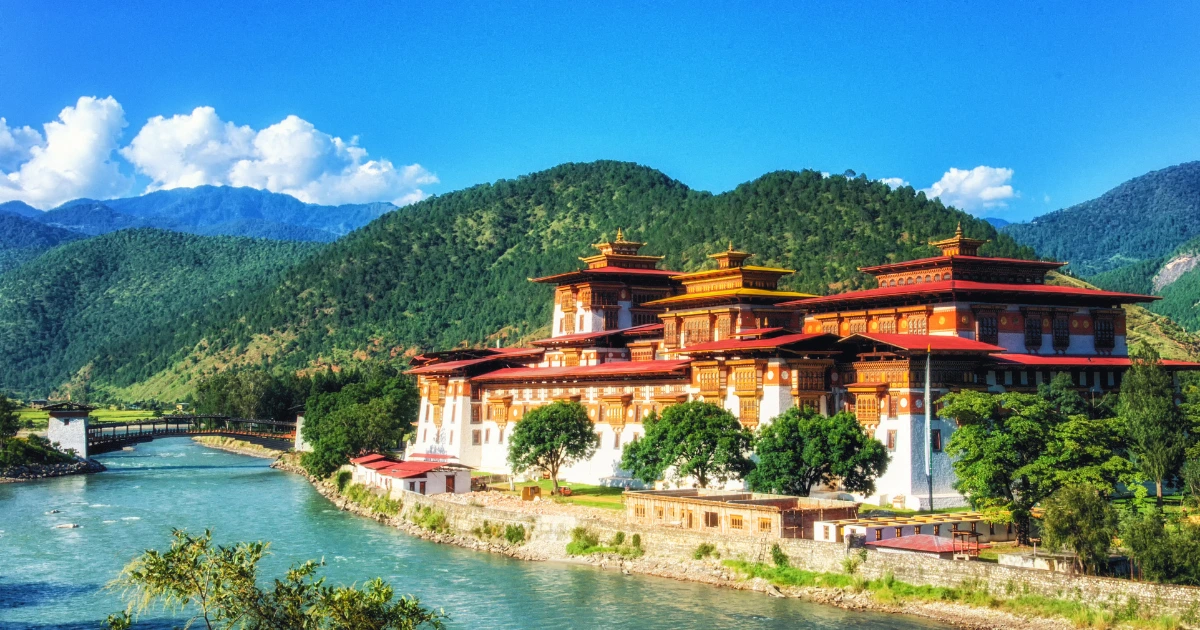
Punakha Dzong ranks among Bhutan’s most impressive historic landmarks and remains an important center of the country’s religious and cultural heritage. Traditionally known as the Palace of Great Happiness or Bliss, Punakha Dzong was built by Zhabdrung Ngawang Namgyal in 1637–38. Its remarkable architecture, sacred heritage, and long connection with Bhutanese history make it one of the most significant dzongs in the country.
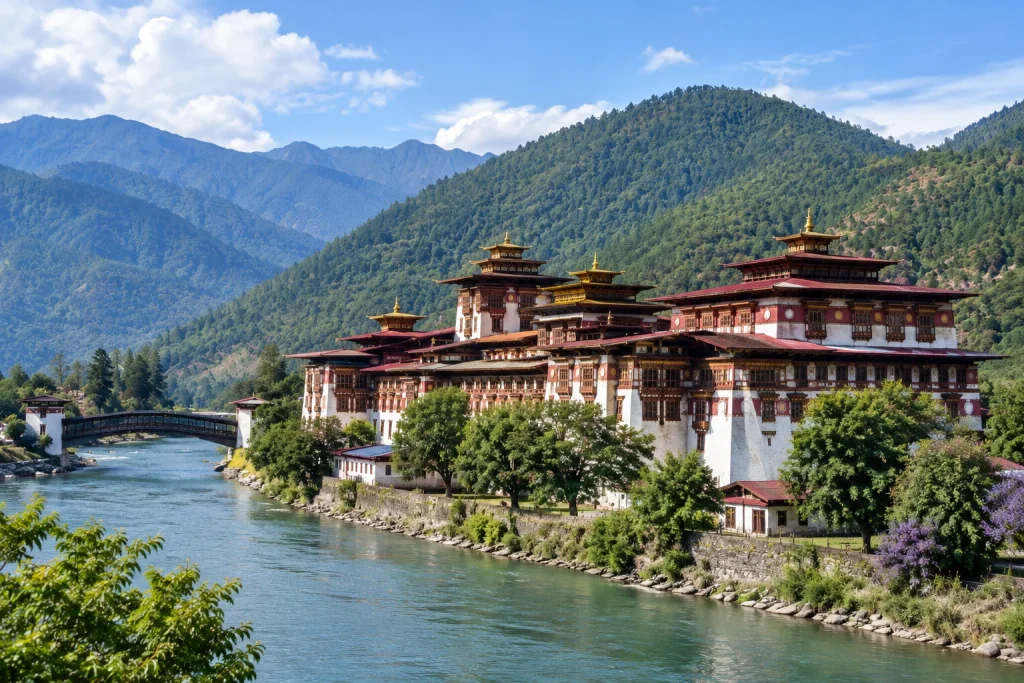
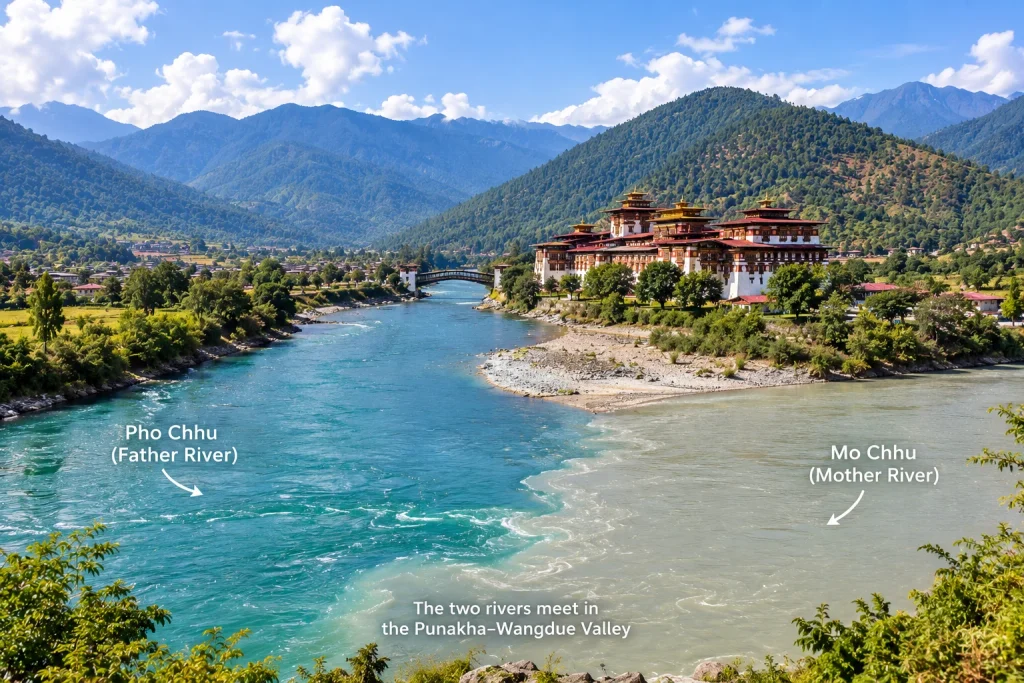
Punakha Dzong also stands out for its remarkable setting. The fortress sits where the Pho Chhu (Father River) and Mo Chhu (Mother River) meet in the Punakha–Wangdue Valley.
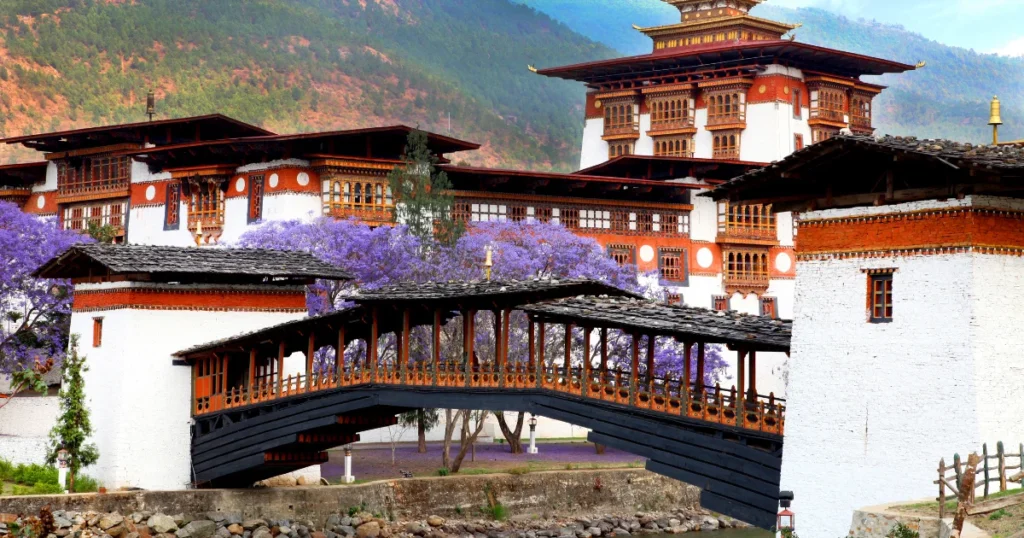
Mountains, fertile farmland, flowing rivers, and seasonal jacaranda blossoms surround the fortress, creating a remarkable natural backdrop for its traditional architecture.
Punakha Dzong also plays an important role in Bhutanese Buddhism. It preserves sacred relics of the Southern Drukpa Kagyu tradition, including the Rangjung Kasarpani and the sacred remains associated with Zhabdrung Ngawang Namgyal and tertön Pema Lingpa. The dzong continues to serve as an important religious center and becomes the winter residence of Bhutan’s Central Monastic Body each year.
Unlike many other dzongs in Bhutan, Punakha Dzong brings history, religion, architecture, and landscape together in one remarkable setting. Its riverside location, royal and religious history, distinctive design, and nearby attractions make it a highlight of any journey through western Bhutan.
In this guide, you will discover the history of Punakha Dzong, its religious and architectural significance, what to see during a visit, the best time to go, nearby attractions, practical travel information, and useful tips for experiencing this remarkable Bhutanese landmark.
Punakha Dzong at a Glance
Before exploring its history, architecture, and religious significance, here are the essential facts about Punakha Dzong in one place. This quick-reference table gives travelers a clear overview of the fortress, its setting, and its continuing importance in Bhutan.
| Feature | Details |
| Location | Punakha–Wangdue Valley, Punakha, western Bhutan |
| Name & Meaning | Zhabdrung later named it Pungthang Dewa Chenpoi Phodrang, meaning “Palace of Great Happiness or Bliss.” |
| Construction Date | 1637–1638 |
| Founder | Zhabdrung Ngawang Namgyal |
| Architectural Style | Traditional Bhutanese dzong architecture, combining religious, administrative, and defensive features |
| Religious Tradition | Drukpa Kagyu tradition of Himalayan Buddhism |
| Rivers | Located at the confluence of the Pho Chhu (Father River) and Mo Chhu (Mother River) |
| Historical Importance | It served as an important religious and administrative center and was the seat of Bhutan’s government until the capital moved to Thimphu in 1955. |
| Current Religious Role | Serves as the winter residence of Bhutan’s Central Monastic Body, which moves from Thimphu to Punakha during the winter months. |
| Sacred Treasures | Houses important sacred relics, including Rangjung Kasarpani and sacred remains associated with Zhabdrung Ngawang Namgyal and tertön Pema Lingpa |
| Nearby Attractions | Punakha Suspension Bridge, Chimi Lhakhang, Khamsum Yulley Namgyal Chorten, and the scenic Punakha Valley |
Where Is Punakha Dzong?
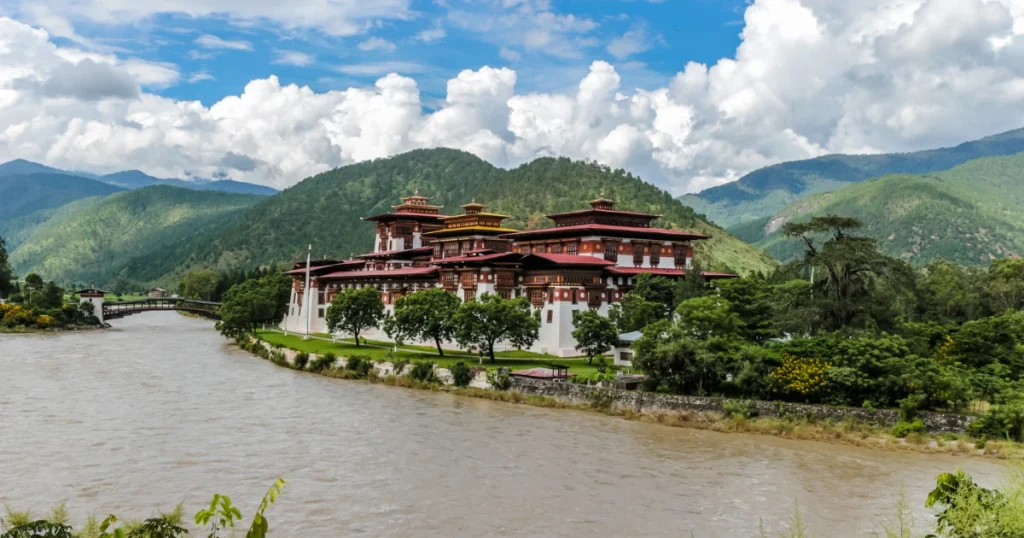
Punakha Dzong stands in the Punakha–Wangdue Valley of western Bhutan, in a spectacular setting where the Pho Chhu (Father River) and Mo Chhu (Mother River) meet. Built on a strategic piece of land between the two rivers, the dzong appears almost surrounded by water and mountains, making its location one of the most distinctive features of the historic fortress. Bhutan’s official Punakha Dzongkhag administration confirms that the dzong sits directly at this river confluence.
The dzong is located at an elevation of around 1,200 meters (3,940 feet), giving Punakha a noticeably warmer climate than Bhutan’s higher valleys. The surrounding landscape is characterized by forested hills, fertile farmland, mountain scenery, and the two rivers flowing around the fortress. In spring, blooming jacaranda trees add another layer of color to the already impressive setting.
Punakha town is roughly 72–75 km from Thimphu, and the drive generally takes around 2–3 hours, depending on road conditions and stops along the way. The journey usually crosses the scenic Dochula Pass, making the drive to Punakha part of the experience rather than simply a transfer between destinations.
The location also makes it convenient to combine Punakha Dzong with other attractions in the valley. The Punakha Suspension Bridge is nearby, while Chimi Lhakhang is approximately 7.5 km away by road.
History of Punakha Dzong
Who Built Punakha Dzong?
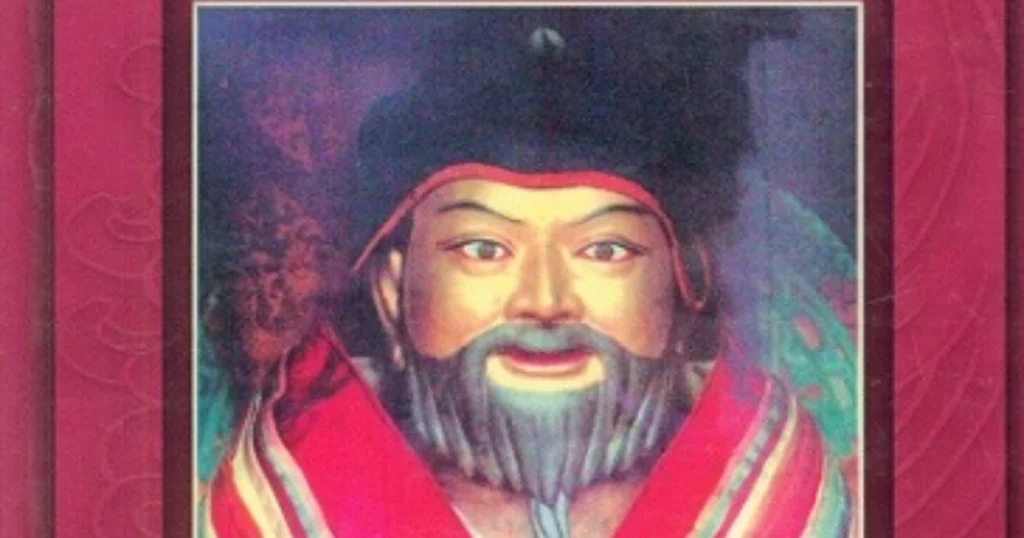
Punakha Dzong was built by Zhabdrung Ngawang Namgyal, one of the most important figures in Bhutanese history. Construction began in 1637 and was completed in 1638. Bhutanese traditions also tell the story of a carpenter named Balip and supernatural events associated with the dzong’s construction. Zhabdrung later named it Pungthang Dewachenpoi Phodrang, meaning “Palace of Great Happiness or Bliss.”
Why Was Punakha Dzong Built?
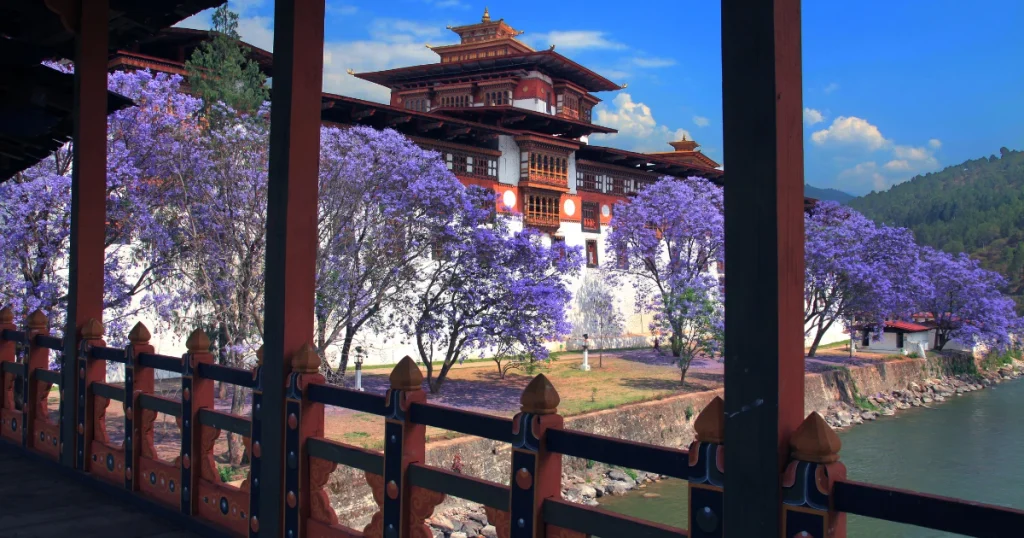
Punakha Dzong was established as an important religious and administrative center during Zhabdrung Ngawang Namgyal’s efforts to strengthen and unify Bhutan. Its position at the meeting point of the Pho Chhu and Mo Chhu rivers also gave the fortress a strategic setting. The dzong brought religious, political, and administrative functions together within one important complex.
Punakha Dzong Through Bhutanese History
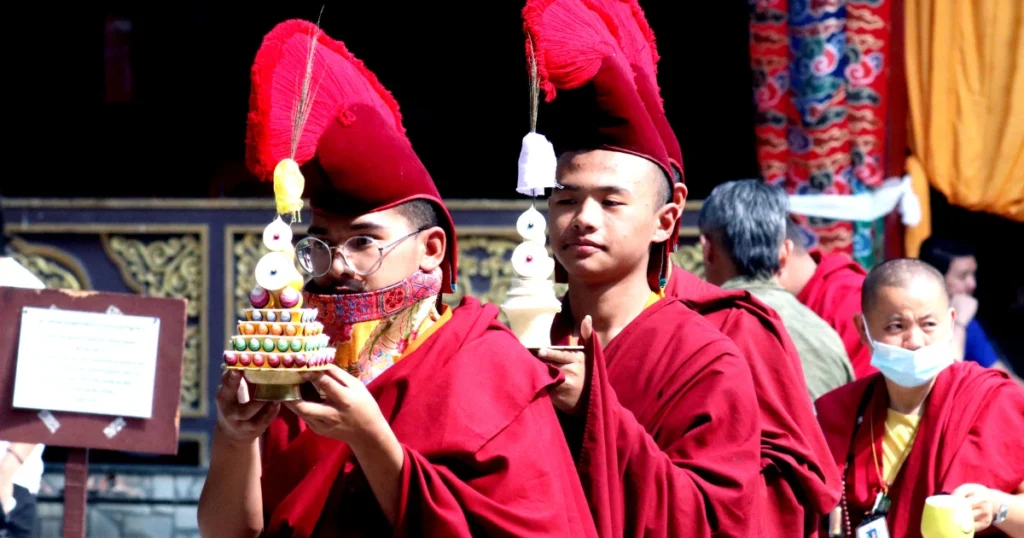
Punakha Dzong has played an important role in Bhutan’s religious and political history for centuries. Punakha served as Bhutan’s winter capital until 1955, when the capital moved to Thimphu. The dzong continues its religious role today and houses important sacred relics, including Rangjung Kasarpani and sacred remains associated with Zhabdrung Ngawang Namgyal and Pema Lingpa.
What Makes Punakha Dzong Special?
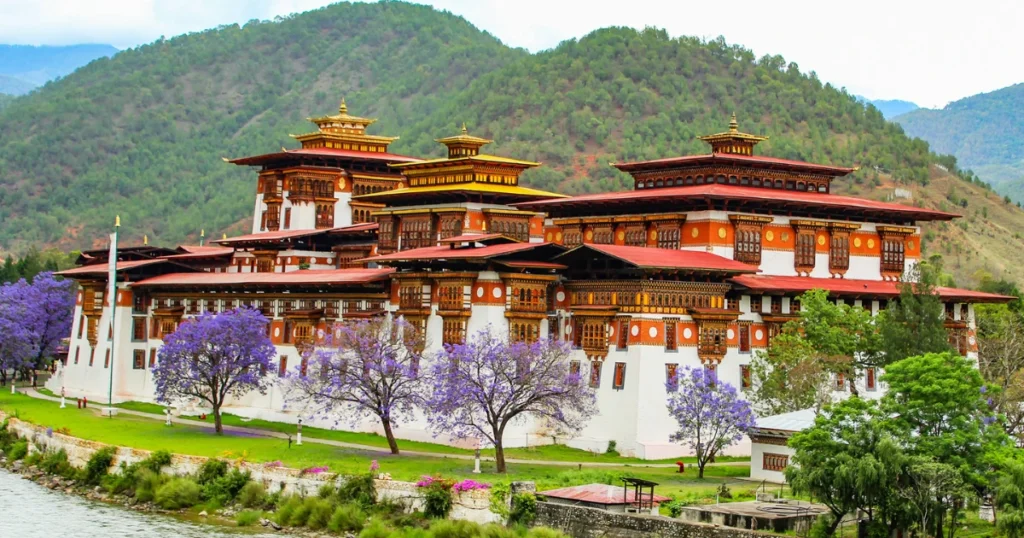
- Traditional Bhutanese Architecture: Built in 1637–38, Punakha Dzong follows traditional Bhutanese dzong design, combining religious, administrative, and defensive features in one impressive complex.
- Massive Whitewashed Walls: Large whitewashed walls give the dzong its strong and distinctive appearance while adding to its traditional fortress character.
- Courtyards and Central Tower: The dzong features spacious courtyards and interconnected buildings, with the central utse, or tower, standing as a major architectural and religious feature.
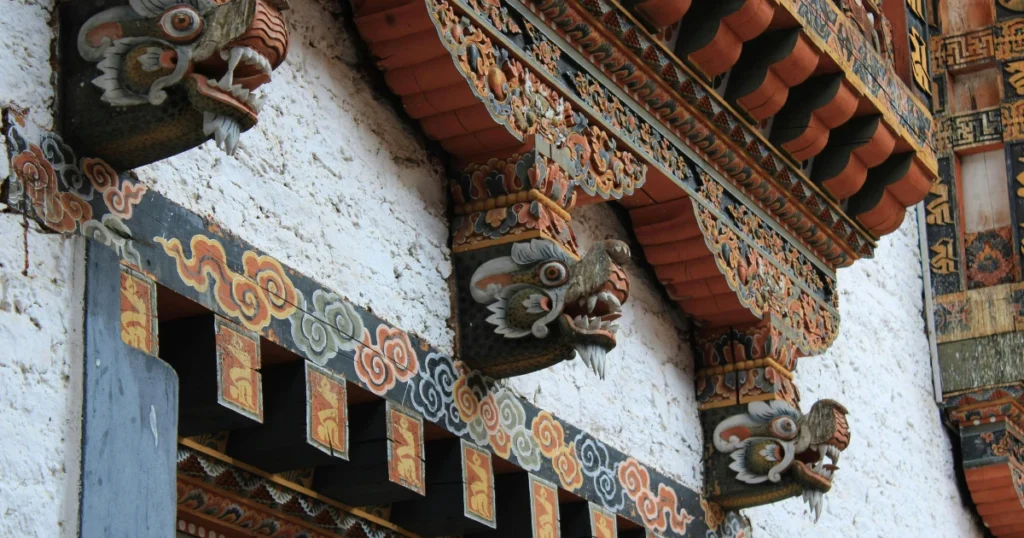
- Traditional Woodwork: Carved wooden windows, doors, pillars, balconies, and other details add character to the structure and showcase traditional Bhutanese craftsmanship.
- Temples and Sacred Spaces: Several temples and sacred rooms contain Buddhist paintings, religious artwork, and important religious objects. Visitors should follow local guidance when entering these areas.
- Defensive Features: The thick walls, controlled entrances, and strategic position between the Pho Chhu and Mo Chhu rivers reflect the dzong’s historic defensive purpose.
- Architecture and Landscape: Punakha Dzong stands at the meeting point of the Pho Chhu and Mo Chhu rivers, with mountains, forests, and farmland surrounding it. This setting makes the architecture feel closely connected to the natural landscape.
Bhutan’s dzongs, including Punakha Dzong, are included on UNESCO’s Tentative List for World Heritage status.
Why Was Punakha Bhutan’s Winter Capital?
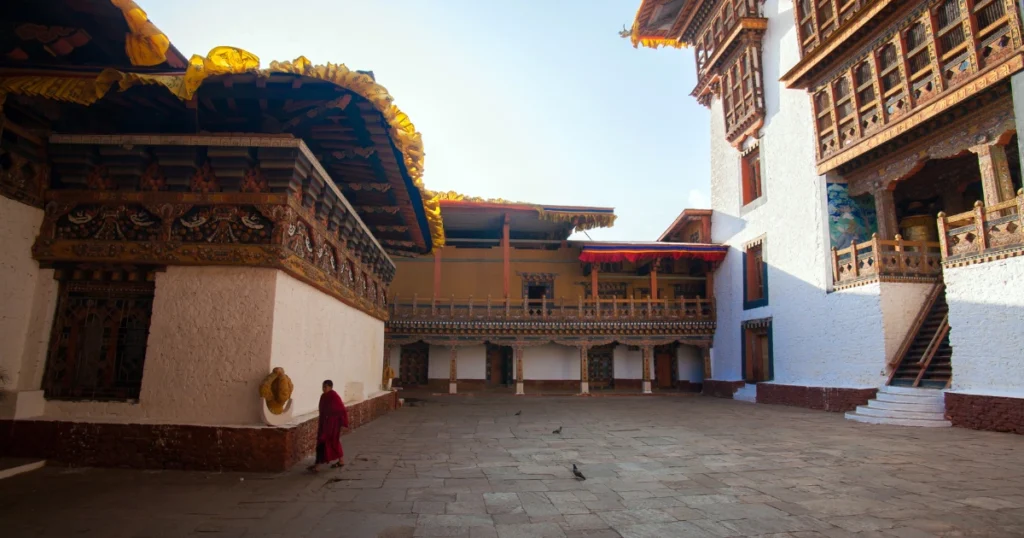
Punakha has long held a special place in Bhutan’s history because of its milder winter climate and important religious role. While Thimphu is Bhutan’s permanent capital today, Punakha served as Bhutan’s winter capital until 1955 and continues to function as the winter residence of Bhutan’s Central Monastic Body.
Why Punakha Has a Warmer Winter Climate
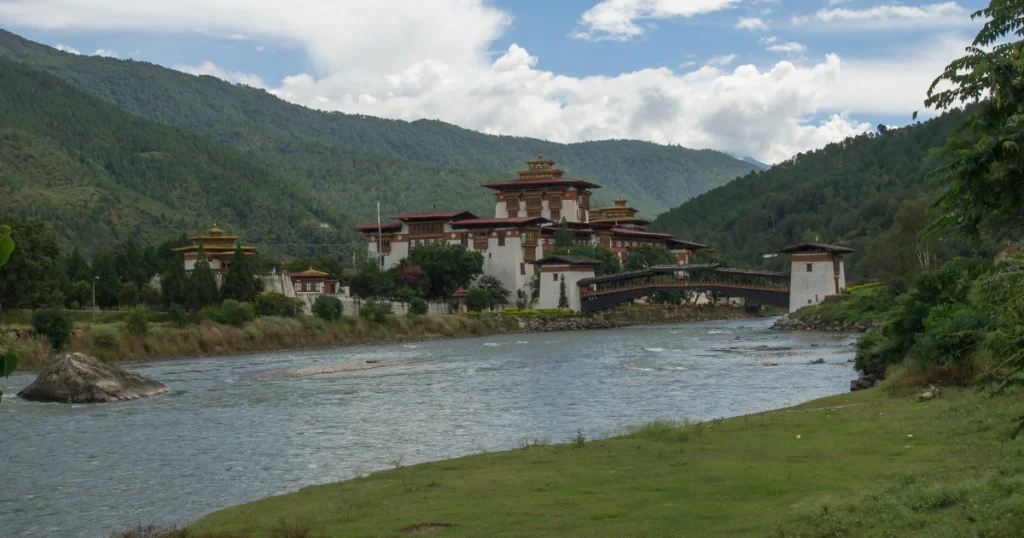
Punakha sits at a relatively low elevation of around 1,200 meters (3,940 feet), considerably lower than Thimphu, which lies at about 2,300 meters. Its lower elevation gives Punakha a warmer and more temperate climate, particularly during the winter months. The valley’s warmer conditions historically made it a more comfortable place for the country’s religious community to spend the winter.
Winter Migration of the Central Monastic Body
Each winter, the Central Monastic Body of Bhutan moves from Thimphu to Punakha for its traditional winter residence. The journey reflects a long-standing practice connected to the different climates of the two valleys. The monks spend the winter months in Punakha before returning to Thimphu as the weather becomes warmer.
The Role of Punakha Dzong During Winter
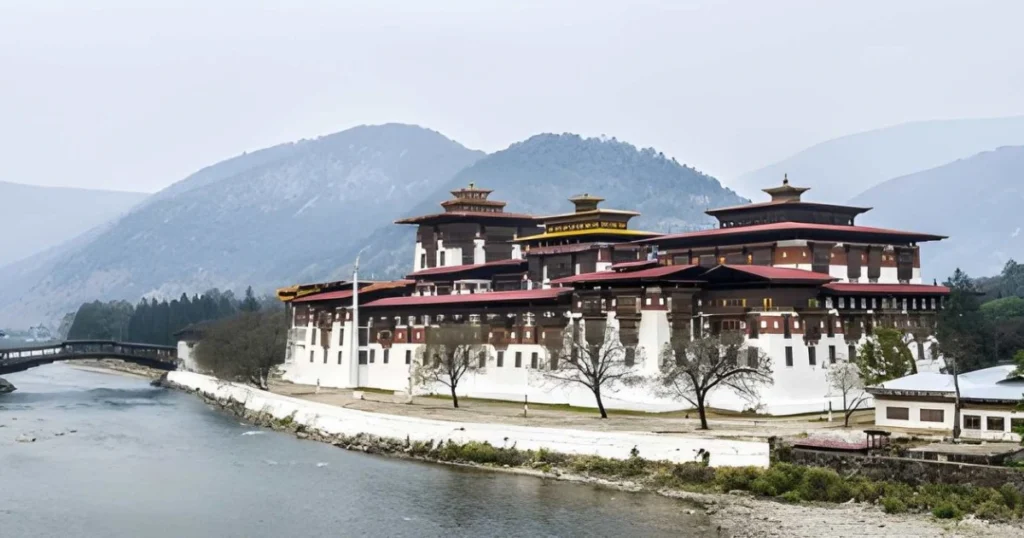
During the winter season, Punakha Dzong becomes an important center of monastic life. The Central Monastic Body resides here, and religious activities and ceremonies continue within the dzong. This seasonal movement also reinforces Punakha Dzong’s role as a living religious institution, rather than simply a historic building preserved for visitors.
How Punakha Differs From Thimphu
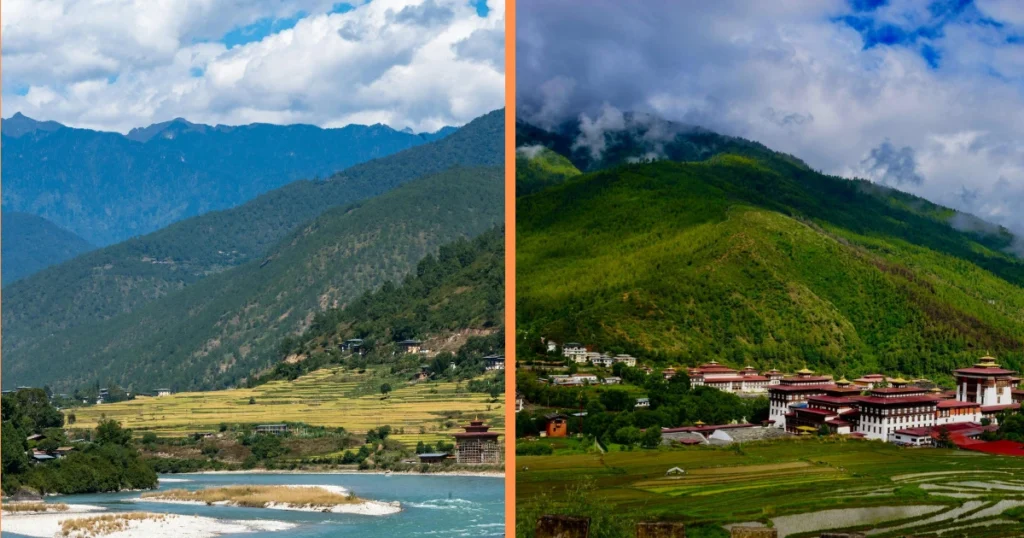
Thimphu is Bhutan’s modern political and administrative capital, while Punakha retains a particularly strong connection with the country’s historical and religious heritage. The seasonal movement of the Central Monastic Body creates a unique relationship between the two cities. For travelers, this distinction makes Punakha especially compelling. A visit to Punakha Dzong offers an opportunity to see an important part of Bhutanese religious life in a setting surrounded by rivers, mountains, fertile farmland, and traditional villages.
Punakha Dzong’s Famous Jacaranda Trees
The jacaranda trees around Punakha Dzong are one of the most beautiful seasonal features of the Punakha Valley. When they bloom, their soft mauve and purple flowers contrast beautifully with the dzong’s whitewashed walls, creating a scene that has become closely associated with springtime in Punakha.
When Do the Jacaranda Trees Bloom?
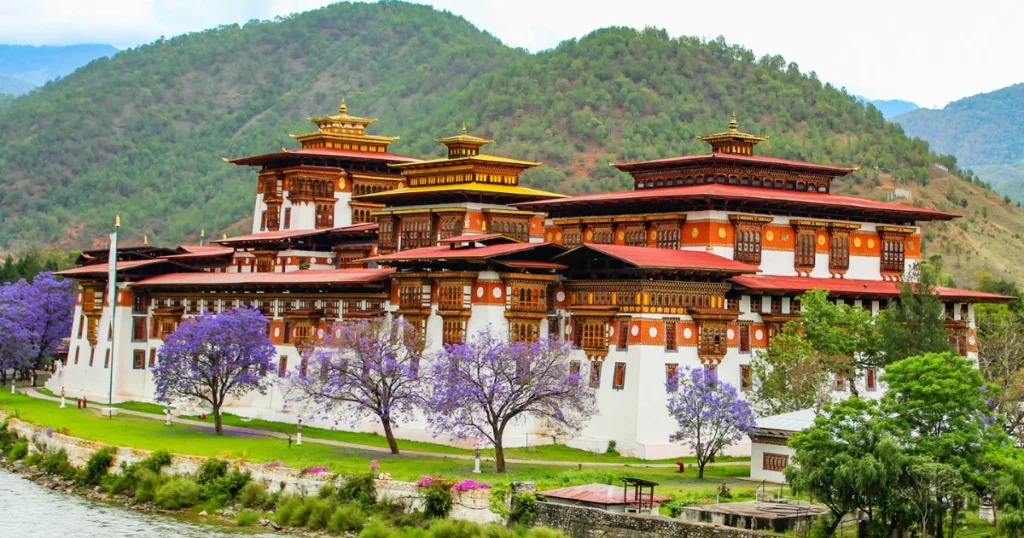
The jacaranda trees generally begin to bloom during spring, particularly around April and May. The exact timing can vary from year to year depending on local weather conditions. If seeing the trees in bloom is important to your trip, plan your visit during spring and check local conditions closer to your travel dates.
Why Spring Is Especially Beautiful
Spring is one of the most rewarding times to visit Punakha. The valley becomes greener, the weather is generally comfortable for sightseeing, and the surrounding mountains and farmland provide a fresh backdrop. When the jacarandas flower, Punakha Dzong takes on an especially colorful appearance, combining traditional Bhutanese architecture with vibrant seasonal scenery.
Punakha Dzong Festivals and Religious Events
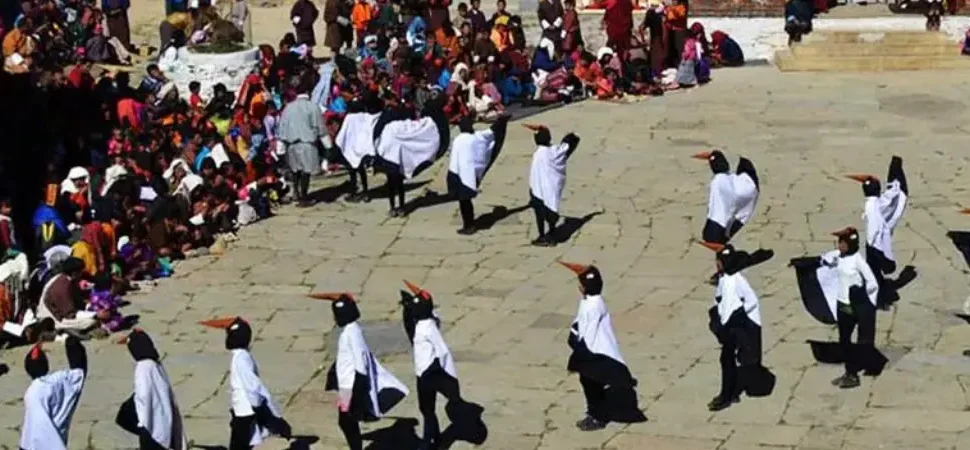
- Punakha Tshechu: A major Buddhist festival featuring traditional masked dances, music, religious rituals, and cultural celebrations.
- Punakha Drubchen: A religious festival that commemorates Bhutan’s victory over Tibetan forces and features traditional dances and performances connected with the history of the event.
- Religious Ceremonies: Punakha Dzong remains an active religious center where Buddhist prayers, rituals, ceremonies, and other monastic activities take place.
- Central Monastic Body: The Central Monastic Body spends the winter at Punakha Dzong, continuing the long-standing tradition of moving between Thimphu and Punakha according to the seasons.
- Festival Experience: Visiting during a festival allows travelers to see Bhutanese Buddhist traditions, traditional clothing, music, dances, and community celebrations in a living cultural setting.
Plan: Festivals can attract larger crowds, and access to some areas may change during religious events. Check the latest festival dates and visiting arrangements before planning your trip. The Punakha Dzongkhag currently publishes annual festival and event information.
How to Visit Punakha Dzong
Punakha Dzong is easy to include in a Bhutan itinerary. Most travelers visit it after Thimphu, on their way to Punakha. A private vehicle with a driver is one of the most convenient ways to travel around Bhutan.
Drive & Road
- From Thimphu: The drive to Punakha takes about 2½ hours and usually passes through Dochula Pass before descending into the warmer Punakha Valley.
- From Paro: Travel through Thimphu and Dochula Pass to reach Punakha. The journey takes most of the day, including sightseeing stops.
A private vehicle with a driver is the easiest way to reach Punakha Dzong. You can stop along the way for photographs and visit other attractions in the Punakha Valley. Self-drive rental vehicles are not available in Bhutan.
Visit With a Guide
A local guide can explain the history, architecture, Buddhist traditions, and importance of Punakha Dzong. A guide is required to enter monuments and dzongs in Bhutan.
What to Expect
When you arrive, you will see Punakha Dzong standing at the meeting point of the Pho Chhu and Mo Chhu rivers. You can explore its courtyards, traditional architecture, temples, and artwork, depending on current access. Since the dzong is an active religious site, dress modestly and follow your guide’s instructions. Photography may be restricted in sacred areas, so please ask before taking any photographs.
Transportation
Tip: Allow around 1–1.5 hours to explore Punakha Dzong. You can then visit the nearby Punakha Suspension Bridge or another attraction in the valley.
Punakha Dzong Opening Hours, Entrance Fee & Visitor Rules
Bhutan has introduced a National Monument Online Ticketing System, allowing travelers to book entry tickets for national monuments online in advance. Because fees, hours, and booking procedures can be updated by the relevant authorities, checking the ticketing platform itself or confirming with your Bhutanese tour operator is more reliable than relying on a fixed figure in a travel guide.
Opening Hours
Punakha Dzong is open to visitors in two daily sightseeing sessions, with a two-hour closure in the afternoon:
- Morning: 11:00 AM–1:00 PM: Visitors can explore the dzong during the morning session, including its courtyards and other areas open to tourists.
- Afternoon: 3:00 PM–5:00 PM: Visitor access resumes at 3:00 PM and continues until 5:00 PM.
- Closed: 1:00 PM–3:00 PM: The dzong closes to regular visitors during this midday break.
These visiting hours are recorded in the Royal Government of Bhutan’s Tourism Council assessment of Punakha Dzong. As the dzong remains an active religious site, access may also change during religious ceremonies, monastic activities, and major festivals. For the latest visitor arrangements, please consult the Punakha Dzongkhag Administration before your visit.
Entrance Fee
- Adult: Nu. 500 per person.
- Children aged 6–18: 50% concession, or Nu. 250.
- Children aged 5 and below: Free.
- Online Booking: Monument tickets can be booked and paid through Bhutan’s official tourism services portal.
- Important: A licensed guide is required to enter Bhutanese monuments and dzongs.
For the latest fee, booking arrangements, and other monument information, check the official Bhutan Tourism website before your visit. The Department of Tourism also publishes its monument entry-fee notifications and booking information through its official tourism services.
Guide Requirements
Visitors should explore Punakha Dzong with a qualified Bhutanese guide who can explain its history, Buddhist traditions, architecture, and cultural significance. A local guide also helps visitors understand which areas they can enter and how to behave inside the religious complex.
Photography Rules
Photography is welcome in the outdoor and courtyard areas of Punakha Dzong, but restrictions apply inside sacred spaces. Since the dzong remains an active religious site and houses important Buddhist relics, visitors should follow the photography rules carefully.
- Courtyards and exterior areas: You can photograph the dzong’s courtyards, exterior architecture, gardens, rivers, and surrounding landscape.
- Temples and sacred interiors: Do not take photographs inside temples or other restricted sacred areas. Punakha Dzong houses important sacred relics, including the Rangjung Kasarpani and the remains of Zhabdrung Ngawang Namgyal.
- Monks and worshippers: Ask for permission before photographing monks, worshippers, or other people, particularly during prayers or religious activities.
- Religious ceremonies: Do not interrupt or photograph religious rituals without permission. During major events such as Punakha Dromche and Tshechu, follow the instructions of the monastic authorities and your guide. The Punakha Dzongkhag Administration also issues visitor-related notices during these events.
- Restricted areas: If a room, altar, or religious area is marked as restricted, do not enter or photograph it. Follow the signs and instructions from the dzong authorities.
- Official guidance: For the latest site information and local notices, please refer to the Punakha Dzongkhag Administration – Punakha Dzong, the official government website.
Religious-Site Etiquette
Punakha Dzong is a functioning religious institution, not simply a historical attraction. Visitors should:
- Speak quietly inside religious areas.
- Avoid disturbing monks or ongoing ceremonies.
- Follow signs and instructions from guides or temple officials.
- Never touch religious objects, statues, paintings, or offerings.
- Ask permission before photographing people or religious activities.
- Respect any area marked as restricted.
Dress Requirements
Wear modest clothing when visiting Punakha Dzong. Clothing should cover the shoulders and legs, particularly when entering temples and other sacred areas. Carrying a light layer is useful because weather conditions can change during the day.
Shoes and Temple-Entry Rules
Remove your shoes before entering temples and sacred prayer halls in Bhutan. Wear clean, comfortable shoes that are easy to take off and put back on, especially when visiting religious sites such as Punakha Dzong. Dress respectfully by covering your shoulders and legs, and do not take photographs inside sacred areas unless permission is given. Follow your guide’s instructions and any site-specific rules, as some areas within a dzong may have additional restrictions.
Important Tip Before You Visit
Because Punakha Dzong continues to serve an important religious role, access can sometimes be affected by festivals, ceremonies, monastic activities, or official events. Check the latest information before your visit rather than relying on an old travel guide.
Best Time to Visit Punakha Dzong
Punakha Dzong is open year-round, but spring and autumn generally offer the best conditions for sightseeing. The Punakha Dromche and Tshechu are major highlights if you want to experience Bhutanese culture and religious traditions.
| Season | Highlights |
| Spring (Mar–May) | Pleasant weather, purple jacaranda blooms, and ideal sightseeing conditions |
| Summer (Jun–Aug) | Lush green valley, but frequent monsoon rain and slippery paths |
| Autumn (Sep–Nov) | Clear skies, crisp mountain views, and golden rice fields. |
| Winter (Dec–Feb) | Winter (Dec–Feb) sees fewer visitors, mild daytime weather, and the Punakha Dromche festival in February. |
Festival note: Punakha Dromche and Punakha Tshechu are held according to the Bhutanese lunar calendar, so their dates change each year. Check the Punakha Dzongkhag Administration for official festival dates and notices.
How Much Time Do You Need at Punakha Dzong?
- With photography: Allow extra time to enjoy the courtyards, architecture, rivers, and surrounding views.
- With Punakha Suspension Bridge: Plan for around 2 hours or more if you want to visit the dzong and walk across the nearby bridge.
- With other attractions: Allow half a day if you also want to visit Chimi Lhakhang or Khamsum Yulley Namgyal Chorten.
- For a relaxed visit: Avoid rushing. Take time to appreciate the dzong’s history, architecture, religious spaces, and riverside setting.
Best choice for most travelers: Plan 1–1.5 hours for Punakha Dzong itself, then add time for nearby attractions.
Things to Do Near Punakha Dzong
Punakha Suspension Bridge
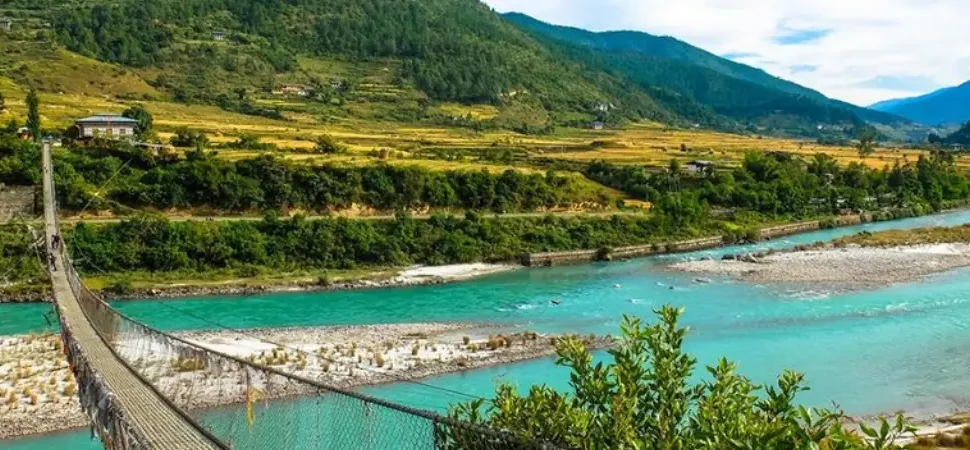
Punakha Suspension Bridge is one of Bhutan’s longest pedestrian suspension bridges, stretching approximately 230 meters across the Pho Chhu River. Located a short walk from Punakha Dzong, it is easy to combine with a visit to the fortress.
Walking across the bridge offers views of the river, surrounding mountains, valley, and colorful prayer flags. Because the bridge is an active public attraction and its condition or access can change, check with your guide or local authorities before crossing on the day of your visit. This is especially important during periods of maintenance or adverse weather.
Chimi Lhakhang
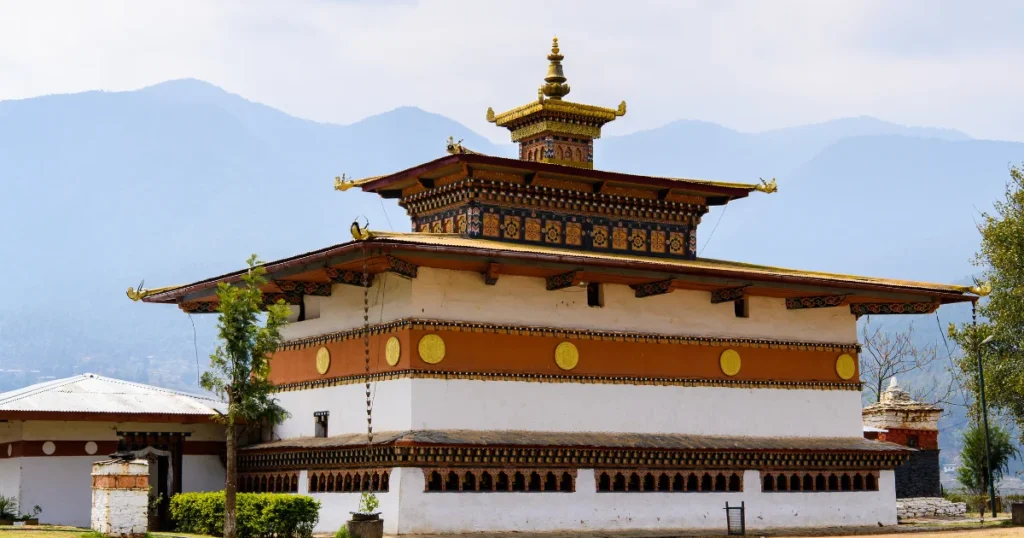
Chimi Lhakhang is a Buddhist temple near Lobesa, built in 1499 and closely connected with Drukpa Kunley, known as the Divine Madman. The temple has strong cultural and religious importance in Bhutan. You can combine it with Punakha Dzong on the same sightseeing day, with a short walk through fields to reach the temple.
Khamsum Yulley Namgyal Chorten
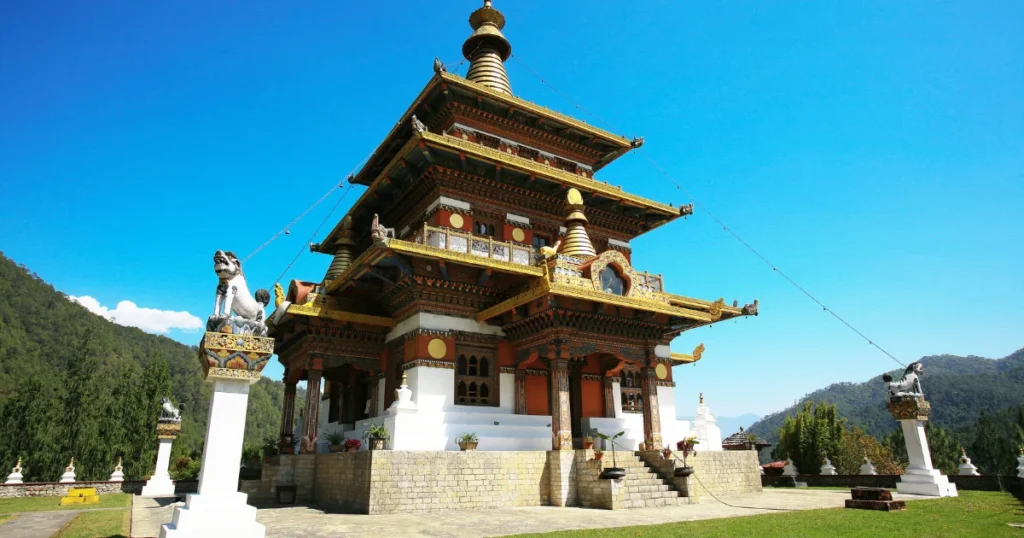
Khamsum Yulley Namgyal Chorten is about 7 kilometers from Punakha Dzong, and you can reach it by a short uphill walk. The trail crosses the Mo Chhu River and continues through rice fields before reaching the chorten. From the top, you can enjoy beautiful views of the lush Mo Chhu Valley and surrounding hills.
Punakha Valley
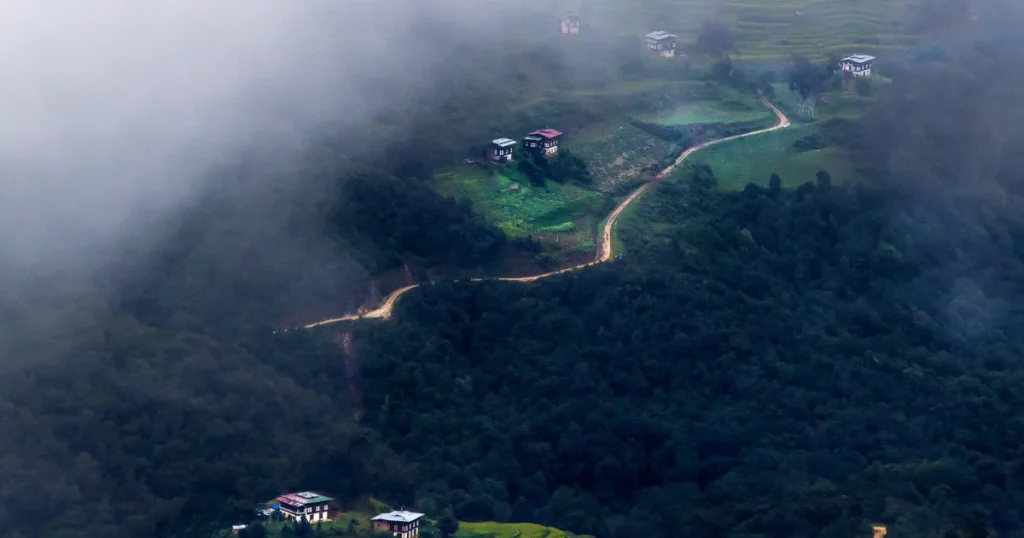
Punakha Valley is known for its fertile farmland, traditional villages, rivers, and mountain scenery. Scenic drives through the valley give you a closer look at rural Bhutanese life, while rice fields and traditional homes create a peaceful landscape. Take time for short walks and village views to experience the valley beyond its main attractions.
Sangchhen Dorji Lhuendrup Nunnery
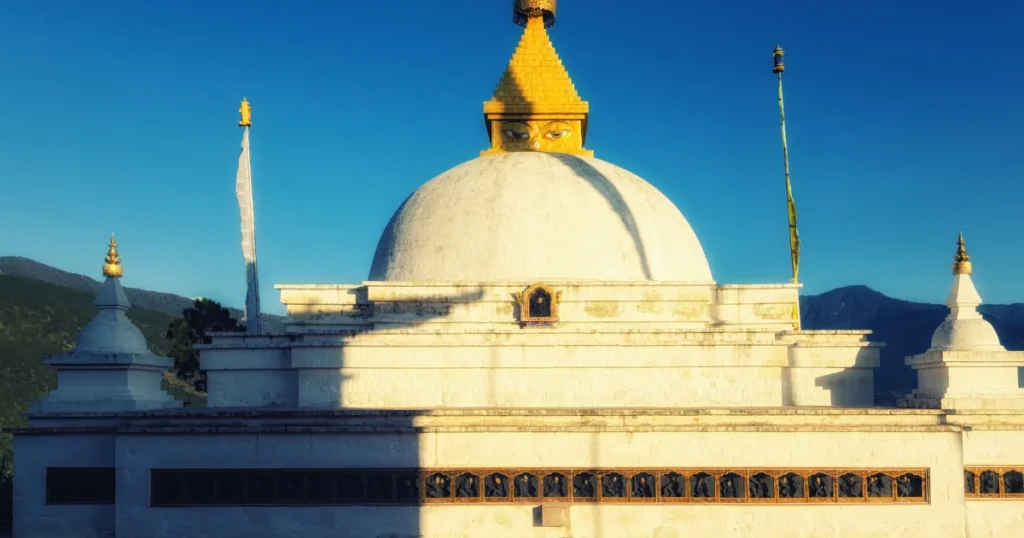
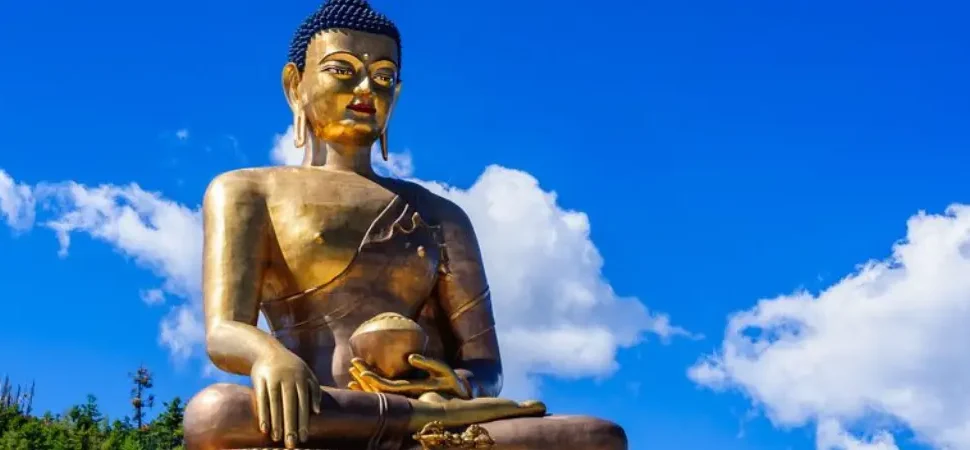
Sangchhen Dorji Lhuendrup Nunnery is a beautiful Buddhist nunnery overlooking the Punakha and Wangdue valleys. The complex is known for its hilltop location, traditional Bhutanese architecture, and peaceful surroundings. Visitors can admire the large statue of Chenrezig (Avalokiteshvara) and enjoy wide views of the surrounding valleys and mountains. It is a good stop to combine with Punakha sightseeing, particularly for travelers interested in Bhutanese Buddhist culture, architecture, and scenic viewpoints.
Punakha Dzong vs. Other Famous Dzongs in Bhutan
| Dzong | Location | Known For |
| Punakha Dzong | Punakha | Religious importance, royal history, riverside setting, and traditional architecture |
| Tashichho Dzong | Thimphu | Government offices, monastic administration, and Bhutan’s modern political center |
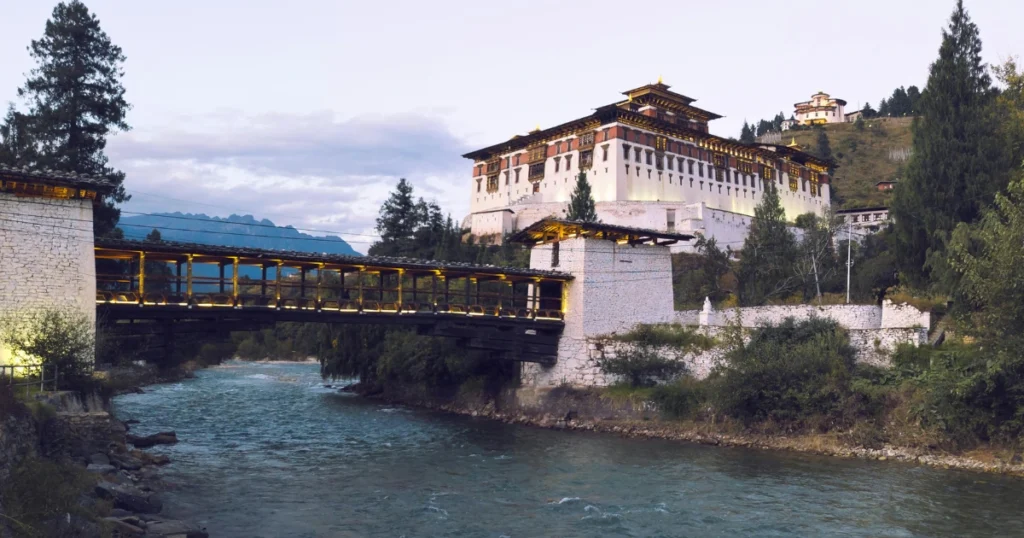
| Paro Dzong (Rinpung Dzong) | Paro | Historic architecture, Buddhist heritage, and views over Paro Valley |
| Trongsa Dzong | Trongsa | Strategic location, impressive scale, and important role in Bhutanese history |
Why Punakha Dzong Stands Out
Punakha Dzong is special because it brings together religion, history, architecture, and scenery in one remarkable setting. Built in 1637–38, it is Bhutan’s second-oldest and second-largest dzong and stands at the meeting point of the Pho Chhu and Mo Chhu rivers. It also served as Bhutan’s winter capital until 1955 and remains the winter residence of the Central Monastic Body.
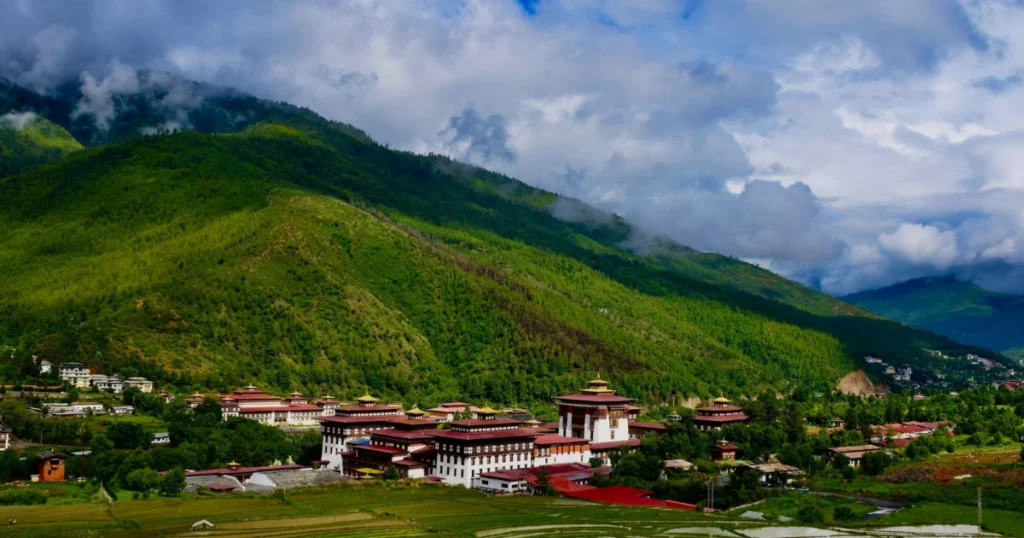
While Tashichho Dzong is closely associated with Bhutan’s modern government and monastic administration, and Trongsa Dzong is known for its strategic position and historic importance, Punakha Dzong offers a particularly complete experience for visitors, combining a dramatic natural setting with some of Bhutan’s most important religious and national traditions.
Photography Tips for Punakha Dzong
- Best spot: West bank of the Mo Chhu for the classic wide view of Punakha Dzong, with the river, mountains, and Bazam Bridge in the frame.
- Best time: Morning (8:30–10 AM) for softer light and fewer people, or late afternoon (3:30–5 PM) for wider landscape shots and warmer light.
- Best angle: Try the southern approach for a view of the two rivers meeting behind the dzong, or use the Bazam Bridge to create a natural foreground and frame the fortress.
- Suspension bridge: Walk to the nearby 230-meter Punakha Suspension Bridge and photograph along its cables and prayer flags for strong leading lines, with the Pho Chhu and valley behind.
- Spring tip: Visit in spring (March–May) to capture the mauve jacaranda blossoms against the dzong’s white walls.
- Lenses: Use a wide-angle lens (16–35mm) for the dzong, rivers, and mountains; a telephoto lens (70–200mm) works well for architectural details and distant views.
- Tip: Allow time for both morning and late-afternoon shots if photography is a priority, and avoid photographing inside restricted temple areas or during religious activities without permission.
What to Wear When Visiting Punakha Dzong
- Wear modest clothing: Choose respectful clothing when visiting Punakha Dzong and other religious sites in Bhutan.
- Cover your shoulders and knees: Clothing that covers the shoulders and knees is appropriate for temples and sacred areas.
- Wear comfortable footwear: Choose comfortable shoes because you may walk through courtyards and combine your visit with nearby attractions.
- Dress in layers: Weather can change during the day, so lightweight layers make sightseeing more comfortable.
- Dress appropriately for temples: Follow local guidance when entering religious spaces, and be prepared to remove your shoes where required.
Tips for Visiting Punakha Dzong
- Visit with a knowledgeable local guide: Learn about the dzong’s history, architecture, Buddhist traditions, and religious significance.
- Allow 1.5–2 hours: Plan around 1.5 to 2 hours to comfortably explore Punakha Dzong, including its courtyards, architecture, sacred areas open to visitors, and surrounding views without rushing.
- Check current access: Punakha Dzong’s visitor hours are 11:00 AM–1:00 PM and 3:00 PM–5:00 PM, according to the Tourism Council of Bhutan’s official site assessment. Access can change during monastic activities, religious ceremonies, festivals, or official events. Before visiting, please verify the Punakha Dzongkhag Administration’s official website and confirm with your Bhutanese tour operator for any same-day restrictions.
- Dress respectfully: Wear clothing that covers your shoulders and knees when visiting religious areas.
- Respect religious spaces: Speak quietly, follow your guide’s instructions, and avoid disturbing monks, worshippers, or ceremonies.
- Follow photography rules: Photography may be restricted inside temples and sacred areas. Always ask before taking photographs.
- Combine nearby attractions: If time allows, visit the Punakha Suspension Bridge, Chimi Lhakhang, or Khamsum Yulley Namgyal Chorten on the same day.
Conclusion
Punakha Dzong is far more than an old fortress preserved for visitors. History, Buddhist tradition, architecture, and landscape converge here in a way few places manage. Built in 1637–38, the dzong still plays an important role in religious life in Bhutan today; monks return each winter, prayers continue, and longstanding religious practices remain part of life here.
The rivers do much of the storytelling on their own. The Pho Chhu and Mo Chhu meet directly beneath the dzong’s walls, framed by green valleys and mountains that stretch out on every side. Spring adds one more layer to the scene, when jacaranda blossoms soften the whitewashed walls with color. A visit here rewards patience.
The courtyards deserve a slow walk, the woodwork deserves close attention, and the temples are best experienced with a guide who can explain what lies behind them. Few sites in Bhutan bring history, faith, and natural beauty together so completely, and that combination is precisely what makes Punakha Dzong one of the most memorable places to visit in the country.