Additional Travel Informations
How Much Does a 4-Day Bhutan Dragon Tour Package Cost?
Planning a trip to Bhutan is a unique experience. The cost of the 4-Day Bhutan Dragon Tour Package depends on how keen you are to explore this beautiful Himalayan kingdom.
Unlike standard holiday packages with fixed prices, every Bhutan journey is customized to your travel preferences, interests, and budget. The total cost of our Bhutan trip may vary based on several factors, including:
- Number of travelers: Private tours, family holidays, and group trips have different pricing structures.
- Accommodation choice: Select from comfortable 3-star hotels, premium 4-star stays, luxury 5-star properties, or exclusive luxury accommodations.
- Travel season and dates: Bhutan tour costs can change depending on peak seasons, festivals, and travel availability.
- Trip duration: The number of days you spend exploring Bhutan’s cultural landmarks, monasteries, valleys, and natural landscapes affects the overall cost.
- Customized experiences: Special activities, private guides, unique cultural experiences, trekking options, and personal requests can influence your final package price.
Since every traveller has different expectations, we do not offer fixed prices for our Bhutan tour packages. Instead, our Bhutan travel experts create a personalized itinerary and detailed quotation based on your requirements, ensuring you receive the best value for your journey.
Just share your preferred travel dates, group size, accommodation preferences, and travel interests with us. We will design a customized itinerary with a transparent cost breakdown and no obligation to book.
Request Your Personalised Bhutan Quote Today
📧 Email: info@tourinbhutan.com
💬 WhatsApp: +1 401 328 1478
📞 Phone: +1 401 328 1478
Best Time for This Short Bhutan Tour
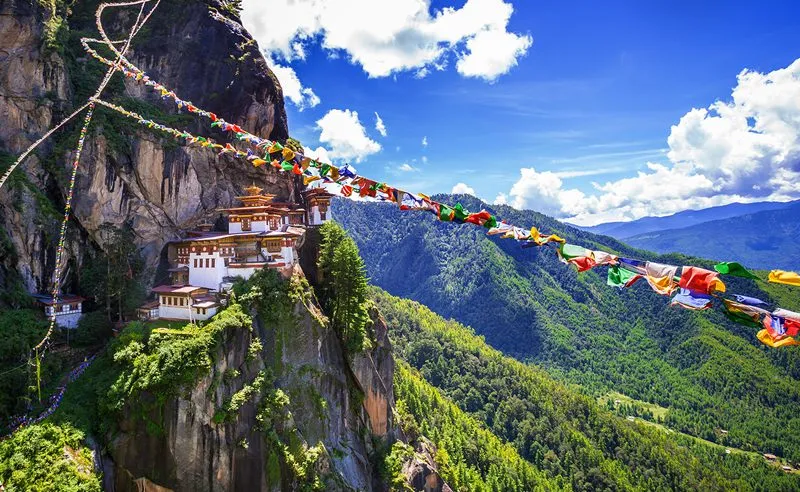
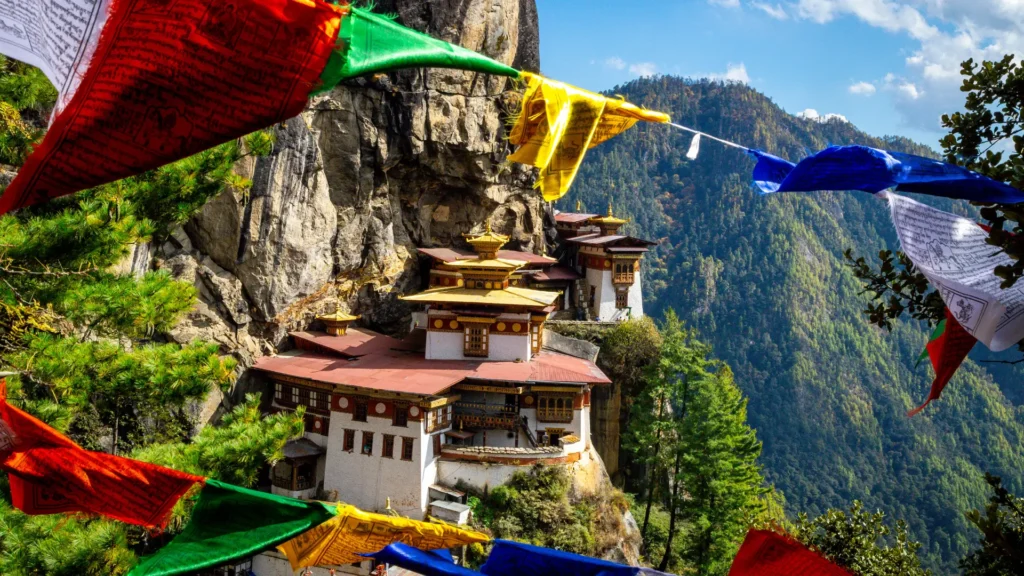
The best time for this short Bhutan tour is from March to May (spring) & September to November (autumn). These two offer the perfect balance for your itinerary: excellent weather for the Tiger’s Nest hike, clear mountain views, comfortable driving, and vibrant cultural experiences.
Seasonal Breakdown
Spring (March to May)
- Weather: Pleasant daytime temperatures (15–25°C in Paro/Thimphu). Flowers in full bloom.
- Seasonal Beauty: Valleys explode with rhododendrons, magnolias, and wildflowers. The landscape looks lush and colorful.
- Trekking Conditions: Ideal for the Tiger’s Nest hike. Trails are dry to moderately dry, and the weather is stable.
- Festivals: Paro Tshechu (usually late March–early April) is one of Bhutan’s biggest and most spectacular festivals, perfect if your dates align.
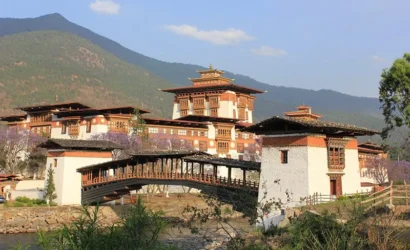
- Pros for your tour: Best lighting for photos of Tiger’s Nest and Punakha Dzong. Fewer crowds than in autumn.
- Cons: Occasional light rain is possible in May.
Autumn (September to November)
- Weather: Crisp, clear skies and comfortable temperatures (12–22°C).
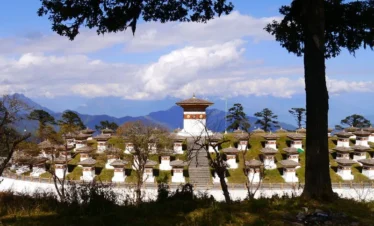
- Seasonal Beauty: Post-monsoon clarity gives you the sharpest views of the Himalayas, including Gangkar Puensum from Dochula Pass. Golden rice fields in Punakha.
- Trekking Conditions: Best of the year. The Tiger’s Nest hike features dry trails and excellent visibility.
- Festivals: Thimphu Tshechu (usually September) is a major highlight if your trip overlaps.
- Pros for your tour: Most reliable weather for scenic drives and mountain panoramas.
- Cons: Peak tourist season books early.
What to Pack for a 4-day Bhutan Tour Package?
This short but scenic Bhutan trip involves altitude changes (up to 3,120m at Tiger’s Nest), one moderate hike, scenic drives, and visits to sacred monasteries.
Packing smart will make your journey more comfortable and enjoyable.
Essential Gear & Equipment
Clothing & Layering (Most Important)
- Lightweight base layers (moisture-wicking t-shirts)
- Fleece jacket or warm mid-layer
- Waterproof/windproof outer jacket (essential for Dochula Pass and Tiger’s Nest)
- Comfortable trekking pants (2 pairs)
- Warm hat, gloves, and scarf (especially for early mornings and passes)
- Sunglasses with UV protection
- Comfortable walking shoes with good grip (mandatory for Tiger’s Nest hike)
- Sandals or slippers for hotel use
Dress Code Note: Bhutan requires modest clothing when visiting dzongs and monasteries. Shoulders and knees must be covered.
Traditional kira (for women) or gho (for men) are not mandatory for tourists but are appreciated.
Hiking & Trekking Essentials
- Daypack (20–30L) for Tiger’s Nest hike
- Trekking poles (highly recommended for the steep sections)
- Reusable water bottle (1–2 liters)
- Headlamp or flashlight (in case of early/late hikes)
- Rain cover for your backpack
Health & Altitude
- Altitude sickness medication (Diamox)—consult your doctor
- Basic first-aid kit (band-aids, antiseptic, painkillers, motion sickness tablets)
- Sunscreen (SPF 50+), lip balm with SPF, and moisturizer (air is very dry)
- Personal medications and copies of prescriptions
- Hand sanitizer and face masks (still useful in monasteries)
Documents & Travel Papers
- Valid passport (minimum 6 months’ validity)
- We provide a Bhutan e-Visa approval letter
- Travel insurance (covering high-altitude trekking and medical evacuation)
- 2–3 passport-size photos (for permits)
- Cash (US dollars in small denominations)—cards are not widely accepted
Electronics & Accessories
- Power bank (10,000mAh+)
- Universal travel adapter (Bhutan uses Type C, D, G plugs)
- Camera with extra batteries (photography is one of the highlights)
- Offline maps or downloaded Google Maps (the internet can be slow)
Other Useful Items
- Snacks/energy bars (especially useful on hike days)
- Reusable shopping bag
- Small binoculars (great for spotting Himalayan peaks from Dochula Pass)
- Earplugs and an eye mask (for better sleep)
- Eco-friendly toiletries (Bhutan is very environmentally conscious)
Accommodation
Accommodation during the 4-Day Bhutan Tour Package is thoughtfully selected across comfortable 3-star, 4-star, and premium boutique hotels in Bhutan, with stays in key destinations like Thimphu and Paro Valley.
Travelers can choose upgraded luxury 5-star resorts and heritage-style properties offering valley views, spa facilities, and premium hospitality for a more refined experience.
For a more authentic touch, carefully selected local boutique lodges and family-run stays provide warm Bhutanese hospitality and cultural immersion.
Upgrade options include valley-view rooms, honeymoon suites, private villas, and premium wellness resorts, allowing each traveler to tailor comfort and experience according to their preference.
Travel Tips
Visa process
We arrange Bhutan tour packages for travelers from all around the world. Travelers should note that independent travel is generally not permitted in Bhutan, and international visitors must book through a licensed Bhutan tour operator, such as Tour in Bhutan.
For Indian travelers, a travel permit or pre-approval is required before entering Bhutan.
International travelers receive their Bhutan visa approval in advance, while the actual visa is stamped upon arrival at Paro International Airport.
All travelers must carry a passport valid for at least 6 months from the date of travel. The Bhutan visa fee is USD $40 per person, which is separate from the Sustainable Development Fee (SDF). Our team assists you with the complete visa and travel permit process to ensure a smooth and hassle-free journey to Bhutan.
Getting there
Only Drukair and Bhutan Airlines fly into Paro (PBH), one of the world’s most scenic and technically demanding landings. Connections from Delhi, Kolkata, Kathmandu, Bangkok, Singapore, Mumbai, and Bagdogra.
Cultural rules
Cover your shoulders and knees at religious sites. Ask before photographing people or sacred objects. No tobacco sales/import (fine). Plastic bags are banned. Dress code for dzongs: traditional kira/gho preferred.
Connectivity
B-Mobile and TashiCell SIM cards are available at Paro airport. 4G coverage in Thimphu, Paro, and Punakha. Remote areas: limited/no signal. Bhutan country code: +975.
Altitude & health
Thimphu sits at 2,334 m and Paro at 2,250 m. Mild altitude awareness needed. The Tiger’s Nest hike reaches 3,120m.
No altitude medication is usually needed; hydrate well. No vaccinations are mandatory, but hepatitis A/B is recommended.
Special Interest Activities
All activities are optional add-ons to the private, tailor-made tour package. Contact us to customize your itinerary. Tours run year-round.
Activity 1: Gross National Happiness, Thimphu: USD 150–200 per group, 1 hour
Bhutan measures progress not by GDP but through Gross National Happiness, a concept first coined by the 4th King, Jigme Singye Wangchuck, in 1972.
A philosopher in Thimphu gives a detailed talk on how spiritual and material development work together to build a truly happy society.
Activity 2: Buddhism talk by a monk, Thimphu: USD 150–200 per group, 1 hour
Bhutan is the world’s only Buddhist kingdom, practicing Vajrayana Buddhism with roots in Tibetan tradition.
A recognized monk explains the Four Noble Truths, the Eightfold Path, and the distinctive rituals, liturgy, and monastic organization that define Bhutanese Buddhism.
Activity 3: Flora & fauna talk by a forest ranger, Thimphu: USD 120–150 per group, 1 hour
With over 70% forest cover, Bhutan is home to snow leopards, Bengal tigers, red pandas, over 670 bird species, 46 rhododendron varieties, and 300+ medicinal plants.
A trained forest ranger walks you through all three altitude zones: tropical foothills, temperate forests, and the alpine Himalayan region.
Activity 4: Helicopter ride Paro (departs) Price on request
Operated by Royal Bhutan Helicopter Services (est. 2015), chartered flights carry up to 5 passengers. A 30–60 min flight circles Taktsang Monastery (Tiger’s Nest).
A longer 70–130 min flight sweeps past Tiger’s Nest to the holy Jomolhari peak, with panoramic views of snowy summits and valleys.
Activity 5: Bhutanese cooking class, Paro (farmhouse), USD 20–30 per person
Learn to cook traditional Bhutanese meals at a local farmhouse. The hallmark of Bhutanese cuisine is the bold use of cheese and chilies.
You’ll prepare dishes including Ema Datsi, the national dish, a spicy mix of chilies and local cheese, alongside red rice and traditional curries.
Activity 6: River rafting, Punakha, USD 100–150 per boat (up to 6)
Raft at the confluence of the Po-chhu (male river) and Mo-chhu (female river).
The Po-chhu offers adventurous Class II–III+ rapids past the longest suspension bridge.
The Mo-chhu (Class I–II, ~10 km) is gentler and ideal for children with views of migratory birds and the royal palace.
Activity 7: Bhutanese cultural show USD 100–150 per group
A three-part performance by experienced dancers and singers in full traditional costume. Includes folk dances and singing (with audience participation); religious Chams’ sacred mask dances with religious chants; and a nomadic performance featuring the Joenpa Legso welcome dance, Shazam Cham (dance of deer), and flute dances.
Activity 8: Archery experience, Paro, USD 10–15 per person for 30 minutes.
Archery is Bhutan’s national sport, and no festival is complete without a competition.
Try your hand at traditional bamboo bows and arrows, a practice with deep roots in Bhutanese history, where bows once served as weapons of defense and are now a source of national pride.
Activity 9: Wear traditional Bhutanese dress. Any location: USD 10 per person
Wear the traditional Gho (for men) or Kera (for women) attire, which was introduced in the 17th century by Bhutan’s unifier, Ngawang Namgyal, to preserve a distinct national identity.
Bhutanese citizens are required by law to wear these outfits in formal settings; tourists can try them for a memorable photo experience.
Activity 10: Farmhouse visit & dinner, Paro, USD 10–20 per person
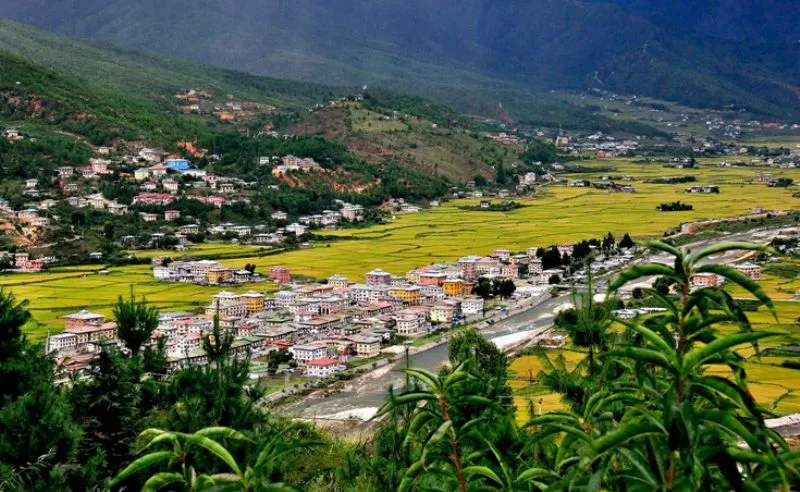
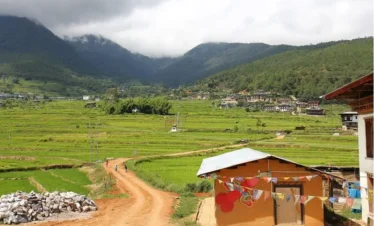
Paro Valley, Bhutan’s “rice bowl,” is known for its red rice terraces and subsistence farms growing millet, wheat, apples, and potatoes.
Visit a family farm, join their daily fieldwork, then share an authentic Bhutanese dinner with the family, rounded off with local rice wine.