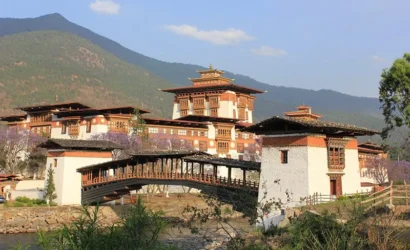
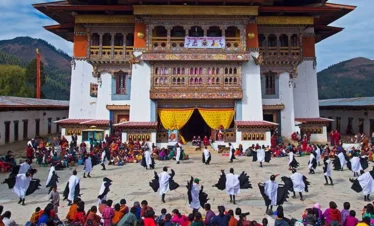
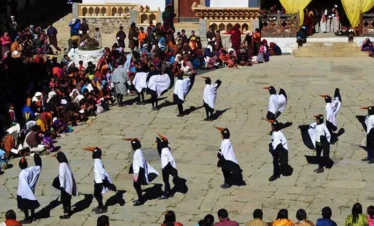
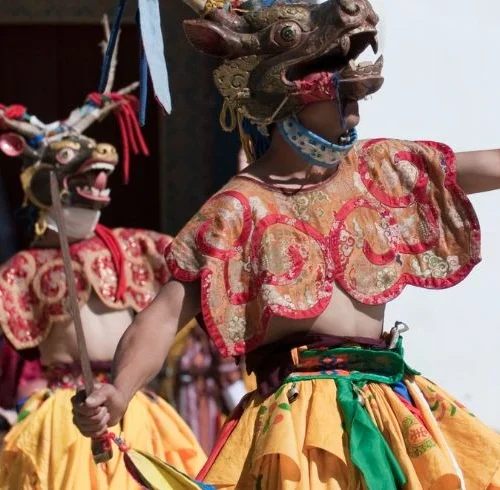
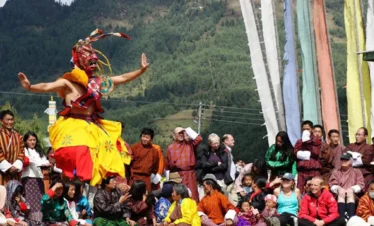
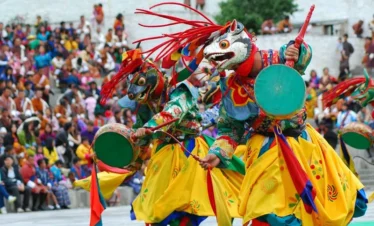
Experience the spiritual charm of Eastern Bhutan with our 14-day Gomphu Kora Tshechu Festival Tour. Witness sacred Buddhist rituals, vibrant mask dances, and centuries-old traditions at the famous Gomphu Kora Temple while exploring Bhutan’s breathtaking landscapes, monasteries, and authentic local culture. This journey offers a unique opportunity to celebrate one of Bhutan’s most meaningful festivals away from the crowds.
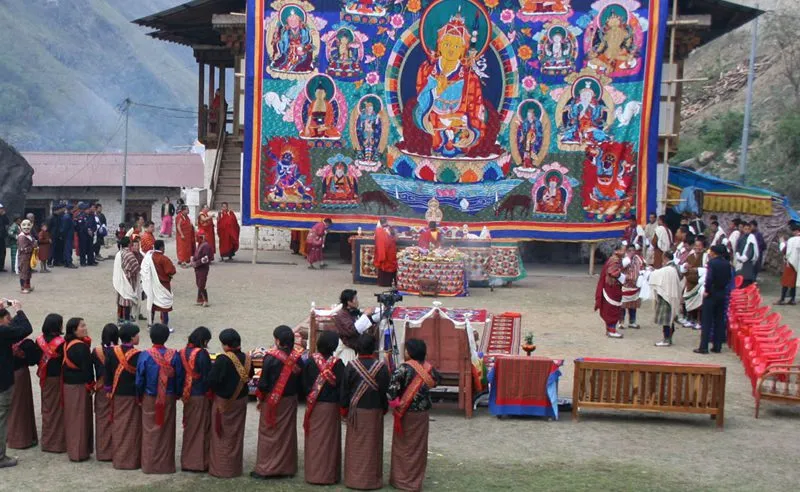
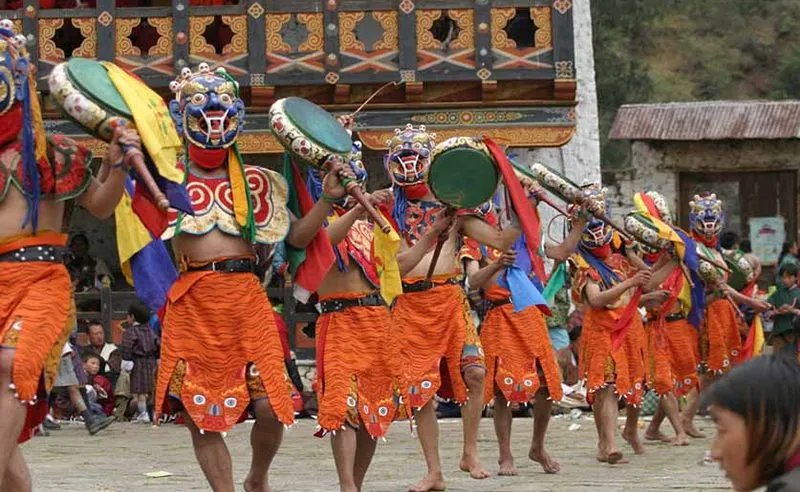
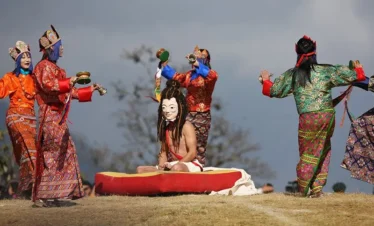
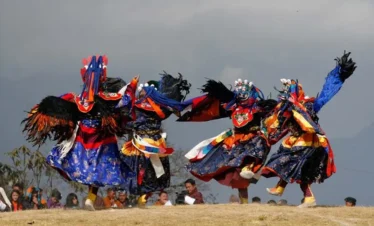
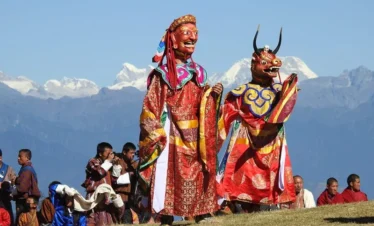
Get a chance to watch Cham mask dances, prayers, and Buddhist rituals at the Gomphu Kora Tshechu.
Explore Gomphu Kora Temple and the cave where Guru Rinpoche is believed to have meditated.
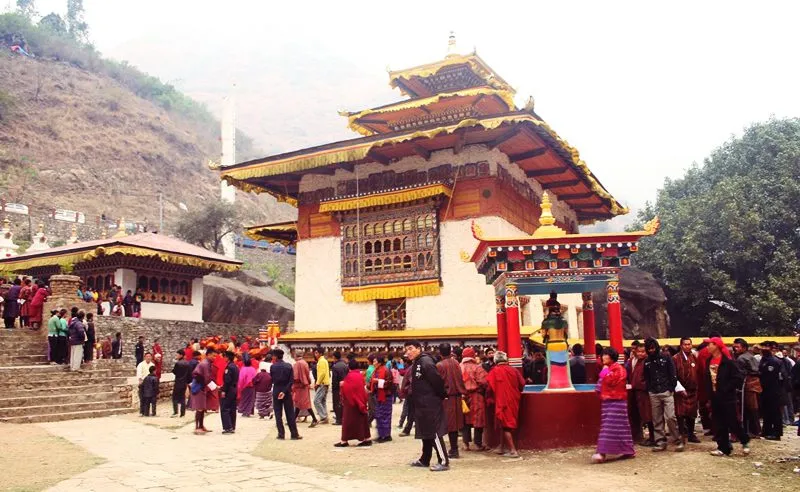
Witness thousands of pilgrims walk around the temple and pray for blessings.
Explore Trashiyangtse, Trashigang, and Mongar in remote Eastern Bhutan.
Visit Jambay Lhakhang, Kurjey Lhakhang, and Jakar Dzong in Bumthang.
Cross Dochula Pass (3,140 m) and Thrumshing La (3,750 m) on scenic mountain roads.
Explore Bumthang, home to some of Bhutan’s oldest temples and monasteries.
Hike to Paro Taktsang (Tiger’s Nest) and enjoy views over the Paro Valley.
Experience the Gomphu Kora pilgrimage, Eastern Bhutanese villages, local traditions, and festival celebrations during this 14-day journey.
Quick Facts
Trip Duration
14 Days / 13 Nights
Festival
Gomphu Kora Tshechu
Location
Trashiyangtse, Eastern Bhutan
Festival Season
March / April
Tour Type
Cultural & Festival Tour
Difficulty
Easy
Maximum Altitude
3,750 m (Thrumshing La Pass)
Accommodation
Hotels
Transportation
Private Vehicle
Best For
Culture, Pilgrimage & Photography
Overview of Gomphu Kora Tshechu
Step into the spiritual heart of Eastern Bhutan on our Gomphu Kora Tshechu Festival Tour and experience one of Bhutan’s most sacred and lesser-known Buddhist festivals. Set in the peaceful valleys of Trashiyangtse, this unique festival offers a rare chance to see Bhutanese traditions, religious rituals, and local life in a setting far from the country’s busy tourist routes.
Unlike the larger Paro and Thimphu Tshechus, Gomphu Kora Tshechu offers a more intimate and authentic experience. With fewer international visitors, you can enjoy the festival at a relaxed pace and witness sacred ceremonies, colorful mask dances, traditional music, local devotion, and pilgrims performing their religious rituals. You can also meet local people and experience the warm community atmosphere that makes Eastern Bhutan so special.
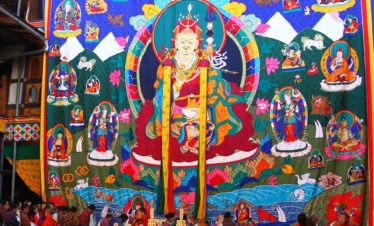
Held every spring at the sacred Gomphu Kora Temple, the festival honors Guru Rinpoche, one of the most important figures in Bhutanese Buddhism. According to local legend, Guru Rinpoche meditated at this sacred site and subdued a powerful demon. During the festival, thousands of devotees travel from Eastern Bhutan and neighboring regions to circle the temple, offer prayers, receive blessings, and pay their respects at this important pilgrimage site.
The Gomphu Kora Tshechu is more than a cultural festival; it is a deeply spiritual experience. You can watch centuries-old Buddhist traditions come to life, observe pilgrims in prayer, and learn more about Bhutan’s living religious heritage. The peaceful surroundings of Trashiyangtse make the experience even more memorable.
Our Gomphu Kora Festival Tour Packagecombines the festival with the natural and cultural highlights of Eastern Bhutan. Travel through spectacular Himalayan landscapes, visit ancient monasteries and temples, explore traditional villages, enjoy scenic mountain drives, and connect with local communities along the way.
Whether you are a cultural traveler, spiritual seeker, photographer, or adventurous explorer, this tour offers a chance to discover a quieter and more authentic side of Bhutan. Join us to experience the sacred Gomphu Kora Tshechu, explore the remote beauty of Eastern Bhutan, and create unforgettable memories far beyond the usual tourist trail.
Gomphu Kora Tshechu Festival Dates 2026, 2027 & 2028
The Gomphu Kora Tshechu takes place annually at Gomphu Kora Temple in Trashiyangtse District, Eastern Bhutan, during spring, usually March or April. Thousands of pilgrims and visitors gather to watch sacred rituals, mask dances, and cultural performances.
Year
Dates
Duration
Venue
2026
26 – 28 March
3 Days
Gomphu, Kora, Lhakhang, Trashiyangtse
2027
16 – 18 March
3 Days
Gomphu, Kora, Lhakhang, Trashiyangtse
2028
Early April (Tentative)
3 Days
Gomphu Kora Lhakhang, Trashiyangtse
Note: Festival dates are based on the Bhutanese lunar calendar and should be reconfirmed before finalizing travel plans. We recommend booking your Gomphu Kora Tshechu Festival Package at least 3–4 months in advance, as flights and premium accommodations fill quickly during festival season.
What is Gomphu Kora Tshechu Festival?
The Gomphu Kora Tshechu is one of Bhutan’s oldest and most sacred Buddhist celebrations. It takes place every year at the historic Gomphu Kora Temple in Trashiyangtse District, Eastern Bhutan, and thousands of pilgrims gather to honor Guru Rinpoche through prayer, ritual, and traditional Cham dances.
According to legend, Guru Rinpoche meditated in a cave here and subdued a powerful demon, which turned the site into a major destination.
The temple complex features sacred relics, ancient Buddhist artwork, and the meditation cave associated with Guru Rinpoche.
The tradition dates back to the 8th century and centers on Guru Rinpoche (Padmasambhava), who brought Vajrayana Buddhism to Bhutan.
Monks perform Cham (mask) dances alongside Buddhist rituals, prayers, blessings, and monastic ceremonies.
Thousands of pilgrims travel here from Bhutan and neighboring Arunachal Pradesh, India, to receive blessings and earn merit.
Devotees walk clockwise around the temple during the kora, chanting prayers and spinning prayer wheels.
Travelers believe the kora purifies negative karma and brings peace, health, and prosperity.
The temple sits beside the Kulong Chhu River, surrounded by forested hills, and gives visitors a direct look at Eastern Bhutan’s Buddhist heritage and rural life.
The festival is held annually at Gomphu Kora Temple in Trashiyangtse District, Eastern Bhutan.
Gomphu Kora Tshechu Festival Tour Itinerary
Day 01 :
Arrival Paro (2250m) – Thimphu (2350m)
Arrive in Paro by the Bhutanese National Carrier, flying over the world’s highest mountains and finally landing at the lush green Paro valley. A cool and clean fresh air greets the visitor as they step down from the plane, the first gift of Bhutan. After clearing customs and visa formalities, meet our representatives and the Bhutanese guide, and take a short tour brief by the guide, then transfer to Paro town for lunch.
Then drive towards Thimphu (the capital of Bhutan) for about 1 and a half hours. En route In Thimphu, one can do a short hike to Tamchog Monastery, a private temple owned by the descendants of famous Tibetan bridge – builder Thangthong Gaylpo. Later on, continue the drive to Thimphu.
In Thimphu, visit Buddha point for a stunning view of Thimphu city and Takin Compound- on the way to the viewpoint over Thimphu is the home of Bhutan’s national animal, the Takin. Then continue to Tashi Choe Dzong- the fortress of the glorious religion was initially constructed in 1641 and rebuilt by King Jigme Dorji Wangchuk in the 1960s, Folk Heritage Museum – a 300 year old traditional house converted into a museum, Centenary Farmers Market, the new authentic craft bazaar.
Overnight at Hotel (lunch/dinner included)
Day 02 :
Thimphu – Punakha (1310m)
After early breakfast, drive towards Punakha for about 3 hours passing along Dochu La Pass at 3140m. On clear weather, the pass commands a wonderful panorama of the Eastern Himalayas. From the pass, the road descends through varied forest and finally emerging into the highly cultivated valley of Punakha.
En-route take a short hike through beautiful rice fields to Chimmi Lhakhang, a temple dedicated to Drukpa Kuenley, who as a favorite saint of the Bhutanese people is known affectionately as “the Divine Madman”.
In the afternoon, visit Punakha Dzong. Located at the confluence of the Pho-chu (male-river) and Mo-chu (female-river), the Punakha Dzong is arguably the most impressive dzong in the country.
Overnight at Hotel.(Breakfast/Lunch/Dinner included)
Day 03 :
Punakha – Gangtey (2320m)
Drive to Wangduephodrang Dzong, which is perched on a spur at the confluence of two rivers. The position of the Dzong is remarkable as it completely covers the spur and commands an impressive view both up and down the valley.
Then drive up a winding mountain road through oak and rhododendron forest, and over a high pass down into the Phobjikha valley, surely one of the loveliest high altitude valleys in Bhutan. Phobjikha is one of Bhutan’s few glacial valleys, and chosen winter home of black-necked cranes, migrating from the Tibetan plateau.
Enjoy 1½ hours Gangtey nature trail from the monastery through the jungle before emerging to the valley floor.
Overnight at Hotel.(Breakfast/Lunch/Dinner included)
Day 04 :
Gangtey – Bumthang (2800m)
Today, we drive 5 hours to Bumthang valley. The road climbs rapidly through a series of hairpins out of Trongsa and there are great views back to the Dzong and out across the valley.
After passing through cultivated fields for a while, the trail re-enters the forest and reach the Yotong La (3400m). Descending to a low point of 2650m at a village called Chumey; the scenery is once again totally different as the route enters the wide-open Bumthang valleys.
It takes about an hour to get to the roadside at Chumey, the first of the four valleys in Bumthang.
Overnight at Hotel.(Breakfast/Lunch/Dinner included)
Day 05 :
In Bumthang – Sightseeing
In the morning visit Kurje Lhakhang, one of the most sacred places in the kingdom as Bhutan’s “patron saint”, Guru Rinpoche (Padmasambhava) meditated here. From Kurje monastery, a tarmac road heads south along the right bank of the river to Jambey Lhakhang.
This temple, erected by the Tibetan king Songtsen Gampo in the 7th century, is one of the two oldest in Bhutan (the other being Kyichu Lhakhang in Paro). After lunch, hike to Tamshing Lhakhang, founded in 1501 by Pema Lingpa. It contains interesting and ancient Buddhist wall paintings. Later, visit Jakar Dzong, “the castle of the white bird”, and then take a stroll through Bumthang’s market area before returning to the hotel.
Overnight at Hotel.(Breakfast/Lunch/Dinner included)
Day 06 :
Bumthang – Mongar (1700m)
Today is the longest day so wake up earlier than usual as a 7-8 hours drive to Mongar from Bhumthang. During this 184 kms trip on hilly roads, witness varieties of floras and faunas passing through Ura valley, one of the most beautiful valley’s of Bhutan. All kinds of vegetations await en-route. You will reach in Mongar before dusk. Evening: Go round Mongar town.
Overnight at Hotel. (Breakfast/Lunch/Dinner included)
Day 07 :
Mongar – Trashigang (3773m)
Morning: visit Mongar Dzong. The Dzong was built with a tradition touch in 1930s, and is the newest Dzong in the Dragon County. The Dzong was reconstructed following an order from the royals in the recent past. The Dzong is unique and traditional at the same time.
The Dzong is a perfect example of modernization of Bhutanese architecture. After this visit drive back to Trashigang by crossing over Korila Pass reaching Trashigang by mid afternoon. In Trashigang, visit Trashigang Dzong. The Dzong was built in 1659 to defend the country from Tibetan invasions.
Likewise, the Dzong is said to be have political stronghold of Eastern Bhutan for over 300 years. It is one of the strategically placed Dzongs in Bhutan. The current Dzong is made bigger in 1936.
Overnight at Hotel. (Breakfast/Lunch/Dinner included)
Day 08 :
Trashigang (Gomphu Kora Festival)
After breakfast, drive to Gomphu Kora Monastery to attend the festival and interacting with the locals. To celebrate people from all over the eastern Bhutan including neighboring Indian state of Arunachal Pardesh have gathered here with their best attires to take part in the festivities. After the festival, drive back to Trashigang.
Overnight at Hotel.(Breakfast/Lunch/Dinner included)
(Option 1)Day 09 :
Trashigang – Mongar (1700m)
In the morning, proceed towards Gom Kora. It is one of the temples where Guru Rinpoche, the great tantric meditated. After spending around a full day in this divine place drive back to Mongar for overnight stay.
Overnight at Hotel. (Breakfast/Lunch/Dinner included)
(Option 2)Day 09 :
Trashigang-Samdrup Jongkhar (450m)
After breakfast drive proceeds towards Samdrup Jongkhar with lunch en-route and the drive is about 8-9 hrs. En-route, visit Khaling the weaving center under women association of Bhutan where one can see all the process and materials involved in weaving.
Overnight at Hotel. (Breakfast/Lunch/Dinner included)
Day 10 :
Mongar – Trongsa (2200m)
This day is all about being on the roadways where occasional stops will be made in gorgeous places for photography. The journey will start form Mongar towards Trongsa which is around 250 kms. It requires around 6-7 hours reaching the destination. In the evening, go around Trongsa village for a short hike.
Overnight at Hotel. (Breakfast/Lunch/Dinner included)
Day 11 :
Trongsa – Gangtey Valley– Wangdue (1310m)
Once again like previous days, the day follows a road trip driving to Wangdiphodrang via Gangtey in the morning. En-route, a stop will be made at Gangtey Gompa. It is an important monastery of Nyingmapa school of Buddhism also the main seat of the Pema Lingpa tradition. Likewise, stop at Phobijikha valley, famous for the Black Necked Cranes during winter. Reach Wangdue in the evening.
Overnight at Hotel.(Breakfast/Lunch/Dinner included)
Day 12 :
Wangdue – Paro (2250m)
After breakfast, drive back to Paro which is about 4 hours drive. PM: Stroll around the streets of Paro.
Overnight at Hotel.(Breakfast/Lunch/Dinner included)
Day 13 :
Hike to Taktsang Monastery ‘Tiger’s Nest’ (3120m)
This morning, make an excursion to Taktsang Monastery – this has to be the monastery with the most outstanding setting in Bhutan. Set on a vertical cliff face at 2950m above sea level, it defies all engineering logic. For the energetic, hike 2 hours up to get a more dramatic view of the monastery.
(The hike demands a certain level of fitness and a pony ride to the monastery can be arranged at additional cost). Just on the outskirts of Paro town, visit Kyichu Lhakang, one of the oldest temples in Bhutan and have the opportunity to meet the local villages in a local farm house.
Overnight at Hotel.(Breakfast/Lunch/Dinner included)
Day 14 :
Paro depart
After breakfast, transfer to the airport to catch the onward flight. Bid farewell to the remote and legendary Dragon Kingdom disappearing again behind its guardian mountains.(Breakfast only included)
Includes/Excludes
The Package Includes
Airport pick-up and drop-off by private vehicle.
3-star accommodation (4 & 5 stars may require an additional premium).
Bhutan visa fee—including all necessary processing
Route Permit
Three meals per day during your stay in Bhutan
A licensed Bhutanese tour guide
All land transportation by private vehicle
Camping equipment and haulage for trekking tours
Sightseeing as per itinerary
Monuments entrance fees where applicable
Drinking water
All internal taxes and charges
A sustainable development fee of $100. (This sustainable development fee goes towards free education, free healthcare, poverty alleviation, along with the building of infrastructure.)
The Package Excludes
Airfare & Travel Insurance
Expenses of personal nature, tips to guides and drivers
Expenses occurred due to unavoidable events, i.e., road wrecks, flight delays, etc.
Trip Map
Map
Frequently Asked Questions
It's one of Bhutan's oldest Buddhist festivals, held annually at Gomphu Kora Temple in Trashiyangtse. It honors Guru Rinpoche through Cham dances, Buddhist ritual, prayer, blessings, and the kora, which thousands of pilgrims perform.
It sits in Trashiyangtse District, Eastern Bhutan, about 24 km north of Trashigang, beside the Kulong Chhu River. Most travelers visit it as part of an Eastern Bhutan cultural tour.
The Gomphu Kora Festival is celebrated every March or April, according to the Bhutanese lunar calendar. Bhutanese religious authorities set the exact dates each year.
Yes. International visitors can attend by booking through a licensed Bhutanese tour operator, who arranges the visa, guide, and logistics.
Plan 12 to 14 days to experience the festival and explore Paro, Thimphu, Punakha, Bumthang, Mongar, Trashigang, and Eastern Bhutan.
Yes. It ranks among the safest regions in the country, with friendly communities, peaceful surroundings, and experienced local drivers.
Cover your shoulders and knees, wear comfortable walking shoes, and bring a light jacket for cool mornings and evenings.
Prices vary with itinerary, accommodation, and group size. Most packages include hotels, meals, a licensed guide, private transportation, visa processing, festival visits, and the SDF.
Yes. Most travelers combine Gomphu Kora with Bumthang, Paro, Thimphu, Punakha, and Mongar for a fuller Bhutan trip.
The temple stands around the cave where Guru Rinpoche is said to have subdued a powerful demon, which makes it one of Eastern Bhutan's most important pilgrimage sites.
Yes, it combines Bhutan's famous Western highlights with Eastern Bhutan's authentic culture and spiritual tradition, which makes it a strong introduction to the country.
Roads run mountainous but are well maintained, through scenic forests, valleys, and high passes. Experienced local drivers handle the private vehicles that carry you through.
Yes. We offer flexible durations, hotel upgrades, extra sightseeing, and optional add-ons like Tiger's Nest Monastery and Bumthang.
14. What makes Gomphu Kora different from other Bhutan festivals?
Unlike the larger festivals in Paro and Thimphu, Gomphu Kora runs primarily as a pilgrimage with fewer crowds, stronger local participation, and a more spiritual atmosphere.
Book 4–6 months ahead, especially for spring departures, to lock in your preferred hotels, guides, and festival arrangements.
Additional Travel Info
How Much Does a Gomphu Kora Tshechu Festival Tour Cost?
Planning a trip to Bhutan is a unique experience. The cost of the Gomphu Kora Tshechu Festival Tour package depends on how keen you are to explore this beautiful Himalayan kingdom. Unlike standard holiday packages with fixed prices, every Bhutan journey is customized to your travel preferences, interests, and budget. The total cost of our Bhutan trip may vary based on several factors, including:
Number of travelers: Private tours, family holidays, and group trips have different pricing structures.
Accommodation choice: Select from comfortable 3-star hotels, premium 4-star stays, luxury 5-star properties, or exclusive luxury accommodations.
Travel season and dates: Bhutan tour costs can change depending on peak seasons, festivals, and travel availability.
Trip duration: The number of days you spend exploring Bhutan’s cultural landmarks, monasteries, valleys, and natural landscapes affects the overall cost.
Customized experiences: Special activities, private guides, unique cultural experiences, trekking options, and personal requests can influence your final package price.
Since every traveller has different expectations, we do not offer fixed prices for our Bhutan tour packages. Instead, our Bhutan travel experts create a personalized itinerary and detailed quotation based on your requirements, ensuring you receive the best value for your journey.
Just share your preferred travel dates, group size, accommodation preferences, and travel interests with us. We will design a customized itinerary with a transparent cost breakdown and no obligation to book.
Gomphu Kora is a sacred pilgrimage site in the remote Trashiyangtse District of Eastern Bhutan. The Kulong Chhu River runs beside it, and forests surround it on every side, so you get an authentic experience well off Bhutan’s main tourist circuit.
It sits in Trashiyangtse District, Eastern Bhutan.
It lies roughly 24 km (15 miles) north of Trashigang.
The drive from Trashigang takes 45 minutes to an hour.
The temple sits beside the Kulong Chhu River.
Forested hills and traditional villages surround it.
Travelers commonly combine it with visits to Mongar, Trashigang, Trashiyangtse, and Bumthang.
During the annual festival, thousands of pilgrims gather here to perform the kora and receive blessings.
Why Visit Gomphu Kora Festival?
The festival is smaller and more intimate than Paro or Thimphu Tshechu in the quiet landscapes of Eastern Bhutan. It runs smaller and more intimate than Paro or Thimphu, so you actually get to watch sacred rituals up close, talk with pilgrims, and take in Bhutan’s culture without a crowd between you and it.
Witness an ancient Buddhist pilgrimage.
Watch thousands of pilgrims perform the kora around Gomphu Kora Temple.
Receive blessings from Buddhist monks and observe centuries-old rituals.
Take part in quiet prayer, butter lamp offerings, and overnight pilgrimage.
Learn about one of Eastern Bhutan’s most important spiritual traditions.
Watch traditional Bhutanese festival performances
Watch monks perform colorful Cham (mask) dances.
Observe sacred rituals and monastic ceremonies.
Take in traditional music, prayer, and community celebration.
Learn about Bhutan’s religious and cultural heritage.
Get to know authentic Eastern Bhutan culture.
Visit traditional villages and meet local communities.
Experience genuine Bhutanese hospitality and rural life.
See handmade textiles and regional craftsmanship up close.
Learn Eastern Bhutan’s customs and traditions from the people who keep them.
Explore Bhutan beyond the usual routes
Discover the remote corners of Eastern Bhutan.
Cross scenic mountain passes, forests, and river valleys.
Skip the crowds you’d find at Bhutan’s more famous festivals.
Get an off-the-beaten-path cultural experience.
History and Legend of Gomphu Kora
Gomphu Kora’s history ties directly to Guru Rinpoche (Padmasambhava) and forms one of Eastern Bhutan’s most important Buddhist legends. The temple stands around a meditation cave where Guru Rinpoche is said to have subdued a powerful demon, which turned the site into one of Bhutan’s most revered pilgrimage destinations.
The legend of the demon: A giant serpent-like demon once terrorized the region. Guru Rinpoche meditated in a cave and subdued it through his spiritual power, transforming the demon’s negative energy into a protector of Buddhism. The story represents wisdom and compassion winning out over evil.
Guru Rinpoche’s meditation cave: The temple stands around this sacred cave, one of the holiest sites in Eastern Bhutan. Pilgrims come here to pray, meditate, and light butter lamps, believing the site brings peace, blessings, and merit.
Why pilgrims circle the temple: Pilgrims walk the kora clockwise around the temple, chanting prayers, spinning prayer wheels, and reciting mantras. They believe the ritual purifies negative karma and builds merit; many complete it several times over, especially on festival night.
A sacred pilgrimage in Eastern Bhutan: Thousands of pilgrims travel here from Bhutan and neighboring Arunachal Pradesh, India, each year. The festival strengthens faith, family bonds, and centuries-old Buddhist tradition, and it gives visitors a genuine spiritual pilgrimage in one of Bhutan’s most peaceful, culturally rich regions.
Festival Highlights
The Gomphu Kora Tshechu Festival Tour offers an unforgettable blend of spirituality, culture, and natural beauty. From sacred Buddhist ceremonies to scenic Himalayan landscapes, here are some of the highlights you can look forward to during your journey:
Attend the Gomphu Kora Tshechu and take part in one of Eastern Bhutan’s most important religious celebrations.
Receive blessings from Buddhist monks and watch centuries-old rituals at the Gomphu Kora Temple.
Watch monks perform Cham (mask) dances in costumes that depict Buddhist teachings and legends.
Visit the Gomphu Kora Temple and Guru Rinpoche’s meditation cave.
Watch thousands of pilgrims perform the kora around the temple while chanting prayers.
Meet local communities and learn about daily life and tradition in Eastern Bhutan.
Explore traditional villages, ancient monasteries, and valleys that mass tourism hasn’t reached.
Take in Himalayan scenery, forests, rivers, mountain passes, and open countryside.
Enjoy Bhutanese hospitality and local cuisine throughout your trip.
Photograph sacred temples, the festival, traditional architecture, and Eastern Bhutan’s landscapes.
Places You’ll Visit During the Gomphu Kora Tshechu Festival Tour
Paro: Your trip starts in the Paro Valley, home to Bhutan’s only international airport and some of its most iconic sites. Mountains and farmland surround the town, known for its history, architecture, and monasteries. Here you’ll see Tiger’s Nest Monastery (Taktsang), Kyichu Lhakhang, one of Bhutan’s oldest temples, and Paro’s shops and cafés.
Thimphu: Bhutan’s capital blends old and new. Visit the Buddha Dordenma, Tashichho Dzong, the National Memorial Chorten, and museums that trace Bhutan’s history and art. Despite being the country’s largest city, Thimphu has no traffic lights and keeps a genuinely calm pace.
Trongsa: Trongsa, in central Bhutan, holds major historical weight. Trongsa Dzong, perched on a mountain ridge, has shaped Bhutan’s political and royal history for centuries and remains the royal family’s ancestral home. Explore its architecture, history, and the views from its ridge.
Bumthang: Bhutan’s spiritual heartland, spanning four valleys filled with temples, monasteries, and villages. Visit Jambay Lhakhang, Kurjey Lhakhang, Tamshing Monastery, and Jakar Dzong, and learn how Guru Rinpoche shaped Bhutanese Buddhism here.
Mongar: Your trip moves into Eastern Bhutan at Mongar, a hillside town surrounded by forest, valleys, and terraced fields, known for its traditional architecture. You’ll reach it by crossing Thrumshing La Pass, one of Bhutan’s most scenic drives.
Trashigang: Trashigang serves as the gateway to Eastern Bhutan, the region’s largest town and a cultural and trading center. Trashigang Dzong sits above the Drangme Chhu River, and the town gives you a solid look at eastern Bhutanese culture, markets, and hospitality before the Gomphu Kora Festival.
Trashiyangtse: Northeast of Trashigang: Trashiyangtse hosts the Gomphu Kora Tshechu and ranks among Bhutan’s most culturally significant districts. Mountain landscapes, monasteries, and woodcraft artisans define the district, and its remote location has kept centuries-old customs intact.
Gomphu Kora Temple: The trip’s spiritual center: Gomphu Kora Temple sits beside the Kulong Chhu River in Trashiyangtse District. Buddhist tradition holds that Guru Rinpoche meditated here to subdue a powerful demon, which made the site one of Eastern Bhutan’s most revered pilgrimage destinations. During the festival, thousands of pilgrims perform the kora, receive blessings, and watch Cham mask dances here.
Best Time to Visit Gomphu Kora Festival
Visit during spring (March–April) to catch the festival itself and Eastern Bhutan’s best weather. Thousands of local pilgrims gather at the temple during this window to receive blessings, perform rituals, and watch the Cham dances.
Spring is also one of the best times to travel in Bhutan. Rhododendrons and wildflowers bloom across the hillsides, temperatures stay mild, and clear skies open up views of the Himalayas, ideal conditions for long drives and sightseeing.
Autumn (September–November) offers stable weather and clear mountain views too, but it doesn’t line up with the festival. You can still explore Eastern Bhutan’s monasteries, villages, and landscapes in autumn; just plan for spring if you want to experience the pilgrimage and celebrations.
What Makes Gomphu Kora Different from Other Bhutan Festivals?
Bhutan runs plenty of colorful Tshechus, but Gomphu Kora stands apart. It’s not built for tourists; it’s a working pilgrimage where faith and tradition drive everything.
A real pilgrimage, not a performance: At Paro Tshechu or Thimphu Tshechu, many visitors show up mainly to watch. At Gomphu Kora, pilgrims come first; thousands travel from Eastern Bhutan and Arunachal Pradesh to pray, receive blessings, and walk the kora.
A festival run by local communities: Local Bhutanese pilgrims and nearby communities make up most of the crowd, so you see religious tradition as it’s actually practiced, not staged for an audience.
Fewer international visitors: Gomphu Kora’s remote location keeps international crowds smaller, giving you a quieter and more intimate festival experience.
A remote Himalayan setting: The Kulong Chhu River and forested hills frame the temple. Getting there is part of the experience; you cross mountain passes and pass through forest and village landscapes most travelers never see.
A deeply spiritual atmosphere: Pilgrims chant, light butter lamps, spin prayer wheels, and circle the temple continuously throughout the celebration. That atmosphere, the ritual, and the devotion make Gomphu Kora one of Bhutan’s most meaningful festivals, well beyond sightseeing.
Gomphu Kora Tshechu vs Other Bhutan Festivals
Bhutan is home to many spectacular festivals, each offering its own unique blend of Buddhist traditions, cultural performances, and local celebrations. While famous events such as Paro Tshechu and Thimphu Tshechu attract thousands of international visitors, the Gomphu Kora Tshechu Festival provides a more intimate and spiritual experience. Held in the remote eastern region of Bhutan, it is best known as an ancient pilgrimage where local devotees gather to honor Guru Rinpoche through sacred rituals, prayers, and traditional ceremonies.
The table below highlights how Gomphu Kora compares with some of Bhutan’s most popular festivals.
Festival
Location
Best Known For
Best Time to Visit
Paro Tshechu
Paro
Bhutan’s most famous festival featuring colorful Cham mask dances and religious celebrations
March / April
Thimphu Tshechu
Thimphu
Bhutan’s largest urban cultural festival with grand monastery performances
September / October
Jambay Lhakhang Drup
Bumthang
Sacred fire ritual (Mewang), religious dances, and ancient Buddhist traditions
October / November
Black-Necked Crane Festival
Phobjikha Valley
Celebration of black-necked cranes, wildlife conservation, and local culture
November
Gomphu Kora Tshechu
Trashiyangtse
Ancient Buddhist pilgrimage, sacred temple circumambulation, and authentic Eastern Bhutan culture
March / April
If you are looking for Bhutan’s most authentic spiritual festival, Gomphu Kora Tshechu is an excellent choice. Unlike the larger festivals in western Bhutan, it offers visitors the rare opportunity to witness centuries-old pilgrimage traditions, interact with local communities, and experience the peaceful atmosphere of Eastern Bhutan. For travelers looking for a more meaningful cultural experience and a unique adventure, Gomphu Kora remains one of Bhutan’s most rewarding festival experiences.
Travel Tips for Visiting Gomphu Kora Festival
A little preparation can make your Gomphu Kora Tshechu Festival Tour even more enjoyable. Keep these practical travel tips in mind before attending one of Bhutan’s most sacred pilgrimage festivals.
Dress respectfully: The Gomphu Kora Tshechu is a religious festival at a sacred temple. Cover your shoulders and knees, dress neatly, and remove your hat before entering any temple or religious building.
Follow photography etiquette: You can photograph outdoor festival areas freely, but ask your guide before shooting inside temples or during ceremonies. Skip the flash during performances and stay respectful when photographing monks or pilgrims.
Wear comfortable walking shoes; you’ll spend hours walking the temple grounds, nearby villages, and the festival site, so bring shoes with good grip.
Bring layers: Spring weather in Bhutan stays pleasant overall, but mornings, evenings, and mountain passes run cool. Layer up so you can adjust through the day.
Carry some cash: Hotels take major payment methods, but small shops and village vendors often only take cash. Keep some Bhutanese Ngultrum (BTN) on hand for snacks and souvenirs.
Respect local customs: Walk clockwise around stupas, temples, and prayer wheels. Don’t point your feet toward sacred objects, keep quiet during ceremonies, and follow your guide’s instructions at monasteries.
Stay hydrated: Eastern Bhutan involves long drives across changing elevations. Carry water, drink often, and take breaks as needed.
Why Book Our Gomphu Kora Tshechu Tour?
Licensed Bhutan Tour Operator: Travel with a trusted, licensed local company specializing in Bhutan cultural and festival tours.
Local Festival Expertise: Experience the Gomphu Kora Tshechu Festival with knowledgeable guides who understand its traditions and significance.
Experienced English-Speaking Guides: Learn about Bhutan’s history, Buddhism, and culture from professional local guides.
Comfortable Hotels: Stay in carefully selected hotels offering comfort and authentic Bhutanese hospitality.
Private Transportation: Enjoy safe and comfortable travel in a private vehicle with an experienced local driver.
Personalized Itinerary: Customize your tour to match your interests, travel style, and schedule.
Responsible Tourism: Support sustainable travel that respects local communities, culture, and the environment.
Luxury Gomphu Kora Festival Experience
Travel Bhutan in comfort with our luxury tour, built for travelers who want top-tier service and personalized attention. Stay in premium hotels and boutique lodges with strong hospitality and mountain views. Travel in a private SUV with an experienced driver and a dedicated English-speaking guide who stays with you from arrival to departure. Your flexible itinerary allows extra sightseeing, unhurried stops, and more time at the festival, based on what interests you. Stop for photos at mountain passes, rivers, monasteries, and villages, and take in Bhutan’s landscapes and culture at a relaxed pace.
Who Should Join This Tour?
The Gomphu Kora Tshechu Festival Tour is ideal for travelers who want to discover Bhutan beyond its most popular tourist attractions.
Spiritual travelers: Anyone drawn to Buddhist philosophy, sacred monasteries, meditation sites, and pilgrimage traditions.
Cultural explorers: travelers who are keen to learn local customs, festivals, architecture, and Bhutan’s way of life.
Festival photographers: a strong opportunity to shoot Cham mask dances, traditional costumes, ancient monasteries, dramatic landscapes, and genuine cultural moments.
Adventure travelers: anyone who enjoys scenic road trips, mountain landscapes, and lesser-known regions of Bhutan.
Repeat Bhutan visitors: a good choice if you’ve been before and want one of the country’s most authentic, least-visited festivals.
Couples: a peaceful holiday with scenic drives, luxury stays, and meaningful, unhurried experiences.
Solo travelers: Bhutan’s hospitality, safety, knowledgeable guides, and easy connection with local communities make the journey an easy trip to do alone.
Essential Travel Information
Bhutan visa: All international visitors (except citizens of India, Bangladesh, and the Maldives, who follow separate entry procedures) need a Bhutan tourist visa. Your licensed Bhutanese tour operator arranges the visa before you arrive.
Sustainable Development Fee (SDF): International visitors pay Bhutan’s SDF, which funds environmental conservation, cultural preservation, education, healthcare, and sustainable tourism. Your tour package normally includes this fee.
Transportation: Your tour includes private transportation with an experienced driver throughout Bhutan. Road travel gives you Bhutan’s best scenery and remains the main way to move between regions.
Accommodation: Hotels range from comfortable 3-star properties to luxury 5-star resorts and boutique lodges. We select each property for comfort, cleanliness, and genuine Bhutanese hospitality.
Internet: Most hotels, cafés, and major towns offer Wi-Fi. You can also buy a mobile SIM card with a data package after you arrive.
Currency: Bhutan uses the Bhutanese Ngultrum (BTN), pegged to the Indian Rupee (INR). Many hotels and larger shops take credit cards but carry cash for smaller towns and villages.
Electricity: Bhutan runs on 230V with Type D, F, and G sockets. Bring a universal travel adapter for your devices.
Health and safety: Bhutan ranks among the safest travel destinations in the world. Drink plenty of water, dress comfortably, apply sunscreen outdoors, and follow your guide’s advice at temples and in the mountains. We strongly recommend travel insurance covering medical emergencies and trip interruption.
Experience Bhutan’s Sacred Eastern Pilgrimage.
Discover the spiritual heart of Eastern Bhutan on our Gomphu Kora Tshechu Festival Tour. Witness ancient Buddhist tradition, Cham mask dances, and the centuries-old pilgrimage at Gomphu Kora Temple while you explore Bhutan’s Himalayan landscapes and local culture. Contact us today to customize your Gomphu Kora Tshechu Festival Tour with experienced local guides, comfortable accommodations, and a personalized itinerary.
Trip Reviews
Posted on Google
Amees Florence
Trustindex verifies that the original source of the review is Google.
Posted on Google
Ravi Jaisi
Trustindex verifies that the original source of the review is Google.
Posted on Google
Silent Shadow
Trustindex verifies that the original source of the review is Google.
Posted on Google
Bishnu Gaire
Trustindex verifies that the original source of the review is Google.
Posted on Google
Tena Rosser
Trustindex verifies that the original source of the review is Google.
Experiencing Bhutan and it’s people and it’s culture and tradtions is a beautiful travel experience in itself. It’s a magical journey into the land high up in the Himalayas. We were lucky that we found this company ‘Happiness Drukyul Holidays’ who were completely flexible, professional and up to the mark. Mr. Sonan, our guide did his job well and introduce to Bhutan’s unique culture and traditions. We learnt more of Buddhism from him. Highly recommended & thank you for this beautiful holiday experience.
Posted on Google
Landslake Chef
Trustindex verifies that the original source of the review is Google.
We did a 6 day tour with our guide Sonam. He was extremely helpful, very knowledgeable about the history and culture of Bhutan and overall friendly and relaxed. Highly recommended.
Rated Excellent by our travellers
★★★★★
“Best Bhutan Tour Operator”
“Aura Trails made our Bhutan trip absolutely unforgettable. Every detail was perfectly planned.”
Sarah M.
Australia · Cultural Tour
★★★★★
“Exceeded All Expectations”
“From landing in Paro to our last day in Thimphu, everything was seamless. Highly recommend!”
James K.
USA · Trekking Tour
★★★★★
“A Dream Come True”
“The festival tour was magical. Our guide Karma was exceptional — so much local knowledge and warmth.”
✔ Local Expertise
✔ Hand-Picked Hotels
✔ Value for money
✔ Quality Service
✔ Responsible Tourism
✔ Tailor-Made Holidays
✔ 100% Visa Approval
✔ 24/7 Customer Service
✔ No Hidden Costs