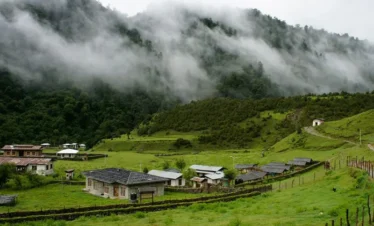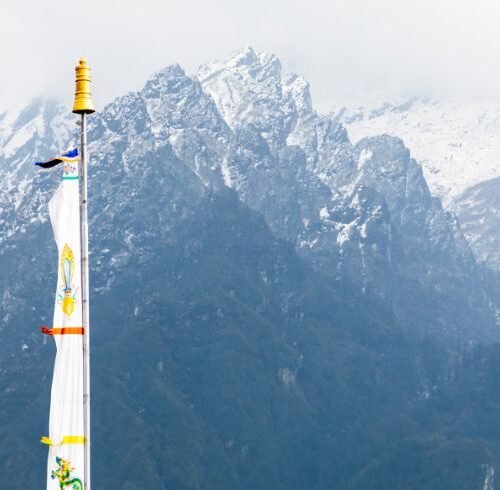
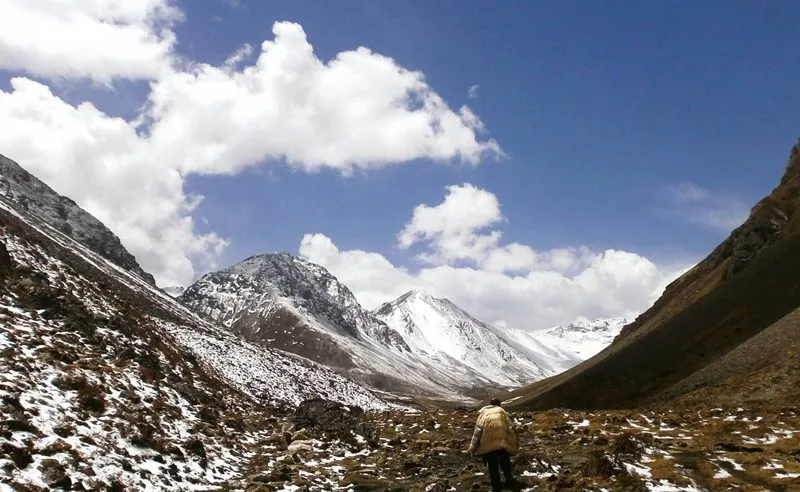
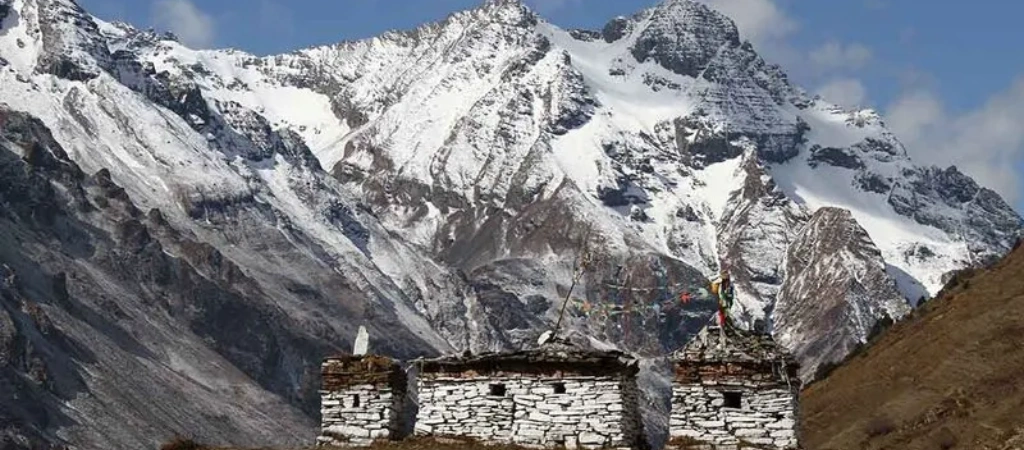
Bhutan’s Snowman Trek is one of the most remote long-distance treks in the world. This 23-day private expedition crosses 11 high-altitude passes through the restricted northern highlands, moving from Thimphu through the Gasa district and deep into the Lunana region before finishing in Paro with a hike to Tiger’s Nest.
-
5,005m/16,420ft
-
March to May and September to November
-
Full board (breakfast, lunch and dinner)
-
Government approved 3 stars and Above
-
Private car, van or bus (Depends on group size)
-
Private Tour
Highlights of the Bhutan Snowman Trek
- Cross 11 high-altitude passes, several exceeding 5,000 meters, through Bhutan’s restricted northern highlands
- Spend time in Laya, one of Bhutan’s most isolated communities, at 3,800 meters
- Trek deep into the Lunana region, accessible to fewer than 200 trekkers per year
- Camp beside Thampe Tsho, a glacial lake set in high alpine terrain above 4,000 meters
- Walk through protected wilderness covering black-necked crane habitat, blue sheep territory, and old-growth conifer forest
- Complete the route with a hike to Taktsang Palphug Monastery, Tiger’s Nest, at 3,120 meters above Paro Valley
- Travel entirely privately with a TCB-licensed guide, dedicated kitchen crew, and full camping support
- Experience Bhutan’s High Value: The low-volume tourism model in a country that limits arrivals by policy to protect exactly this kind of landscape
Quick facts
- Duration: 23 days
- Maximum altitude: 5,230 meters (Gophu La, highest pass)
- Highest camp: 4,950 meters (Chukarpo)
- Best seasons: Late September to October; late June to August
- Group size: Fully private; minimum 1, no maximum group cap
- Accommodation: Hotels in Thimphu, Punakha, and Paro; full camping on all trekking days
- Transportation: Private vehicle from Thimphu to Tashithang trailhead; private vehicle from Sephu to Thimphu on exit
- Starting point: Paro International Airport
- Ending point: Paro International Airport
- Meals: All meals included throughout, hotel meals in cities, full kitchen crew on trek
- Permits required: Bhutan visa, trekking permit, Jigme Dorji National Park permit, Lunana restricted area permit
- Physical requirement: High; prior high-altitude trekking experience above 4,000 meters required
- SDF: USD 100 per person per night, fully included
Overview of Snowman Trek
The Snowman Trek is widely regarded as one of the hardest and most rewarding long-distance treks on Earth. Recognized by the Tourism Council of Bhutan as the country’s longest trekking trail, the route traverses the northern frontier of the kingdom along the Tibetan border, rising to a highest point of 5,230 meters at the Gophu La pass and dropping as low as 2,850 meters at Sephu.
It was created by the yak herders of Bhutan’s high valleys and passes through terrain so isolated that fewer than 200 trekkers complete the full route in any given year. Since records began in 1982, the total number of full completions stands at roughly 500, which is fewer than the number of people who have orbited the Earth. The route begins with acclimatization days in Thimphu and Punakha before the trek itself starts at Tashithang.
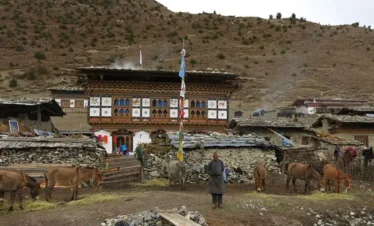
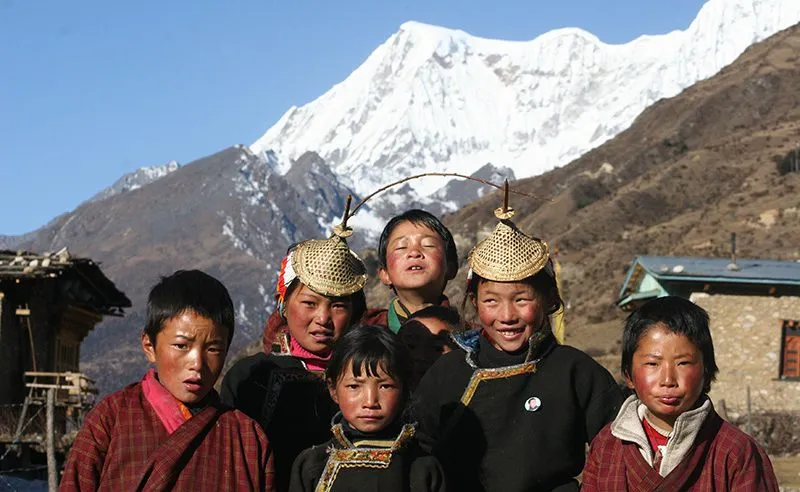
From there it climbs steadily through the Gasa district, reaching Laya at 3,800 meters on roughly Day 6, one of Bhutan’s most isolated communities, where women wear distinctive conical bamboo hats found nowhere else in the country and yak herding remains the primary livelihood. Laya sits within the protected boundaries of Jigme Dorji National Park, Bhutan’s largest national park, which covers the entire northern trekking corridor.
After a rest day at Laya, the route pushes north across Gangla Karchung La into Lunana, a region so remote that the Bhutanese government restricts access through a mandatory special inner-line permit.
No independent trekking is permitted anywhere in Bhutan; all travel must be arranged through a licensed operator registered with the Tourism Council of Bhutan. Thanza, the largest village in Lunana, sits at 4,000 meters and holds fewer than 200 permanent residents. It is reachable only on foot. A rest day here is built into the itinerary before the trek enters its hardest and most consequential section.
Passes between Thanza and the southern exit cross above 4,900 meters on consecutive days at Tshochena, Jichu Dramo, and Chukarpo, among the highest camp elevations on the entire route.
The route crosses five passes above 5,000 meters in total. Weather windows on these high crossings are narrow, and the physical demands compound daily. Most failed attempts on the Snowman Trek turn back in this section.
Trekkers who push through emerge at Thampe Tsho, a glacial lake at high altitude, before the long descent through Maurothang and Sephu back to the Bhutanese road network.
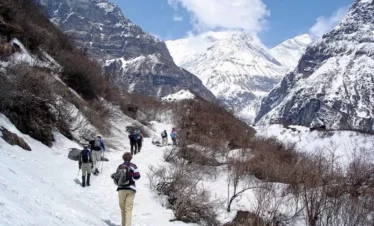
Throughout the crossing, the landscape shifts between glacial valleys, high-altitude tundra, rhododendron forest, and yak pastures.
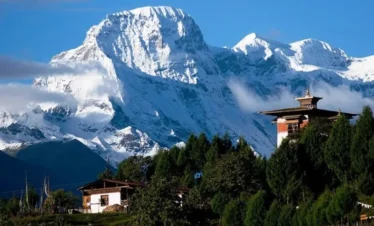
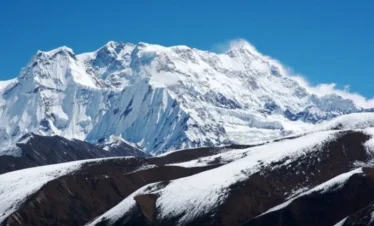
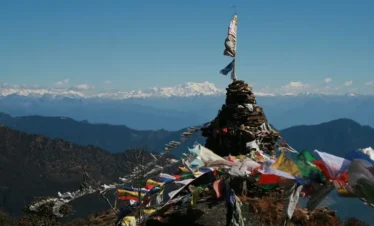
The route overlooks some of Bhutan’s most celebrated peaks: Jomolhari at 7,326 meters, Jichu Drake at 6,662 meters, Masangang at 7,194 meters, and Gangkar Puensum, the highest unclimbed mountain on Earth.
Snow leopards are recorded in this corridor. Black-necked cranes, a protected species, winter in the lower Lunana valleys from late October onward. Recently, breeding pairs have also been recorded at higher elevations within the Lunana region.
The trek closes with a cultural return through Punakha and Thimphu and a final night in Paro, concluding with the Tiger’s Nest hike. This single itinerary moves from the most remote corner of the kingdom to its most iconic site.
Tour in Bhutan has been operating in Bhutan since 2008, and our trek leader, Karma Yarden, has walked the Snowman route himself. He is a TCB-licensed Bhutanese guide who personally handles departures and fully supports them from the first permit to the final camp.
23-Day Snowman Trek Itinerary
Your Snowman Trek Bhutan begins at Paro International Airport, one of the world’s most technically demanding landing approaches, set between Himalayan ridgelines at 2,250 meters.
Our guide meets you on arrival with a traditional Khada scarf and a “Tashi Delek” welcome. The drive to Thimphu takes approximately one hour through the Paro Valley’s terraced farmland and prayer-flag-draped ridgelines.
Check into your hotel, rest, and spend the afternoon adjusting to the altitude. Thimphu sits at 2,350 meters, a gentle first night before the route ahead. Accommodation: hotel in Thimphu.
Day 02: Thimphu to Punakha (1,310m)
After breakfast, drive from Thimphu to Punakha via Dochula Pass at 3,100 meters, where 108 memorial chortens stand against a wide Himalayan sky.
On a clear morning, the full arc of the eastern Himalayan range is visible from the pass.
The road descends 800 meters into the warm subtropical Punakha Valley, climatically and visually unlike anything above it.
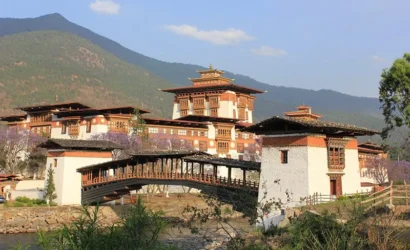
Visit Punakha Dzong, constructed in 1637 at the confluence of the Pho Chhu and Mo Chhu rivers and one of the most architecturally significant buildings in Bhutan.
Drive time from Thimphu to Punakha is approximately two hours. Accommodation: hotel in Punakha.
Drive from Punakha to Tashithang, the trek starting point, and begin the Snowman Trek Bhutan on foot.
The trail descends briefly before climbing steadily through subtropical forest and terraced farmland toward Damji village at 2,250 meters.
This is a relatively comfortable opening-day distance, approximately 14 kilometers, with a walking time of five to six hours, designed to ease trekkers into the rhythm of the route before altitude becomes a factor.
The forest is dense, and bird life is active at this elevation. Accommodation: camping.
The trail climbs from Damji through mixed forest and open ridge sections toward Gasa, gaining approximately 650 meters over a distance of around 12 kilometers.
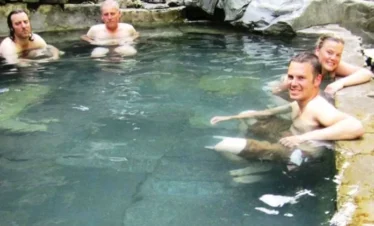
Gasa is home to a small dzong and a set of natural hot springs, the last hot water many trekkers will encounter for weeks.
Walking time: five to six hours. The village marks the edge of the Jigme Dorji National Park, and the landscape begins to open toward the alpine zones ahead. Accommodation: camping.
A longer and more demanding day as the trail pushes north and altitude begins to assert itself. Distance: approximately 16 kilometers; walking time: six to seven hours.
The trail climbs steadily through rhododendron forests and high pasture, with views opening across the Gasa valley system.
Chamsa sits at 3,650 meters, the first camp above 3,500 meters on the route.
Hydration and pace management become important from this point forward. Accommodation: camping.
The trail reaches Laya, one of Bhutan’s most remote and culturally distinct communities, at 3,800 meters.
The Layap people are semi-nomadic yak herders whose women wear a distinctive conical bamboo hat found nowhere else in Bhutan.
Distance: approximately 10 kilometers; walking time: four to five hours. Laya represents the last point of regular contact with settled Bhutanese life before the route enters the fully restricted Lunana region. Accommodation: camping near Laya village.
A full acclimatization day at Laya. Use the morning to explore the village, interact with the Layap community, and observe a way of life centered entirely around yak herding and high-altitude agriculture.
The afternoon is free for rest. This day is not optional; acclimatization at Laya is essential preparation for the high passes ahead, including Gangla Karchung La. Accommodation: camping.
The route pushes north from Laya, climbing steadily toward Rhodophu at 4,350 meters.
This is the first night above 4,000 meters on the trek and a significant step in the altitude profile.
Distance: approximately 16 kilometers; walking time: six to seven hours.
The landscape becomes increasingly alpine: open yak pasture, glacial streams, and the first views of the high peaks that define the Lunana horizon.
Pace carefully and drink consistently. Accommodation: camping.
A day of significant exertion as the trail crosses Gangla Karchung La, the first of the major high passes on the Snowman Trek Bhutan route.
The pass sits above 5,000 meters and requires an early start and careful management of pace and breathing.
The descent to Tarina at 3,980 meters is steep and demands concentration on loose terrain.
Distance is approximately 18 kilometers, including the pass crossing; walking time is seven to eight hours.
This is one of the defining days of the entire route. Accommodation: camping.
The route continues through the Lunana region, dropping slightly to Wache at 3,800 meters.
Distance: approximately 14 kilometers; walking time: five to six hours.
The valley here is wide and glacially formed, with views across to permanent snowfields on the northern ridges.
The isolation of Lunana becomes fully apparent on this day; there are no roads, no outside contact, and no infrastructure beyond what the trek carries with it. Accommodation: camping.
A shorter day allows for partial recovery before the demanding section ahead.
Distance: approximately 12 kilometers; walking time: four to five hours.
The trail follows the valley floor through Wache before climbing gently to Lhedi at 3,650 meters.
Lunana’s villages are visible on this section: small stone settlements surrounded by buckwheat fields and yak pasture, functioning entirely outside the Bhutanese road network. Accommodation: camping.
The trail reaches Thanza, the largest village in Lunana, at 4,000 meters. Distance: approximately 10 kilometers; walking time: four to five hours.
Thanza has a small school, a basic health post, and a community that has had limited outside contact for most of its history.
The arrival here marks the deepest point of the Snowman Trek route in terms of remoteness.
Black-necked cranes are visible in the valley during the autumn season. Accommodation: camping near Thanza.
The second acclimatization day on the route is essential preparation for the highest section of the Snowman Trek Bhutan.
Use the day to rest completely, hydrate aggressively, and allow the body to adjust to sustained altitude above 4,000 meters.
The days ahead, from Tshochena to Jichu Dramo and Chukarpo, represent the most demanding consecutive section of the entire route.
Do not underestimate this rest day. Accommodation: camping.
The Snowman Trek enters its most demanding section.
The trail climbs from Thanza, at 4,000 meters, to Tshochena, at 4,900 meters, gaining 900 meters over a distance of approximately 14 kilometers, with a walking time of six to seven hours.
This is the highest camp on the route and requires full acclimatization, strong physical condition, and careful monitoring of altitude symptoms.
The terrain is open, exposed, and visually extraordinary, with permanent snowfields and glacial moraines in every direction. Accommodation: camping.
A high traverse from Tshochena to Jichu Dramo at 4,880 meters, crossing a pass between the two camps.
Distance: approximately 12 kilometers, walking time five to six hours.
The altitude remains above 4,800 meters for most of the day, and the terrain demands consistent attention.
Weather monitoring is essential in this section; conditions can deteriorate rapidly in Lunana and pass crossings must be attempted in stable windows. Accommodation: camping.
The highest camp on the Snowman Trek Bhutan route at 4,950 meters.
The trail crosses another high pass before descending briefly to the Chukarpo camp.
Distance: approximately 10 kilometers; walking time: five to six hours.
Physical and mental fatigue are at their peak on this day; the combination of altitude, accumulated exertion, and exposure requires deliberate management.
Our guides actively monitor every trekker’s condition on this section. Accommodation: camping.
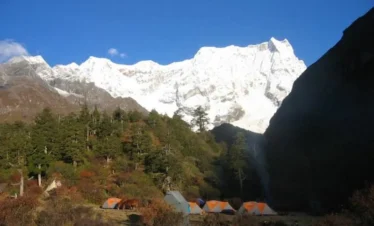
The descent begins. From Chukarpo, the trail drops toward Thampe Tsho, a glacial lake set in high alpine terrain that marks the psychological turning point of the route.
The hardest altitude is behind. Distance and walking time vary by exact camp location at Thampe Tsho.
The lake sits in a bowl of glacially carved rock and is one of the most visually striking campsites on the entire Snowman route.
Accommodation: camping at Thampe Tsho.
It is around two hours walk to the base of Thampe Tso and then a steep climb to the pass at 4230M. Then the trek route goes downhill through rhododendron to the Yak pasture of Maurothang. This is as far as the Yaks go and they won’t be willing to go further down, so yaks needs to be replaced with horses.
Overnight Camp. (Walking Duration: 5 hrs)(Breakfast/Lunch/Dinner included)
The final trekking day drops from 4,000 meters to Sephu at 2,500 meters, a long descent of approximately 20 kilometers and seven to eight hours of walking through increasingly dense forest and farmland.
At Sephu, the trail meets the road network, where vehicles are waiting.
The Snowman Trek is complete. Drive to Wangdue Phodrang and then to Thimphu. Accommodation: hotel in Thimphu.
Drive from Wangdue Phodrang to Thimphu, approximately two hours.
Rest day in Thimphu after completing the trek. Use the day to recover, explore the capital at leisure, and revisit the city with the perspective of someone who has just spent weeks in the most remote corner of Bhutan.
Tashichho Dzong, the Memorial Chorten, and the Centenary Farmers Market are all within effortless reach. Accommodation: hotel in Thimphu.
Drive from Thimphu to Paro, approximately one hour through the Paro Valley.
Check in and spend the afternoon at leisure in Paro town, visiting Rinpung Dzong or the National Museum.
Rest well; tomorrow’s Tiger’s Nest hike is the final physical day of the itinerary. Accommodation: hotel in Paro.
The closing day of the Snowman Trek Bhutan itinerary is spent hiking to Taktsang Palphug Monastery, set on a cliff face 900 meters above the Paro Valley floor.
The trail climbs through blue pine and rhododendron forest to a teahouse viewpoint at 2,950 meters before dropping into a waterfall gorge and climbing stone steps to the monastery entrance at 3,120 meters.
After weeks above 4,000 meters, the Tiger’s Nest hike feels entirely manageable.
The right way to close a journey of this scale is the monastery itself, which consists of four sacred cave temples built in 1692 at the site where Guru Rinpoche meditated in the eighth century. Accommodation: hotel in Paro.
Transfer to Paro International Airport for your onward flight.
The Snowman Trek Bhutan is one of the few journeys that genuinely changes how a trekker measures difficulty, remoteness, and reward. Tashi Delek and safe travels.
Includes/Excludes
The Package Includes
- Airport pick-up and drop-off by private vehicle.
- 3-star accommodation (4 & 5 stars may require an additional premium).
- Bhutan visa fee – including all necessary processing
- Route Permit
- Three meals per day during your stay in Bhutan
- A licensed Bhutanese tour guide
- All land transportation by private vehicle
- Camping equipment and haulage for trekking tours
- Sightseeing as per itinerary
- Monuments entrance fees where applicable
- Drinking water
- All internal taxes and charges
- A sustainable development fee of $100. (This sustainable development fee goes towards free education, free healthcare, poverty alleviation, along with the building of infrastructure.)
The Package Excludes
- Airfare & Travel Insurance
- Expenses of personal nature, tips to guides and drivers
- Expenses occurred due to unavoidable events i.e. road wrecks, flight delays etc.
Trip Map
Frequently Asked Questions
Package pricing varies based on group size, departure date, and accommodation preferences. Contact our team directly for a current quote. All pricing fully includes the Sustainable Development Fee of USD 100 per person per night.
The services that are included are all accommodation, all meals, a TCB-licensed guide, camping equipment, a kitchen crew, porters, all permits, visa processing, SDF, internal transportation, and the Tiger's Nest entrance fee. Excluded are international airfare, travel insurance, personal gear, tips, and costs arising from weather delays or medical evacuation.
This Snowman Trek in Bhutan is very difficult. This route spends extended days, crosses 11 passes above 4,000 meters, and camps at nearly 5,000 meters. Prior high-altitude trekking experience above 3,500 meters is required. No technical climbing skills are needed.
The best season for the Snowman Trek Bhutan is in Late September through October, which is the primary season for stable weather, dry passes, and clear skies. Late June through August is the secondary season, viable but wetter at lower elevations.
Daytime temperatures at high camps range from 5 to 15 degrees Celsius. Night temperatures above 4,500 meters drop to between 10 and 20 degrees Celsius. On cold nights, temperatures at the Chukarpo camp, which is situated at 4,950 meters, can fall below minus 20 degrees. A sleeping bag rated to minus 20 degrees is mandatory.
Flights are not included in the package. Druk Air and Bhutan Airlines are the only carriers authorized to operate at Paro International Airport. Our team can assist with flight coordination as an optional add-on.
All trekking nights are fully tented camping, with two-person mountain tents rated for sub-zero temperatures. Hotel accommodation is provided in Thimphu, Punakha, and Paro on the non-trekking days.
You can contact our team directly to begin the booking process. A deposit is required to secure the departure date and begin permit processing. Full payment is due eight weeks before departure. Cancellation policies vary by departure date and are confirmed at the time of booking; contact us for current terms.
Yes, mandatory. The policy must include emergency medical coverage and helicopter evacuation to a minimum of 5,000 meters. Standard policies frequently exclude high-altitude trekking; confirm altitude coverage explicitly with your insurer.
Very fit. The route requires six to eight hours of hiking per day on consecutive days at altitude. Begin a structured training program at least four months before departure, including long-distance hiking with elevation gain and cardiovascular endurance work.
You need a Bhutan visa, a trekking permit, a Jigme Dorji National Park permit, and a Lunana restricted area permit. Our team arranges every permit in full; trekkers are not required to handle any permit logistics independently.
Two full rest days: Day 7 at Laya (3,800m) and Day 13 at Thanza (4,000m). The itinerary also incorporates gradual altitude gain through the Gasa section to support progressive acclimatization from Day 3 onward.
All departures are fully private. Your group, your guide, your schedule. A minimum of one trekker is required, but there is no maximum group size, although logistics are optimized for groups of two to eight.
Personal trekking gear, including boots, a sleeping bag rated to minus 20 degrees, a layered clothing system, a daypack, trekking poles, a headlamp, a power bank, and a personal first aid kit. See the full gear checklist above.
All meals are included throughout, including breakfast, packed lunch, and cooked dinner daily on trek days, prepared by a dedicated Bhutanese kitchen crew. Dietary requirements flagged in advance are accommodated.
The route is non-technical; no ropes, fixed lines, or climbing equipment are required. The difficulty is physical and altitude-related rather than technical. All terrain is walkable with appropriate footwear and trekking poles.
Fewer than 200 trekkers complete the Snowman Trek successfully each year. Weather, altitude illness, and physical exhaustion are the primary reasons for incomplete attempts. Our guided departures have a strong completion record; contact our team for specifics.
No. This route is not suitable for beginners or first-time Himalayan trekkers. Prior experience above 3,500 meters on a multi-day route is the minimum requirement.
Addition Trekking Info
Cost of Snowman Trek Bhutan Package
The Snowman Trek in Bhutan is a private, high-altitude expedition that requires detailed planning and customized arrangements. Since every departure is tailored according to the trekker’s requirements, the final cost depends on multiple factors, including:
- Number of trekkers joining the expedition
- Preferred travel dates and trekking season
- Accommodation category before and after the trek
- Private group size and customized itinerary requirements
- Additional services or special arrangements
- Flight assistance and extra travel arrangements in Bhutan
The Snowman Trek is not a fixed group departure with a standard price. Every expedition requires individual arrangements, including restricted area permits, licensed Bhutanese guides, camping logistics, kitchen crew, transportation, and high-altitude support.
To provide an accurate quotation, our team will first understand your trekking experience, preferred dates, group size, and travel requirements. We will then prepare a personalized Snowman Trek Bhutan itinerary with a detailed cost breakdown and inclusions.
There is no obligation to book. Our trekking specialists will help you plan the right expedition based on your expectations, experience level, and budget.
Contact Our Bhutan Trek Specialists
Email: info@tourinbhutan.com
WhatsApp: +1 401 328 1478
Phone: +1 401 328 1478
Snowman Trek Bhutan Route
The Snowman Trek Bhutan follows a west-to-east arc through Bhutan’s northern protected areas, beginning in the Gasa district and pushing into the Lunana region before turning south to exit near Wangdue Phodrang. The route covers approximately 330 kilometers of trail, crossing 11 major passes and spending the majority of its duration above 3,500 meters.
From Tashithang, the trail climbs through subtropical forest and rhododendron zones into the alpine grasslands of Gasa, reaching the hot springs at Gasa Dzong before continuing north toward Laya. The Laya community sits at 3,800 meters and represents the last point of regular contact with the outside world before the route enters Lunana.
Between Laya and Thanza, the trail crosses Gangla Karchung La, one of the most demanding passes on the entire route, with steep approaches on both sides and exposure to altitude that requires trekkers to be fully acclimatized before attempting it.
From Thanza, the route enters its most serious section. The villages of Tshochena, Jichu Dramo, and Chukarpo sit between 4,880 and 4,950 meters, making this area the highest sustained section of the trek. Weather in Lunana can deteriorate rapidly, and passes can close with little warning outside the main seasonal windows.
Trekkers descend from Chukarpo to Thampe Tsho, a glacial lake that marks the psychological turning point of the route; the hardest terrain is behind, and the long descent south begins. The trail drops through Maurothang and reaches Sephu at 2,500 meters, where vehicles meet the group for the return to Thimphu.
Two final days in Thimphu and Paro, including the Tiger’s Nest hike, close the itinerary before departure from Paro International Airport.
Who Can Do the Snowman Trek in Bhutan?
The Snowman Trek in Bhutan is designed for experienced trekkers who have completed multi-day high-altitude routes and are comfortable spending consecutive nights above 4,000 meters in fully tented conditions. Prior experience on routes such as the Everest Base Camp trek, Annapurna Circuit, or equivalent long-distance Himalayan treks is the minimum recommended baseline.
Trekkers should be capable of walking six to eight hours per day on uneven terrain, carrying a light daypack, and managing their physical and psychological condition through extended periods of remoteness.
This is not a trek for beginners, casual hikers, or anyone without genuine high-altitude experience. The combination of sustained altitude, remote terrain, limited evacuation options, and consecutive high-pass days makes the Snowman one of the most demanding long-distance treks anywhere in the Himalayas.
Age is not a barrier provided fitness and experience are present; trekkers in their sixties have completed the route with the right preparation. Before committing to the itinerary, you should focus on cardiovascular fitness, mental resilience, and honest self-assessment.
Our team is available to assess your experience level and advise on whether this route is the right fit before any booking is confirmed.
Best Season for Snowman Trek Package
Autumn, late September through October, is the primary season for Bhutan’s Snowman Trek and the window in which most successful completions occur. The monsoon clears by mid-September, leaving skies stable, passes dry, and visibility across the Lunana high zone at its best. October delivers consistently clear mornings, cold but manageable nights above 4,000 meters, and the best conditions for the high passes between Thanza and Chukarpo.
Black-necked cranes arrive in the Lunana valleys from late October, making this season doubly rewarding for wildlife observation and for trekking itself. Autumn departures should be booked earliest and secured at least six months in advance.
Summer, late June through August, is the secondary season and viable for trekkers comfortable with afternoon rain and occasional trail delays. The monsoon affects lower elevations more significantly than the high Lunana Plateau, and the northern passes often remain workable through July and August when southern Bhutan is heavily saturated. The landscape in summer is intensely green, rhododendrons and alpine wildflowers are in full bloom, and the route is quieter than in autumn. However, leeches are present on lower trail sections in June and July, and river crossings require more caution after rain. Trekkers choosing summer should build flexibility into their schedules for weather days.
Weather, Temperature, and Climate
The Snowman Trek Bhutan passes through multiple climate zones over 23 days, from subtropical valley floors at 1,310 meters in Punakha to fully alpine terrain above 4,900 meters in Lunana. In autumn, daytime temperatures at trekking altitudes range from 10 to 18 degrees Celsius at lower camps, dropping to minus 5 to minus 15 degrees Celsius at night above 4,500 meters. The Chukarpo camp at 4,950 meters can drop below minus 20 degrees Celsius on cold autumn nights, and wind chill amplifies the effective temperature significantly. In summer, daytime temperatures are warmer across all elevations, but afternoon clouds and rain are common below 3,500 meters. The Lunana plateau sits in a rain shadow that moderates monsoon impact at high altitude, but weather can deteriorate without warning, and pass crossings must be attempted in morning windows before afternoon clouds build. Trekkers should be equipped for the full temperature range of the route regardless of season.
Required Permits for Snowman Trek Itinerary
The Snowman Trek in Bhutan requires multiple permits arranged in advance through a licensed Bhutanese operator. Independent trekking is not permitted in Bhutan, and all permits must be processed before arrival.
- Bhutan Visa: Required for all nationalities except India, Bangladesh, and the Maldives. Processed digitally through a licensed operator before arrival, stamped on entry at Paro Airport.
- Trekking Permit: Issued by the Tourism Council of Bhutan for all trekking routes. Mandatory for the Snowman route.
- Jigme Dorji National Park Permit: The Snowman Trek passes through Jigme Dorji National Park, Bhutan’s largest protected area. Entry permit required.
- Lunana Restricted Area Permit: The Lunana region requires a separate restricted area clearance due to its proximity to the northern border. This permit is processed by our team and is non-negotiable for access.
- Sustainable Development Fee: USD 100 per person per night, mandatory for all international visitors, fully included in the package price.
All permits are arranged in full by our team. No trekker needs to handle permit logistics on their own.
Difficulty
The Snowman Trek in Bhutan is graded as highly difficult and is consistently listed among the ten hardest long-distance treks in the world. The primary difficulty factors are sustained altitude, pass elevation, route length, remoteness, and the cumulative physical demand of 16 consecutive trekking days with limited recovery time. Passes above 5,000 meters require trekkers to be fully acclimatized before attempting, and the section from Thanza to Chukarpo represents three consecutive nights above 4,880 meters, a sustained altitude exposure that has no equivalent on easier Himalayan routes. The trail surface varies from well-maintained lower sections to loose rocky terrain on high passes where careful footing is essential.
Mental difficulty is as significant as physical difficulty on the Snowman Trek. Extended remoteness, limited communication, consecutive high-altitude days, and the physical demands of carrying a daypack for six to eight hours daily over three weeks test psychological resilience as much as fitness. Trekkers who have completed the Everest Base Camp trek or Annapurna Circuit have a useful reference point but should not assume those routes fully prepare them for the sustained demands of the Snowman Trek. Training guidance: begin a structured aerobic fitness program at least four months before departure, incorporating long-distance hiking with elevation gain, cardiovascular endurance work three to four times per week, and at least one multi-day high-altitude trek in the six months before the Snowman departure. No technical climbing skills are required; the Snowman Trek is a trekking route, not a climbing expedition.
Physical and Mental Preparation
The Snowman Trek in Bhutan demands a structured preparation program beginning at least four months before departure. Cardiovascular fitness, leg strength, and altitude tolerance are the three primary physical requirements. Mental preparation, which includes the ability to stay focused, positive, and self-managing during extended periods of physical stress and remoteness, is equally important and often underestimated.
- Begin a structured aerobic training program four to six months before departure
- Incorporate long-distance hiking with significant elevation gain at least twice per week
- Build to back-to-back long hiking days, training the body for consecutive exertion days
- Complete at least one multi-day trek above 3,500 meters in the six months before departure
- Strengthen leg muscles with step training, lunges, and weighted hiking
- Practice hiking with a daypack of eight to ten kilograms to simulate trail conditions
- Consult your doctor about altitude medication, including Diamox before departure
- Maintain consistent hydration habits; begin the practice of drinking three liters of water daily before the trek starts
- Establish a sleep discipline before departure; rest quality at altitude is a performance factor
- Prepare psychologically for extended remoteness; discuss the route honestly with yourself and your team before committing
Accommodation and Meals
We include hotel accommodation in Thimphu, Punakha, and Paro at three-star properties with en-suite rooms, hot water, Wi-Fi, and daily breakfast. These nights provide genuine comfort before the trek begins and on the final days before departure, and our team selects properties for location and character within Bhutan’s traditional architectural guidelines, timber facades, decorative woodwork, and valley-facing rooms.
All trekking nights feature fully tented camping, with the camping crew carrying and erecting sleeping tents, a kitchen tent, and a dining tent. Sleeping tents are two-person mountain tents rated for sub-zero temperatures. Trekkers carry their personal sleeping bag, rated to at least minus 20 degrees Celsius for the high Lunana section, and their personal gear in their own daypack. The support crew carries all other camping equipment.
Meals on the trek are prepared by a dedicated Bhutanese kitchen crew and served three times daily: breakfast before departure each morning, packed lunch on the trail, and a cooked dinner at camp. The kitchen crew manages dietary requirements flagged in advance, and the quality of trail cooking on a well-staffed Bhutanese trek is consistently high. Expect rice, lentils, vegetables, pasta, noodles, eggs, and fresh ingredients at lower elevations, transitioning to dried and preserved foods at high altitude. Hot drinks are available throughout the day at camp.
Drinking water on the trek is sourced from mountain streams and treated by the kitchen crew. Trekkers are responsible for carrying and using their own water bottle or hydration system. Minimum recommended intake is three liters per day, increasing above 4,000 meters.
Transportation
All transportation within Bhutan is by private vehicle throughout the itinerary. Airport pickup on arrival and the departure transfer on Day 23 are by private car or minivan, depending on group size. The drive from Thimphu to Punakha on Day 2 takes approximately two hours via Dochula Pass.
The drive from Punakha to the Tashithang trailhead on Day 3 takes approximately one hour. On exit, vehicles meet the group at Sephu on Day 19 for the drive to Wangdue Phodrang and onward to Thimphu, approximately three hours total.
All internal drives are included in the package price. International flights to and from Paro are not included; Druk Air and Bhutan Airlines are the only carriers authorized to operate at Paro International Airport, connecting from Delhi, Kolkata, Mumbai, Kathmandu, Bangkok, Singapore, and Dhaka.
Travel Insurance
Comprehensive travel insurance is mandatory for the Snowman Trek Bhutan and must be arranged independently before departure. The policy must include emergency medical coverage, high-altitude helicopter evacuation to a minimum of 5,000 meters, trip cancellation and interruption coverage, and coverage for the full duration of the itinerary.
Standard travel insurance policies frequently exclude high-altitude trekking above 4,000 meters; read your policy carefully and confirm altitude coverage explicitly with your insurer before purchasing.
Helicopter evacuation from the Lunana region costs between USD 3,000 and USD 8,000 depending on location and conditions and is not covered by the trek package. Our team establishes helicopter contact before every departure and can coordinate evacuation logistics, but the cost is the trekker’s responsibility and must be covered by insurance.
Gear and Equipment Checklist
- Clothing: Moisture-wicking base layers, top and bottom, in three to four sets; mid-layer insulating jacket, down or synthetic, rated to minus 10 degrees; heavyweight fleece or soft shell for camp use; waterproof hardshell jacket and trousers, Gore-Tex or equivalent; trekking trousers in two pairs; warm hat, balaclava, and neck gaiter; insulated gloves and waterproof outer gloves; gaiters for high-pass days; quick-dry socks in five to six pairs; and camp shoes or lightweight sandals.
- Footwear: Waterproof trekking boots fully broken in before departure, non-negotiable; camp shoes or down booties for cold evenings above 4,000 meters; trekking poles strongly recommended for pass days and long descents.
- Health and Safety: Personal first aid kit; blister prevention tape and moleskin; altitude medication (consult your doctor about Diamox before departure); water purification tablets or personal filter as backup; sunscreen SPF 50 and UV-protective sunglasses (UV exposure at 4,900 meters is extreme); lip balm with SPF; hand sanitizer; and personal prescription medications in full supply for the duration.
- Tech and Power: Headlamp with spare batteries essential for early morning starts on pass days; portable power bank minimum 20,000 mAh (there is no charging infrastructure on the trail); camera with extra memory cards and spare battery; satellite communicator or personal locator beacon recommended for additional safety; a universal power adapter for hotel nights (Bhutan uses Type D and F sockets).
- Bags: Daypack (25 to 35 liters) for personal gear on trail; duffel bag for items carried by porters (maximum 15 kilograms); dry bags or pack liners for waterproofing; reusable water bottle (minimum one liter) or hydration bladder.
- Essential Extras: Cash in Bhutanese Ngultrum or Indian Rupees for personal purchases (ATMs in Thimphu and Paro only); printed copies of visas and permits; high-calorie trail snacks for personal use between meals; trekking poles; biodegradable soap and toiletries.
Altitude Sickness and Prevention
Altitude sickness is a genuine risk on the Snowman Trek in Bhutan, which spends extended days above 4,000 meters and camps at nearly 5,000 meters. The itinerary is structured with two acclimatization rest days at Laya on Day 7 and Thanza on Day 13, and the gradual altitude gain through Gasa and Laya is designed to allow progressive adaptation. However, individual response to altitude varies significantly and cannot be fully predicted in advance.
Symptoms to monitor:
- Persistent headache not relieved by hydration or paracetamol
- Nausea or vomiting
- Dizziness or loss of coordination
- Unusual fatigue disproportionate to exertion
- Loss of appetite
- Difficulty sleeping at altitude
- Dry cough or shortness of breath at rest
- Confusion or disorientation, a serious warning sign requiring immediate descent
Prevention:
- Ascend gradually, follow the itinerary, and do not attempt to accelerate above the planned schedule
- Drink a minimum of three liters of water daily, increasing above 4,000 meters
- Avoid alcohol for the first several days and minimize consumption throughout
- Consult your doctor about Diamox before departure; prophylactic use from Day 5 onward is common on this route
- Sleep at lower altitudes where possible; the itinerary accounts for this on several days
- Communicate symptoms to your guide immediately; guides are trained in altitude assessment and carry supplemental oxygen
- Descend without delay if symptoms worsen; no summit or camp is worth a serious altitude illness event
Emergency and Medical Evacuation
Every Snowman Trek Bhutan departure managed by our team includes a preplanned emergency evacuation protocol. Helicopter evacuation contact is confirmed before the trek begins, and our guides carry satellite communication devices for use in the Lunana region, where mobile coverage is absent.
In the case of a medical emergency requiring evacuation, our team coordinates with helicopter operators in Thimphu and with the nearest Bhutanese health post for ground-level support.
Evacuation from the Lunana region is logistically complex; weather windows are required for helicopter operations, and ground evacuation to the nearest road can take two to three days depending on location on the route.
This is why comprehensive travel insurance with helicopter evacuation coverage to 5,000 meters is mandatory, not optional. Our guides are trained in wilderness first aid and altitude illness assessment and carry a basic medical kit including supplemental oxygen, on every departure.
Guide and Porter for Snowman Trek, Bhutan
Every Snowman Trek Bhutan departure includes a TCB-licensed, locally trained Bhutanese head guide assigned specifically to the group for the full 23 days. Our guides are selected for their knowledge of the Snowman route, their altitude experience, their wilderness first aid training, and their capacity to read both terrain and trekker conditions accurately.
The head guide will support you with a dedicated kitchen crew, a cook and kitchen assistant, a porter, and a pack animal team sized for the group. Porters carry all camping and kitchen equipment. Trekkers have to carry only their personal daypack on the trail.
Tipping is not included in the package price and is at the trekker’s discretion. Our team guides appropriate amounts before departure.
Important Notes
- The Snowman Trek Bhutan is classified as a restricted route requiring advance permit clearance; bookings must be confirmed at least three months before departure, and six months is strongly recommended for autumn departures
- All international visitors to Bhutan are required to pay the Sustainable Development Fee of USD 100 per person per night; this is fully included in the package price
- Independent trekking is not permitted in Bhutan; all trekkers must be accompanied by a licensed guide at all times on the route
- The Lunana restricted area permit adds processing time; our team requires passport copies and booking confirmation at least eight weeks before departure to begin permit processing
- Travel insurance with helicopter evacuation coverage to 5,000 meters is mandatory and must be arranged before departure
- The route is not suitable for trekkers without prior high-altitude experience above 3,500 meters; our team reserves the right to advise against booking for trekkers who do not meet the experience threshold
- Weather can close high passes without warning; the itinerary includes buffer days, but extended weather delays may affect the schedule, and no refunds are issued for delays caused by weather
- Mobile coverage ends at Laya on Day 6; trekkers should inform family and contacts of the communication blackout before departure
- Pack animal availability in Lunana is seasonal and occasionally limited; our team manages logistics in advance, but flexibility may be required
- The Tiger’s Nest hike on Day 22 requires a separate entrance fee, which is included in the package price
Why Book the Snowman Trek With Us?
We at Tour in Bhutan have prepared this Snowman Trek for adventure seekers like you. Our team has operated trekking departures in Bhutan since 2008 and has firsthand experience managing Snowman Trek logistics, permits, high-altitude safety procedures, and evacuation planning. Route information is reviewed regularly to ensure accuracy regarding permits, regulations, seasonal conditions, and Sustainable Development Fee requirements.
- TCB-licensed Bhutanese operator with over a decade of experience guiding the Snowman route
- Every guide is locally trained, certified, and assigned specifically to match the group’s pace and experience
- Full camping infrastructure, including a kitchen tent, dining tent, sleeping tents, and a dedicated cook
- All permits handled in full: Bhutan visa, trekking permit, national park entry, and Lunana restricted area clearance
- Emergency evacuation protocol in place for every departure, with helicopter evacuation contact established before the trek begins
- Sustainable Development Fee fully included, no hidden government charges
- Completely private departures, your group, your schedule, your pace
- Direct contact with our team throughout planning, preparation, and on-trek communication via satellite where available
Book Your Snowman Trek Bhutan Expedition
The Snowman Trek in Bhutan is one of the world’s most challenging and rewarding Himalayan adventures. Due to its restricted route, limited trekking season, permit requirements, and complex logistics, planning is essential.
Whether you are planning a private expedition with friends, a personal Himalayan challenge, or a once-in-a-lifetime adventure through Bhutan’s remote northern valleys, our team will help create a trekking experience designed around your goals.
Ready to take on the Snowman Trek in Bhutan?
Contact our Bhutan trekking experts today to:
✓ Check available departure dates
✓ Discuss your trekking experience.
✓ Receive a customized itinerary
✓ Get your personalized quotation.
✓ Understand preparation and equipment requirements
Start Planning Your Snowman Trek Bhutan Adventure Today
📩 Email: info@tourinbhutan.com
📱 WhatsApp: +1 401 328 1478
☎ Phone: +1 401 328 1478
Your journey through Bhutan’s remote Himalayan wilderness begins with a conversation.
Trip Reviews
Posted on GoogleTrustindex verifies that the original source of the review is Google. Posted on GoogleTrustindex verifies that the original source of the review is Google. Posted on GoogleTrustindex verifies that the original source of the review is Google. Posted on GoogleTrustindex verifies that the original source of the review is Google. Posted on GoogleTrustindex verifies that the original source of the review is Google. Experiencing Bhutan and it’s people and it’s culture and tradtions is a beautiful travel experience in itself. It’s a magical journey into the land high up in the Himalayas. We were lucky that we found this company ‘Happiness Drukyul Holidays’ who were completely flexible, professional and up to the mark. Mr. Sonan, our guide did his job well and introduce to Bhutan’s unique culture and traditions. We learnt more of Buddhism from him. Highly recommended & thank you for this beautiful holiday experience.Posted on GoogleTrustindex verifies that the original source of the review is Google. We did a 6 day tour with our guide Sonam. He was extremely helpful, very knowledgeable about the history and culture of Bhutan and overall friendly and relaxed. Highly recommended.