The Bhutan Spiritual Tour is a 12-day immersive journey through sacred valleys, ancient monasteries, and Himalayan landscapes. From Paro’s iconic Tiger’s Nest to Bumthang’s Burning Lake, this tour blends Bhutan’s Buddhist heritage, culture, and nature into a deeply transformative experience.
-
3,120m/10,240 ft
-
March to May and September to November
-
March to May and September to November
-
Government approved 3 stars and Above
-
Private car, van or bus (Depends on group size)
-
Private Tour
Highlights of the Bhutan Spiritual Tour Package
- Hike through pine forests and prayer flags to Taktsang Monastery, clinging to a cliff 900 meters above the Paro Valley floor.
- Step into Bumthang, Bhutan’s oldest sacred valley, where butter lamps still burn in 7th-century temples and monks live as they always have.
- Stand at Mebar Tsho, the Burning Lake, where Pema Lingpa rose from the water holding a flame that never went out.
- Walk through Jambay, Kurjey, and Tamshing Lhakhang, three temples that together hold more than a thousand years of living Buddhist history.
- Watch rare black-necked cranes glide over Phobjikha’s open wetlands, a valley so quiet that the silence itself feels like something worth protecting.
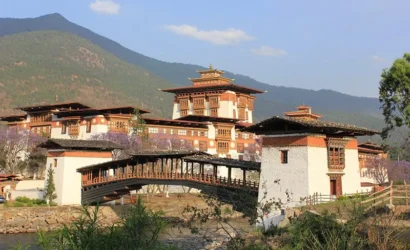
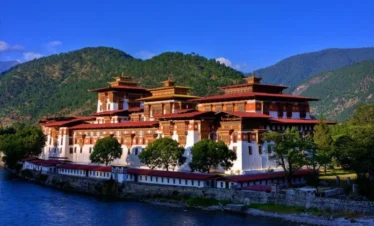
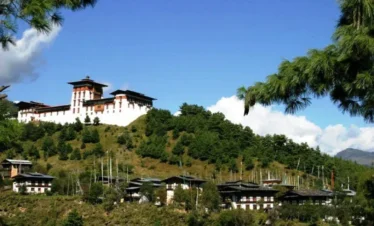
- Cross the river to Punakha Dzong, built in 1637, where two sacred rivers meet, still one of the most beautiful buildings in Asia.
- Disappear into the Tang and Ura valleys, where stone houses, buckwheat fields, and monastery festivals continue entirely on their terms.
- Cross Chele La Pass at 3,988 meters into Haa Valley, prayer flags snapping in the wind, with Tibet visible on the horizon.
- Sit in a monastery courtyard at dawn, listen to chanting drift through the walls, and feel Buddhist practice as something alive, not historical.
- Move through six Himalayan valleys: Paro, Thimphu, Punakha, Phobjikha, Bumthang, and Haa, each an entirely different world from the last.
Overview of the Bhutan Spiritual Travel Package
Our 12-day Bhutan Pilgrimage tour offers a unique opportunity to explore Bhutan. This tour offers an immersive experience that helps one understand and appreciate the spiritual traditions at the heart of Bhutan’s culture.
It encompasses the country’s most awe-inspiring regions and scenery, such as Paro, Thimphu, Punakha, Phobjikha, Bumthang, Haa Valley, and Ura.
The first leg of the tour focuses on Western Bhutan. This section introduces tourists to the living traditions of the Bhutanese people through visits to both Paro Dzong and monasteries in Thimphu.
During the course of this Buddhist tour, you will pass through Punakha as well as Phobjikha Valley, where the black-necked cranes (a highly endangered species) reside.
This tour has its spiritual core in Bumthang. What makes this region central to Bhutan’s spiritual history are the ancient Buddhist temples, the sacred legends, and the ordinariness of monastic life, all of which help bring Buddhist heritage alive. This section of the tour also includes visits to both the Ura and Tang valleys, which showcase scenic rural life.
The journey continues to Haa Valley before culminating in the famous hike to the Tiger’s Nest Monastery, one of the most recognized monasteries in Bhutan.
This tour also justifies its title as a “Spiritual Tour” because of the various ways in which it engages and inspires tourists.
It harmonizes the concept of Gross National Happiness and Bhutanese hospitality by employing locals to lead and guide the tour at a pace that allows for deeper reflection and appreciation of the country.
12 Days Bhutan Spiritual Tour Itinerary
Our Bhutan cultural and spiritual journey begins the moment the plane descends through the clouds, and the Himalayan peaks appear on either side of the window.
Paro International Airport is one of the most dramatic landings in the world. Your guide meets you at arrivals, and you drive together to Thimphu, Bhutan’s calm and walkable capital.
The road follows a river through pine forests and small villages. In the evening, visit Tashichho Dzong, a grand fortress-monastery where golden rooftops catch the last of the light.
Tonight is for settling in, breathing the mountain air, and letting the pace of Bhutan begin to work on you.
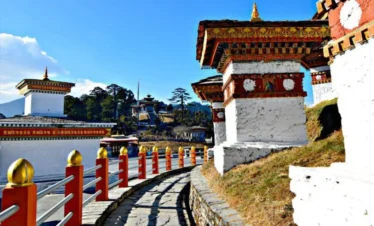
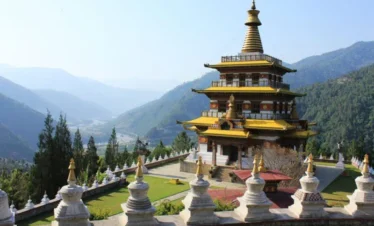
The drive from Thimphu to Punakha crosses the Dochu La Pass at 3,100 meters, where 108 white chortens stand in a circle, and the Himalayan range stretches across the horizon on a clear day.
As you descend, the climate softens, and the landscape opens into rice terraces and banana trees.
Punakha Dzong waits at the meeting point of the Pho Chhu and Mo Chhu rivers, known as the Father and Mother rivers; its whitewashed walls and gilded towers are reflected in the water below.
This is one of the most beautiful buildings in the Himalayas, and no photograph captures its beauty.
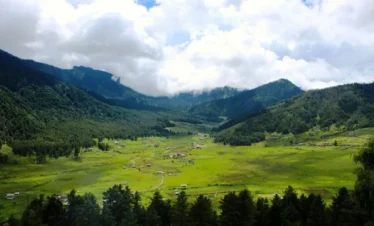
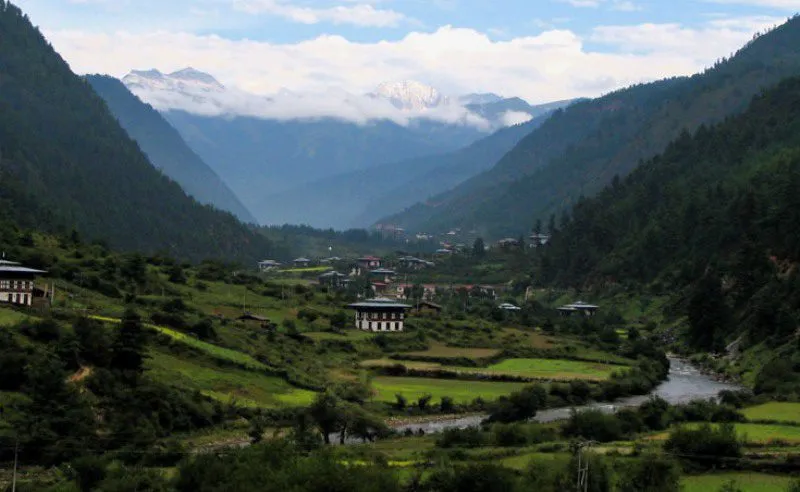
We travel today to Phobjikha Valley, a wide, open glacial valley cradled between forested ridges.
This is one of Bhutan’s most important wildlife reserves, and in winter it becomes the seasonal home of the rare black-necked crane, a bird considered sacred in Bhutanese culture.
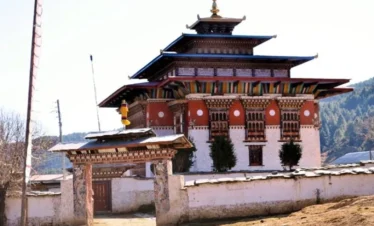
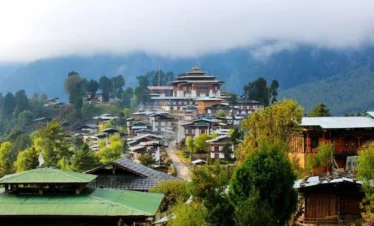
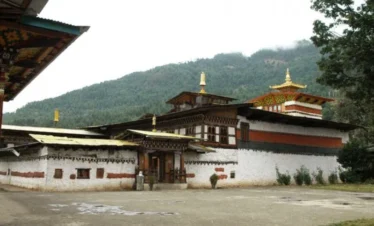
Visit Gangtey Monastery, built in the 17th century and still an active center of the Nyingma tradition of Tibetan Buddhism.
The valley below spreads out from the monastery courtyard in a panorama of green meadows and farmhouses.
The pace here is slow. The silence is the kind you have to stop and notice before it disappears.
Today’s drive takes you deeper into Bhutan’s interior, climbing through forests of fir and rhododendron and into the Bumthang valley system.
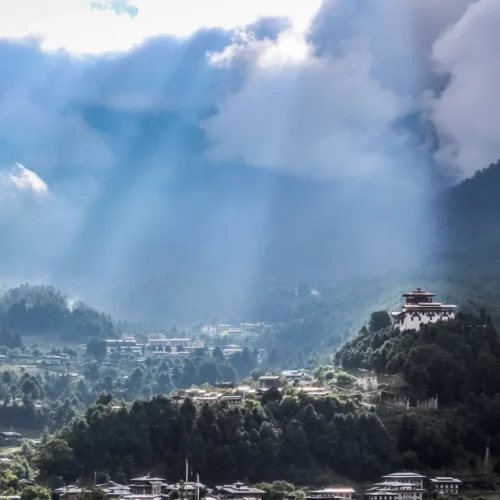
Bumthang is the spiritual heart of the country. It is older than the kingdom itself, has a lot of history, and is home to some of Bhutan’s most sacred sites.
The valleys here have a particular quality of light, especially in the late afternoon, when the sun catches the buckwheat fields, and the smoke from farmhouse fires rises slowly in the still air.
Arriving here feels less like reaching a destination and more like stepping into a different register of time.
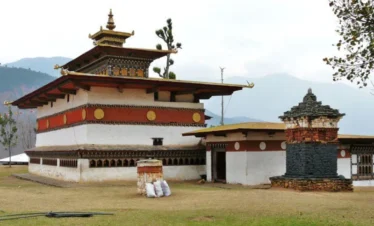
A full day in Bumthang, moving slowly between temples that have stood for centuries. Jambay Lhakhang is one of the oldest temples in the country, said to have been built in the 7th century to pin down a demoness beneath its foundations.
Kurjey Lhakhang enshrines a body-print left in stone by Guru Rinpoche himself. Tamshing Lhakhang holds some of the finest medieval wall paintings in all of Bhutan.
Monks go about their daily rituals, butter lamps glow in dim interiors, and the smell of juniper incense lingers in the courtyards. This day is not about sightseeing. It is about presence.
Tang Valley sits further up from Bumthang’s main valleys, quieter and less visited. The road winds through forests before opening into a landscape of farmhouses, river crossings, and terraced hillsides.
The Ugyen Choling Palace, a traditional manor house turned museum, gives a rare glimpse into aristocratic Bhutanese life: rooms of armor, thangka paintings, and ancient manuscripts, all entirely undisturbed.
The day continues to Mebar Tsho, the Burning Lake, one of Bhutan’s most sacred pilgrimage sites. Legend holds that the treasure revealer Pema Lingpa emerged from these waters carrying a butter lamp that stayed lit beneath the surface.
Surrounded by prayer flags and forested cliffs, the lake holds a stillness that is hard to explain and easy to feel.
Ura is one of Bhutan’s highest and most traditional villages, its stone houses clustered close together along a ridge overlooking the surrounding hills.
The village has barely changed in centuries: narrow lanes, carved wooden balconies, fields of buckwheat and potatoes, and a monastery at its center that still draws the whole community together for festivals.
Walking through Ura is like walking through a way of life that the rest of the world has largely left behind.
The air is crisp, the views are long, and the people you meet along the way tend to be quietly, genuinely welcoming.
The journey back toward western Bhutan begins today, retracing your route through mountain passes and river valleys that look different now, familiar but seen with different eyes.
Arriving back in Phobjikha Valley feels like returning to somewhere you already know a little. The wetlands are still, and the ridge-top monastery stands against the late sky.
This is a day for the road itself: long views, changing light, and the particular satisfaction of a journey that is moving toward its close. Spend the evening quietly in the valley.
A long but beautiful drive brings you back to Paro, Bhutan’s most visited valley and one of its most charming.
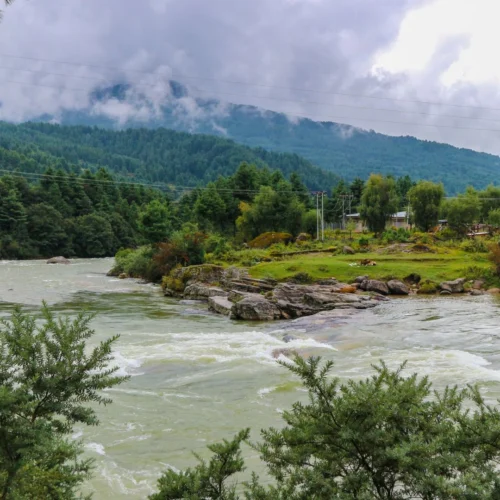
The town sits beside a wide river with a central watchtower, traditional painted shopfronts, and a pace that invites walking.
Paro Dzong, the district fortress, dominates the valley from a hillside above the river. After the remoteness of Bumthang and Ura, Paro feels relatively lively.
Use this afternoon to wander the town, browse the market stalls, or simply sit somewhere quiet and take stock of everything you have seen.
Haa Valley lies just south of the Chele La Pass, the highest motorable pass in Bhutan at 3,988 meters, where prayer flags run in long lines across the ridge and the views stretch into both Bhutan and Tibet.
The descent into Haa reveals a valley that sees far fewer visitors than Paro, with apple orchards, traditional farmhouses, ancient monasteries, and a river that runs green through the valley floor.
Visit the Lhakhang Karpo and Lhakhang Nagpo, the White and Black temples, which mark the spiritual heart of the valley. Return to Paro in the evening, carrying Haa’s quietness with you.
The hike to Taktsang Monastery is the moment most people come to Bhutan for. The trail rises through a pine forest hung with prayer flags, climbing steadily for two to three hours before the monastery appears clinging to a sheer cliff face 900 meters above the valley, as if it grew from the rock.
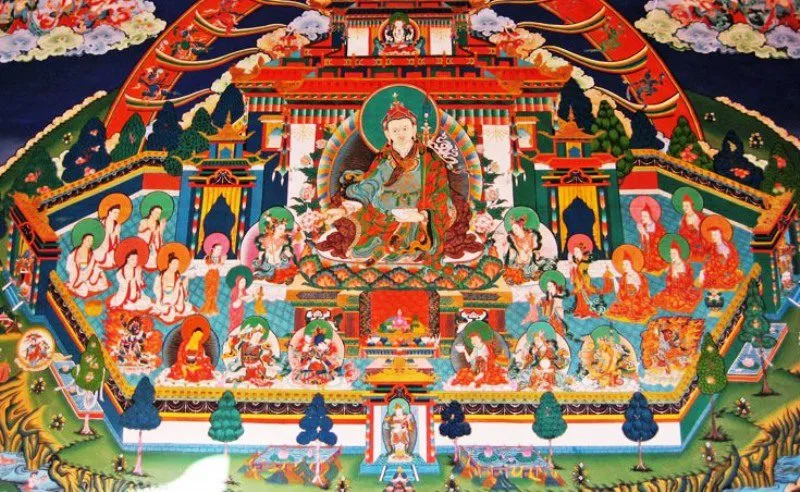
Guru Rinpoche is said to have flown here on the back of a tigress in the 8th century and meditated in the caves behind the main shrine.
Standing at the monastery, looking out over the valley far below, it is easy to understand why. This is less a hike and more a meditation in motion.
The last morning in Bhutan tends to be quiet. Breakfast, a final look at the mountains, and the drive to the airport mark the last morning in Bhutan.
Our guide accompanies you to the terminal, and the farewell is unhurried. The flight out offers one last view of the valley, the dzong, and the river winding through the fields below.
What you carry home from Bhutan is harder to name than souvenirs: something in the way time moved differently here, the quality of silence in the temples, a conversation you didn’t expect, and the smell of butter lamps in the dark.
Bhutan does not let you leave unchanged. That is the point.
Includes/Excludes
The Package Includes
- Airport pick-up and drop-off by private vehicle.
- 3-star accommodation is included, with 4- and 5-star options available at an additional premium.
- Bhutan visa fee and all processing
- Route Permit for all destinations
- Three meals per day during your stay in Bhutan
- A licensed Bhutanese tour guide for the entire journey
- All land transportation by private vehicle
- Sightseeing as per itinerary
- All internal taxes and charges
- Monument entrance fees, where applicable
- A Sustainable Development Fee of USD 100 per person per night funds free education, free healthcare, poverty alleviation, and infrastructure.
The Package Excludes
- International airfare and travel insurance are not included; travelers must arrange their own comprehensive travel insurance before arrival. Note: travel insurance is mandatory for entry into Bhutan.
- Expenses of a personal nature, tips to guides and drivers
- Expenses arising from unforeseen events, such as flight delays, road conditions, or weather, are not covered.
Trip Map
Frequently Asked Questions
Yes, and Bhutan is one of the safest countries in the world to travel alone as a woman. Crime is extremely low, guides are professional and vetted, and the culture is respectful. We handle the visa, the permits, the accommodation, and the logistics; you just show up.
Book your travel at least one to three months in advance, especially if you're traveling in spring (March–May) or autumn (September–November). Bhutan limits visitor numbers, flights fill quickly, and popular hotels book out early during peak season. Earlier is always better.
No. International airfare is not included in the package. We can help you find the right connections to Paro through Druk Air or Bhutan Airlines, which fly from Bangkok, Delhi, Kathmandu, Singapore, and a handful of other cities.
Yes. This itinerary runs as a private tour by default, but group departures are available. A group tour costs less and works well if you're happy to travel with others on a fixed schedule. Ask us about upcoming group departure dates.
Yes, this is precisely the right itinerary for a first visit. It covers the country's most important spiritual sites and scenic valleys without rushing, and your guide explains everything as you go. You don't need prior knowledge of Bhutan or Buddhism to get a great deal from it.
Not at all. Your guide will explain the history, the legends, and the meaning behind every site you visit. Curiosity is the only requirement. Many people find that the journey itself answers questions they didn't know they had.
Bumthang is older than the Bhutanese kingdom itself. It holds the country's most ancient temples; Jambay Lhakhang dates to the 7th century and many of Bhutan's most important Buddhist legends trace directly back to this valley system. Monks still practice here exactly as they always have. It doesn't feel like heritage. It feels alive.
Yes. The Burning Lake is included on Day 06 as part of the Tang Valley excursion. It is one of the most spiritually charged sites in all of Bhutan, the place where Pema Lingpa, Bhutan's greatest Buddhist treasure revealer, is said to have emerged from the water holding a butter lamp that never went out. Most visitors find it unexpectedly moving.
Most days involve light to moderate walking around monastery courtyards, village lanes, and valley paths. The one genuinely demanding day is the Tiger's Nest hike: roughly two to three hours uphill each way on a well-maintained trail. Everything else is manageable for anyone in reasonable health.
No. If you'd rather not do the full hike, you can stop at the viewpoint café partway up, which already gives a dramatic view of the monastery on the cliff face. It's a perfectly good alternative. That said, most people who complete the hike say it was the best day of the trip.
Comfortable, well-located, and chosen for character as much as quality. The standard package uses 3-star hotels and lodges; 4-star and luxury options are available at a supplement. Many properties have traditional Bhutanese architecture, valley or mountain views, and a quiet atmosphere that suits the pace of the journey.
Yes, and solo travelers do particularly well on this itinerary. The private guide format means the pace and conversation adapt entirely to you. There's no group dynamic to manage, no waiting around. If you'd prefer a group departure for cost reasons, that option is also available.
Yes. We can build in meditation sessions, meetings with monks, special blessings, or extended time at particular sites. These arrangements depend on the monastery, the season, and your travel dates, so please contact us in touch early if this aspect matters to you.
A shorter trip to Bhutan typically covers Paro, Thimphu, and Punakha, the western circuit. This itinerary goes further: Bumthang, Tang Valley, Ura Valley, Haa Valley, and Phobjikha. The extra days are where the real depth of the country opens up. If you're going to come this distance, it's worth doing it properly.
Book a Bhutan spiritual tour with us because we are a licensed Bhutanese tour operator with local guides who know these valleys, temples, and roads personally, not from a brochure. We handle everything: visas, permits, accommodation, transport, meals, and guides. And if something needs adjusting on the ground, we sort it
Additional Travel Info
How Much Does a 12-Day Bhutan Spiritual Tour Cost?
Planning a trip to Bhutan is a unique experience. The cost of the Bhutan Spiritual Tour depends on how keen you are to explore this beautiful Himalayan kingdom.
Unlike standard holiday packages with fixed prices, every Bhutan journey is customized to your travel preferences, interests, and budget. The total cost of our Bhutan trip may vary based on several factors, including:
- Number of travelers: Private tours, family holidays, and group trips have different pricing structures.
- Accommodation choice: Select from comfortable 3-star hotels, premium 4-star stays, luxury 5-star properties, or exclusive luxury accommodations.
- Travel season and dates: Bhutan tour costs can change depending on peak seasons, festivals, and travel availability.
- Trip duration: The number of days you spend exploring Bhutan’s cultural landmarks, monasteries, valleys, and natural landscapes affects the overall cost.
- Customized experiences: Special activities, private guides, unique cultural experiences, trekking options, and personal requests can influence your final package price.
Since every traveller has different expectations, we do not offer fixed prices for our Bhutan tour packages. Instead, our Bhutan travel experts create a personalized itinerary and detailed quotation based on your requirements, ensuring you receive the best value for your journey.
Just share your preferred travel dates, group size, accommodation preferences, and travel interests with us. We will design a customized itinerary with a transparent cost breakdown and no obligation to book.
Request Your Personalized Bhutan Quote Today
📧 Email: info@tourinbhutan.com
💬 WhatsApp: +1 401 328 1478
📞 Phone: +1 401 328 1478
What Travelers Love About Bhutan
Bhutan is unlike anywhere else on Earth. Travelers who come here often leave with something harder to name than memories: a quietness that follows them home, a shift in how they measure a good day.
What visitors consistently speak about is not the sights but the feeling: clean air, unhurried valleys, monasteries where time moves differently, and a people whose warmth feels entirely unperformed.
The hike to Tiger’s Nest draws many here, and it delivers. Challenging enough to feel earned and rewarding enough to stay with you for years, the view from the top and the silence at the monastery are things travelers describe long after they return.
But it is the country itself that leaves the deepest impression. It is a place where people take happiness seriously as a measure of success. The forests cover the land as far as the eye can see.
Where doors are left open, and nothing goes missing. Where the landscapes are vast, unspoiled, and utterly Himalayan, one traveler called it a visual treat not to be missed in a lifetime.
One traveler, Megha H.T., writing on Quora, captured it simply: “As the last kingdom of the Himalayas, Bhutan offers you immensely beautiful landscapes that you should not miss in life.
The country has no thieves; it is completely theft-free. A place where success is measured in happiness. Visiting Bhutan is worth it and an absolute bliss.”
Best Time for Bhutan Spiritual Trip
The best time to experience this Bhutan spiritual holiday is during spring (March to May) and autumn (September to November).
In spring, the hills come alive with blooming rhododendrons, mild temperatures, and clear skies, creating a beautiful and comfortable atmosphere for visiting sacred sites and hiking to Tiger’s Nest.
Autumn offers the clearest views of the Himalayan mountains, pleasant weather, and colorful harvest scenes across the valleys, making it ideal for peaceful reflection and spiritual journeys.
Winter (December to February) is also a wonderful option for those seeking solitude. Although it is colder, the valleys remain uncrowded, Tiger’s Nest and most monasteries stay accessible, and you can witness the graceful black-necked cranes in Phobjikha Valley.
The monsoon season (June to August) brings lush greenery, but it is not recommended for this tour due to frequent rains and challenging road conditions.
For the most comfortable and spiritually enriching experience, we highly recommend traveling between March and May or September and November.
Recommended Gear & Personal Items
The following items are not essential but can enhance your comfort and overall travel experience while exploring Bhutan’s valleys, monasteries, and mountain landscapes.
- Trekking Poles: Helpful for the hike to Tiger’s Nest Monastery and uneven mountain trails.
- Binoculars: Ideal for wildlife viewing, birdwatching, and enjoying distant Himalayan panoramas.
- Camera or Smartphone with Extra Storage: Perfect for capturing Bhutan’s monasteries, festivals, landscapes, and cultural experiences.
- Power Bank: Useful during long scenic drives and full days of sightseeing.
- Universal Travel Adapter: Recommended for charging electronic devices throughout your journey.
- Lip Balm and Moisturizer: Helpful during Bhutan’s dry mountain climate.
- Small Daypack: Convenient for carrying water, cameras, snacks, and personal belongings during excursions.
- Travel Journal or Notebook: Ideal for recording reflections and memorable moments from your spiritual journey.
- Light Snacks or Energy Bars: Useful during longer drives and hiking days.
- Reading Material or E-Reader: Perfect for quiet evenings in Bhutan’s peaceful valleys and lodges.
- Extra Memory Cards and Camera Batteries: Recommended for photography enthusiasts exploring Bhutan’s spectacular scenery and cultural sites.
Accommodation
Accommodation on this tour is selected for location, character, and comfort, not just star ratings. The standard package uses well-run 3-star hotels and lodges throughout.
These are clean, comfortable, and well-placed close to the sites you’re visiting rather than on the edge of town.
Many are built in traditional Bhutanese style, with timber interiors, valley views, and a quiet atmosphere that matches the pace of the journey.
If you want more comfort, 4-star and luxury upgrades are available across most destinations on the route.
Some properties at the higher end include spa facilities, heated floors, and rooms designed around the landscape outside the window.
These can be arranged for the whole trip or for specific nights. Punakha and Paro in particular have strong luxury options.
In smaller destinations like Ura and Tang Valley, accommodation is simpler by nature. The lodges here are locally owned, well-kept, and part of what makes those valleys feel genuine rather than touristic.
Whatever category you choose, we have visited and selected every property on this itinerary in person. Nothing is booked blindly.
Travel Tips for Bhutan
Visa and Entry
- Visa: All international visitors except Indian, Bangladeshi, and Maldivian nationals need a Bhutan visa. It is arranged through a licensed tour operator before you travel; we handle this as part of the booking.
- Sustainable Development Fee: USD 100 per person per night, mandatory for all international visitors. This fee is included in your package and funds Bhutan’s free healthcare, free education, and environmental protection programs.
- Flights into Bhutan: Paro is Bhutan’s only international airport. Druk Air and Bhutan Airlines fly in from Bangkok, Delhi, Kathmandu, Singapore, and a few other hubs. Seats fill quickly in peak season; book early.
Health and Altitude
- Acclimatization: The itinerary is designed to ascend gradually. You start at 2,250m and gain altitude slowly over several days. Don’t rush the first 48 hours.
- Altitude symptoms: Mild headaches and tiredness are common on arrival. Drink plenty of water, skip alcohol for the first day or two, and move at a slow pace.
- Medical facilities: Basic hospitals exist in Thimphu and Paro. For anything serious, medical evacuation is the only option. Travel insurance with evacuation cover is not optional; it is required for entry into Bhutan.
- Fitness: The tour suits anyone in reasonable health. The Tiger’s Nest hike is the hardest day: two to three hours uphill each way on a clear, well-used trail. Everything else is light to moderate walking.
What to Pack
- Clothing: Pack in layers. Temperatures shift significantly between valleys (Punakha is warm; Bumthang can be cold at night. A light base layer, a warm mid-layer, and a waterproof shell cover most situations.
- Footwear: Comfortable walking shoes handle most days. Bring proper hiking boots for Tiger’s Nest and the Chele La Pass.
- Temple dress: Shoulders and knees covered for all monastery visits, no exceptions. Remove your shoes before entering any lhakhang or monastery interior.
- Cash: Bhutan uses the Ngultrum (BTN), pegged to the Indian rupee. ATMs work in Thimphu and Paro. Carry cash once you leave the western towns; smaller valleys have no ATMs.
- Photography: Outdoor photography is generally fine everywhere. Inside temples and monastery halls, always check with your guide first. Some interiors do not permit cameras at all.
Who Should Join This Tour
- Spiritual seekers: People drawn to Buddhism, sacred spaces, and living traditions rather than sights to tick off.
- Slow travelers: Those who want to actually feel a place rather than pass through it. This itinerary is built around depth, not distance.
- Solo travelers: The private guide format adapts entirely to one person. The pace, the conversation, and the stops are all yours.
Start Your Spiritual Journey Today
The 12-Day Bhutan Spiritual Travel is your chance to see Bhutan genuinely and purposefully in a way that a tourist never could.
Each day of this Bhutan tour is packed with sacred sites and serene natural landscapes, fully designed to help you encounter yourself amidst the culture and nature of Bhutan.
There are very few experiences in the world quite like this one, so if you’re after the ultimate transformative Himalayan experience, led by one of the leading tour operators, look no further.
There are limited departures, so don’t wait to reserve your spiritual package.
Trip Reviews
Posted on Google![Google]()
![Amees Florence profile picture]() Amees Florence
Amees FlorenceTrustindex verifies that the original source of the review is Google.
Posted on Google![Google]()
![Ravi Jaisi profile picture]() Ravi Jaisi
Ravi JaisiTrustindex verifies that the original source of the review is Google.
Posted on Google![Google]()
![Silent Shadow profile picture]() Silent Shadow
Silent ShadowTrustindex verifies that the original source of the review is Google.
Posted on Google![Google]()
![Bishnu Gaire profile picture]() Bishnu Gaire
Bishnu GaireTrustindex verifies that the original source of the review is Google.
Posted on Google![Google]()
![Tena Rosser profile picture]() Tena Rosser
Tena RosserTrustindex verifies that the original source of the review is Google.
Experiencing Bhutan and it’s people and it’s culture and tradtions is a beautiful travel experience in itself. It’s a magical journey into the land high up in the Himalayas. We were lucky that we found this company ‘Happiness Drukyul Holidays’ who were completely flexible, professional and up to the mark. Mr. Sonan, our guide did his job well and introduce to Bhutan’s unique culture and traditions. We learnt more of Buddhism from him. Highly recommended & thank you for this beautiful holiday experience.Posted on Google![Google]()
![Landslake Chef profile picture]() Landslake Chef
Landslake ChefTrustindex verifies that the original source of the review is Google.
We did a 6 day tour with our guide Sonam. He was extremely helpful, very knowledgeable about the history and culture of Bhutan and overall friendly and relaxed. Highly recommended.